Nature of Science
Plant Structures and Functions
Plant Response to Stimuli
Classifying Plants
Classifying Animals
Plant and Animal Response to Changing Seasons
100
In which situation did a scientist most likely need to make an inference?
A. when recording a measurement
B. when using a microscope to make observations
C. when describing the way that an experiment was done
D. when making conclusions after completing an experiment
D. when making conclusions after completing an experiment
100
Pine trees do not have leaves, they have needles. Both leaves and needles perform the same functions. What is the function of both leaves and needles?
A. They help make food.
B. They help take in water.
C. They help with reproduction.
D. They help take in carbon dioxide.
A. They help make food.
100
Isabella plants some okra seeds in her garden. She knows that light does not reach them through the soil. After one week, the seeds germinate. Isabella observes the roots starting to grow down into the soil. What has caused the roots to grow downward?
A. They grow in response to soil.
B. They grow in response to touch.
C. They grow in response to gravity.
D. They grow in response to plant food.
C. They grow in response to gravity.
100
Justin finds pictures of the three trees below to put into her notebook.
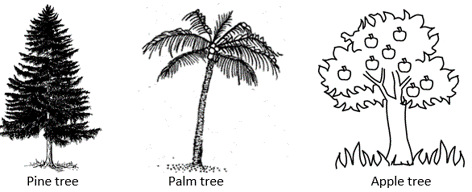
How can all three of these trees be classified?
A. spore producing
B. cone bearing
C. seed bearing
D. nonflowering
D. nonflowering
100
Rylee enjoys drawing animal pictures in his notebook. Two of his favorite animals to draw are shown below.
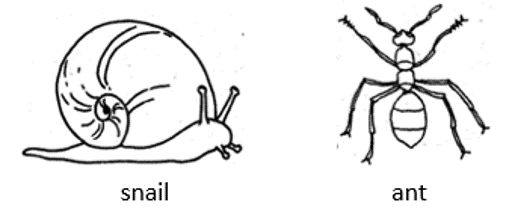
How can both of these animals be classified in Doug’s notebook?
A. fish
B. insects
C. arthropods
D. invertebrates
D. invertebrates
100
Bryan reads about how arctic foxes behave. The picture on the left shows what the arctic fox looks like during the summer. The picture on the right shows what the arctic fox looks like during the winter.
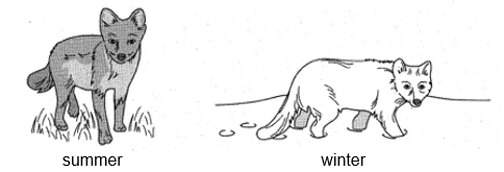
What conclusion can Patricia make from the picture about how the arctic fox behaves?
A. It hibernates during the winter.
B. It stores up food for the winter.
C. Its babies are born during the winter.
D. Its fur changes colors with the seasons.
D. Its fur changes colors with the seasons.
200
A scientist chooses to use a tool and units of measurement based on what is being measured. Which of the following items would be easier to measure using centimeters stick rather meters?
A. book
B. pencil
C. classroom
D. school bus
C. postage stamp
200
Jane draws the diagram below of a plant but needs to label each part.
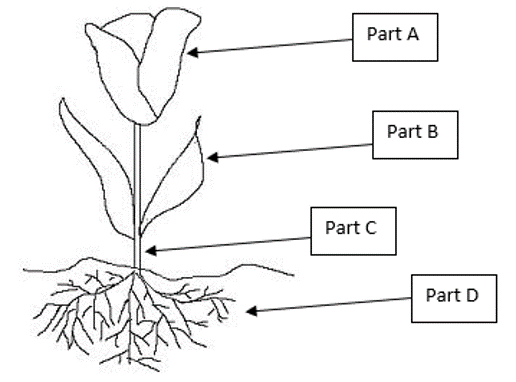
Which plant part allows water and nutrients to be absorbed into the plant?
A. Part A
B. Part B
C. Part C
D. Part D
D. Part D
200
Daniel investigates how plants grow in different conditions. He places a cardboard box with a small hole over a plant he has on his window sill to find out how plants grow when there is a little bit of light.
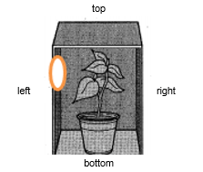
After six weeks, Daniel makes his final recordings as to how his plant has grown. According to the diagram above, which direction best describes the direction Daniel’s plant would grow?
A. towards the bottom right
B. towards the top right
C. towards the bottom left
D. towards the top left
D. towards the top left
200
Emmanuel plays a guessing game with his friend. He asks his friend to identify what he sees. Emmanuel says, “I see a nonflowering, seed-bearing plant.” Which of the following statements identifies what Emmanuel sees?
A. He sees cones.
B. He sees spores.
C. He sees petals and leaves.
D. He sees spores and needles.
A. He sees cones.
200
Crows, ostriches, and ducks are birds. Alligators, turtles, and snakes are reptiles. In what way do all birds and all reptiles differ?
A. Birds fly, but reptiles walk on legs.
B. Birds have feathers, but reptiles have scales.
C. Birds have backbones, but reptiles have scales.
D. Birds lay eggs, but reptiles give birth to live young.
B. Birds have feathers, but reptiles have scales.
200
Robin observes a change in her favorite oak tree as the number of daylight hours decrease from fall to winter. Which of the following ways will Robin’s oak tree most likely change when the number of daylight hours decrease?
A. It will lose its leaves.
B. It will grow new roots.
C. The tree will produce flowers.
D. The seeds will begin to germinate.
A. It will lose its leaves.
300
Two scientists were talking about an experiment. One of the scientists explained how something was causing problems with his investigation. The second scientist offered a suggestion how to fix the problem. The first scientist tried the suggestion, and it solved the problem.
What does this example say about these scientists?
A. The second scientist should not offer advice.
B. The first scientist was smarter than the second scientist.
C. The first scientist did not communicate with his fellow scientist.
D. The second scientist communicated well and helped all scientists learn more.
D. The second scientist communicated well and helped all scientists learn more.
300
The cone-like structure in the sago-palm acts like a flower. How does the cone-like structure help the sago palm?
A. It helps make food.
B. It helps take in water.
C. It helps with reproduction.
D. It helps take in carbon dioxide.
C. It helps with reproduction.
300
Tiffany forgets to water the class plant. After two weeks, the leaves are drooping downward. A picture of the class plant is shown below.
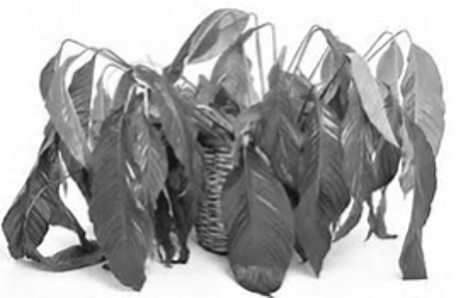
Which of the following statements best describes the class plant?
A. The plant is falling.
B. The plant is wilting.
C. The plant is melting.
D. The plant is absorbing.
B. The plant is wilting.
300
Carlos observes a pinecone hanging from one of the branches of a pine tree. What conclusion can Carlos make about this tree?
A. It is part of the moss family.
B. The cone is a flower.
C. It is seed bearing.
D. The tree will die.
C. It is seed bearing.
300
A duckbill platypus is a mammal that has a leathery bill, brown fur, a flat tail like a beaver’s, and webbed feet. It spends a lot of time in water and lays eggs.
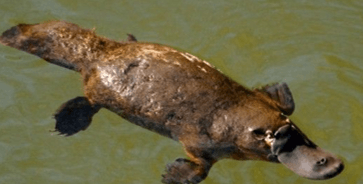
Which of the following characteristic of the platypus is unusual for a mammal?
A. having fur
B. laying eggs
C. having a flat tail
D. spending time in water
B. laying eggs
300
Charles lists some ways that trees and other plants respond to changes in the environment during the seasons.
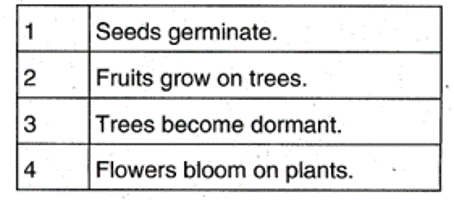
Which of the following changes most likely happen during summer?
A. 3 and 4 only
B. 1 and 3 only
C. 2 and 3 only
D. 2 and 4 only
D. 2 and 4 only
400
This is a model of an animal cell.
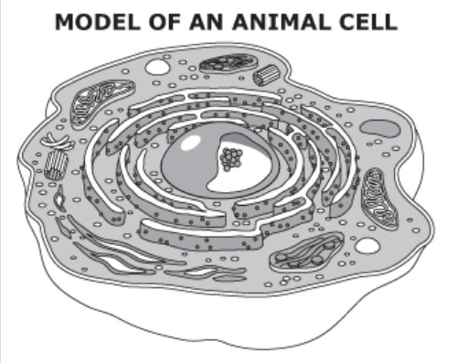
Why do scientists find using a model helpful when studying a cell?
A. It can change like a cell.
B. It looks exactly like a cell.
C. It has more parts than a cell.
D. It is easier to see than a cell.
D. It is easier to see than a cell.
400
Plants use the process of photosynthesis to survive. Which of following resources is NOT needed for plants to carry out photosynthesis?
A. sunlight
B. carbon dioxide
C. sugar
D. water
C. sugar
400
Maureen placed a plant on a table in her bedroom for one month. The walls and floor have been numbered.
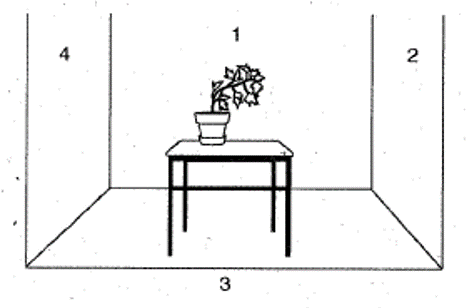
What number in the room is Maureen’s window most likely located?
A. near 1
B. near 2
C. near 3
D. near 4
B. near 2
400
Alyssa turned over the fronds of a fern plant and observed tiny dark dots.
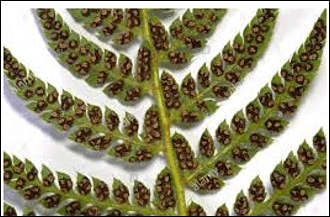
Which of the following describes what Alyssa observes?
A. She is observing fern seeds.
B. She is observing fern spores.
C. She is observing a disease on the leaves.
D. She is observing tiny eggs laid by insects.
B. She is observing fern spores.
400
One group of animals that are invertebrates are arthropods. Which of these four animals is not an arthropod?
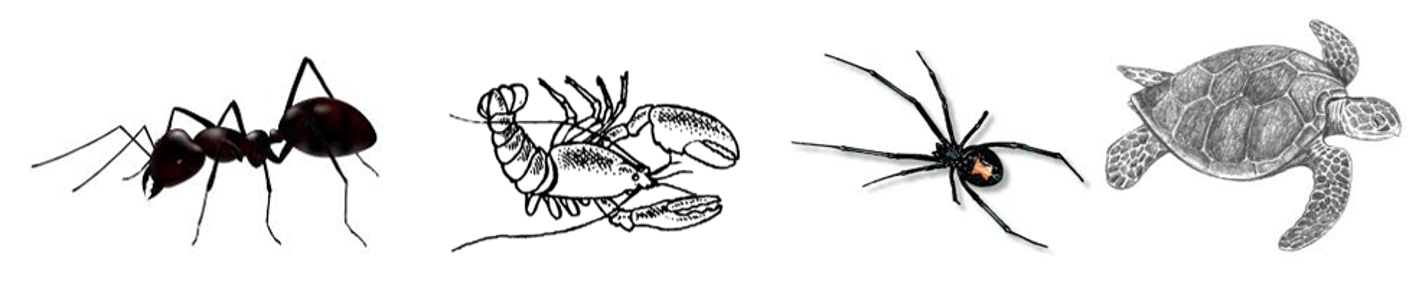
A. ant
B. lobster
C. spider
D. turtle
D. turtle
400
Liam wants to write a caption for the picture of the groundhog shown below.
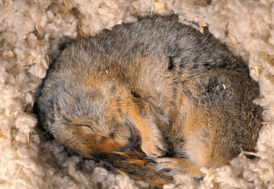
If the picture was taken during a month with low temperatures, which of the following captions should Jenna write?
A. This groundhog prepares for migration.
B. This groundhog prepares for offspring.
C. This groundhog hibernates for winter.
D. This groundhog is in germination.
C. This groundhog hibernates for winter.
500
Makenna fills 6 jars each with 400 mL of water. She places 3 of the jars outside in the sun and 3 of the jars outside in the shade for a total of four hours. Then she measures how much water is left in each jar. She graphs the data.
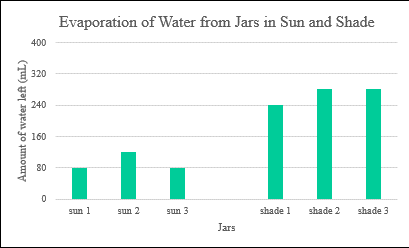
Which of the following conclusions is supported by the data?
A. Water evaporates more quickly in the shade than in the sun.
B. Water evaporates more quickly in the sun than in the shade.
C. Being outside makes no difference in the evaporation of water.
D. Being outside makes evaporation occur more quickly than being inside.
B. Water evaporates more quickly in the sun than in the shade.
500
David put a plant in a box as shown. The box also had a lid to cover the front. David only opened the box to add water to the plant. The plant stayed in the box for 10 days.
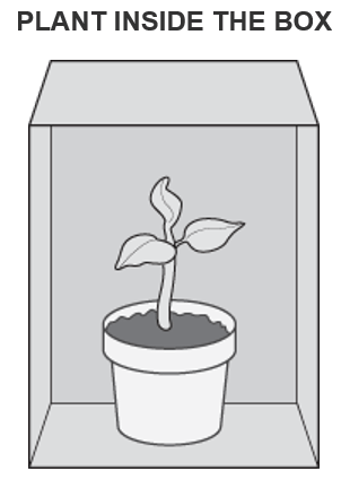
When David took the plant out of the box on day ten, the plant was yellow and had small leaves. Why did the plant become yellow and grow only small leaves after ten days in the box?
A. The plant needed carbon dioxide to grow.
B. The plant needed sunlight to make food and grow.
C. The plant needed more water and fresh air to grow.
D. The plant needed fertilizer (plant food) and different soil to grow.
B. The plant needed sunlight to make food and grow.
500
Paul places two young plants in a window as shown below on the left. He waters both plants the same amount and does not move them for 25 days. The picture on the right shows how the plants have grown.
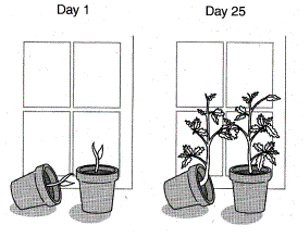
Which of the following best explains how Paul’s plants have grown?
A. plants respond to gravity and light
B. plants respond to soil and atmosphere
C. plants respond to plant food and shade
D. plants respond to conversation and touch
A. plants respond to gravity and light
500
Emily classifies some plants after her class has a lesson on how to group plants. She places the samples into the boxes shown below.
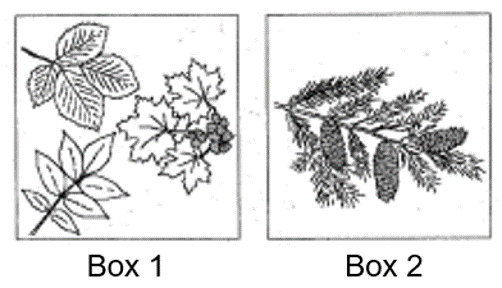
Which of the following characteristics does Emily use to classify the samples in Box 1?
A. They all come from nonflowering plants.
B. They all come from plants that make cones.
C. They all come from plants that make seeds.
D. They all come from plants that make spores.
C. They all come from plants that make seeds.
500
Sophia , Brandon, Emily, Brayan, Liam, Makenna and Aiden B. and Jordyn went on a hike at Lyonea and notied the needles on a Florida scrub Pine. What is the function of the needles?.
A. Produce seeds
C. To provide support for the tree.
D. To collect water.
B. To make food.
500
Which of the following is NOT a way that plants or animals respond to changing seasons?
A. migration
B. dormancy
C. hibernation
D. camouflage
Which of the following is NOT a way that plants or animals respond to changing seasons?
A. migration
B. dormancy
C. hibernation
D. camouflage