Labs 1 - 3
Labs 4 - 6
Labs 7 - 9
Labs 10 + 11
Misc.
100
How many significant figures does the number 1,234,000 have?
4.
100
What is a null hypothesis?
The hypothesis we are trying to disprove, the one that asserts no new interactions of note will occur.
100
What is one reason scientists use the mark-recapture method for studying populations?
Can get a good estimate of population size, and with more advanced tags individuals/populations' behaviors.
100
How do we define an island?
Optimal area surrounded by less optimal area -- doesn't have to be land in the middle of ocean.
100
What are the two components of a scientific name?
Genus and species.
200
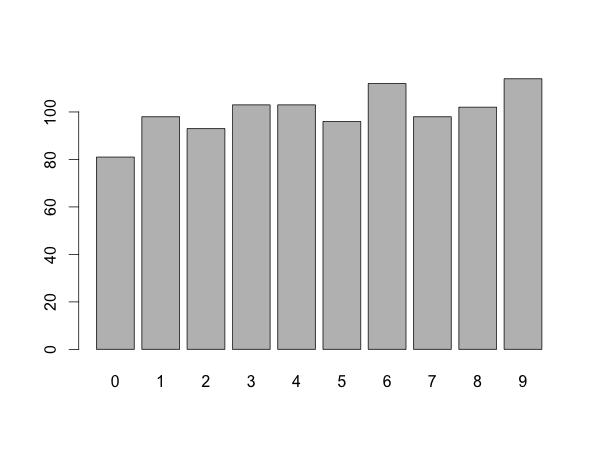
What kind of distribution is this?
Uniform distribution.
200
What would a p-value of 0.4 indicate?
That the results are not statistically significant (must be equal to or below 0.05).
200
What is a survivorship curve?
Visualization of surviving populations at different stages of life.
200
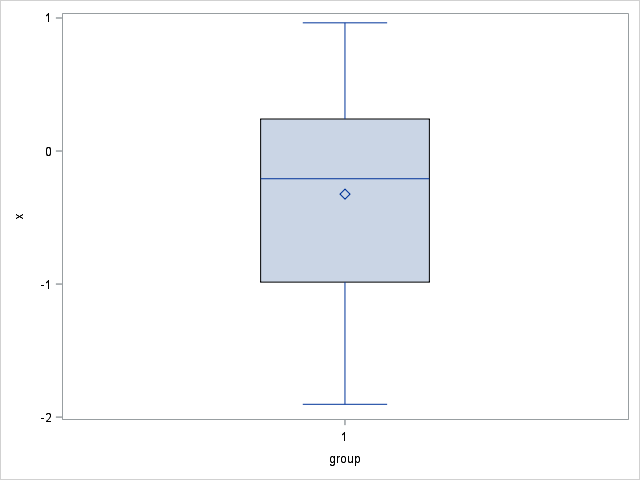 What do the different parts of a boxplot indicate?
Minimum, First Quartile, Median, Second Quartile, Maximum
200
What is community science?
Collaborative scientific work that brings the community into conducting scientific research.
300
What should be included in a scatterplot to give abetter sense of the data's relationship?
Trendline (but also chart features like title, tick marks, etc.)
300
What is a phenological mismatch?
When interacting species annual cycles start to misalign (e.g.: flowers blooming earlier, butterflies emerging later).
300
What is taxonomic diversity?
It's diversity based on the number of species present and the number of organisms in each species (richness/abundance)
300
Why do scientists study macroinvertebrates?
Many macroinvertebrates have different tolerances for pollution, making them good indicator species for healthy a body of water is.
300
What are some examples of climate change?
Rising sea levels, increased temperatures, extreme weather, etc.
400
What would an R^2 value of 0.85 indicate?
That there is a strong relationship between our variables.
400
What is genetic drift? What would be an example of genetic drift?
Change over time due to randomness. Example could be a koi population losing the white gene allele over many, many generations.
400

Describe the survivorship curve for each Type.
Type 1: fewer offspring that are more invested in, most reach maturity and die of old age (humans)
Type 2: chance of death is equal throughout all stages, some investment in offspring (songbirds)
Type 3: Many offspring, low investment -- those who do survive initial stages live long lives (trees)
400
Why is nutrient pollution (especially of nitrogen in water bodies) a bad thing?
Causes too much algal growth, and through the process of eutrophication leads to dead zones that support little life.
400
What is a novel ecosystem?
An ecosystem so disturbed it bears little resemblance to the original ecosystem that was once there/can not functionally be brought back to the native ecosystem.
500
What does a 95% confidence interval mean?
95% confidence interval is a range of numbers around each of our samples. 95% of the time, the true mean will fall within these ranges (calculated using standard error and according to normal distribution).
500
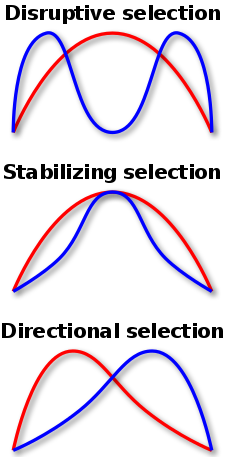
If red is before and blue is after, describe what could have happened for each population.
disruptive -- 2 more extreme traits, got selected over one broader trait (maybe due to population isolations) (ex: galapagos finches)
stabilizing -- one specific less extreme trait got selected over a broader selection of traits (ex: human birth weights)
directional -- one trait used to be more advantageous but something changed to make the previously less advantageous trait the more advantageous one. (ex: male size)
500
Why do we use Simpson's Reciprocal Index?
Simpson's index shows dominance, the reciprocal shows diversity which is more useful.
500
What is the island theory of biogeography?
Species richness is a function of island size and distance from the mainland.
Populations may change, but number of species will stay the same.
500
What happens to the NYC water bodies after heavy rain?
Combined Sewage Overflows can't handle the volume of water, and because of the design of the sewer system, raw sewage goes directly into water bodies untreated.