Ready, Set.. RECHARGE
Hold the Water Works
What's your function
Wonder Twin Powers Activate
Crazy Connections
100
When ATP loses a phosphate group, it is catabolized into this.
What is ADP.
100
A pure substance made of two or more chemically combined elements.
What is a compound?
100
A pure substance made of only one kind of atom.
What is an element?
100
A substance that produces hydroxide ions (-OH) in a solution.
What is a base?
100
A substance that produces Hydrogen (H+) in a solution.
What is an acid?
200
Photosynthesis converts light energy from the sun into chemical energy stored in
What is glucose?
200
This part of the plant's vascular system transports WATER from the roots.
What is the xylem?
200
When a peptide bond forms between two amino acids, ______ is released.
What is water?
200
Carbohydrates, lipids, proteins, and nucleotides are all considered this type of compound.
What are organic compounds?
200
Enzymes help a chemical reaction proceed by doing this.
What is lowering the activation energy?
300
Photosynthesis takes place in a cell's
What are the chloroplasts?
300
The attraction of one molecule to another is known as this.
What is cohesion?
300
The four different types of energy and an example of each?
What are kinetic (moving object), thermal (campfire), food consumption (chemical), photosynthesis (light energy)
300
The physical stuff that makes up the universe.
What's matter.
300
An inhibitor can decrease the activity of an enzyme by binding to this.
What is the activation site?
400
Chlorophyll A absorbs light energy mainly in the ____ portion (s) of the visible light spectrum.
What are blue and red?
400
This is a special type of diffusion, where particles of water go from an area of higher concentration to lower concentration.
What is osmosis?
400
The smallest individual part of an element is this.
What is an atom?
400
Which side of a chemical equation does the reactants go?
What is the left side of the equation?
400
The reason lipids do not dissolve in water?
What is because lipids are nonpolar?
500
The phases of cellular respiration WHEN ATP is produced (hint there are three)
What are the Citric Acid Cycle (Krebs), Electron transport chain, and glycolysis?
500
Because water molecules have regions of asymmetric charge, they are considered what type of molecule?
What is polar?
500
This percentage of the light energy available to plants is available to first-level consumers as chemical energy.
What is 4%?
500
The two laws respectively that state matter nor energy can be created or destroyed.
What is the law of the conservation of matter, and the law of the conservation of energy?
500
Examples of nucleic acids are these.
What is RNA and DNA?
600
Where does the light-dependent phase of photosynthesis take place?
What are they thylakoids?
600
This process allows water to move upward against gravity in plants by using cohesion, adhesion and polarity, enabling it to travel through the roots to the leaves. Without this ability, the transport of water would fail.
What is capillary action?
600
The chemical formular for photosynthesis with its reactants, source of energy, and products.
What is 6CO2 + 6H2O---(light energy)--> C6H12O6 + 6O2 ?
600
Mrs. Pillion didn't know this in 2023 when she started teaching Biology-- but now she does, and it makes her feel smart. This is a ___________ type of chemical reaction. (It wasn't on your study guide, but for giggles)
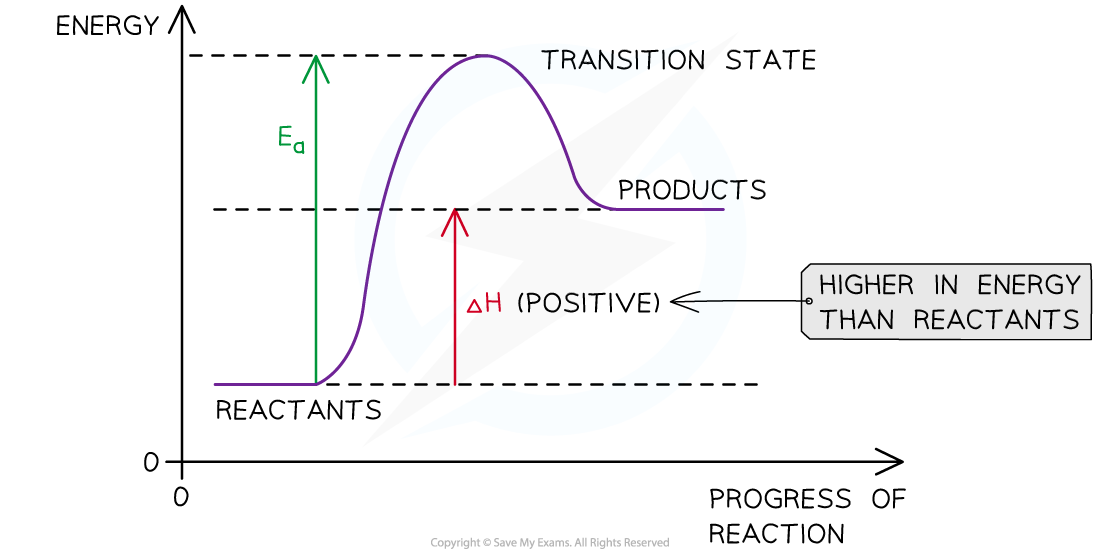
What is an endothermic reaction?
600
These four classes of organic compounds are distinguished by their unique structures: name and describe each.
What are ring-shaped/pentagon shaped monosaccharides (sugar) or carbohydrates, long hydrocarbon chains or lipids, folded amino acids with an R group or proteins, a backbone consisting of a sugar/phosphate/and base or nucleotide for nucleic acids
700
During glycolysis, glucose produced by photosynthesis is broken down into
What is pyruvate?
700
After hydrogen ions are released from NADH and diffuse in the mitochondrial intermembrane space this happens to them.
What is they catalyze the production of ATP by ATP synthase?
700
In addition to alcohol, alcoholic fermentation produces this as a byproduct.
What is carbon dioxide?
700
The electrons needed for the Electron Transport Chain are produced when light energy does this.
What is splits water molecules?
700
Call it what it is- of each of these phases in aerobic cellular respiration glycolysis, the citric acid cycle, and the electron transport chain, what are each phase-- aerobic or anaerobic
What is anaerobic for glycolysis and aerobic for the remaining two phases the citric acid cycle (Krebs cycle) and the electron transport chain (ETC).