Ch 1
Ch 2
Ch 3
Functional Groups
Carbohydrates
Lipids
Proteins
Nucleic Acids
MISC.
100
The smallest unit of any substance is the ___
atom
100
What atom has only 1 proton?
Hydrogen
100
Organic molecules consist mainly of ___ atoms
carbon and hydrogen
100
What is the formula for Methyl?
-CH3
100
What is the function of a carbohydrate?
Fuel source, storage, structural building blocks
100
What is the function of a Lipid?
Energy source
100
What is the function of a Protein?
SO MANY
catalyze chemical reactions, provide structural support, store amino acids, transport substances, coordinate organismal responses, receive signals from outside cells, function in cell movement, protect against disease
100
What is the function of Nucleic Acids?
DNA: stores hereditary information
RNA: various functions during gene expression, including carrying instructions from DNA to the ribosome
100
What is a nucleoprotein?
protein + nucleic acid
200
The smallest unit of life is the ___
cell
200
A molecule into which a radioisotope has been incorporated can be used as a(n) ___
a) compound
b)tracer
c)salt
d)acid
tracer
200
Each carbon atom can bond with as many as ___ other atom(s)
4
200
What is the formula for Hydroxyl?
-OH
200
What are the 3 kinds of carbohydrates?
Monosaccharides, Disaccharides, Polysaccharides
200
True or False: Lipids are hydrophobic
TRUE!!!!!!!!!!!!!!!!!!!
200
What are examples of a protein?
enzymes, structural proteins, storage proteins, transport proteins, hormones, receptor proteins, motor proteins, defensive proteins
200
What is the function of nucleic acids?
store, transmit, and help express hereditary information
200
What is a polypeptide?
a chain of amino acids
300
Organisms require ___ and ___ to maintain themselves, grow, and reproduce
nutrients; energy
300
Which of the following statements in INCORRECT?
a)Isotopes have the same atomic number AND different mass numbers
b)Atoms have about the same number of electrons as protons
c)All molecules consist of atoms
d)Free radicals are dangerous because they emit energy
Free radicals are dangerous because they emit energy
300
___ groups are the "acid" part of amino acids and fatty acids
Carboxyl (-COOH)
300
What is the formula for Carbonyl?
-CO
300
What is a monosaccharide made up of?
C, H, O in 1:2:1 ratio
300
3 Examples of Lipids
Trialyglycerols: fats/oils, glycerol + 3 fatty acids
Phospholipid: phosphate group + 2 fatty acids
Steroids: 4 fused rings with attached chemical groups
300
How do scientists determine protein confirmation?
Scientists use X-ray crystallography to determine protein conformation
300
What is nucleic acid made up of?
a phosphate group, a nitrogenous base, and a sugar
300
What is a lipoprotein?
protein + lipid
400
By sensing and responding to change, organisms keep conditions in the internal environment within ranges that cells can tolerate. This process is called___
homeostasis
400
In the periodic table, the elements are arranged according to___
atomic number
400
___ is a simple sugar (monosaccharide)
a)ribose
b)sucrose
c)starch
d)all of the above
Ribose
400
What is the formula for Carboxyl?
-COOH
400
What are examples of monosaccharides?
Glucose, fructose, galactose
400
What is a fatty acid?
hydrocarbon chain of 10-50 carbons in length (vary in length and in number of double bonds)
400
What is the Emergent Property?
a protein's function which is determined by its conformation
400
What is the function of DNA?
stores hereditary information
400
If a molecule has more carboxyl than amine is it acidic or basic?
ACIDIC
500
DNA___
a) guides form and function
b) is the basis of traits
c)is transmitted from parents to offspring
d)all of the above
all of the above
500
All ions have at least 1 ___(select all that are correct)
a)proton
b)electron
c)neutron
d)all of the above
proton
500
Name 3 carbohydrates that can be built using only glucose molecules.
starch, cellulose, glycogen
500
What is the formula for Amino/Amine?
-NH2
500
What is a disaccharide made up of?
2 monosaccharides joined together by a condensation (dehydration synthesis) reaction
500
What is a saturated fat?
- no double bonds
- form straight chains
- solid @ room temperature
- most animal fats (butter, lard)
500
What is an amino acid?
- consists of carboxyl, amine, and 1 of 20 R groups typically bonded to the same Carbon
- monomer of protein
500
What is the function of RNA?
various functions during gene expression, including carrying instructions form DNA to ribosomes
500
What is a glycoprotein?
protein + carbohydrate
600
___is the transmission of DNA to offspring
Reproduction
600
Rank the following chemical bonds in order of increasing polarity:
a)nonpolar covalent
b)ionic
c)polar covalent
nonpolar covalent, polar covalent, ionic
600
Unlike saturated fats, the fatty acid tails of unsaturated fats incorporate one or more ___
double bonds
600
What is the formula for Phosphate?
-PO4
600
What are examples of disaccharides?
Sucrose = glucose + fructose
Maltose = glucose + glucose
Lactose = glucose + galactose
600
What is an unsaturated fat?
- one/more than one double bond(s) in tails
- kinks wherever there is a double bond -> prevents tight packing of molecules so LIQUID @ room temperature
- oils
600
What is a polypeptide?
- polymer of amino acid subunits connected in a specific sequence
- rigid, planar structures
600
What is the sugar in DNA?
Deoxyribose
600
What does Organic mean?
a compound consists mostly of carbon and hydrogen
700
A butterfly is a(n) ___ (choose all that apply)
a)organism
b)domain
c)species
d)eukaryote
e)consumer
f)producer
g)prokaryote
h)trait
organism, eukaryote, consumer
700
The measure of an atom's ability to pull electrons away from another atom is called___
electronegativity
700
True or False: Unlike saturated fats, ALL unsaturated fats are beneficial to health because their fatty acid tails kink and do not pack together
False
700
Where is Methyl mostly found?
organic compounds
700
What are polysaccharides made up of?
long polymers of monosaccharides
700
What does hydrogenated mean?
Unsaturated fats have been synthetically converted to saturated fats by adding hydrogen
ex: peanut butter (prevent lipids from separating out as oil)
700
How is a polypeptide formed?
An enzyme joins the carboxyl of one amino acid and the amino group of another via DEHYDRATION SYNTHESIS/CONDENSATION reaction
700
What is the sugar in RNA?
Ribose
700
What does a hydrocarbon consist of?
only carbon and hydrogen and is nonpolar
800
___move around for at least part of their life
a)living organisms
b)animals
c)species
d)eukaryotes
animals
800
The mutual attraction of opposite charges holds atoms together as molecules in a(n) ___ bond.
ionic bond
800
Steroids are among lipids with no ____
a)double bonds
b)fatty acid tails
c)hydrogens
d)carbons
fatty acid tails
800
Where is Hydroxyl mostly found?
alcohols, sugars
800
What are examples of polysaccharides?
Starch, Cellulose, Glycogen
800
What is a phospholipid?
fat with one fatty acid replaced by a phosphate group
(addition sugars, amines, or other groups can be attached to phosphate group to form a variety of different phospholipids)
800
What is the 1st level of protein structure organization?
Primary structure: a sequence of unique amino acids, determined by DNA code
800
What are the nitrogenous bases in DNA?
Adenine (A), Thymine (T), Cytosine (C), Guanine (G)
800
What is a functional group?
an atom or small molecular group bonded to a carbon in an organic compound
900
A bacterium is a ___ (choose all that apply)
a)an organism
b)single-celled
c)an animal
d) a eukaryote
an organism, single-celled
900
Atoms share electrons unequally in a(n) ___ bond
polar covalent bond
900
Which of the following is a class of molecules that encompasses all of the others listed?
a)triglycerides
b)fatty acids
c)waxes
d)steroids
e)lipids
f)phospholipids
lipids
900
Where is Carbonyl mostly found?
sugars
900
What are the 2 forms of Starch?
Amylose: straight, unbranched glucose chain
Amylopectin: many linked amylose chains
900
What is the function of a phospholipid?
- major component in cell membranes
- arranged as bilayer (hydrophilic head towards outside of bilayer and in contact with the aqueous solution, hydrophobic tail point towards the interior of the bilayer and away from aqueous solution)
- forms barrier between cell and external environment
900
What is the 2nd level of protein structure organization?
Secondary structure: determined by amino acid sequence, H BONDS stabilize structure and form patterns
- a helix: polypeptide chain winds clockwise (ex: keratin: main component of hair)
- a pleated sheet: chains joined together like the logs in a raft (ex: silk)
900
What are the nitrogenous bases in RNA?
Adenine (A), Uracil (U), Cytosine (C), Guanine (G)
900
What are the 4 ways in which a chemical structure can be represented?
- Structural formula
– Simplified carbon ring structures
– Ball-and-stick models
– Space-filling models
1000
Bacteria, Archaea, and Eukarya are three___
domains
1000
A(n) ___ substance repels water
hydrophobic
1000
___ are to proteins as ___ are to nucleic acids
a)sugars; lipids
b)sugars; proteins
c)amino acids, hydrogen bonds
d)amino acids, nucleotides
amino acids, nucleotides
1000
Where is Carboxyl mostly found?
fatty acids, amino acids
1000
What is the function of glycogen?
Energy storage in animals
1000
What is Cholesterol?
- important precursor for all other steroids (lipid with a carbon skeleton with 4 fused rings and a small carbon chain tail)
- synthesized in liver
- essential in animals, but high levels in blood = cardiovascular disease
1000
What is the 3rd level of protein structure organization?
Tertiary Structure: hydrogen bonding, ionic interactions, hydrophobic interactions
1000
Which nitrogenous bases pair with each other in DNA
Adenine and Thymine
Cytosine and Guanine
1000
What is Metabolism?
activities by which cells acquire and use energy to construct, rearrange, and split organic molecules
• Allows cells to live, grow, and reproduce
• Requires enzymes (proteins that increase the speed of reactions)
1100
What is a control group?
the standard against which an experimental group is compared
1100
A salt does not release ___ in water
a)ions
b)H+
H+
1100
A denatured protein has lost its ___
function
1100
Where is Amine/Amino mostly found?
nucleic acids, proteins
1100
What is cellulose
A major component in plant cell walls
1100
True or false: unsaturated fats DO NOT have double bonds
FALSE!!!!!!!!!!!!!!!!
1100
What is the 4th level of protein structure organization?
Quaternary structure: protein made up of more than one amino acid chain
EX: collagen (fibrous) and hemoglobin (globular)
1100
Which nitrogenous bases pair with each other in RNA
Adenine and Uracil
Cytosine and Guanine
1100
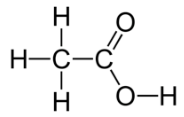 How is this chemical structure being represented?
Structural formula
1200
15 randomly selected students are found to be taller than 6 feet. The researchers concluded that the average height of a student is greater than 6 feet. This is an example of ___
a)experimental error
b)sampling error
c)a subjective opinion
d)experimental bias
sampling error
1200
Hydrogen ions (H+) are ___
a)in blood
b)protons
c)indicated by a pH scale
d)all of the above
all of the above
1200
A ___ is an example of a protein secondary structure
a)barrel
b)polypeptide
c)domain
d)helix
Helix
1200
Where is Phosphate mostly found?
nucleic acid, phospholipids
1200
What is Chitin?
a fibrous substance consisting of polysaccharides and forming the major constituent in the exoskeleton of arthropods and the cell walls of fungi.
1200
What are Cis fats?
The most common type of fat
1200
What is denaturation?
unraveling/loss of native conformation in proteins
results in a loss of function
caused by intense changes in temperature (heat), pH, salt concentration, and presence of reducing agents (detergents)
1200
Is DNA double-stranded or single-stranded?
double-stranded
1200
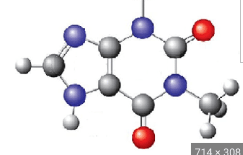
Ball and stick method
1300
science only addresses that which is ___
a)alive
b)observable
c)variable
d)indisputable
observable
1300
When dissolved in water, a(n) ___ donates H+; a(n) ___ accepts H+
acid; base
1300
In the following list, identify the carbohydrate, the fatty acid, the amino acid, and the polypeptide
a) methionie-valine-proline-leucine-serine
b)C6H12O6
c)NH2-CHR-COOH
d)CH3(CH2)16COOH
a) polypeptide
b)carbohydrate
c)amino acid
d)fatty acid
1300
What are trans fats?
- unhealthy fats found mostly in partially hydrogenated vegetable oils
- linked to diabetes and heart disease
1300
What is a Peptide?
amino acids bonded together
1300
Is RNA double-stranded or single-stranded
single-stranded
1300
What is an organism?
consists of one or more cells
1400
Which of the following statements can be falsified?
a)Some of the fish in the lake are brown
b)None of the fish in the lake are brown
c)All of the fish in the lake are brown
Some of the fish in the lake are brown
1400
A ___ can help keep the pH of a solution stable
a)covalent bond
b)hydrogen bond
c)buffer
d)pH
buffer
1400
What is an ecosystem?
community interacting with its environment
1400
What is a population?
group of interbreeding individuals of the same species in the same area
1500
What is taxonomy?
system of naming and classifying species
1500
A ___ is dissolved in a solvent
solute
1500
What is a biosphere?
all regions of Earth where organisms live
1500
What is a community?
all populations of all species in a given area