The Periodic Table
Physical and Chemical Properties
Metals, Nonmetals, Metalloids
Anything
Goes
Goes
100
How are elements organized on the periodic table?
By increasing atomic number and by similar properties.
100
1. Turning wood into sawdust is a _____ change because _________.
2. Burning wood is a _______ change because ________.
1. PHYSICAL - didn't change what the wood is made of, just changed the size.
2. CHEMICAL - a new substance (ash) was formed.
100
Which type of element is a gas at room temperature and can break if hammered?
Nonmetal
100
Define "metalloid" and give an example.
Metalloid - an element that shares properties of both metals and nonmetals.
There are 8 elements on each side of the zig-zag line that are metalloids: boron (B), silicon (Si), germanium (Ge), arsenic (As), antimony (Sb), tellurium (Te), polonium (Po) and astatine (At)
200
Which way do groups go on the periodic table?
Which way do periods go on the periodic table?
Groups - up and down (vertical columns)
Periods - left to right (horizontal rows)
200
_________ describes how an element can be stretched into a wire without breaking.
_________ describes how an element can be flattened into sheets without breaking.
ductile, malleable
200
Which metalloid is found in group 13?
Boron (B)
200
Give 2 physical properties of element #3.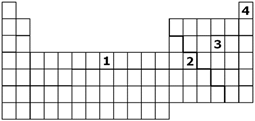
It's a nonmetal - dull, low reactivity, brittle, low conductivity, etc.
300
Based on the periodic table, which element is more reactive: Sodium (Na) or Sulfur (S)? Explain why.
Sodium (Na) because it is farthest on the left of the periodic table, which is where most reactive elements are found.
300
Give 1 physical and 1 chemical property of element #1.
It's a metal:
physical - luster, malleable, conductivity
chemical - reacts with water/oxygen
300
Which type of element has a luster, but is brittle? GIVE AN EXAMPLE.
Metalloid
B, Si, Ge, As, Sb, Te, Po or At
300
What is the difference between an element that is brittle vs. malleable?
Brittle- can easily break; malleable - doesn't easily break
400
What kind of element is Cadmium (Cd) and how do you know?
What other elements share similar properties?
Cadmium is a METAL because it is on the LEFT side of the Metalloids.
It shares similar properties with the elements in the same group (group 12)
400
What is the difference between a physical and chemical property?
Physical - can be observed with the 5 senses
Chemical - can only be observed with a reaction
400
Which type of element is Lithium? Give an example of a property.
Which type of element is Phosphorous? Give an example of a property.
Lithium - metal; shiny luster, reactive, malleable
Phosphorus - nonmetal; dull, brittle, not very reactive
400
Sally took a shower to wash her hair after she dyed it red.
What is the physical change to her hair? What is the chemical change to her hair?
physical - washing (dry to wet)
chemical - dyeing (change in color)
500
Which elements are more reactive; Alkali Earth Metals or Transition Metals? How do you know?
Alkali Earth Metals. They are farther on the left than the Transition Metals
500
1. List 2 physical properties of an apple.
2. What is an example of physically changing the apple?
3. What is an example of chemically changing the apple?
1. color, taste, texture, shape, mass, ..
2. Cutting the apple, biting the apple, ..
3. The apple rotting, the apple being cooked, ..
500
What type of element are the Noble Gases and why are they so "noble?"
Give an example of a Noble Gas.
Nonmetals. Do not react with anything (nonreactive). He, Ne, Ar, Kr, Xe or Rn
500
1. Describe 1 sign a chemical change has taken place with an example.
2. Describe 1 sign a physical change has taken place with an example.
Chemical - a new substance is formed (example: metal rusting)
Physical - doesn't change what the object is made of (ex: airing up a tire)