Layout & Composition
Color Theory
Color Wheel
100
Name this principle.
Contrast
100
What are the primary and secondary colors?
Primary: red, blue, yellow
Secondary: orange, purple, green
100
Different colors from the same base hue
Monochromatic
200
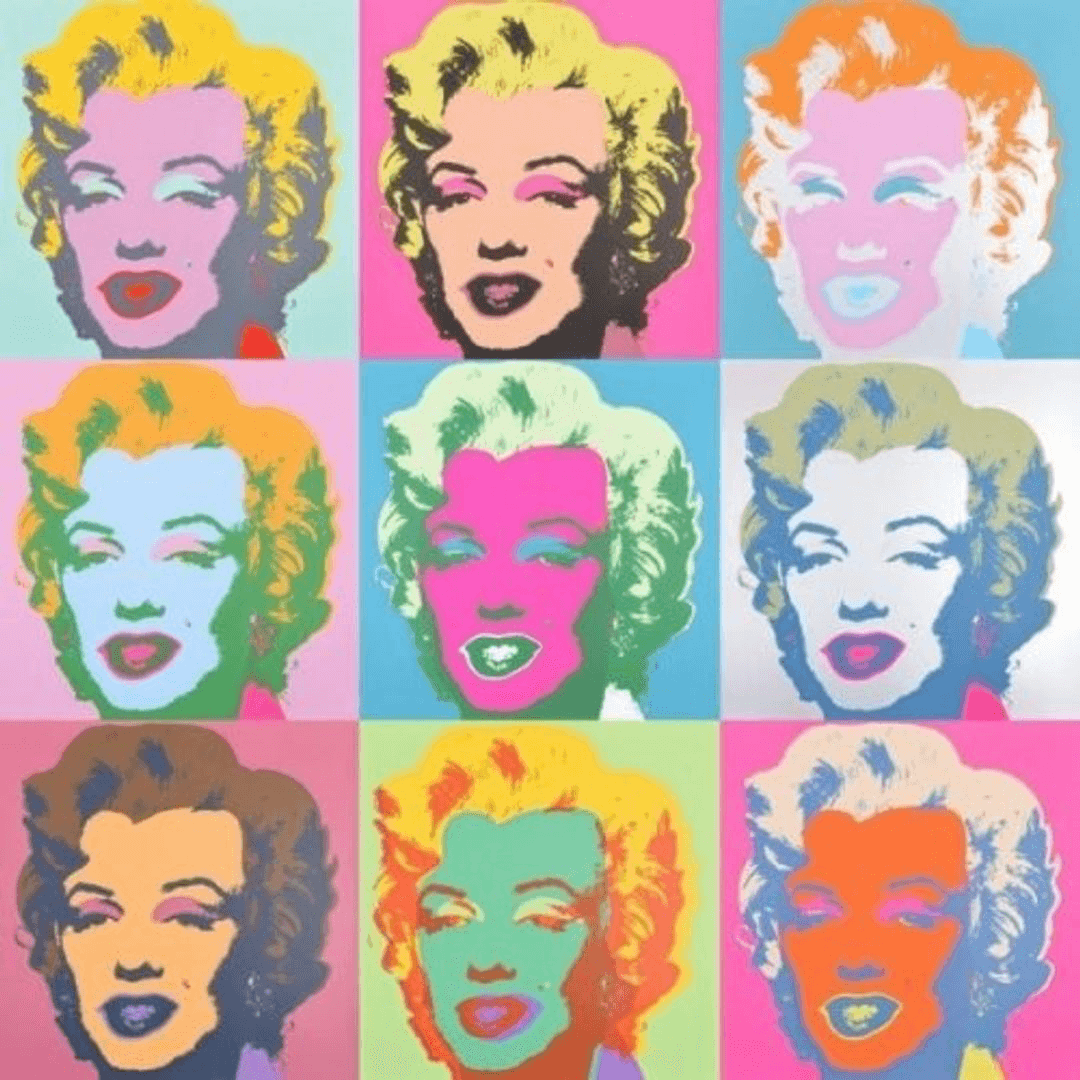 Name this principle and explain why it is important.
Repetition. This principle helps people to recognize the artist/company when they continue to use the same style of art.
200
What are the LIGHT primary colors.
Red, blue, green.
200
Colors across from each other on the color wheel
Complimentary
300
What is the difference between layout and composition?
Layout is the base, where composition involves the elements.
300
What colors do we mix to get tertiary colors?
Primary and Secondary colors.
300
Two to four colors next to each other on the color wheel
Analogous
400
 What principle is being executed here and how?
White Space. Artist only applied the black parts of the panda to a white canvas.
400
Explain tint, tone, and shade?
Tint: Add white to a color
Tone: Add gray to a color
Shade: Add black to a color
400
Colors on either side of the complement
Split complimentary
500
 What principles are being used here?
Alignment, Proximity, and White Space.
500
Explain saturation, value and hue.
Saturation: How intense/bold a color is
Value: How light or dark a color is
Hue: The color itself
500
Three colors evenly spaced out on the color wheel, and four colors that make a rectangle on the color wheel.
Triadic and Tetradic