Casus (Cases)
Verba (Verbs)
Aliae Partes (Other Parts)
Imagines (Pictures)
Varia Grammatica (Grab Bag)
Post Ludos
100
The accusative singular in every (non-neuter) declension we have ends in this letter.
What is m?
100
This is the location of the verb in most Latin sentences.
What is at the end of the sentence?
100
This is the difference between LAETUS and LAETE.
What is LAETUS is an adjective, LAETE is an adverb?
100
This is the Latin verb the little boy, who is a thief, is doing in this sentence.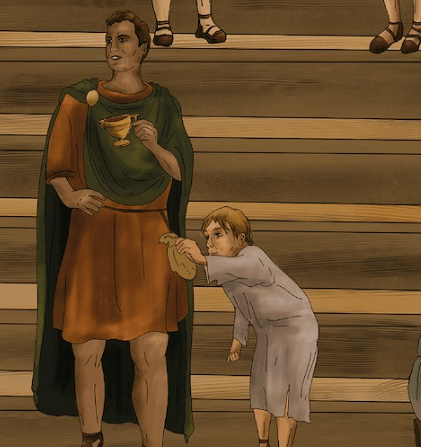
What is laborat?
100
This role in a sentence is the noun to whom the action is done.
What is the direct object?
100
This is what Catia carries when she goes into the bar.
What is a sword?
200
🎶 When you place a line upon an A,
it's now this case and number. 🎶
What is ablative singular?
200
This is the ending for all "they" verbs.
What is -nt?
200
Iam, interdum, semper and nimium are all this.
What are adverbs?
200
This is the Latin verb Sabina and Iulia are doing in this sentence. Remember to get the ending right!
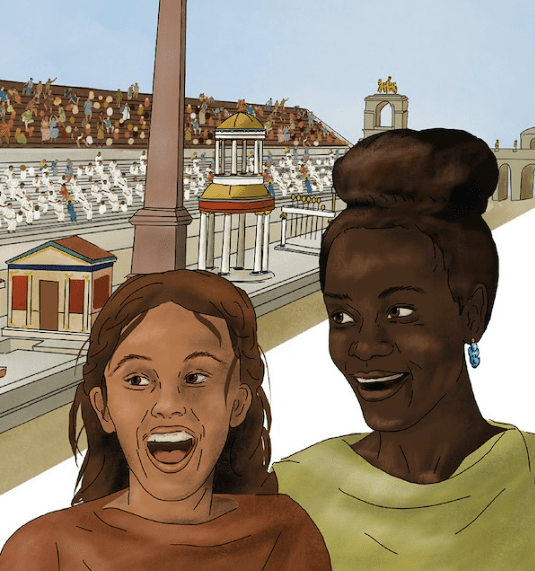
What is rident?
200
Take an adjective like meus, mea, meum.
What order do those three forms go in?
What is masculine, feminine, neuter?
200
This is how the city is at the start of the story.
What is noisy?
300
This is the "standard" nominative singular ending of the third declension.
What is there isn't one / none?
300
Quid significat legimus?
Significant "we read."
300
This is the common element of the prepositions ad and per.
What is they both take the accusative?
300
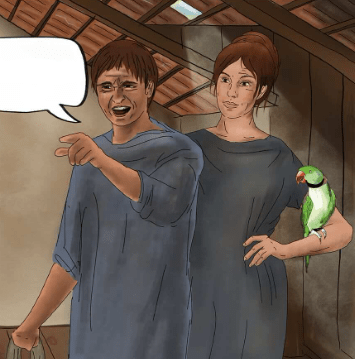
This is the Latin word for the bird in this picture.
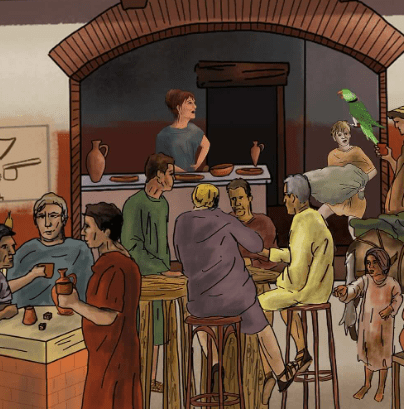
What is psittacus?
300
If you don't see a nominative noun in a Latin sentence, try looking here for the subject.
What is in the verb?
300
This is why Catia has a sword.
What is she's British?
400
Provide the accusative forms, in singular and plural, of the noun canis.
What are canem and canes?
400
This is the only verb we know that doesn't use -o as the first person singular ending.
What is sum?
400
This is the unique feature of in, as far as we're concerned.
What is it takes both the accusative and ablative?
400
This is the Latin word for the people in the stands.
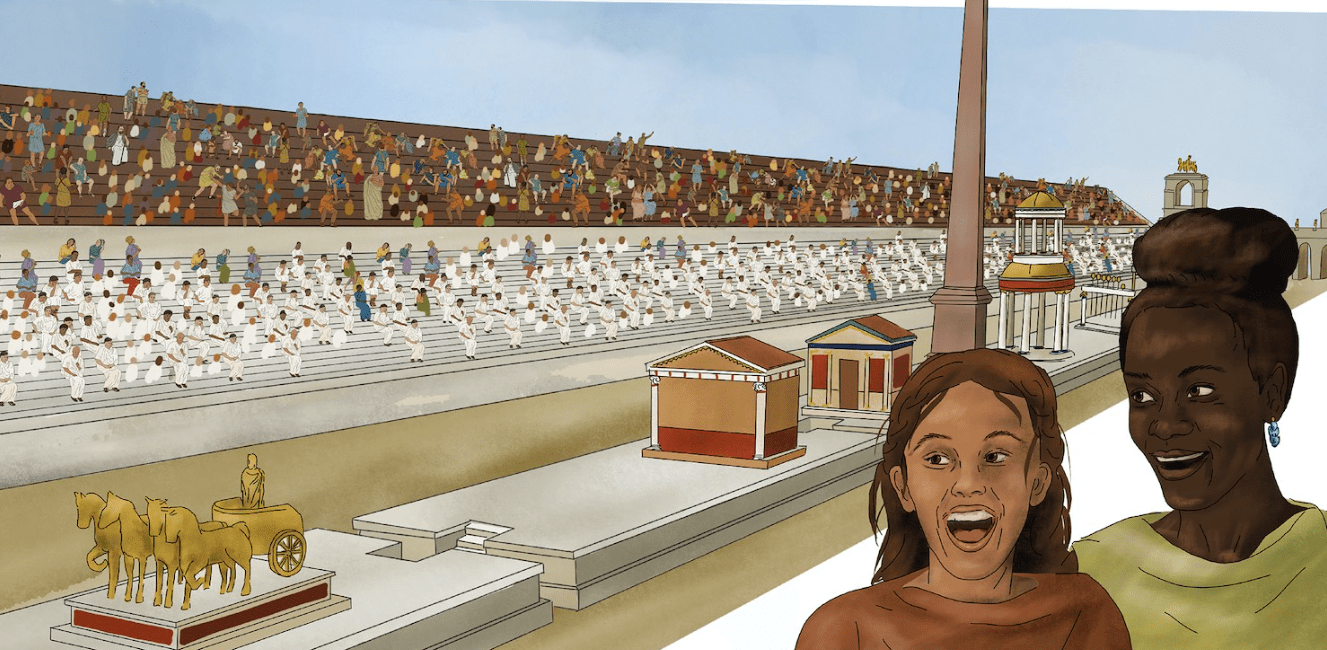
What is turba?
400
This is where the object of a preposition has to be.
What is after the preposition?
400
This is why Rufina and Quartilla are anxious.
What is they don't like chariot races?
500
In the neuter gender, the same ending is used by these two separate yet equally important cases.
What are the nominative and accusative?
500
Hōc modō Latīne dīcitur
“you sleep.”
Quid est dormīs?
500
Adjectives have to agree with their nouns in three properties: gender, and these two.
What are case and number?
500
This is the Latin verb Faustus is doing in this sentence.
What is vituperat?
500
What do intentē, laetē, lentē and semper have in common?
What is all adverbs?
500
These are the people the merchants are trying to attract.
Who are the married ladies?