Verba (Verbs)
Casus (Cases)
Aliae Partes (Other Parts)
Varia Grammatica (Grab Bag)
Varia Vocabulorum (Grab Bag II)
Imagines (Pictures)
fuga ex oppido Londinio
100
The imperfect tense always, ALWAYS, includes this syllable—unless we're talking about that notorious verb sum.
What is -ba-?
100
The accusative singular of every (non-neuter) declension we know ends in this letter.
What is -m?
100
Yes, ei, eae, ea may all mean "they," but the kind of "they" each one is goes in this order.
What is masculine, feminine, neuter?
100
Verbs in Latin sentences typically go here.
What is at the end?
100
This is what canis, columba, mus and psittacus all have in common.
What is they are all animals?
100
Name the Latin term for either of the buildings in this picture. (No, you do not get bonus for naming both.)
What is arcus or templum?
100
We've already met this protagonist of the story.
Who is Indus?

200
These are the four letters that help indicate a verb is in the perfect tense.
What are V, S, U and X?
200
[to the tune of "When You Wish Upon a Star"]
🎶 When you put a line on an A,
it's now this case and number 🎶
What is ablative singular?
200
Adjectives have to agree with their nouns in all three of these properties.
What are gender, case and number?
200
Prepositions that deal with this kind of motion use the ablative case.
What is motion away?
200
This is Magister's favorite Latin word. Yes, we do know it.
What is urbs?
200
Name the Latin word for the object Catia's father is equipped with in this picture.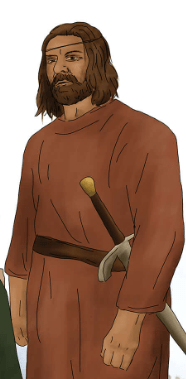
What is gladius?
200
This is the tense of the verb in the sentence tandem in flūmen saluimus.
What is perfect?
300
Magister's favorite verb stem is this two-letter perfect stem for sum, esse.
What is fu-?
300
First- and second-declension nouns have the same endings as each other in these two case-and-number combinations.
What are dative and ablative plural?
300
Iam, semper, nimium and intente have this in common.
What is they are all adverbs?
300
Translating an infinitive requires this two-letter word.
What is to [verb]?
300
The common root in senator and senex refers to this.
What is old age?
300
This Latin verb is what Aucissa, Catia's sister in blue, is doing in this picture. Remember, it's her doing it.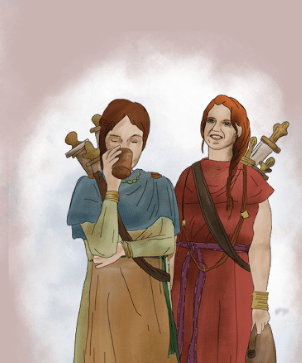
What is bibit?
300
This is why Indus had a tough time making it to the opposite bank of the river.
What is his gear was too heavy?
400
The perfect tense ending for tu has this unique quality.
What is it doesn't end in S?
400
This is the standard nominative singular ending for the third declension.
What is there isn't one?
(That's what the ∅ symbol means.)
400
These are the Latin forms for when something happens to is, ea, or id.
What are eum, eam, and id?
[Id is neuter, so its nominative and accusative are the same.)
400
Give me the words we use to translate the dative case in English.
Hint: there aren't eight of them.
What are to and for?
400
Of possum, volo, nolo and habeo, this is the only one that cannot trigger an infinitive—at least, not in Classical Latin.
What is habeo?
400
Name the Latin term for the Romans in this picture. Remember: there's more than one.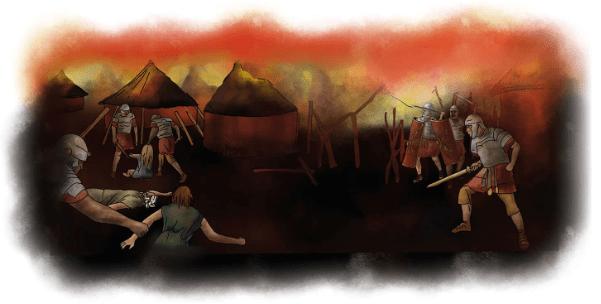
What are milites?
400
Against its own definition, this adverb is in the sentence Vix ad rīpam ulteriōrem natāre poteram.
What is vix?
500
Aside from was/were verbing, used to verb, began to verb, and sometimes just verbed/did verb, the imperfect tense can be translated as this.
What is would verb?
500
Neuter nouns have the same endings in these two cases.
What are the nominative and accusative?
500
Name the one case where we and y’all are different by more than one letter.
What is genitive?
nostrum vs. vestrum
500
If you don't see a nominative noun in a Latin sentence, try looking here for the subject.
What is in the verb?
500
The Latin question word quem is asking for this role.
What is direct object?
[That's what "whom" is asking for, as in "whom did you hit with the car again?"]
500
This Latin verb is what Faustus and Lucrio are doing in this picture. Make sure to get the ending right!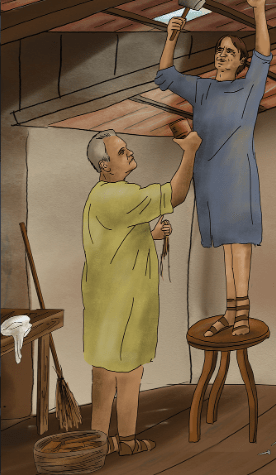
What is laborant?
500
While escaping, Indus, Gisco and Catia used this time to sleep.
What is during the day?
600
Ending your verb form with this allows you to command a group of people.
What is -te?
600
Be truthful: this is the Latin for to the liars.
What is mendacibus?
600
This is the only undeclinable noun we've learned.
What is nihil?
600
The present stem of a verb, which you use to make the imperfect tense, is also used for this form of the verb.
What is the imperative?
600
Famously, in is the first preposition we learned that can be either ablative or accusative. Name the other two.
Hint: they're opposites of each other.
What are sub and super?
600
Collectively, the Britons listening to, and responding to, Boudica would be referred to by this Latin term.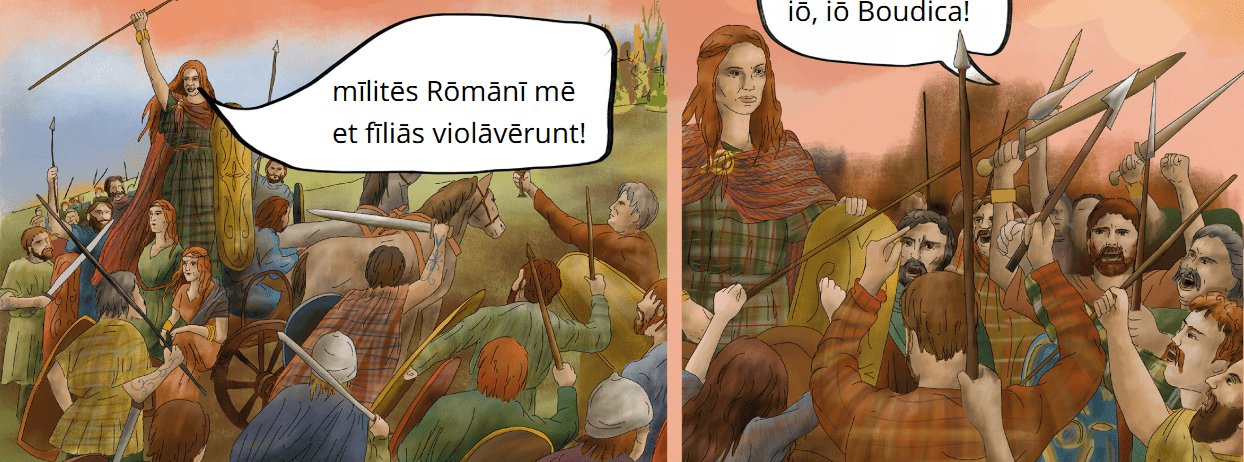
What are copiae?
600
This is the indirect object in the sentence posteā difficile erat nōbīs iter facere.
What is nōbīs?