Renal
Fluids and Acid/base
Pharm
Rando
Review
100
These are the indications for urgent dialysis
●Acidosis
●Electrolyte abnormalities
●Intoxicants
●Overload (fluid)
●Uremia
100
This much Na is in LR?
130
100
These three HTN medication classes should be held pre-operatively to avoid hypotension
Ace, arbs, Diuretics
100
This is the mechanism of action of Urokinase, Reteplase, and Strepokinase
Converts plasminogen to plasmin which degrades fibrin
100
Patients with prolonged MA time on TEG need this.
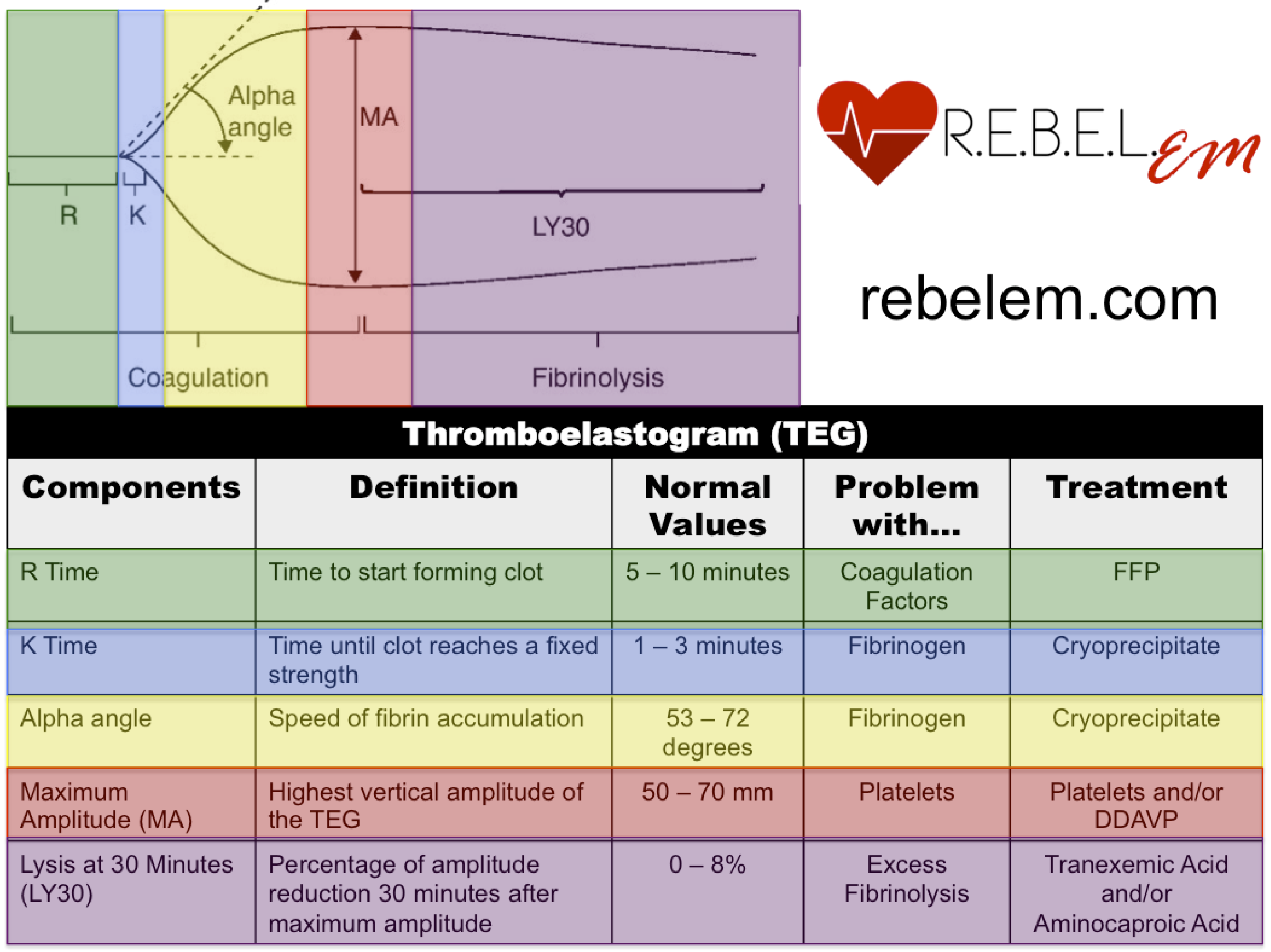
200
A FeNa greater than this is concerning for intra-renal pathology

200
This is the free water deficit for a 70kg M with a Na of 160
Male = FWD = W x 0.6 (current na -140/140) - so 6L for him
Female is the same but 0.5.
200
This is medication is given to reverse an oral direct thrombin inhibitor
Idarucizumab
200
These, from both the donor and the recipient, mediate febrile transfusion reactions
Febrile transfusion reactions are mediated by circulating cyotkines to donor blood as well as cytokines from donor leukocytes within stored donor blood
200
Dependence on this substance can cause hypomagnesium
ETOH – direct renal wasting by impairing the tubules in the kidneys and suppression of ADH/Vasopressin which increases over urine volumes and flushes minerals out. Additionally, inflammation of the GI tract with ETOH causes decreased nutrient absorption, increased gut motility.
300
A woman with ESRD on peritoneal dialysis presents to the clinic complaining of severe pain and bruising to her right leg. On examination, there is a 5-cm dark brown area that is hardened and tender to palpation. What is this presentation most concerning for?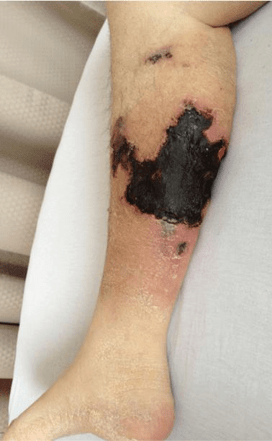
Calciphylaxis
Patients with chronic renal failure are at high risk for the development of calciphylaxis due to elevated phosphate levels, causing high calcium-phosphate products.
300
This is how much fluid it would take to replete the intravascular circulating volume of a patient that lost 500ml of blood
Three-quarters of the crystalloid given will distribute to the interstitial space and one-quarter to the intravascular space.
-So answer is 2 L
ie. If you give 1 L of fluid, 250 ml will remain circulating and 750ml will be distributed to the interstitial space.
300
This opioid should be avoided/used with caution in patients with renal failure
Morphine
300
A 32 yr M is referred to clinic after routine labs showed Ca of 10.9. He is asymptomatic. Exam, including neck, is unremarkable. His PTH is normal. There is no obvious explanation for his hypercalcemia. What is the next most appropriate test to work this up?
A. Ionized Ca
B. Serum albumin
C. Urine Studies
D. Sestamibi Scan
E. Neck US
Urine studies.
- The two most common cause of hypercalcemia are primary hyperparathyroidism and malignancy. Malignancy tends to have more elevated Ca and more symptomatic. Initial goal is too differentiate PTH mediated hyperCa (primary Hyper or familial hyperparathyroidism syndrome) from non-PTH mediated. (FHH, Vit d tox, Malignancy etc)
300
This is how PTH effects Ca and Phos levels in the kidney.
(Mechanism and increase or decrease)
●It activates bone osteoclasts and releases calcium from the bone matrix.
●It stimulates proximal nephron tubules to absorb calcium and excretes phosphate.
●It results in increased calcium absorption in the gut
400
What is the first line treatment for lithium induced nephrogenic DI for patients that cannot discontinue lithium ?
Lithium can damage the collecting ducts response to ADH, if they cannot dc the lithium Amiloride blocks lithium uptake into the renal cells
400
This fluid can cause non-anion gap metabolic acidosis due to bicarbonate dilutional and its high chloride content binding H ions
The association between NS and non–anion gap metabolic acidosis is due to bicarbonate dilution and its high chloride content binding with hydrogen ions and forming hydrochloric acid.
400
This IV form of this central nervous system depressant is contraindicated in patients with renal disease due to the polyethylene glycol excipient
●Robaxin
●- The intravenous formulation of methocarbamol is contraindicated in renal impairment due to the presence of polyethylene glycol. The oral methocarbamol should be cautiously used for patients with mild to moderate renal impairment. Healthcare providers should be cautious when giving methocarbamol to patients who are undergoing dialysis
400
A 16 yo M s/ Burkitt Lymphoma is admitted and started on induction chemotherapy. Initial Labs are normal. 2 days later, his Cr is 2.5 and his K is 6.5. What additional electrolyte laboratory abnormality would be expected in this patient and why?
-
-Hypocalcemia – due to tumor lysis syndrome. Massive tumor cell death leads to lysis of the tumor cells and release of intracellular contents K, Ph and nucleic acids as well as metabolic byproducts and you see rapid development of hyperkalemia, hyperphosphatemia, hyperuricemia. The hyperphosphatemia cause Ca to precipitate as calcium-phosphate leading to hypocalcemia.
400
You are performing a complex reoperation, and there is extensive blood loss. The patient’s hemoglobin (g/dL)/hematocrit (%) levels drop from 9.5 /27.2 preoperatively to 7.0/21.0. While transfusing 2 units of RBCs, the patient becomes hypotensive (BP 60/44 mm Hg) and requires more IV fluid and vasopressors. The IV sites begin to bleed, and there is diffuse bleeding in the operative field. What is the immediate best next step?
A. Stop Fluids to avoid diluting the Hgb levels
B. Stop blood transfusion and abort operation
C. Continue transfusion and give diphenhydramine
D. Continue the transfusion and give IM epinephrine
E. Stop the transfusion and administer epinephrine
E.
Transfusion reactions in the OR can manifest as diffuse bleeding and hypotension not responsive to fluid/vasopressor therapy. In this scenario, the patient received blood products and started having diffuse bleeding from IV sites. Transfusion reaction should always be in the differential diagnosis. The immediate treatment of a life-threatening transfusion reaction is to stop the transfusion and give epinephrine. Diphenhydramine (Benadryl) is used for mild transfusion reactions only.
500
A 52-year-old woman is found to have a corrected serum calcium level of 11.8 mg/dL on routine laboratory testing. She is asymptomatic. Her parathyroid hormone level is elevated. She has no history of malignancy. A 24-hour urine calcium collection shows markedly low calcium excretion. What is the most likely diagnosis?
Familial hypocalciuric hypercalcemia (FHH): AD mutation in the calcium-sensing receptor, leading to increased renal retention of calcium and magnesium. Presents with mild hypercalcemia, elevated or inappropriately normal parathyroid hormone, and characteristically low urinary calcium excretion. This diagnosis is critical to distinguish from primary hyperparathyroidism, because FHH does not require parathyroidectomy.
Primary hyperparathyroidism typically shows elevated urinary calcium and elevated PTH.
Hypercalcemia of malignancy usually presents with suppressed PTH because the elevated calcium is driven by malignancy-related mechanisms such as PTHrP,
500
A 62-year-old patient is admitted with worsening abdominal pain, fever, and hypotension. Initial lab results demonstrate the following. What is the most likely cause of this patient's acidosis?
pH of 7.20; WBC 17,200; Na 134; K 3.9 ; Cl 92 ; HCO3 14 ; glucose 105 ; Cr 0.6
A.Lactic Acidosis
B.Diarrhea
C.Respiratory Failure
D.Renal tubular acidosis
E.Diabetic ketoacidosis
A.
This patient has a metabolic acidosis with an elevated anion gap. Causes of anion gap metabolic acidosis include methanol, uremia, diabetic ketoacidosis, paraldehyde, isoniazid, lactic acidosis, ethylene glycol, and salicylates (MUDPILES) Based on the patient's presentation with sepsis and abdominal pain, elevated lactic acid is the most likely cause. Although this patient has an anion gap acidosis, their blood glucose level is normal, making diabetic ketoacidosis an unlikely diagnosis. Diarrhea and renal tubular acidosis cause a non-anion gap metabolic acidosis, and this patient's anion gap is elevated. The patient has a primary metabolic acidosis, not respiratory failure.
500
Stress dose steroids are not indicated if a patient is taking this dose equivalent for this length of time
5mg daily for less than 3 weeks.
500
1-131 Metaiodobenzylguaine Radiation Therapy is FDA-approved to treat this type of neoplasm
Pheochromocytoma.