WEATHERING, EROSION & DEPOSITION
CONSTRUCTIVE OR DESTRUCTIVE?
LANDFORMS & EARTH'S CHANGING SURFACE
TECHNOLOGY & NATURAL DISASTERS
Mixed Earth Science
100
A student leaves a rock outside. After several months, they notice that the rock has developed cracks, but the pieces have not moved anywhere.
What process is most directly occurring?
Weathering
100
A volcano erupts and lava cools, adding new rock to Earth's surface.
Is this constructive or destructive?
Constructive
100
 Scientists are studying an area where they find a large crack in Earth's lithosphere. Measurements show that the rocks on opposite sides of the crack have moved because of the movement of tectonic plates.
What is this feature called, and what natural event could occur when the rocks suddenly move along it?
A fault; an earthquake could occur.
100
Scientists use images taken from space to observe changing weather patterns.
What type of technology from this unit could provide this information?
Satellite/infrared imagery
100
 A student finds a rock with a crack in it. Water enters the crack, freezes, expands, and makes the crack larger.
Is this chemical weathering or mechanical weathering? Explain your answer.
Mechanical weathering. The rock is physically broken into smaller pieces, but its chemical composition does not change.
200
A river carries small pieces of rock downstream. Eventually, the river slows down and the pieces settle onto the river bottom.
What process caused the sediment to settle?
Deposition
200
A landslide removes soil and rock from the side of a mountain.
Is this primarily constructive or destructive?
Destructive
200
A mountain has a deep, narrow opening carved into its rock by moving water over a very long period.
Which process most likely helped create the feature?
Erosion
200
A city wants to determine which neighborhoods are most vulnerable to flooding and which routes could help residents reach safety.
What technology would be especially useful?
GIS
200
 A statue made of limestone has been exposed to acidic rain for many years. The acid reacts with the minerals in the rock and changes the material.
What type of weathering is occurring?
Chemical weathering
300
A cliff becomes smaller over many years as wind carries tiny pieces of rock away.
Which process is most responsible for the cliff becoming smaller?
Erosion
300
A process breaks down material in one location, but the material is later deposited somewhere else and builds up a new landform.
Why might this process be considered both constructive and destructive?
It can destroy/wear away material in one place and build up/deposit material somewhere else.
300
Scientists find the same type of fossil on two continents that are now thousands of miles apart.
Which idea from this unit could help explain how this is possible?
Continental drift/Pangaea
300
Scientists notice that a volcano is experiencing more frequent earthquakes beneath it.
**Why could this information be important?
Increased seismic activity can be an indicator of volcanic activity and help scientists monitor the volcano.
300
"Seismic Events" are most closely related to what natural disaster?
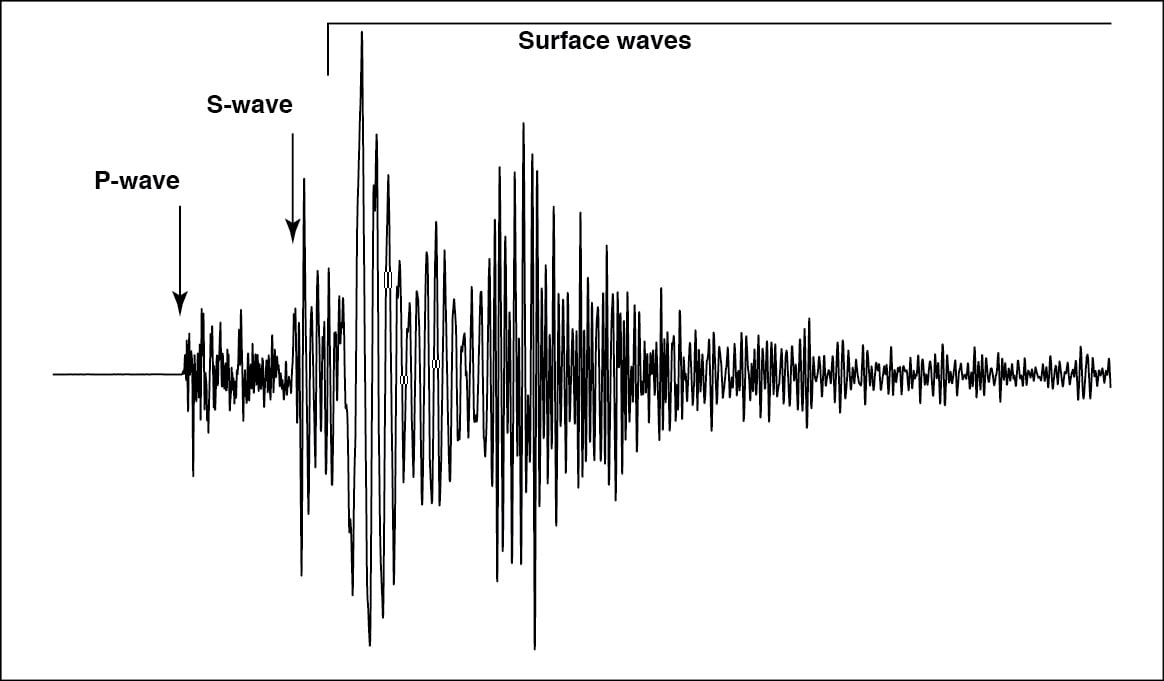
Earthquakes
400
Two students make these observations:
- Location A: Rocks break into smaller pieces but remain in the same location.
- Location B: Small pieces of rock are carried away by moving water.
Which student correctly describes the processes?
A. A = erosion; B = weathering
B. A = weathering; B = erosion
C. A = deposition; B = weathering
D. A = deposition; B = erosion
B. A = weathering; B = erosion
400
A student says:
"Volcanoes are always destructive because eruptions can destroy things."
What is the BEST response?
A. Correct, because anything involving lava is destructive.
B. Incorrect, because volcanic activity can also create new land.
C. Correct, because volcanoes only change land temporarily.
D. Incorrect, because volcanoes do not change Earth's surface.
B. Incorrect, because volcanic activity can also create new land.
400
A student claims that tectonic plates only cause destructive changes to Earth's surface.
Which observation would BEST challenge the claim?
A. A plate movement causes an earthquake.
B. A plate movement causes a landslide.
C. Tectonic activity contributes to mountain building.
D. Tectonic activity causes rocks to crack.
C. Tectonic activity contributes to mountain building.
400
A community wants to reduce the effects of waves along its shoreline.
Which would be the BEST type of solution?
A. GIS map
B. Satellite image
C. Seismological study
D. Engineering structure such as a seawall
D. Engineering structure such as a seawall
400
A coastal town notices that waves are gradually carrying sand away from its beach. The town wants to reduce the amount of beach erosion. Which solution would BEST help?
A. Build a jetty
B. Build a seismograph
C. Use GIS to locate earthquakes
D. Use satellite images to track clouds
A. Build a jetty
500
A river enters a large, slow-moving body of water. The river suddenly loses some of its ability to carry sediment. Over many years, sediment builds outward into the body of water.
What process is occurring, and what landform could eventually form?
Deposition; a delta.
500
A coastal area loses sand from one location because of waves. The same sediment is later carried somewhere else and builds up a sandbar.
**Explain how BOTH destructive and constructive processes are involved.
Use the words erosion and deposition in your explanation
Erosion removes/carries away sediment, while deposition builds it up in another location.
500
A scientist studies an area where two plates interact. The evidence shows that one plate is moving beneath another.
**Predict TWO geological events or changes that could be associated with this type of plate interaction.
Answers may include earthquakes, volcanic activity, mountain building, etc.
500
A hurricane is approaching a coastal community.
Scientists cannot stop the hurricane. However, they use technology to track its movement and predict its path.
**Explain TWO ways this information could reduce the disaster's impact on people.
It can provide warnings, allow people to prepare or evacuate, help officials make decisions, etc.
500
A hurricane eroded a beach in North Carolina. Residents want to rebuild their beach so they have a buffer between the town and the next storm. What is the best solution to restore the beaches?
Beach reclamation