Asexual Reproduction
Genetic Variation
Meiosis
Asexual vs Sexual Reproduction
Identify
100
Separation of a parent cell into two or more cells of about equal size
Binary Fission
100
Random distribution of pairs of genes on different chromosomes of the gametes
Independent assortment
100
Homologous chromosomes line up at the equator
Metaphase I
100
Name a disadvantage of asexual reproduction
Lack of genetic diversity
100
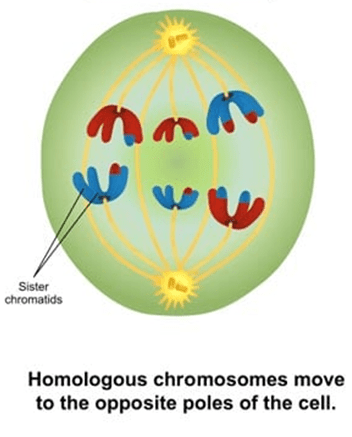
Anaphase I
200
Body breaks into pieces which grow into complete adults
Fragmentation
200
What is the result of meiosis in terms of the number of daughter cells produced?
4 haploid cells
200
Cytoplasm forming two diploid cells
Telophase I
200
Asexual or Sexual:
Half of the parents' genetic information is passed onto the offspring
Sexual
200
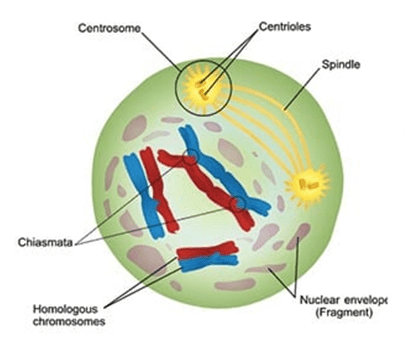
Prophase I
300
Define asexual reproduction
generates offspring that are genetically identical to a single parent
300
What happens during crossing over in meiosis?
Genetic information/material are exchanged between homologous chromosomes.
300
Chromosomes split at the centromere. Chromatids move to opposite poles
Anaphase II
300
Asexual or Sexual:
creates a clone
Asexual
300
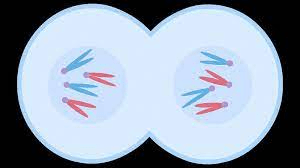
After Telophase I and II (Meiosis)
Cytokinesis
400
New individuals split off from existing ones
Budding
400
What process produces gametes in males? How many usable cells result?
Spermatogenesis
FOUR usable cells
400
A new spindle forms around the chromosomes
Prophase II
400
What process happens when one gamete from each parent meet and fuse to form a zygote?
Fertilization
400
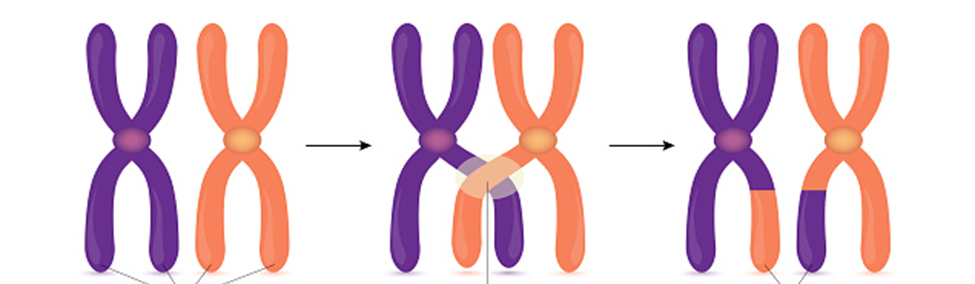
Name the process depicted above.
Crossing over
500
Name all 3 advantages of asexual reproduction
Faster
Produces more offspring at one time
Does not require a mate
500
Name the process that produces gametes in females. What is the result of this process?
Oogenesis
ONE usable cell + 3 polar bodies
500
Chromosomes lines up at the equator
Metaphase II
500
Name all 3 disadvantages of sexual reproduction
Longer
Produces less offspring at one time
Needs a mate
500
What is formed at the end of Meiosis II?
Four haploid cells