Population & Development
India
China
Ethiopia
Nigeria
100
What does the fertility rate measure?
The average number of children per woman.
100
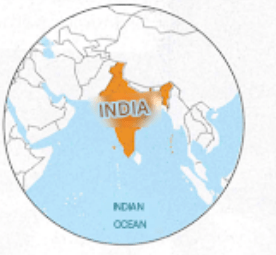 According to the 2023 figures in our case study, approximately how many people lived in India: 140 million, 1.4 billion or 14 billion?
About 1.4 billion people.
100
Which part of China is generally the wealthiest and most urbanised: the coast or the far west?
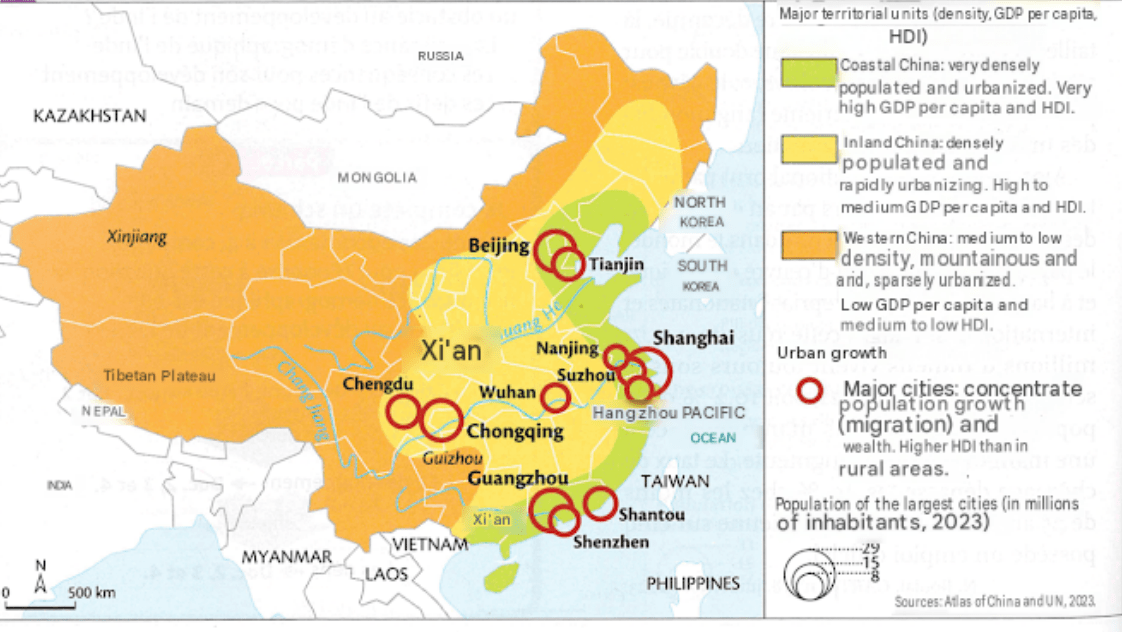 Coastal China.
100
In which part of Africa is Ethiopia located: east or west?
East Africa.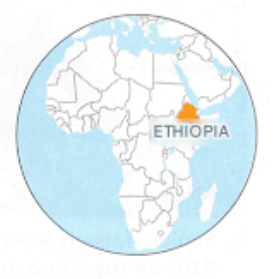
100
Which natural resource brings Nigeria major wealth in the case study?
Oil (petroleum).
200
What is rural exodus?
The movement of people from the countryside to towns and cities.
200
What inequality does the Indian literacy data show?
A higher proportion of men can read and write than women: a gap of 16 percentage points. men 82%, women 66%?
200
What does an ageing population mean?
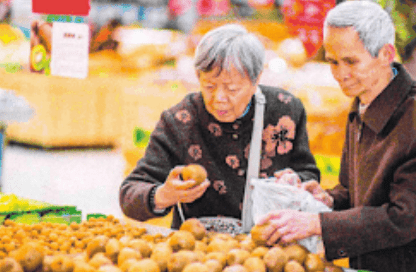 Older people make up an increasing share of the population.
200
Name the two causes of the severe food crisis affecting refugees from Tigray shown in the case study.
Civil war and drought.
200
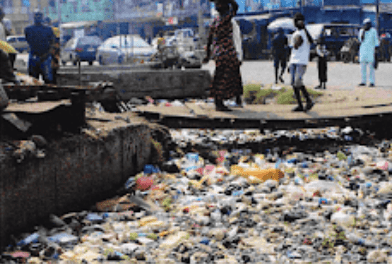 What percentage of waste is not collected in Lagos?
60%.
300
Why can rapid population growth lead to the expansion of slums?
The need for housing grows faster than suitable housing and services can be provided, so some people settle in poorly equipped informal neighbourhoods.
300
How can population growth help Indian businesses?
It creates more customers and demand for goods and services; it also provides a larger workforce.
300
The case-study projection for China in 2050 shows a birth rate of 6.1 per thousand and a death rate of 13.2 per thousand. What would happen to population size from births and deaths alone? Explain.
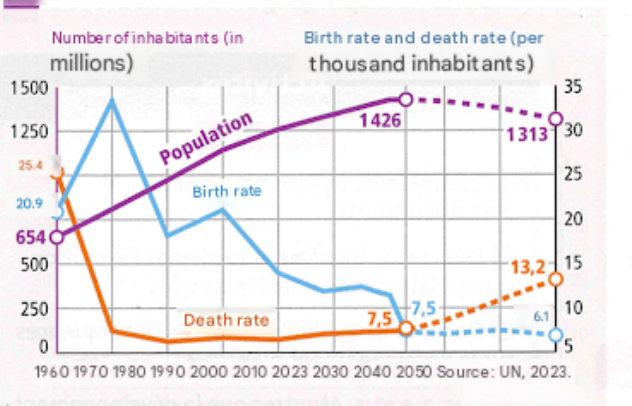 It would decrease because deaths would outnumber births.
300
The case study says 42% of Ethiopians are under 15. Give two services this young population needs.
Schools/teachers and healthcare for children. Also accept suitable food provision or clean drinking water.
300
How can rapid growth in Lagos make its waste problem worse?
More people produce more waste. If collection services do not expand fast enough, rubbish accumulates and pollution increases.
400
What does equitable and sustainable development aim to achieve? Give both parts.
Equitable: improve living conditions and reduce inequalities so everyone benefits. Sustainable: meet needs while protecting resources and the environment for future generations.
400
Why can a growing workforce be a challenge for India as well as an advantage?
More workers can help businesses, but enough jobs must be created. If jobs do not grow as quickly as the workforce, many people remain unemployed or in poverty.
400
Why can a national average income give a misleading picture of life in China?
It hides inequalities: urban incomes are much higher than rural incomes, and wealth is unevenly distributed between people and regions.
400
How can Ethiopia's population grow rapidly while its birth rate is falling? Use the gap between births and deaths.
The death rate has fallen greatly and is much lower than the birth rate. Births still greatly outnumber deaths, so the population continues to grow rapidly.
400
20 million Nigerian children out of school, 60% of them girls. What inequality does this show, and why can it harm future development?
Girls are more affected than boys. Missing education limits literacy, skills and future job opportunities, making poverty and inequality harder to reduce.
500
Why might a country with rapid population growth and a country with an ageing population need to spend money differently? Give one priority for each and explain.
Rapid growth, especially with many children, increases demand for schools and teachers (also accept housing or basic services with explanation). Ageing increases demand for healthcare, care for older people and pensions. Priorities differ because the populations have different needs.
500
Explain why India's economic growth does not mean everyone enjoys good living conditions. Use two examples.
Wealth and opportunities are unevenly shared. For example, some people still live in slums or lack toilets, while unemployment and poverty remain high. Also accept unequal literacy between men and women or inequalities between regions, linked to unequal access to development.
500
Why could population ageing be especially difficult for people in rural China? Link two facts from the case study.
Ageing increases the need for medical care and support, but rural medical services are scarce and rural incomes are lower. Older rural residents may therefore struggle to obtain or pay for the care they need.
500
 A new playground has opened in Addis Ababa. Why is this not enough to prove that development benefits all Ethiopians? Use contrasting evidence.
It shows an improvement in one part of the capital, but elsewhere people face food insecurity, poverty, slum housing or displacement by war. One successful urban project does not show that all regions and social groups benefit equally.
500
Explain why Nigeria's oil wealth does not automatically lead to good living conditions for everyone. Give two reasons from the case study.
Wealth is distributed unequally, so wealthy communities coexist with slums and poverty. Insecurity, violence and oil theft also hinder development and make it harder to improve living conditions.