Defining Volume
Area
Calculating Volume
Solve
Random
100
Why do you think some species of grasses live in meadows and not in deserts? All organisms live where their needs are met. Ecosystems are composed of all the living and nonliving things that interact in an area. In this lesson, you will discover that there are similarities and differences among ecosystems.
Suppose you hike down into the Grand Canyon. At the top of the canyon, you notice many wildflowers and tall pine trees. The soil is damp from recent rain. You see many birds and squirrels. As you descend into the canyon, you pass through an area of shorter trees. Most of the plants in this environment are small bushes and cactuses. Lizards move over the dry soil. The air is hot and dry.
Each environment is part of the Grand Canyon ecosystem. An ecosystem is all the living and nonliving things that interact with each other in an area. For example, all the pine trees, wildflowers, birds, squirrels, soil, and air are part of the Grand Canyon ecosystem.
Recall that an organism is any living thing. Organisms must meet their needs in an ecosystem, or they cannot survive there. They must have enough food and water. They require a temperature that is neither too hot nor too cold. They need places for their young to grow. Plants require enough sunlight to make food to stay alive. The living things depend on each other to survive. For example, in a forest ecosystem, a woodpecker might eat insects living in the bark of a tree. It might also build a nest in that tree. The woodpecker, insects, and tree all interact in a forest ecosystem.
Air, water, and sunlight are nonliving things. Organisms depend on nonliving parts of their ecosystem for survival. For example, some trees need strong light and a lot of water to survive. They must live in moist, sunny ecosystems.
Have you heard of the Amazon rainforest? It is a large, tropical rainforest surrounding the Amazon River of South America and the rivers that feed into it. Many organisms live there, like monkeys, large snakes, and brightly colored birds. Why do these animals not live everywhere?
Many of these animals can only meet their needs in this rainforest ecosystem. Other ecosystems might not have enough food, water, or heat. Likewise, plants and animals from a desert ecosystem could not meet their needs in the Amazon rainforest ecosystem. The rainforest would be too wet for those organisms.
HAHAHA DID YOU ACTUALLY READ THAT ALL LOL
100
Defining Volume
Area
Calculating Volume
Solve
Random
100
100
100
100
100
Continue ESC
Defining Volume for 100
Reveal Correct Response Spacebar
Why do you think some species of grasses live in meadows and not in deserts? All organisms live where their needs are met. Ecosystems are composed of all the living and nonliving things that interact in an area. In this lesson, you will discover that there are similarities and differences among ecosystems.
Suppose you hike down into the Grand Canyon. At the top of the canyon, you notice many wildflowers and tall pine trees. The soil is damp from recent rain. You see many birds and squirrels. As you descend into the canyon, you pass through an area of shorter trees. Most of the plants in this environment are small bushes and cactuses. Lizards move over the dry soil. The air is hot and dry.
Each environment is part of the Grand Canyon ecosystem. An ecosystem is all the living and nonliving things that interact with each other in an area. For example, all the pine trees, wildflowers, birds, squirrels, soil, and air are part of the Grand Canyon ecosystem.
Recall that an organism is any living thing. Organisms must meet their needs in an ecosystem, or they cannot survive there. They must have enough food and water. They require a temperature that is neither too hot nor too cold. They need places for their young to grow. Plants require enough sunlight to make food to stay alive. The living things depend on each other to survive. For example, in a forest ecosystem, a woodpecker might eat insects living in the bark of a tree. It might also build a nest in that tree. The woodpecker, insects, and tree all interact in a forest ecosystem.
Air, water, and sunlight are nonliving things. Organisms depend on nonliving parts of their ecosystem for survival. For example, some trees need strong light and a lot of water to survive. They must live in moist, sunny ecosystems.
Have you heard of the Amazon rainforest? It is a large, tropical rainforest surrounding the Amazon River of South America and the rivers that feed into it. Many organisms live there, like monkeys, large snakes, and brightly colored birds. Why do these animals not live everywhere?
Many of these animals can only meet their needs in this rainforest ecosystem. Other ecosystems might not have enough food, water, or heat. Likewise, plants and animals from a desert ecosystem could not meet their needs in the Amazon rainforest ecosystem. The rainforest would be too wet for those organisms.
M
E
N
U
Team 1
600
+ -
Team 2
0
+ -
Team 3
0
+ -
Team 4
0
+ -
Team 5
0
+ -
Team 6
0
+ -
Team 7
0
+ -
Team 8
0
+ -
Team 9
0
+ -
100
100
100
100
100
100
100
100
100
100
100
100
100
100
100
100
100
100
100
100
100
100
100
100
100
100
100
100
100
100
100
100
100
Defining Volume
Area
Calculating Volume
Solve
Random
100
100
100
100
100
Continue ESC
Defining Volume for 100
Reveal Correct Response Spacebar
Why do you think some species of grasses live in meadows and not in deserts? All organisms live where their needs are met. Ecosystems are composed of all the living and nonliving things that interact in an area. In this lesson, you will discover that there are similarities and differences among ecosystems.
Suppose you hike down into the Grand Canyon. At the top of the canyon, you notice many wildflowers and tall pine trees. The soil is damp from recent rain. You see many birds and squirrels. As you descend into the canyon, you pass through an area of shorter trees. Most of the plants in this environment are small bushes and cactuses. Lizards move over the dry soil. The air is hot and dry.
Each environment is part of the Grand Canyon ecosystem. An ecosystem is all the living and nonliving things that interact with each other in an area. For example, all the pine trees, wildflowers, birds, squirrels, soil, and air are part of the Grand Canyon ecosystem.
Recall that an organism is any living thing. Organisms must meet their needs in an ecosystem, or they cannot survive there. They must have enough food and water. They require a temperature that is neither too hot nor too cold. They need places for their young to grow. Plants require enough sunlight to make food to stay alive. The living things depend on each other to survive. For example, in a forest ecosystem, a woodpecker might eat insects living in the bark of a tree. It might also build a nest in that tree. The woodpecker, insects, and tree all interact in a forest ecosystem.
Air, water, and sunlight are nonliving things. Organisms depend on nonliving parts of their ecosystem for survival. For example, some trees need strong light and a lot of water to survive. They must live in moist, sunny ecosystems.
Have you heard of the Amazon rainforest? It is a large, tropical rainforest surrounding the Amazon River of South America and the rivers that feed into it. Many organisms live there, like monkeys, large snakes, and brightly colored birds. Why do these animals not live everywhere?
Many of these animals can only meet their needs in this rainforest ecosystem. Other ecosystems might not have enough food, water, or heat. Likewise, plants and animals from a desert ecosystem could not meet their needs in the Amazon rainforest ecosystem. The rainforest would be too wet for those organisms.
M
E
N
U
Team 1
600
+ -
Team 2
0
+ -
Team 3
0
+ -
Team 4
0
+ -
Team 5
0
+ -
Team 6
0
+ -
Team 7
0
+ -
Team 8
0
+ -
Team 9
0
+ -
100
100
100
100
100
100
100
100
100
100
100
100
100
100
100
100
100
100
100
100
100
100
100
100
100
100
100
100
100
100
100
100
100
Defining Volume
Area
Calculating Volume
Solve
Random
100
100
100
100
100
Continue ESC
Defining Volume for 100
Reveal Correct Response Spacebar
Why do you think some species of grasses live in meadows and not in deserts? All organisms live where their needs are met. Ecosystems are composed of all the living and nonliving things that interact in an area. In this lesson, you will discover that there are similarities and differences among ecosystems.
Suppose you hike down into the Grand Canyon. At the top of the canyon, you notice many wildflowers and tall pine trees. The soil is damp from recent rain. You see many birds and squirrels. As you descend into the canyon, you pass through an area of shorter trees. Most of the plants in this environment are small bushes and cactuses. Lizards move over the dry soil. The air is hot and dry.
Each environment is part of the Grand Canyon ecosystem. An ecosystem is all the living and nonliving things that interact with each other in an area. For example, all the pine trees, wildflowers, birds, squirrels, soil, and air are part of the Grand Canyon ecosystem.
Recall that an organism is any living thing. Organisms must meet their needs in an ecosystem, or they cannot survive there. They must have enough food and water. They require a temperature that is neither too hot nor too cold. They need places for their young to grow. Plants require enough sunlight to make food to stay alive. The living things depend on each other to survive. For example, in a forest ecosystem, a woodpecker might eat insects living in the bark of a tree. It might also build a nest in that tree. The woodpecker, insects, and tree all interact in a forest ecosystem.
Air, water, and sunlight are nonliving things. Organisms depend on nonliving parts of their ecosystem for survival. For example, some trees need strong light and a lot of water to survive. They must live in moist, sunny ecosystems.
Have you heard of the Amazon rainforest? It is a large, tropical rainforest surrounding the Amazon River of South America and the rivers that feed into it. Many organisms live there, like monkeys, large snakes, and brightly colored birds. Why do these animals not live everywhere?
Many of these animals can only meet their needs in this rainforest ecosystem. Other ecosystems might not have enough food, water, or heat. Likewise, plants and animals from a desert ecosystem could not meet their needs in the Amazon rainforest ecosystem. The rainforest would be too wet for those organisms.
M
E
N
U
Team 1
600
+ -
Team 2
0
+ -
Team 3
0
+ -
Team 4
0
+ -
Team 5
0
+ -
Team 6
0
+ -
Team 7
0
+ -
Team 8
0
+ -
Team 9
0
+ -
100
100
100
100
100
100
100
100
100
100
100
100
100
100
100
100
100
100
100
100
100
100
100
100
100
100
100
100
100
100
100
100
100
Defining Volume
Area
Calculating Volume
Solve
Random
100
100
100
100
100
Continue ESC
Defining Volume for 100
Reveal Correct Response Spacebar
Why do you think some species of grasses live in meadows and not in deserts? All organisms live where their needs are met. Ecosystems are composed of all the living and nonliving things that interact in an area. In this lesson, you will discover that there are similarities and differences among ecosystems.
Suppose you hike down into the Grand Canyon. At the top of the canyon, you notice many wildflowers and tall pine trees. The soil is damp from recent rain. You see many birds and squirrels. As you descend into the canyon, you pass through an area of shorter trees. Most of the plants in this environment are small bushes and cactuses. Lizards move over the dry soil. The air is hot and dry.
Each environment is part of the Grand Canyon ecosystem. An ecosystem is all the living and nonliving things that interact with each other in an area. For example, all the pine trees, wildflowers, birds, squirrels, soil, and air are part of the Grand Canyon ecosystem.
Recall that an organism is any living thing. Organisms must meet their needs in an ecosystem, or they cannot survive there. They must have enough food and water. They require a temperature that is neither too hot nor too cold. They need places for their young to grow. Plants require enough sunlight to make food to stay alive. The living things depend on each other to survive. For example, in a forest ecosystem, a woodpecker might eat insects living in the bark of a tree. It might also build a nest in that tree. The woodpecker, insects, and tree all interact in a forest ecosystem.
Air, water, and sunlight are nonliving things. Organisms depend on nonliving parts of their ecosystem for survival. For example, some trees need strong light and a lot of water to survive. They must live in moist, sunny ecosystems.
Have you heard of the Amazon rainforest? It is a large, tropical rainforest surrounding the Amazon River of South America and the rivers that feed into it. Many organisms live there, like monkeys, large snakes, and brightly colored birds. Why do these animals not live everywhere?
Many of these animals can only meet their needs in this rainforest ecosystem. Other ecosystems might not have enough food, water, or heat. Likewise, plants and animals from a desert ecosystem could not meet their needs in the Amazon rainforest ecosystem. The rainforest would be too wet for those organisms.
M
E
N
U
Team 1
600
+ -
Team 2
0
+ -
Team 3
0
+ -
Team 4
0
+ -
Team 5
0
+ -
Team 6
0
+ -
Team 7
0
+ -
Team 8
0
+ -
Team 9
0
+ -
100
100
100
100
100
100
100
100
100
100
100
100
100
100
100
100
100
100
100
100
100
100
100
100
100
100
100
100
100
100
100
100
100
Defining Volume
Area
Calculating Volume
Solve
Random
100
100
100
100
100
Continue ESC
Defining Volume for 100
Reveal Correct Response Spacebar
Why do you think some species of grasses live in meadows and not in deserts? All organisms live where their needs are met. Ecosystems are composed of all the living and nonliving things that interact in an area. In this lesson, you will discover that there are similarities and differences among ecosystems.
Suppose you hike down into the Grand Canyon. At the top of the canyon, you notice many wildflowers and tall pine trees. The soil is damp from recent rain. You see many birds and squirrels. As you descend into the canyon, you pass through an area of shorter trees. Most of the plants in this environment are small bushes and cactuses. Lizards move over the dry soil. The air is hot and dry.
Each environment is part of the Grand Canyon ecosystem. An ecosystem is all the living and nonliving things that interact with each other in an area. For example, all the pine trees, wildflowers, birds, squirrels, soil, and air are part of the Grand Canyon ecosystem.
Recall that an organism is any living thing. Organisms must meet their needs in an ecosystem, or they cannot survive there. They must have enough food and water. They require a temperature that is neither too hot nor too cold. They need places for their young to grow. Plants require enough sunlight to make food to stay alive. The living things depend on each other to survive. For example, in a forest ecosystem, a woodpecker might eat insects living in the bark of a tree. It might also build a nest in that tree. The woodpecker, insects, and tree all interact in a forest ecosystem.
Air, water, and sunlight are nonliving things. Organisms depend on nonliving parts of their ecosystem for survival. For example, some trees need strong light and a lot of water to survive. They must live in moist, sunny ecosystems.
Have you heard of the Amazon rainforest? It is a large, tropical rainforest surrounding the Amazon River of South America and the rivers that feed into it. Many organisms live there, like monkeys, large snakes, and brightly colored birds. Why do these animals not live everywhere?
Many of these animals can only meet their needs in this rainforest ecosystem. Other ecosystems might not have enough food, water, or heat. Likewise, plants and animals from a desert ecosystem could not meet their needs in the Amazon rainforest ecosystem. The rainforest would be too wet for those organisms.
M
E
N
U
Team 1
600
+ -
Team 2
0
+ -
Team 3
0
+ -
Team 4
0
+ -
Team 5
0
+ -
Team 6
0
+ -
Team 7
0
+ -
Team 8
0
+ -
Team 9
0
+ -
100
100
100
100
100
100
100
100
100
100
100
100
100
100
100
100
100
100
100
100
100
100
100
100
100
100
100
100
100
100
100
100
100
Defining Volume
Area
Calculating Volume
Solve
Random
100
100
100
100
100
Continue ESC
Defining Volume for 100
Reveal Correct Response Spacebar
Why do you think some species of grasses live in meadows and not in deserts? All organisms live where their needs are met. Ecosystems are composed of all the living and nonliving things that interact in an area. In this lesson, you will discover that there are similarities and differences among ecosystems.
Suppose you hike down into the Grand Canyon. At the top of the canyon, you notice many wildflowers and tall pine trees. The soil is damp from recent rain. You see many birds and squirrels. As you descend into the canyon, you pass through an area of shorter trees. Most of the plants in this environment are small bushes and cactuses. Lizards move over the dry soil. The air is hot and dry.
Each environment is part of the Grand Canyon ecosystem. An ecosystem is all the living and nonliving things that interact with each other in an area. For example, all the pine trees, wildflowers, birds, squirrels, soil, and air are part of the Grand Canyon ecosystem.
Recall that an organism is any living thing. Organisms must meet their needs in an ecosystem, or they cannot survive there. They must have enough food and water. They require a temperature that is neither too hot nor too cold. They need places for their young to grow. Plants require enough sunlight to make food to stay alive. The living things depend on each other to survive. For example, in a forest ecosystem, a woodpecker might eat insects living in the bark of a tree. It might also build a nest in that tree. The woodpecker, insects, and tree all interact in a forest ecosystem.
Air, water, and sunlight are nonliving things. Organisms depend on nonliving parts of their ecosystem for survival. For example, some trees need strong light and a lot of water to survive. They must live in moist, sunny ecosystems.
Have you heard of the Amazon rainforest? It is a large, tropical rainforest surrounding the Amazon River of South America and the rivers that feed into it. Many organisms live there, like monkeys, large snakes, and brightly colored birds. Why do these animals not live everywhere?
Many of these animals can only meet their needs in this rainforest ecosystem. Other ecosystems might not have enough food, water, or heat. Likewise, plants and animals from a desert ecosystem could not meet their needs in the Amazon rainforest ecosystem. The rainforest would be too wet for those organisms.
M
E
N
U
Team 1
600
+ -
Team 2
0
+ -
Team 3
0
+ -
Team 4
0
+ -
Team 5
0
+ -
Team 6
0
+ -
Team 7
0
+ -
Team 8
0
+ -
Team 9
0
+ -
100
100
100
100
100
100
100
100
100
100
100
100
100
100
100
100
100
100
100
100
100
100
100
100
100
100
100
100
100
100
100
100
100
Defining Volume
Area
Calculating Volume
Solve
Random
100
100
100
100
100
Continue ESC
Defining Volume for 100
Reveal Correct Response Spacebar
Why do you think some species of grasses live in meadows and not in deserts? All organisms live where their needs are met. Ecosystems are composed of all the living and nonliving things that interact in an area. In this lesson, you will discover that there are similarities and differences among ecosystems.
Suppose you hike down into the Grand Canyon. At the top of the canyon, you notice many wildflowers and tall pine trees. The soil is damp from recent rain. You see many birds and squirrels. As you descend into the canyon, you pass through an area of shorter trees. Most of the plants in this environment are small bushes and cactuses. Lizards move over the dry soil. The air is hot and dry.
Each environment is part of the Grand Canyon ecosystem. An ecosystem is all the living and nonliving things that interact with each other in an area. For example, all the pine trees, wildflowers, birds, squirrels, soil, and air are part of the Grand Canyon ecosystem.
Recall that an organism is any living thing. Organisms must meet their needs in an ecosystem, or they cannot survive there. They must have enough food and water. They require a temperature that is neither too hot nor too cold. They need places for their young to grow. Plants require enough sunlight to make food to stay alive. The living things depend on each other to survive. For example, in a forest ecosystem, a woodpecker might eat insects living in the bark of a tree. It might also build a nest in that tree. The woodpecker, insects, and tree all interact in a forest ecosystem.
Air, water, and sunlight are nonliving things. Organisms depend on nonliving parts of their ecosystem for survival. For example, some trees need strong light and a lot of water to survive. They must live in moist, sunny ecosystems.
Have you heard of the Amazon rainforest? It is a large, tropical rainforest surrounding the Amazon River of South America and the rivers that feed into it. Many organisms live there, like monkeys, large snakes, and brightly colored birds. Why do these animals not live everywhere?
Many of these animals can only meet their needs in this rainforest ecosystem. Other ecosystems might not have enough food, water, or heat. Likewise, plants and animals from a desert ecosystem could not meet their needs in the Amazon rainforest ecosystem. The rainforest would be too wet for those organisms.
M
E
N
U
Team 1
600
+ -
Team 2
0
+ -
Team 3
0
+ -
Team 4
0
+ -
Team 5
0
+ -
Team 6
0
+ -
Team 7
0
+ -
Team 8
0
+ -
Team 9
0
+ -
100
100
100
100
100
100
100
100
100
100
100
100
100
100
100
100
100
100
100
100
100
100
100
100
100
100
100
100
100
100
100
100
100
Defining Volume
Area
Calculating Volume
Solve
Random
100
100
100
100
100
Continue ESC
Defining Volume for 100
Reveal Correct Response Spacebar
Why do you think some species of grasses live in meadows and not in deserts? All organisms live where their needs are met. Ecosystems are composed of all the living and nonliving things that interact in an area. In this lesson, you will discover that there are similarities and differences among ecosystems.
Suppose you hike down into the Grand Canyon. At the top of the canyon, you notice many wildflowers and tall pine trees. The soil is damp from recent rain. You see many birds and squirrels. As you descend into the canyon, you pass through an area of shorter trees. Most of the plants in this environment are small bushes and cactuses. Lizards move over the dry soil. The air is hot and dry.
Each environment is part of the Grand Canyon ecosystem. An ecosystem is all the living and nonliving things that interact with each other in an area. For example, all the pine trees, wildflowers, birds, squirrels, soil, and air are part of the Grand Canyon ecosystem.
Recall that an organism is any living thing. Organisms must meet their needs in an ecosystem, or they cannot survive there. They must have enough food and water. They require a temperature that is neither too hot nor too cold. They need places for their young to grow. Plants require enough sunlight to make food to stay alive. The living things depend on each other to survive. For example, in a forest ecosystem, a woodpecker might eat insects living in the bark of a tree. It might also build a nest in that tree. The woodpecker, insects, and tree all interact in a forest ecosystem.
Air, water, and sunlight are nonliving things. Organisms depend on nonliving parts of their ecosystem for survival. For example, some trees need strong light and a lot of water to survive. They must live in moist, sunny ecosystems.
Have you heard of the Amazon rainforest? It is a large, tropical rainforest surrounding the Amazon River of South America and the rivers that feed into it. Many organisms live there, like monkeys, large snakes, and brightly colored birds. Why do these animals not live everywhere?
Many of these animals can only meet their needs in this rainforest ecosystem. Other ecosystems might not have enough food, water, or heat. Likewise, plants and animals from a desert ecosystem could not meet their needs in the Amazon rainforest ecosystem. The rainforest would be too wet for those organisms.
M
E
N
U
Team 1
600
+ -
Team 2
0
+ -
Team 3
0
+ -
Team 4
0
+ -
Team 5
0
+ -
Team 6
0
+ -
Team 7
0
+ -
Team 8
0
+ -
Team 9
0
+ -
100
100
100
100
100
100
100
100
100
100
100
100
100
100
100
100
100
100
100
100
100
100
100
100
100
100
100
100
100
100
100
100
100
Defining Volume
Area
Calculating Volume
Solve
Random
100
100
100
100
100
Continue ESC
Defining Volume for 100
Reveal Correct Response Spacebar
Why do you think some species of grasses live in meadows and not in deserts? All organisms live where their needs are met. Ecosystems are composed of all the living and nonliving things that interact in an area. In this lesson, you will discover that there are similarities and differences among ecosystems.
Suppose you hike down into the Grand Canyon. At the top of the canyon, you notice many wildflowers and tall pine trees. The soil is damp from recent rain. You see many birds and squirrels. As you descend into the canyon, you pass through an area of shorter trees. Most of the plants in this environment are small bushes and cactuses. Lizards move over the dry soil. The air is hot and dry.
Each environment is part of the Grand Canyon ecosystem. An ecosystem is all the living and nonliving things that interact with each other in an area. For example, all the pine trees, wildflowers, birds, squirrels, soil, and air are part of the Grand Canyon ecosystem.
Recall that an organism is any living thing. Organisms must meet their needs in an ecosystem, or they cannot survive there. They must have enough food and water. They require a temperature that is neither too hot nor too cold. They need places for their young to grow. Plants require enough sunlight to make food to stay alive. The living things depend on each other to survive. For example, in a forest ecosystem, a woodpecker might eat insects living in the bark of a tree. It might also build a nest in that tree. The woodpecker, insects, and tree all interact in a forest ecosystem.
Air, water, and sunlight are nonliving things. Organisms depend on nonliving parts of their ecosystem for survival. For example, some trees need strong light and a lot of water to survive. They must live in moist, sunny ecosystems.
Have you heard of the Amazon rainforest? It is a large, tropical rainforest surrounding the Amazon River of South America and the rivers that feed into it. Many organisms live there, like monkeys, large snakes, and brightly colored birds. Why do these animals not live everywhere?
Many of these animals can only meet their needs in this rainforest ecosystem. Other ecosystems might not have enough food, water, or heat. Likewise, plants and animals from a desert ecosystem could not meet their needs in the Amazon rainforest ecosystem. The rainforest would be too wet for those organisms.
M
E
N
U
Team 1
600
+ -
Team 2
0
+ -
Team 3
0
+ -
Team 4
0
+ -
Team 5
0
+ -
Team 6
0
+ -
Team 7
0
+ -
Team 8
0
+ -
Team 9
0
+ -
100
100
100
100
100
100
100
100
100
100
100
100
100
100
100
100
100
100
100
100
100
100
100
100
100
100
100
100
100
100
100
100
100
Defining Volume
Area
Calculating Volume
Solve
Random
100
100
100
100
100
Continue ESC
Defining Volume for 100
Reveal Correct Response Spacebar
Why do you think some species of grasses live in meadows and not in deserts? All organisms live where their needs are met. Ecosystems are composed of all the living and nonliving things that interact in an area. In this lesson, you will discover that there are similarities and differences among ecosystems.
Suppose you hike down into the Grand Canyon. At the top of the canyon, you notice many wildflowers and tall pine trees. The soil is damp from recent rain. You see many birds and squirrels. As you descend into the canyon, you pass through an area of shorter trees. Most of the plants in this environment are small bushes and cactuses. Lizards move over the dry soil. The air is hot and dry.
Each environment is part of the Grand Canyon ecosystem. An ecosystem is all the living and nonliving things that interact with each other in an area. For example, all the pine trees, wildflowers, birds, squirrels, soil, and air are part of the Grand Canyon ecosystem.
Recall that an organism is any living thing. Organisms must meet their needs in an ecosystem, or they cannot survive there. They must have enough food and water. They require a temperature that is neither too hot nor too cold. They need places for their young to grow. Plants require enough sunlight to make food to stay alive. The living things depend on each other to survive. For example, in a forest ecosystem, a woodpecker might eat insects living in the bark of a tree. It might also build a nest in that tree. The woodpecker, insects, and tree all interact in a forest ecosystem.
Air, water, and sunlight are nonliving things. Organisms depend on nonliving parts of their ecosystem for survival. For example, some trees need strong light and a lot of water to survive. They must live in moist, sunny ecosystems.
Have you heard of the Amazon rainforest? It is a large, tropical rainforest surrounding the Amazon River of South America and the rivers that feed into it. Many organisms live there, like monkeys, large snakes, and brightly colored birds. Why do these animals not live everywhere?
Many of these animals can only meet their needs in this rainforest ecosystem. Other ecosystems might not have enough food, water, or heat. Likewise, plants and animals from a desert ecosystem could not meet their needs in the Amazon rainforest ecosystem. The rainforest would be too wet for those organisms.
M
E
N
U
Team 1
600
+ -
Team 2
0
+ -
Team 3
0
+ -
Team 4
0
+ -
Team 5
0
+ -
Team 6
0
+ -
Team 7
0
+ -
Team 8
0
+ -
Team 9
0
+ -
100
100
100
100
100
100
100
100
100
100
100
100
100
100
100
100
100
100
100
100
100
100
100
100
100
100
100
100
100
100
100
100
100
Defining Volume
Area
Calculating Volume
Solve
Random
100
100
100
100
100
Continue ESC
Defining Volume for 100
Reveal Correct Response Spacebar
Why do you think some species of grasses live in meadows and not in deserts? All organisms live where their needs are met. Ecosystems are composed of all the living and nonliving things that interact in an area. In this lesson, you will discover that there are similarities and differences among ecosystems.
Suppose you hike down into the Grand Canyon. At the top of the canyon, you notice many wildflowers and tall pine trees. The soil is damp from recent rain. You see many birds and squirrels. As you descend into the canyon, you pass through an area of shorter trees. Most of the plants in this environment are small bushes and cactuses. Lizards move over the dry soil. The air is hot and dry.
Each environment is part of the Grand Canyon ecosystem. An ecosystem is all the living and nonliving things that interact with each other in an area. For example, all the pine trees, wildflowers, birds, squirrels, soil, and air are part of the Grand Canyon ecosystem.
Recall that an organism is any living thing. Organisms must meet their needs in an ecosystem, or they cannot survive there. They must have enough food and water. They require a temperature that is neither too hot nor too cold. They need places for their young to grow. Plants require enough sunlight to make food to stay alive. The living things depend on each other to survive. For example, in a forest ecosystem, a woodpecker might eat insects living in the bark of a tree. It might also build a nest in that tree. The woodpecker, insects, and tree all interact in a forest ecosystem.
Air, water, and sunlight are nonliving things. Organisms depend on nonliving parts of their ecosystem for survival. For example, some trees need strong light and a lot of water to survive. They must live in moist, sunny ecosystems.
Have you heard of the Amazon rainforest? It is a large, tropical rainforest surrounding the Amazon River of South America and the rivers that feed into it. Many organisms live there, like monkeys, large snakes, and brightly colored birds. Why do these animals not live everywhere?
Many of these animals can only meet their needs in this rainforest ecosystem. Other ecosystems might not have enough food, water, or heat. Likewise, plants and animals from a desert ecosystem could not meet their needs in the Amazon rainforest ecosystem. The rainforest would be too wet for those organisms.
M
E
N
U
Team 1
600
+ -
Team 2
0
+ -
Team 3
0
+ -
Team 4
0
+ -
Team 5
0
+ -
Team 6
0
+ -
Team 7
0
+ -
Team 8
0
+ -
Team 9
0
+ -
100
100
100
100
100
100
100
100
100
100
100
100
100
100
100
100
100
100
100
100
100
100
100
100
100
100
100
100
100
100
100
100
100
Defining Volume
Area
Calculating Volume
Solve
Random
100
100
100
100
100
Continue ESC
Defining Volume for 100
Reveal Correct Response Spacebar
Why do you think some species of grasses live in meadows and not in deserts? All organisms live where their needs are met. Ecosystems are composed of all the living and nonliving things that interact in an area. In this lesson, you will discover that there are similarities and differences among ecosystems.
Suppose you hike down into the Grand Canyon. At the top of the canyon, you notice many wildflowers and tall pine trees. The soil is damp from recent rain. You see many birds and squirrels. As you descend into the canyon, you pass through an area of shorter trees. Most of the plants in this environment are small bushes and cactuses. Lizards move over the dry soil. The air is hot and dry.
Each environment is part of the Grand Canyon ecosystem. An ecosystem is all the living and nonliving things that interact with each other in an area. For example, all the pine trees, wildflowers, birds, squirrels, soil, and air are part of the Grand Canyon ecosystem.
Recall that an organism is any living thing. Organisms must meet their needs in an ecosystem, or they cannot survive there. They must have enough food and water. They require a temperature that is neither too hot nor too cold. They need places for their young to grow. Plants require enough sunlight to make food to stay alive. The living things depend on each other to survive. For example, in a forest ecosystem, a woodpecker might eat insects living in the bark of a tree. It might also build a nest in that tree. The woodpecker, insects, and tree all interact in a forest ecosystem.
Air, water, and sunlight are nonliving things. Organisms depend on nonliving parts of their ecosystem for survival. For example, some trees need strong light and a lot of water to survive. They must live in moist, sunny ecosystems.
Have you heard of the Amazon rainforest? It is a large, tropical rainforest surrounding the Amazon River of South America and the rivers that feed into it. Many organisms live there, like monkeys, large snakes, and brightly colored birds. Why do these animals not live everywhere?
Many of these animals can only meet their needs in this rainforest ecosystem. Other ecosystems might not have enough food, water, or heat. Likewise, plants and animals from a desert ecosystem could not meet their needs in the Amazon rainforest ecosystem. The rainforest would be too wet for those organisms.
M
E
N
U
Team 1
600
+ -
Team 2
0
+ -
Team 3
0
+ -
Team 4
0
+ -
Team 5
0
+ -
Team 6
0
+ -
Team 7
0
+ -
Team 8
0
+ -
Team 9
0
+ -
100
100
100
100
100
100
100
100
100
100
100
100
100
100
100
100
100
100
100
100
100
100
100
100
100
100
100
100
100
100
100
100
100
Defining Volume
Area
Calculating Volume
Solve
Random
100
100
100
100
100
Continue ESC
Defining Volume for 100
Reveal Correct Response Spacebar
Why do you think some species of grasses live in meadows and not in deserts? All organisms live where their needs are met. Ecosystems are composed of all the living and nonliving things that interact in an area. In this lesson, you will discover that there are similarities and differences among ecosystems.
Suppose you hike down into the Grand Canyon. At the top of the canyon, you notice many wildflowers and tall pine trees. The soil is damp from recent rain. You see many birds and squirrels. As you descend into the canyon, you pass through an area of shorter trees. Most of the plants in this environment are small bushes and cactuses. Lizards move over the dry soil. The air is hot and dry.
Each environment is part of the Grand Canyon ecosystem. An ecosystem is all the living and nonliving things that interact with each other in an area. For example, all the pine trees, wildflowers, birds, squirrels, soil, and air are part of the Grand Canyon ecosystem.
Recall that an organism is any living thing. Organisms must meet their needs in an ecosystem, or they cannot survive there. They must have enough food and water. They require a temperature that is neither too hot nor too cold. They need places for their young to grow. Plants require enough sunlight to make food to stay alive. The living things depend on each other to survive. For example, in a forest ecosystem, a woodpecker might eat insects living in the bark of a tree. It might also build a nest in that tree. The woodpecker, insects, and tree all interact in a forest ecosystem.
Air, water, and sunlight are nonliving things. Organisms depend on nonliving parts of their ecosystem for survival. For example, some trees need strong light and a lot of water to survive. They must live in moist, sunny ecosystems.
Have you heard of the Amazon rainforest? It is a large, tropical rainforest surrounding the Amazon River of South America and the rivers that feed into it. Many organisms live there, like monkeys, large snakes, and brightly colored birds. Why do these animals not live everywhere?
Many of these animals can only meet their needs in this rainforest ecosystem. Other ecosystems might not have enough food, water, or heat. Likewise, plants and animals from a desert ecosystem could not meet their needs in the Amazon rainforest ecosystem. The rainforest would be too wet for those organisms.
M
E
N
U
Team 1
600
+ -
Team 2
0
+ -
Team 3
0
+ -
Team 4
0
+ -
Team 5
0
+ -
Team 6
0
+ -
Team 7
0
+ -
Team 8
0
+ -
Team 9
0
+ -
100
100
100
100
100
100
100
100
100
100
100
100
100
100
100
100
100
100
100
100
100
100
100
100
100
100
100
100
100
100
100
100
100
Defining Volume
Area
Calculating Volume
Solve
Random
100
100
100
100
100
Continue ESC
Defining Volume for 100
Reveal Correct Response Spacebar
Why do you think some species of grasses live in meadows and not in deserts? All organisms live where their needs are met. Ecosystems are composed of all the living and nonliving things that interact in an area. In this lesson, you will discover that there are similarities and differences among ecosystems.
Suppose you hike down into the Grand Canyon. At the top of the canyon, you notice many wildflowers and tall pine trees. The soil is damp from recent rain. You see many birds and squirrels. As you descend into the canyon, you pass through an area of shorter trees. Most of the plants in this environment are small bushes and cactuses. Lizards move over the dry soil. The air is hot and dry.
Each environment is part of the Grand Canyon ecosystem. An ecosystem is all the living and nonliving things that interact with each other in an area. For example, all the pine trees, wildflowers, birds, squirrels, soil, and air are part of the Grand Canyon ecosystem.
Recall that an organism is any living thing. Organisms must meet their needs in an ecosystem, or they cannot survive there. They must have enough food and water. They require a temperature that is neither too hot nor too cold. They need places for their young to grow. Plants require enough sunlight to make food to stay alive. The living things depend on each other to survive. For example, in a forest ecosystem, a woodpecker might eat insects living in the bark of a tree. It might also build a nest in that tree. The woodpecker, insects, and tree all interact in a forest ecosystem.
Air, water, and sunlight are nonliving things. Organisms depend on nonliving parts of their ecosystem for survival. For example, some trees need strong light and a lot of water to survive. They must live in moist, sunny ecosystems.
Have you heard of the Amazon rainforest? It is a large, tropical rainforest surrounding the Amazon River of South America and the rivers that feed into it. Many organisms live there, like monkeys, large snakes, and brightly colored birds. Why do these animals not live everywhere?
Many of these animals can only meet their needs in this rainforest ecosystem. Other ecosystems might not have enough food, water, or heat. Likewise, plants and animals from a desert ecosystem could not meet their needs in the Amazon rainforest ecosystem. The rainforest would be too wet for those organisms.
M
E
N
U
Team 1
600
+ -
Team 2
0
+ -
Team 3
0
+ -
Team 4
0
+ -
Team 5
0
+ -
Team 6
0
+ -
Team 7
0
+ -
Team 8
0
+ -
Team 9
0
+ -
100
100
100
100
100
100
100
100
100
100
100
100
100
100
100
100
100
100
100
100
100
100
100
100
100
100
100
100
100
100
100
100
100
Defining Volume
Area
Calculating Volume
Solve
Random
100
100
100
100
100
Continue ESC
Defining Volume for 100
Reveal Correct Response Spacebar
Why do you think some species of grasses live in meadows and not in deserts? All organisms live where their needs are met. Ecosystems are composed of all the living and nonliving things that interact in an area. In this lesson, you will discover that there are similarities and differences among ecosystems.
Suppose you hike down into the Grand Canyon. At the top of the canyon, you notice many wildflowers and tall pine trees. The soil is damp from recent rain. You see many birds and squirrels. As you descend into the canyon, you pass through an area of shorter trees. Most of the plants in this environment are small bushes and cactuses. Lizards move over the dry soil. The air is hot and dry.
Each environment is part of the Grand Canyon ecosystem. An ecosystem is all the living and nonliving things that interact with each other in an area. For example, all the pine trees, wildflowers, birds, squirrels, soil, and air are part of the Grand Canyon ecosystem.
Recall that an organism is any living thing. Organisms must meet their needs in an ecosystem, or they cannot survive there. They must have enough food and water. They require a temperature that is neither too hot nor too cold. They need places for their young to grow. Plants require enough sunlight to make food to stay alive. The living things depend on each other to survive. For example, in a forest ecosystem, a woodpecker might eat insects living in the bark of a tree. It might also build a nest in that tree. The woodpecker, insects, and tree all interact in a forest ecosystem.
Air, water, and sunlight are nonliving things. Organisms depend on nonliving parts of their ecosystem for survival. For example, some trees need strong light and a lot of water to survive. They must live in moist, sunny ecosystems.
Have you heard of the Amazon rainforest? It is a large, tropical rainforest surrounding the Amazon River of South America and the rivers that feed into it. Many organisms live there, like monkeys, large snakes, and brightly colored birds. Why do these animals not live everywhere?
Many of these animals can only meet their needs in this rainforest ecosystem. Other ecosystems might not have enough food, water, or heat. Likewise, plants and animals from a desert ecosystem could not meet their needs in the Amazon rainforest ecosystem. The rainforest would be too wet for those organisms.
M
E
N
U
Team 1
600
+ -
Team 2
0
+ -
Team 3
0
+ -
Team 4
0
+ -
Team 5
0
+ -
Team 6
0
+ -
Team 7
0
+ -
Team 8
0
+ -
Team 9
0
+ -
100
100
100
100
100
100
100
100
100
100
100
100
100
100
100
100
100
100
100
100
100
100
100
100
100
100
100
100
100
100
100
100
100
Defining Volume
Area
Calculating Volume
Solve
Random
100
100
100
100
100
Continue ESC
Defining Volume for 100
Reveal Correct Response Spacebar
Why do you think some species of grasses live in meadows and not in deserts? All organisms live where their needs are met. Ecosystems are composed of all the living and nonliving things that interact in an area. In this lesson, you will discover that there are similarities and differences among ecosystems.
Suppose you hike down into the Grand Canyon. At the top of the canyon, you notice many wildflowers and tall pine trees. The soil is damp from recent rain. You see many birds and squirrels. As you descend into the canyon, you pass through an area of shorter trees. Most of the plants in this environment are small bushes and cactuses. Lizards move over the dry soil. The air is hot and dry.
Each environment is part of the Grand Canyon ecosystem. An ecosystem is all the living and nonliving things that interact with each other in an area. For example, all the pine trees, wildflowers, birds, squirrels, soil, and air are part of the Grand Canyon ecosystem.
Recall that an organism is any living thing. Organisms must meet their needs in an ecosystem, or they cannot survive there. They must have enough food and water. They require a temperature that is neither too hot nor too cold. They need places for their young to grow. Plants require enough sunlight to make food to stay alive. The living things depend on each other to survive. For example, in a forest ecosystem, a woodpecker might eat insects living in the bark of a tree. It might also build a nest in that tree. The woodpecker, insects, and tree all interact in a forest ecosystem.
Air, water, and sunlight are nonliving things. Organisms depend on nonliving parts of their ecosystem for survival. For example, some trees need strong light and a lot of water to survive. They must live in moist, sunny ecosystems.
Have you heard of the Amazon rainforest? It is a large, tropical rainforest surrounding the Amazon River of South America and the rivers that feed into it. Many organisms live there, like monkeys, large snakes, and brightly colored birds. Why do these animals not live everywhere?
Many of these animals can only meet their needs in this rainforest ecosystem. Other ecosystems might not have enough food, water, or heat. Likewise, plants and animals from a desert ecosystem could not meet their needs in the Amazon rainforest ecosystem. The rainforest would be too wet for those organisms.
M
E
N
U
Team 1
600
+ -
Team 2
0
+ -
Team 3
0
+ -
Team 4
0
+ -
Team 5
0
+ -
Team 6
0
+ -
Team 7
0
+ -
Team 8
0
+ -
Team 9
0
+ -
100
100
100
100
100
100
100
100
100
100
100
100
100
100
100
100
100
100
100
100
100
100
100
100
100
100
100
100
100
100
100
100
100
Defining Volume
Area
Calculating Volume
Solve
Random
100
100
100
100
100
Continue ESC
Defining Volume for 100
Reveal Correct Response Spacebar
Why do you think some species of grasses live in meadows and not in deserts? All organisms live where their needs are met. Ecosystems are composed of all the living and nonliving things that interact in an area. In this lesson, you will discover that there are similarities and differences among ecosystems.
Suppose you hike down into the Grand Canyon. At the top of the canyon, you notice many wildflowers and tall pine trees. The soil is damp from recent rain. You see many birds and squirrels. As you descend into the canyon, you pass through an area of shorter trees. Most of the plants in this environment are small bushes and cactuses. Lizards move over the dry soil. The air is hot and dry.
Each environment is part of the Grand Canyon ecosystem. An ecosystem is all the living and nonliving things that interact with each other in an area. For example, all the pine trees, wildflowers, birds, squirrels, soil, and air are part of the Grand Canyon ecosystem.
Recall that an organism is any living thing. Organisms must meet their needs in an ecosystem, or they cannot survive there. They must have enough food and water. They require a temperature that is neither too hot nor too cold. They need places for their young to grow. Plants require enough sunlight to make food to stay alive. The living things depend on each other to survive. For example, in a forest ecosystem, a woodpecker might eat insects living in the bark of a tree. It might also build a nest in that tree. The woodpecker, insects, and tree all interact in a forest ecosystem.
Air, water, and sunlight are nonliving things. Organisms depend on nonliving parts of their ecosystem for survival. For example, some trees need strong light and a lot of water to survive. They must live in moist, sunny ecosystems.
Have you heard of the Amazon rainforest? It is a large, tropical rainforest surrounding the Amazon River of South America and the rivers that feed into it. Many organisms live there, like monkeys, large snakes, and brightly colored birds. Why do these animals not live everywhere?
Many of these animals can only meet their needs in this rainforest ecosystem. Other ecosystems might not have enough food, water, or heat. Likewise, plants and animals from a desert ecosystem could not meet their needs in the Amazon rainforest ecosystem. The rainforest would be too wet for those organisms.
M
E
N
U
Team 1
600
+ -
Team 2
0
+ -
Team 3
0
+ -
Team 4
0
+ -
Team 5
0
+ -
Team 6
0
+ -
Team 7
0
+ -
Team 8
0
+ -
Team 9
0
+ -
100
100
100
100
100
100
100
100
100
100
100
100
100
100
100
100
100
100
100
100
100
100
100
100
100
100
100
100
100
100
100
100
100
Defining Volume
Area
Calculating Volume
Solve
Random
100
100
100
100
100
Continue ESC
Defining Volume for 100
Reveal Correct Response Spacebar
Why do you think some species of grasses live in meadows and not in deserts? All organisms live where their needs are met. Ecosystems are composed of all the living and nonliving things that interact in an area. In this lesson, you will discover that there are similarities and differences among ecosystems.
Suppose you hike down into the Grand Canyon. At the top of the canyon, you notice many wildflowers and tall pine trees. The soil is damp from recent rain. You see many birds and squirrels. As you descend into the canyon, you pass through an area of shorter trees. Most of the plants in this environment are small bushes and cactuses. Lizards move over the dry soil. The air is hot and dry.
Each environment is part of the Grand Canyon ecosystem. An ecosystem is all the living and nonliving things that interact with each other in an area. For example, all the pine trees, wildflowers, birds, squirrels, soil, and air are part of the Grand Canyon ecosystem.
Recall that an organism is any living thing. Organisms must meet their needs in an ecosystem, or they cannot survive there. They must have enough food and water. They require a temperature that is neither too hot nor too cold. They need places for their young to grow. Plants require enough sunlight to make food to stay alive. The living things depend on each other to survive. For example, in a forest ecosystem, a woodpecker might eat insects living in the bark of a tree. It might also build a nest in that tree. The woodpecker, insects, and tree all interact in a forest ecosystem.
Air, water, and sunlight are nonliving things. Organisms depend on nonliving parts of their ecosystem for survival. For example, some trees need strong light and a lot of water to survive. They must live in moist, sunny ecosystems.
Have you heard of the Amazon rainforest? It is a large, tropical rainforest surrounding the Amazon River of South America and the rivers that feed into it. Many organisms live there, like monkeys, large snakes, and brightly colored birds. Why do these animals not live everywhere?
Many of these animals can only meet their needs in this rainforest ecosystem. Other ecosystems might not have enough food, water, or heat. Likewise, plants and animals from a desert ecosystem could not meet their needs in the Amazon rainforest ecosystem. The rainforest would be too wet for those organisms.
M
E
N
U
Team 1
600
+ -
Team 2
0
+ -
Team 3
0
+ -
Team 4
0
+ -
Team 5
0
+ -
Team 6
0
+ -
Team 7
0
+ -
Team 8
0
+ -
Team 9
0
+ -
100
100
100
100
100
100
100
100
100
100
100
100
100
100
100
100
100
100
100
100
100
100
100
100
100
100
100
100
100
100
100
100
100
Skip to main content
Bring Science Alive Exploring Science Practices Grade 5
- S. Nagy
Home
- My Classes
- Assignments
- Grades
- Settings
- Program Content
- Unit
- Overview
- Checkpoints
- Investigationwith Notebook
- Textwith Notes
- Lesson Game
- Vocabulary Cards
- Assessments
- Reference
2021 TCI
Home / What Is Matter Made Of? / Section 1 - Matter Is Made of Particles / Text with Notes
Text with Notes
Status: Not Started
Lesson:
1 - What Is an Ecosystem? 2 - What Is the Role of Producers in an Ecosystem? 3 - What Is the Role of Consumers in an Ecosystem? 4 - What Is the Role of Decomposers in an Ecosystem? 5 - How Do Matter and Energy Move in an Ecosystem? 6 - What Makes an Ecosystem Healthy or Unhealthy? 7 - How Do Ecosystems Change? 8 - How Do Humans Change Ecosystems? - Performance Assessment: Planning an Episode of Colossal Travels 1 - What Are Earth's Four Systems? 2 - How Do Earth's Systems Produce Weather and Climate? 3 - How Do Earth's Systems Change Earth's Surface? - Performance Assessment: Writing an Article on Earth's Systems 4 - How Do Farming and Industry Affect Earth's Systems? 5 - How Do People's Everyday Lives Affect Earth's Systems? 6 - What Can People Do To Protect Earth's Systems? - Performance Assessment: Creating a Public Service Announcement About Water in Your Community 1 - What Is Matter Made Of? 2 - Why Are Materials Different? 3 - How Can Substances Be Identified? 4 - How Do Scientists Know When Substances Change? 5 - What Causes Substances to Change? 6 - How Do Changes to Substances Affect Their Weights? 7 - How Do Engineers Improve Materials? - Performance Assessment: Testing Pancake Ingredients 1 - What Does Gravity Do? 2 - Why Is the Sun Brighter Than Other Stars? 3 - Why Is There Day and Night? 4 - How Do Shadows Change During the Day and Year? 5 - How Do Stars Seem to Move During the Night and Year? 6 - How Does the Moon Seem to Move and Change Shape? 7 - What Tools Do Scientists Use to Observe Space? - Performance Assessment: Training Astronauts for the ISS
Section: Introduction (p. 186) Section 1 - Matter Is Made of Particles (p. 187) Section 2 - States of Matter (p. 188 - 189) Section 3 - Matter Seems to Appear and Disappear (p. 190 - 191) Section 4 - Some Matter You Cannot See (p. 192 - 193) Section 5 - Odors Come from Matter (p. 194) Summary (p. 195) Super Simple Science - A Fourth State of Matter (p. 196 - 199)
Previous SectionIntroductionNext SectionSection 2 - States of Matter


Save a PDF of this text to Google Drive
 Print Text
 Lesson Correlations
1. Matter Is Made of Particles

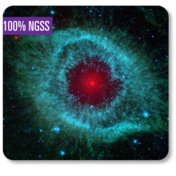
Everything you see in this photo is made of matter. Each of these objects is made of tiny particles, too small to see without very powerful tools. The particles are always moving.
Look around you and name the objects that you can see and touch. Perhaps you see a pencil and a pair of scissors, or water in a water bottle. What do all these objects have in common? They are all made of matter.
Everything around you is made of matter. Matter is anything that takes up space. A pencil and scissors take up space, so you cannot put them in the same location. You can place the pencil on top of the scissors or the scissors on top of the pencil, but you cannot put one inside the other. Water and a plastic bottle are also made of matter. When you pour water in the bottle, they both appear to be in the same place, but they are not. The matter that makes up the bottle surrounds the water, so the bottle and the water take up different spaces.
All matter has weight. You can feel the weight of a glass of water because the glass and water are made of matter. If you pour more water in the glass, it will be heavier because the glass is holding more matter.
All objects are made of matter, but what makes up matter? All matter is made up of smaller pieces of matter called particles. You cannot see these tiny particles without certain tools, such as very powerful microscopes, but they still take up space and have weight.
Particles are always moving. When you look at a pencil or a pair of scissors, they appear to be still. But the particles that make up the pencil and pair of scissors are actually vibrating back and forth. The particles in water are always flowing over, under, and around each other, even when it appears motionless. Particles of matter are always moving.
-
Notes
Lesson:
1 - What Is an Ecosystem? 2 - What Is the Role of Producers in an Ecosystem? 3 - What Is the Role of Consumers in an Ecosystem? 4 - What Is the Role of Decomposers in an Ecosystem? 5 - How Do Matter and Energy Move in an Ecosystem? 6 - What Makes an Ecosystem Healthy or Unhealthy? 7 - How Do Ecosystems Change? 8 - How Do Humans Change Ecosystems? - Performance Assessment: Planning an Episode of Colossal Travels 1 - What Are Earth's Four Systems? 2 - How Do Earth's Systems Produce Weather and Climate? 3 - How Do Earth's Systems Change Earth's Surface? - Performance Assessment: Writing an Article on Earth's Systems 4 - How Do Farming and Industry Affect Earth's Systems? 5 - How Do People's Everyday Lives Affect Earth's Systems? 6 - What Can People Do To Protect Earth's Systems? - Performance Assessment: Creating a Public Service Announcement About Water in Your Community 1 - What Is Matter Made Of? 2 - Why Are Materials Different? 3 - How Can Substances Be Identified? 4 - How Do Scientists Know When Substances Change? 5 - What Causes Substances to Change? 6 - How Do Changes to Substances Affect Their Weights? 7 - How Do Engineers Improve Materials? - Performance Assessment: Testing Pancake Ingredients 1 - What Does Gravity Do? 2 - Why Is the Sun Brighter Than Other Stars? 3 - Why Is There Day and Night? 4 - How Do Shadows Change During the Day and Year? 5 - How Do Stars Seem to Move During the Night and Year? 6 - How Does the Moon Seem to Move and Change Shape? 7 - What Tools Do Scientists Use to Observe Space? - Performance Assessment: Training Astronauts for the ISS
Section: Introduction (p. 186) Section 1 - Matter Is Made of Particles (p. 187) Section 2 - States of Matter (p. 188 - 189) Section 3 - Matter Seems to Appear and Disappear (p. 190 - 191) Section 4 - Some Matter You Cannot See (p. 192 - 193) Section 5 - Odors Come from Matter (p. 194) Summary (p. 195) Super Simple Science - A Fourth State of Matter (p. 196 - 199)
Previous SectionIntroductionNext SectionSection 2 - States of Matter
Suppose you have a piece of matter sitting in a container. Draw an image that shows the matter as having many particles. Then, write a sentence describing your drawing. Use these terms in your sentence: matter, particle, and moving.
Text to speech


Turn In
Previous SectionIntroductionNext SectionSection 2 - States of Matter
why just why
100
Skip to main content
Bring Science Alive Exploring Science Practices Grade 5
- S. Nagy
Home
- My Classes
- Assignments
- Grades
- Settings
- Program Content
- Unit
- Overview
- Checkpoints
- Investigationwith Notebook
- Textwith Notes
- Lesson Game
- Vocabulary Cards
- Assessments
- Reference
2021 TCI
Home / What Is Matter Made Of? / Section 2 - States of Matter / Text with Notes
Text with Notes
Status: Not Started
Lesson:
1 - What Is an Ecosystem? 2 - What Is the Role of Producers in an Ecosystem? 3 - What Is the Role of Consumers in an Ecosystem? 4 - What Is the Role of Decomposers in an Ecosystem? 5 - How Do Matter and Energy Move in an Ecosystem? 6 - What Makes an Ecosystem Healthy or Unhealthy? 7 - How Do Ecosystems Change? 8 - How Do Humans Change Ecosystems? - Performance Assessment: Planning an Episode of Colossal Travels 1 - What Are Earth's Four Systems? 2 - How Do Earth's Systems Produce Weather and Climate? 3 - How Do Earth's Systems Change Earth's Surface? - Performance Assessment: Writing an Article on Earth's Systems 4 - How Do Farming and Industry Affect Earth's Systems? 5 - How Do People's Everyday Lives Affect Earth's Systems? 6 - What Can People Do To Protect Earth's Systems? - Performance Assessment: Creating a Public Service Announcement About Water in Your Community 1 - What Is Matter Made Of? 2 - Why Are Materials Different? 3 - How Can Substances Be Identified? 4 - How Do Scientists Know When Substances Change? 5 - What Causes Substances to Change? 6 - How Do Changes to Substances Affect Their Weights? 7 - How Do Engineers Improve Materials? - Performance Assessment: Testing Pancake Ingredients 1 - What Does Gravity Do? 2 - Why Is the Sun Brighter Than Other Stars? 3 - Why Is There Day and Night? 4 - How Do Shadows Change During the Day and Year? 5 - How Do Stars Seem to Move During the Night and Year? 6 - How Does the Moon Seem to Move and Change Shape? 7 - What Tools Do Scientists Use to Observe Space? - Performance Assessment: Training Astronauts for the ISS
Section: Introduction (p. 186) Section 1 - Matter Is Made of Particles (p. 187) Section 2 - States of Matter (p. 188 - 189) Section 3 - Matter Seems to Appear and Disappear (p. 190 - 191) Section 4 - Some Matter You Cannot See (p. 192 - 193) Section 5 - Odors Come from Matter (p. 194) Summary (p. 195) Super Simple Science - A Fourth State of Matter (p. 196 - 199)
Previous SectionSection 1 - Matter Is Made of ParticlesNext SectionSection 3 - Matter Seems to Appear and Disappear
Save a PDF of this text to Google Drive
Print Text
Lesson Correlations
2. States of Matter
Particles are always moving, but they do not always move in the same way! Particles can vibrate in place, flow over each other, or spread apart.

Ice, water, and vapor are the different states of matter of water. Water vapor is usually invisible, but here you can see it carrying small droplets of water. Each state is made of the same kind of particles, moving differently.
Look at some matter around you. Its state of matter is the way the particles in that piece of matter are moving. In each state of matter, the particles are arranged differently. How particles are arranged and how they move changes the volume and shape of the matter. Ice cubes from the freezer are hard, water can flow out of a faucet, and water vapor rises from a pot of boiling water and mixes with the air around it. Ice, water, and water vapor are all different states of the same material— water. Three common states of matter are solid, liquid, and gas.
Solids
Ice is water in a solid state. The particles in a solid are close together and locked in position, so they cannot move around each other and can only vibrate in place. The particles in a solid are like marbles packed tightly in a jar. The marbles cannot move around, but they can wiggle slightly.
Unlike marbles in a jar, the particles in a solid are attached to one another. If you moved a solid from one container, it would stay the same shape because the particles do not move around each other. Solids have a fixed volume and shape. The word fixed means “not changing,” so, the size and shape of a solid object does not change. A book is a solid, so the amount of space it takes up does not change and it always stays in the shape of a book.
Liquids
Water from a faucet is a liquid. The particles in a liquid are close together but they are able to move about. Liquid particles are always sliding past one another like marbles in a bowl. If you tilt the bowl back and forth, the marbles roll over one another and change position. Although the marbles move, they always stay near each other. Liquid particles flow over each other, but stay close together like the particles in a solid.
A liquid has a fixed volume but does not have a fixed shape. The amount of space a liquid takes up cannot change, but the liquid's shape can change. If you pour water from a tall glass into a shallow bowl, the water in the bowl takes up as much space as it did when it was in the glass. But the water in the bowl now has a bowl shape instead of a glass shape.
Gases
The water vapor coming from boiling water is a gas. The particles in a gas spread apart and move freely in all directions. Gas particles bounce off one another and the sides of their container. Although the particles run into each other, they do not stay near one another. They are always moving throughout their container.
A gas does not have a fixed volume or shape. The amount of space that a gas takes up and the shape of a gas can change. A gas gets bigger or smaller depending on the container it is in. A gas always takes the shape of its container. Air is a mixture of different gasses. When you blow into a round balloon, the air fills the balloon and takes the round shape of the balloon.
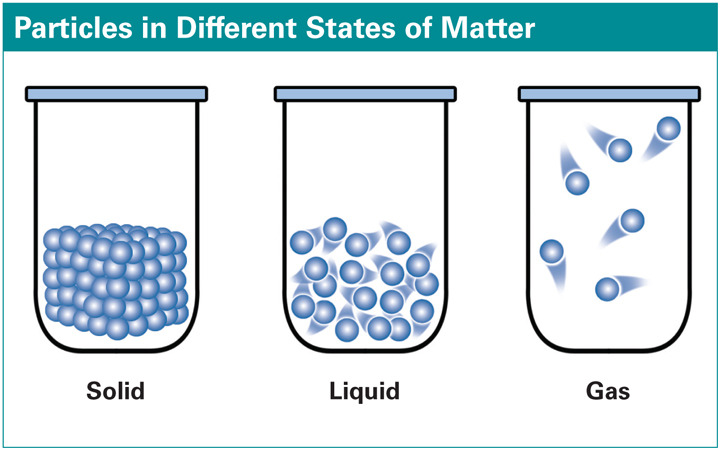
The particles in different states of matter move differently. In a solid, they vibrate back and forth. In a liquid, they remain close but flow around and over each other. In a gas, they spread throughout the entire container and move in all directions.
-
Notes
Lesson:
1 - What Is an Ecosystem? 2 - What Is the Role of Producers in an Ecosystem? 3 - What Is the Role of Consumers in an Ecosystem? 4 - What Is the Role of Decomposers in an Ecosystem? 5 - How Do Matter and Energy Move in an Ecosystem? 6 - What Makes an Ecosystem Healthy or Unhealthy? 7 - How Do Ecosystems Change? 8 - How Do Humans Change Ecosystems? - Performance Assessment: Planning an Episode of Colossal Travels 1 - What Are Earth's Four Systems? 2 - How Do Earth's Systems Produce Weather and Climate? 3 - How Do Earth's Systems Change Earth's Surface? - Performance Assessment: Writing an Article on Earth's Systems 4 - How Do Farming and Industry Affect Earth's Systems? 5 - How Do People's Everyday Lives Affect Earth's Systems? 6 - What Can People Do To Protect Earth's Systems? - Performance Assessment: Creating a Public Service Announcement About Water in Your Community 1 - What Is Matter Made Of? 2 - Why Are Materials Different? 3 - How Can Substances Be Identified? 4 - How Do Scientists Know When Substances Change? 5 - What Causes Substances to Change? 6 - How Do Changes to Substances Affect Their Weights? 7 - How Do Engineers Improve Materials? - Performance Assessment: Testing Pancake Ingredients 1 - What Does Gravity Do? 2 - Why Is the Sun Brighter Than Other Stars? 3 - Why Is There Day and Night? 4 - How Do Shadows Change During the Day and Year? 5 - How Do Stars Seem to Move During the Night and Year? 6 - How Does the Moon Seem to Move and Change Shape? 7 - What Tools Do Scientists Use to Observe Space? - Performance Assessment: Training Astronauts for the ISS
Section: Introduction (p. 186) Section 1 - Matter Is Made of Particles (p. 187) Section 2 - States of Matter (p. 188 - 189) Section 3 - Matter Seems to Appear and Disappear (p. 190 - 191) Section 4 - Some Matter You Cannot See (p. 192 - 193) Section 5 - Odors Come from Matter (p. 194) Summary (p. 195) Super Simple Science - A Fourth State of Matter (p. 196 - 199)
Previous SectionSection 1 - Matter Is Made of ParticlesNext SectionSection 3 - Matter Seems to Appear and Disappear
Throughout this unit, use the simulation below to help build your conceptual model of matter.
Follow these directions:
- Select "States."
- Click the Solid, Liquid, and Gas buttons to see how the particles move in each state.
Text to speech
1) Draw models that show the particles of matter during each state: solid, liquid, and gas. In your models, draw the matter inside a closed jar.
Text to speech
2) Describe the differences between your different models. Use these terms in your answer: solid, liquid, gas, fixed volume, and fixed shape.Text to speech
Turn In
Previous SectionSection 1 - Matter Is Made of ParticlesNext SectionSection 3 - Matter Seems to Appear and Disappear
HAHA WHY DO YOU DO THIS
100
Skip to main content
Bring Science Alive Exploring Science Practices Grade 5
- S. Nagy
Home
- My Classes
- Assignments
- Grades
- Settings
- Program Content
- Unit
- Overview
- Checkpoints
- Investigationwith Notebook
- Textwith Notes
- Lesson Game
- Vocabulary Cards
- Assessments
- Reference
2021 TCI
Home / What Is Matter Made Of? / Section 3 - Matter Seems to Appear and Disappear / Text with Notes
Text with Notes
Status: Not Started
Lesson:
1 - What Is an Ecosystem? 2 - What Is the Role of Producers in an Ecosystem? 3 - What Is the Role of Consumers in an Ecosystem? 4 - What Is the Role of Decomposers in an Ecosystem? 5 - How Do Matter and Energy Move in an Ecosystem? 6 - What Makes an Ecosystem Healthy or Unhealthy? 7 - How Do Ecosystems Change? 8 - How Do Humans Change Ecosystems? - Performance Assessment: Planning an Episode of Colossal Travels 1 - What Are Earth's Four Systems? 2 - How Do Earth's Systems Produce Weather and Climate? 3 - How Do Earth's Systems Change Earth's Surface? - Performance Assessment: Writing an Article on Earth's Systems 4 - How Do Farming and Industry Affect Earth's Systems? 5 - How Do People's Everyday Lives Affect Earth's Systems? 6 - What Can People Do To Protect Earth's Systems? - Performance Assessment: Creating a Public Service Announcement About Water in Your Community 1 - What Is Matter Made Of? 2 - Why Are Materials Different? 3 - How Can Substances Be Identified? 4 - How Do Scientists Know When Substances Change? 5 - What Causes Substances to Change? 6 - How Do Changes to Substances Affect Their Weights? 7 - How Do Engineers Improve Materials? - Performance Assessment: Testing Pancake Ingredients 1 - What Does Gravity Do? 2 - Why Is the Sun Brighter Than Other Stars? 3 - Why Is There Day and Night? 4 - How Do Shadows Change During the Day and Year? 5 - How Do Stars Seem to Move During the Night and Year? 6 - How Does the Moon Seem to Move and Change Shape? 7 - What Tools Do Scientists Use to Observe Space? - Performance Assessment: Training Astronauts for the ISS
Section: Introduction (p. 186) Section 1 - Matter Is Made of Particles (p. 187) Section 2 - States of Matter (p. 188 - 189) Section 3 - Matter Seems to Appear and Disappear (p. 190 - 191) Section 4 - Some Matter You Cannot See (p. 192 - 193) Section 5 - Odors Come from Matter (p. 194) Summary (p. 195) Super Simple Science - A Fourth State of Matter (p. 196 - 199)
Previous SectionSection 2 - States of MatterNext SectionSection 4 - Some Matter You Cannot See
Save a PDF of this text to Google Drive
Print Text
Lesson Correlations
3. Matter Seems to Appear and Disappear
You have learned that everything around you is matter, and all matter is made of tiny particles. A scientist observed small pieces of dust as they floated on water. The dust seemed to jiggle even if the water did not seem to move. Scientists studied this observation and realized that the dust was being moved by the water particles as they flowed over and around each other.
However, not every material will float in water. Some materials seem to disappear if they are mixed with water. Where do the particles that make up matter go when a material seems to disappear?
Matter Seems to Disappear
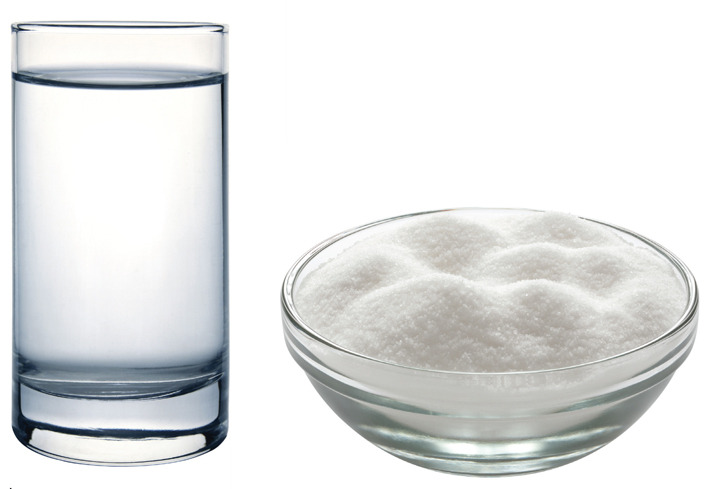
Sugar and water are both materials. When sugar dissolves in water, it forms a solution of sugar water.
If you put a spoonful of sugar into a glass of water, you will see the sugar sink to the bottom of the glass. If you then stir the water with a spoon, you will see the pile of sugar get smaller and smaller. Eventually, the sugar will seem to disappear completely. The sugar dissolved in the water.
When a material dissolves, it mixes completely with another material and appears as just one material. When sugar is dissolved in water, the resulting sugar water looks just like water and you do not see sugar floating around. The particles of sugar mixed completely with the water.
When the particles of one material are dissolved with the particles of a different material, the mixture is called a solution. Each part of a solution is the same as all other parts of the solution. Sugar water is a solution, so a drop of sugar water from the top of a glass has the same amount of sugar as a drop of water from the bottom of the same glass.
Matter Seems to Appear
Although sugar seems to disappear when you dissolve it in a pot of water, it is not gone. The sugar is still inside the water. If you boil the sugar water until all the water is gone, there will be grains of sugar left behind. The sugar seems to appear out of nowhere. In fact, this sugar is the same sugar that you mixed in the water.
You can see the sugar again because, as the water turned into vapor and left the pot, the sugar particles got closer and closer together. Eventually, the particles were close enough that they started to stick together. As more and more particles stuck together, larger and larger grains of sugar formed until they became large enough to see.
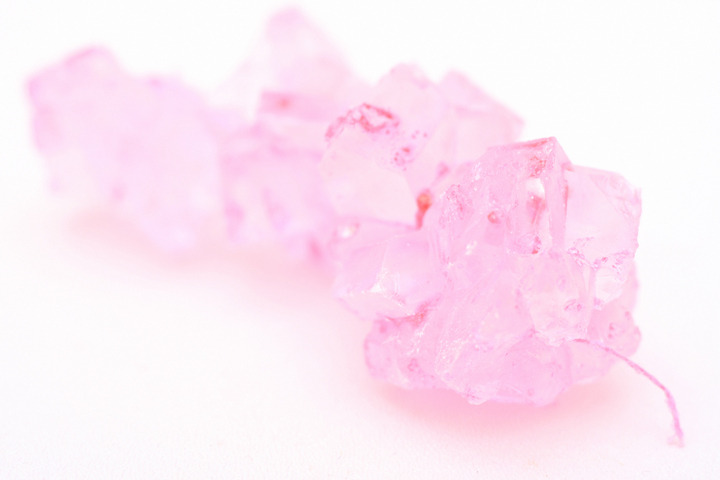
To make sugar crystals like these, sugar and food coloring are dissolved in hot water. Over time, the water cools down and the sugar forms large crystals.
Often people will make different colored sugar crystals with food coloring. Sugar and food coloring are dissolved in hot water. The sugar appears to disappear, but the food coloring mixes and spreads throughout the water to give the liquid an even color. The sugar, food coloring, and water form a solution.
A string is placed in the solution. As the solution cools, more and more sugar particles stick to the string and particles of food coloring get trapped in amongst the sugar particles. Eventually, big “rocks” or crystals of colored sugar appear on the string. These crystals are made up of the sugar and food coloring that were dissolved in the water.
-
Notes
Lesson:
1 - What Is an Ecosystem? 2 - What Is the Role of Producers in an Ecosystem? 3 - What Is the Role of Consumers in an Ecosystem? 4 - What Is the Role of Decomposers in an Ecosystem? 5 - How Do Matter and Energy Move in an Ecosystem? 6 - What Makes an Ecosystem Healthy or Unhealthy? 7 - How Do Ecosystems Change? 8 - How Do Humans Change Ecosystems? - Performance Assessment: Planning an Episode of Colossal Travels 1 - What Are Earth's Four Systems? 2 - How Do Earth's Systems Produce Weather and Climate? 3 - How Do Earth's Systems Change Earth's Surface? - Performance Assessment: Writing an Article on Earth's Systems 4 - How Do Farming and Industry Affect Earth's Systems? 5 - How Do People's Everyday Lives Affect Earth's Systems? 6 - What Can People Do To Protect Earth's Systems? - Performance Assessment: Creating a Public Service Announcement About Water in Your Community 1 - What Is Matter Made Of? 2 - Why Are Materials Different? 3 - How Can Substances Be Identified? 4 - How Do Scientists Know When Substances Change? 5 - What Causes Substances to Change? 6 - How Do Changes to Substances Affect Their Weights? 7 - How Do Engineers Improve Materials? - Performance Assessment: Testing Pancake Ingredients 1 - What Does Gravity Do? 2 - Why Is the Sun Brighter Than Other Stars? 3 - Why Is There Day and Night? 4 - How Do Shadows Change During the Day and Year? 5 - How Do Stars Seem to Move During the Night and Year? 6 - How Does the Moon Seem to Move and Change Shape? 7 - What Tools Do Scientists Use to Observe Space? - Performance Assessment: Training Astronauts for the ISS
Section: Introduction (p. 186) Section 1 - Matter Is Made of Particles (p. 187) Section 2 - States of Matter (p. 188 - 189) Section 3 - Matter Seems to Appear and Disappear (p. 190 - 191) Section 4 - Some Matter You Cannot See (p. 192 - 193) Section 5 - Odors Come from Matter (p. 194) Summary (p. 195) Super Simple Science - A Fourth State of Matter (p. 196 - 199)
Previous SectionSection 2 - States of MatterNext SectionSection 4 - Some Matter You Cannot See
Using the images as a guide, describe how to make sugar crystals. Use these terms in your description: substance, solid, liquid, dissolve, boil, and solution.Text to speech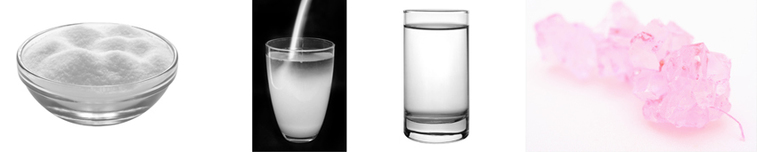
Turn In
Previous SectionSection 2 - States of MatterNext SectionSection 4 - Some Matter You Cannot See
bruh
100
april fools
lol