Basic Science
Cell Biology
Chemistry
Geology
Ecology
Natural Resources
100
What is this tool?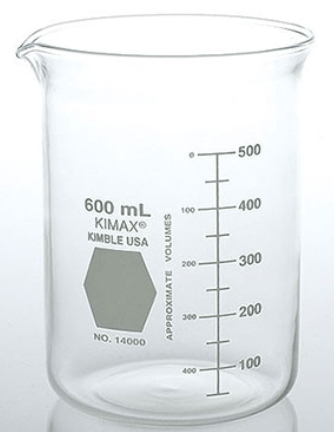
Beaker
100
What organelle is the control center or "brain" of the cell?
the nucleus
100
What element has the symbol Au?
Gold
100
Give one type of plate boundary and how the plates move
Convergent - collide
Divergent - divide
Transform - slide (past each other)
100
What trophic level is the lion in this food web?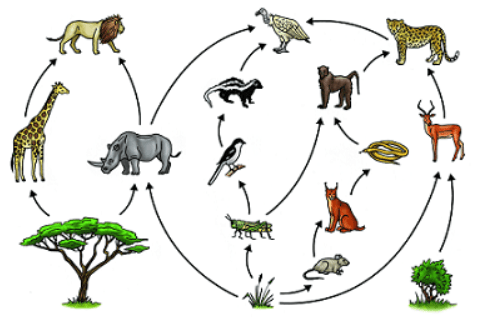
secondary consumer
100
Define a renewable resource
A resource that can be replenished in a relatively short period of time (a human lifetime)
200
How many meters are in a kilometer?
1,000
200
What are the inputs and outputs of photosynthesis?
Inputs: water, carbon dioxide, sun light energy
Outputs: glucose (sugar), oxygen
200
What subatomic particles are in a nucleus?
Protons and neutrons
200
What type of rock is this (out of the 3 main rock types, not specifically)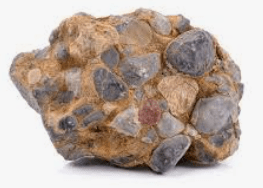
+100 bonus if you know the actual name
Sedimentary
+100 - conglomerate
200
Definite mutualism
+100 bonus if you can give an example
A relationship where both organisms benefit
+100 clown fish and anemone, bees and flowers, etc
200
Give an example of a renewable resource AND an example of a nonrenewable resource
Renewable: water, sunlight, animals, plants
Nonrenewable: fossil fuels (oil, coal, natural gas), rocks/minerals
Others at Mrs. Fox discretion
300
What is the metric base unit for mass?
Gram
300
Name one way plant and animal cells are different
- Plant cells have cell walls
- Plant cells have chloroplasts
- Plant cells have one big central vacuole, while animal cells have multiple small vacuoles
- Animal cells have lysosomes (to get rid of waste)
300
Name one sign of a chemical reaction
Change in odor, change in temperature, change in color, formation of gas, formation of a solid
300
There are two primary ways igneous rocks form. Give one.
+100 bonus if you know both
- Cooling and crystallizing from lava on the surface (after a volcanic eruption)
- Cooling and crystallizing from magma under the surface of the Earth
300
What percentage of energy is LOST at each level of the trophic pyramid?
+100 bonus if you can explain where it goes
90%
+100 - it is lost as heat into the atmosphere
300
Define geoscience process
+100 bonus if you give an example
Any process that happens on Earth (in the geosphere)
+100 bonus - weathering, erosion, plate tectonics, others at Mrs. Fox discretion
400
What is this tool?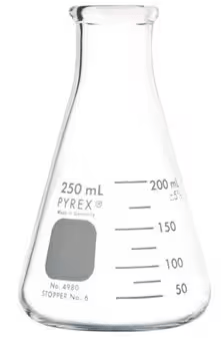
Erlenmeyer flask
400
How are the processes of cellular respiration and photosynthesis related?
Tell if each process is used by plants, animals, or both
The inputs of one are the outputs of the other
(Photosynthesis: water + CO2 --> glucose + O2
Cellular respiration: glucose + O2 --> water + CO2)
Only plants use photosynthesis. Animals AND plants use cellular respiration.
400
How many valence electrons does this atom have?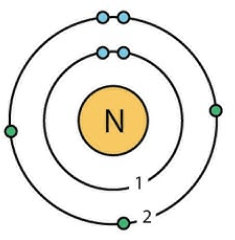
5
400
What is the difference between weathering and erosion?
Weathering breaks the rock down in place, erosion moves the sediment from one place to another
400
Explain how parasitism and predation are different
In predation, the predator kills and consumes the prey. In parasitism, the parasite steals nutrients from the host but typically does not kill it (or at least isn't trying to)
400
Explain how nature AND at least one human action contributed to causing the Dust Bowl.
+100 bonus if you can name a change in farming practices that helped fix the problem
Something like: humans over farmed, plowed up native grasses, broke up the soil. Then drought and high winds blew the soil away
+100 bonus - contour farming, reduced tilling, cover crops, crop rotation
500
Convert 5429 milliliters to liters
5.429 L
500
Why is it helpful to cells to be so tiny?
It makes it easier for things to diffuse into and out of the cell
+100 bonus if you used the concept of SA:V to explain
500
What is the difference between a chemical reaction and a physical change?
Chemical reactions make new substances, physical changes just change shape or state of matter
500
Give TWO pieces of evidence supporting the theory of continental drift
- Plant and animal fossils found on separate continents (only counts as two if you can be specific)
- Coal found in Antarctica
- Coastlines line up like puzzle pieces
- Rock layers align on separate continents
- Others at Mrs. Fox's discretion
500
Give a SECOND ORDER effect of a natural disaster striking an ecosystem.
(You must also give the disaster and a first order effect to prove yours is second order)
Mrs. Fox discretion
500
Pick one of the resources we researched and EXPLAIN why it is found in some places but not others. Be specific!
[Options: oil, gold, fertile soil, aquifers]
Mrs. Fox discretion