Unit 1: Biodiversity
Unit 2: Rock Cycle & Plate Tectonics
Unit 3: Climate Change
Unit 4: Human Body
Unit 5: Genetics
100
The next level of organization in the list below.
Organism,______________, Community, Ecosystem
What is Population?
100
The name of this rock type.

What is obsidian?
100
Two examples of greenhouse gases.
What is carbon dioxide, water vapor, methane, nitrous oxide, HFCs, and PFCs?
100
The next level of organization in the list below.
Atom, Molecule, Organelle, Cell,____________, Organ, Organ System, Organism
What is a tissue?
100
The name of this type of genotype (Aa).
What is heterozygous?
200
A definition and example of an abiotic factor.
What is a non-living part of an ecosystem and water?
Other examples: rocks, sun, win, gases, sand, etc.
200
WED stands for this.
What is weathering, erosion, and deposition?
200
One of the three NATURAL causes of climate change.
What is the sun's intensity, volcanic eruptions, or naturally occurring greenhouse gases?
200
This system is responsible for taking in oxygen and giving off carbon dioxide.
What is the respiratory system?
200
Two reasons for how asexual reproduction is different than sexual reproduction.
What is the offspring is genetically identical, happens fast, one parent, hard to evolve?
300
Two things that organisms might compete over.
What is food and habitat?
Other examples: mates, water, light (plants)
300
The current Geologic Time Scale Era that we are in from the options below.
A. Paleozoic
B. Precambrian
C. Mesozoic
D. Cenozoic
What is the Cenozoic Era?
300
Three examples of types of renewable energy.
What is solar, wind, hydropower, biomass, geothermal, tidal?
300
Four bones that are in the lower body (below the stomach).
What are the phalanges, metatarsals, tarsals, tibia, fibula, patella, femur, pelvis, sacrum, coccyx?
300
Mutations in DNA can be any of these three things to the organism.
What is positive/beneficial, negative/harmful, and neutral/no effect?
400
Two examples of invasive species in Maine.
What are Emerald Ash Borers and Green Crabs?
Other examples: Northern Pike, Purple Loosetrife, Spotted Lanternfly, Asian Shore Crab, Eurasian Milfoil, etc.
400
A sedimentary rock gets melted down and cools to form this type of rock.
What is an igneous rock?
400
Three specific HUMAN causes of climate change.
What is generating power, manufacturing goods, deforestation, transportation, food production, buildings/energy use, or waste/consumption?
400
Gas exchange (oxygen <--> carbon dioxide) in the lungs happens where specifically?
hint: there are 2 parts that should be named
What are the capillaries and the alveoli?
400
From the list below, this shows an example of artificial selection.
A. Wolves evolving into different subspecies naturally
B. Farmers breeding cows that produce more milk
C. A scientist editing genes in a lab
D. A random mutation that helps potatoes resist drought
What is B. Farmers breeding cows that produce more milk?
500
As we move closer to tropical areas (near the Equator) the biodiversity amount does this.
What is increases?
500
The type of plate boundary when tectonic plates are pulling apart.
What are divergent plate boundaries?
500
An explanation of how the greenhouse effect works.
What is the sun emits infrared radiation onto the Earth, and some is absorbed while the rest bounces back into the atmosphere where greenhouse gases are, which then absorb the infrared radiation causing the temperature in the atmosphere to increase?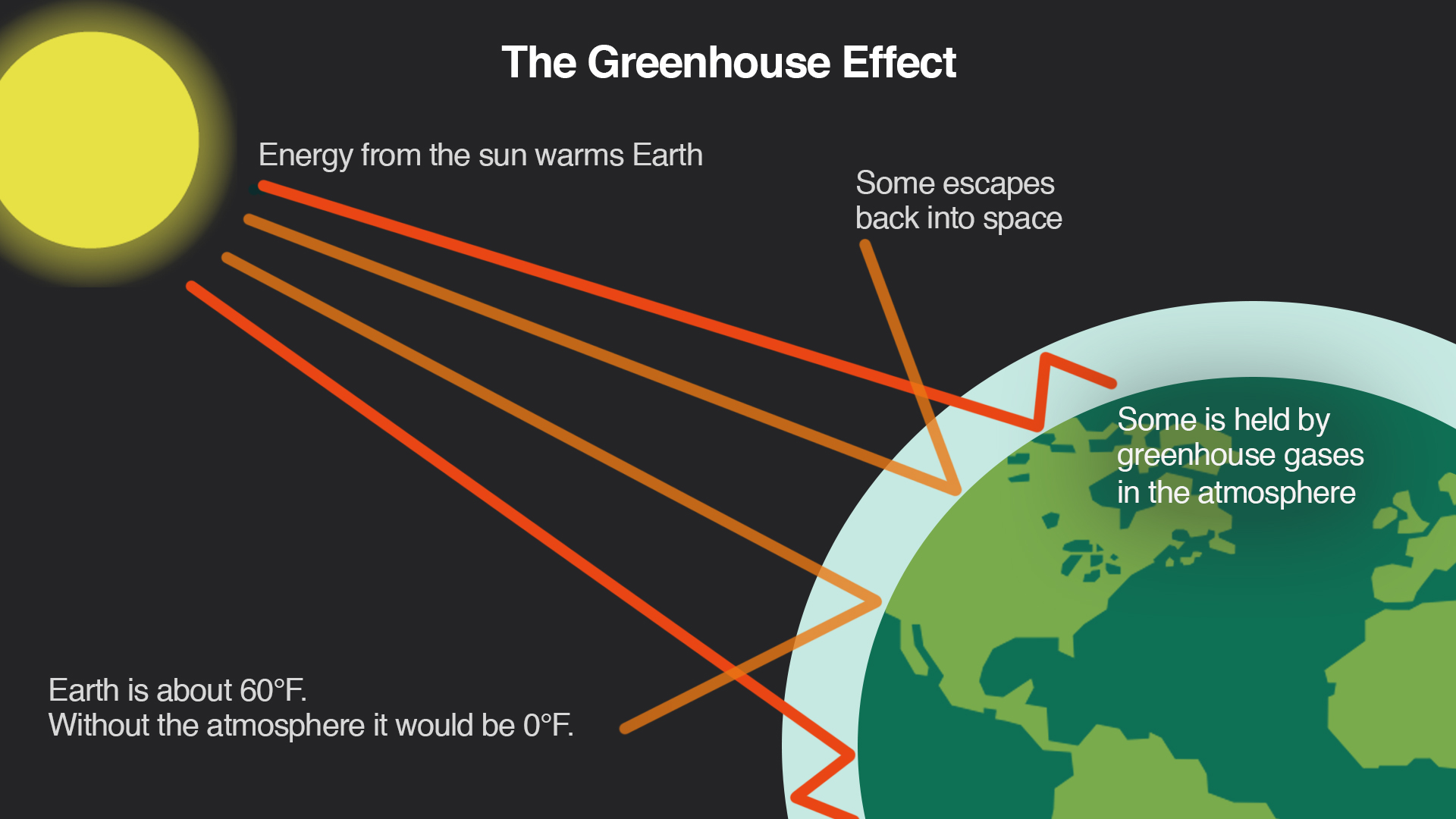
500
What is it called when your body maintains stable and steady conditions?
What is homeostasis?
500
In the punnett square below, two heterozygous round pea plants are crossed. The percentage that you'd have any homozygous offspring is this. 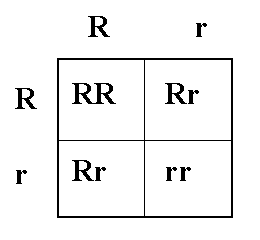
What is 50%?
25% homozygous dominant (RR)
25% homozygous recessive (rr)
50% chance of homozygous offspring