Under the Microscope
Name That Plate
Host Vs Pathogen
Know Your Bacteria
To Be or Not to Be an MLS
100
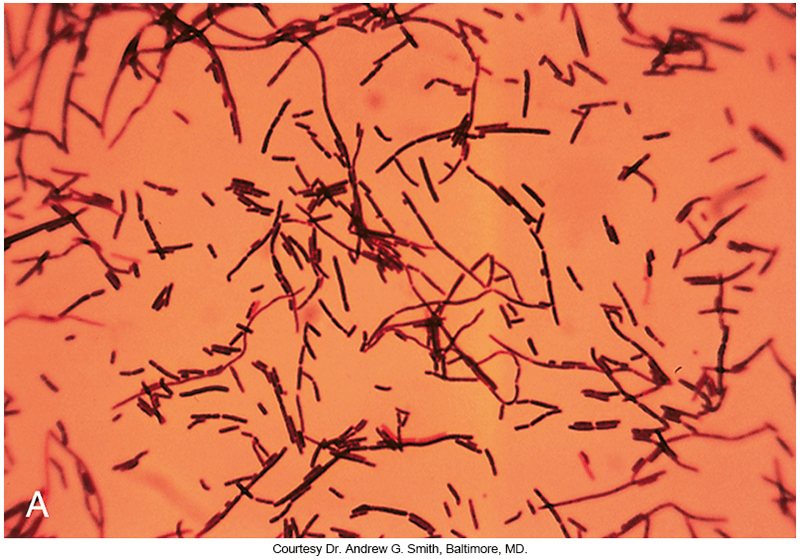 This image displays what bacteria morphology.
What is Gram Positive Rods?
100
This non selective plate is routinely used as a primary plate that can grow most organisms.
What is SBA?
100
Which antibody is seen first during an infection?
What is IgM?
100
The morphology of bacteria can be arranged in clusters, chains, tetrads, or diplococci?
What is Gram positive cocci?
100
When a sample enters the lab, what is the actual process pathway before an actual culture is performed?
What is clerical and specimen quality check?
200
 Interpret this gram stain of expectorated sputum.
What is Moderate gram positive diplococci, Rare PMN's and No epithelia cells seen?
200
This plate would be most useful in isolating an GNR from a polymicrobial infection?
What is a MAC plate?
200
 Which antibody could this image NOT be refferring to?
What is IgM?
200
 Which bacteria type would be determined by the saffarrin dye?
What is gram negative?
200
What should you perform before a culture is set up?
What is clerical and specimen quality check?
300
 Interpret the slide of expectorated sputum.
What is sample rejection due to poor specimen quality?
300

Describe the gross morphology of this colony using at least 3 descriptive terms.
What is dry (form), umbonate (elevation), and white (color)? [Other include gamma hemolytic, medium size]
300
Autoimmune diseases would be determined by naive T cells in what part of the body and through what selection process?
What is the thymus and positive selection?
300
A bacterium possesses a thick peptidoglycan layer containing teichoic acids and lacks an outer membrane. What Gram-stain reaction would you expect, and why?
Gram-positive; the thick peptidoglycan retains the crystal violet–iodine complex during decolorization.
300
 If the 1:100 calibrated loop was used to streak this plate, what would be the final CFU calculation be?
What is 300 CFU'S?
400
 Interpret this image.
What is NOS, Many PMN, No epithelial cells seen?
400
 What is the hemolysis pattern shown here? What are the other possible hemolysis patterns AND what do they show?
What is beta hemolytic in the image and alpha hemolytic (partial clearing) and gamma hemolytic (no clearing)?
400
Name the APC’s, what part of the cell they present foreign antigens to, and which cell differentiation markers are associated with the respective parts of the cell.
What are dendritic cells, macrophages, and B cells and they present to the MHC complexes I (CD8+) and ll (CD4+)?
400
A bacterial isolate survives exposure to harsh environmental conditions for an extended period and later returns to its metabolically active state when conditions improve. What bacterial structure most likely allowed it to survive, and name one clinically significant genus capable of producing it.
An endospore
400
A physician send a stool sample and request a gram stain to aid in preliminary diagnosis. What should your response be?
What is stool contains a variety of normal flora to which performing a gram stain could lead to over treatment. A stool culture must be performed first to determine pathogens.
500

Interpret this gram stain.
What is few yeast, mod PMN'S, no epithelial cells seen?
500
A wound specimen is inoculated onto SBA, Chocolate, MacConkey, and CNA agar. After incubation, growth is present on SBA and CNA, but there is no growth on MacConkey. The colonies demonstrate beta hemolysis on SBA.
Based on the growth pattern alone, what can you determine about the organism, and which plate provides the strongest evidence for your conclusion?
The organism is most likely Gram-positive. Growth on CNA provides the strongest evidence because CNA selects for Gram-positive organisms by inhibiting most Gram-negative bacteria. Beta hemolysis provides an additional phenotypic characteristic but does not by itself establish Gram reaction.
500
Explain why the organism could exist harmlessly in one location but cause disease in another. Identify TWO factors that determine whether the host–microbe interaction results in colonization or infection.
The outcome depends on the organism’s virulence factors and the host’s defenses/susceptibility.
- Host immune status
- Integrity of physical barriers
- Infectious dose/number of organisms
- Organism virulence
- Portal/site of entry
- Presence of adhesins, toxins, enzymes, capsule, etc.
500
Two bacterial isolates are exposed to penicillin. Organism A is highly susceptible, while Organism B has no cell wall and is intrinsically resistant. What bacterial structure is the drug targeting, and why is Organism B resistant?
Penicillin targets peptidoglycan cell-wall synthesis. An organism without a cell wall—classically Mycoplasma—lacks the target for beta-lactam antibiotics, making it intrinsically resistant.
500
You and a new tech and receive a purulent sample and perform a gram stain. After finishing the gram stain process the stain is very purple. When you interpret the stain, you report out many GPC in clusters,many GPR Many PMN’s, and No epithelial cells. The culture grows Many GNR. The supervisor pulls you aside and ask for a gram stain review. What should your explanation be?
What is the crystal violent stuck heavily to the thick purulent sample leading to an inability to wash out the stain properly and causing an improper interpretation of the slide?