Standard Form
Vertex Form
Graphing
Converting Forms
100
Does this parabola open up or down? y=x^2 -2x - 5
Up
100
What is the vertex of the parabola:
y=(x-6)^2+10
(6, 10)
100
What are the roots of this parabola?
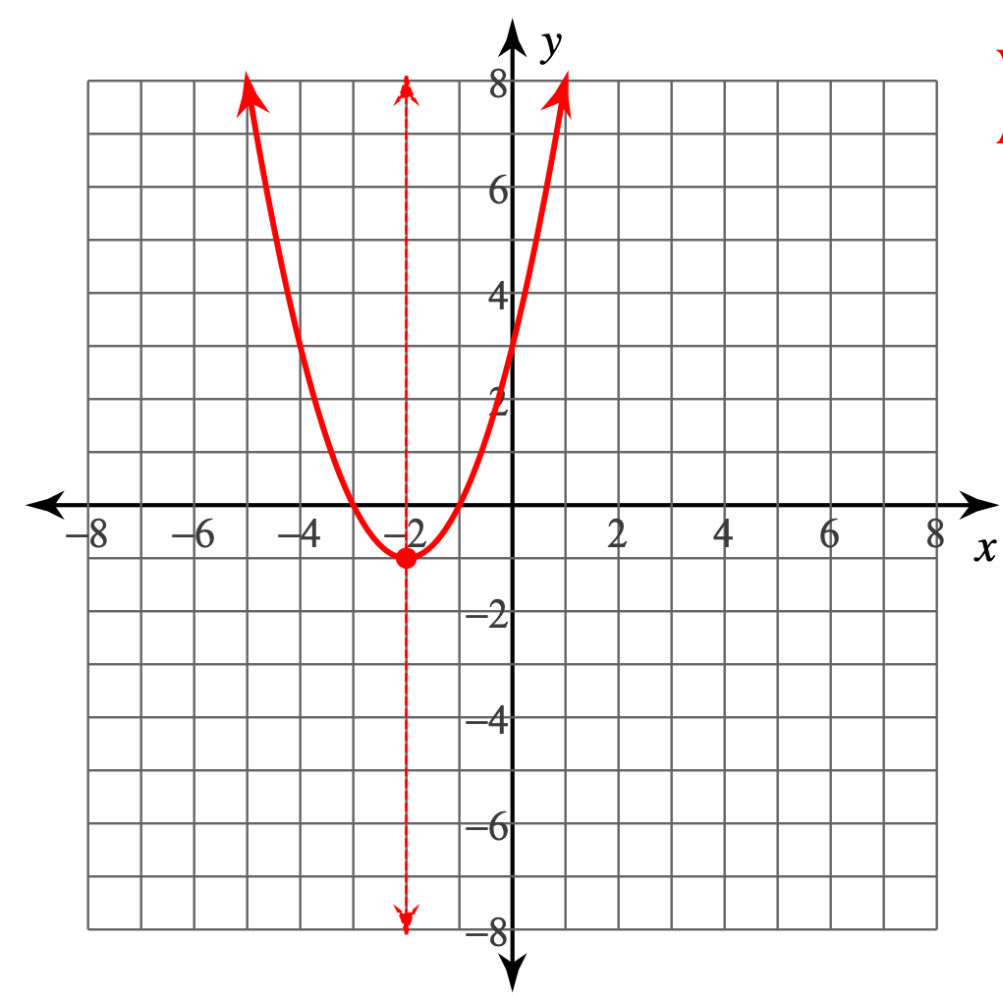
(-1, 0) (-3, 0)
100
Convert this equation to standard form: y=(x+5)(x+4)
y=x^2+9x+20
200
Calculate the vertex: y=x^2+16x+71
(-8, 7)
200
Does this parabola have a minimum or maximum?
y=-6(x+1)^2-7
Maximum
200
What is the axis of symmetry of this parabola?
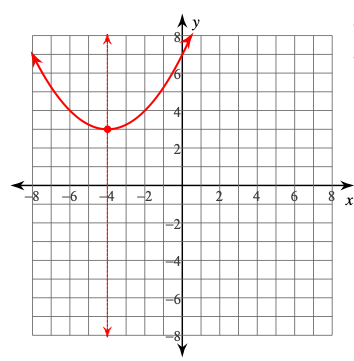
x=-4
200
Convert this equation to standard form: y=2(x+9)^2+8
y=2x^2+36x+170
300
What is the extreme value of the function: y=x^2-6x+5
-4
300
What is the axis of symmetry of the function: y=-6(x+1)^2-7
x = -1
300
a. Using the equation y=1/2x^2 -12x +40 , fill in the T-chart for plotting points:
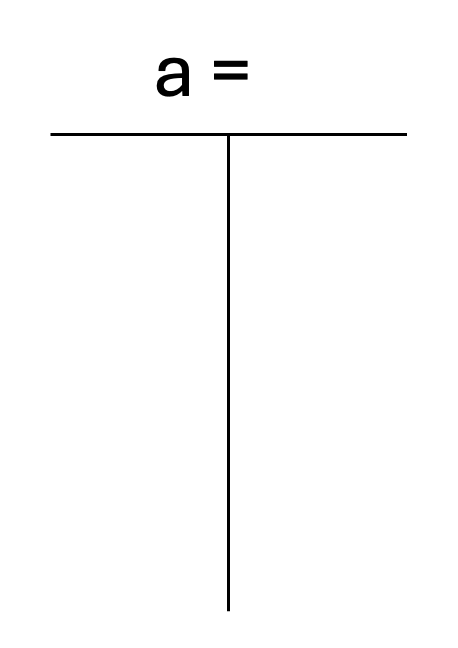
b. Where do you start from each time when using this chart?
a. 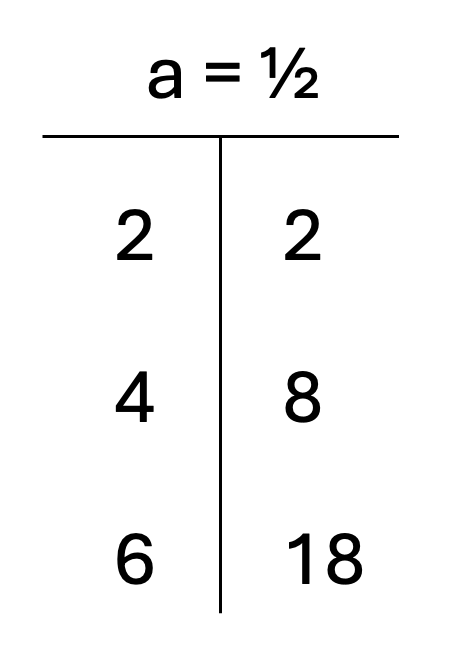
b. vertex
300
Convert this equation to factored form:
y=4(x+1)^2-1
y=(2x+1)(2x+3)
400
Find the x-intercepts from standard form: y=-x^2-2x+3
(-3, 0) (1, 0)
400
Find the y-intercept:
y=1/4(x+4)^2+3
(0, 7)
400
State the domain and range:
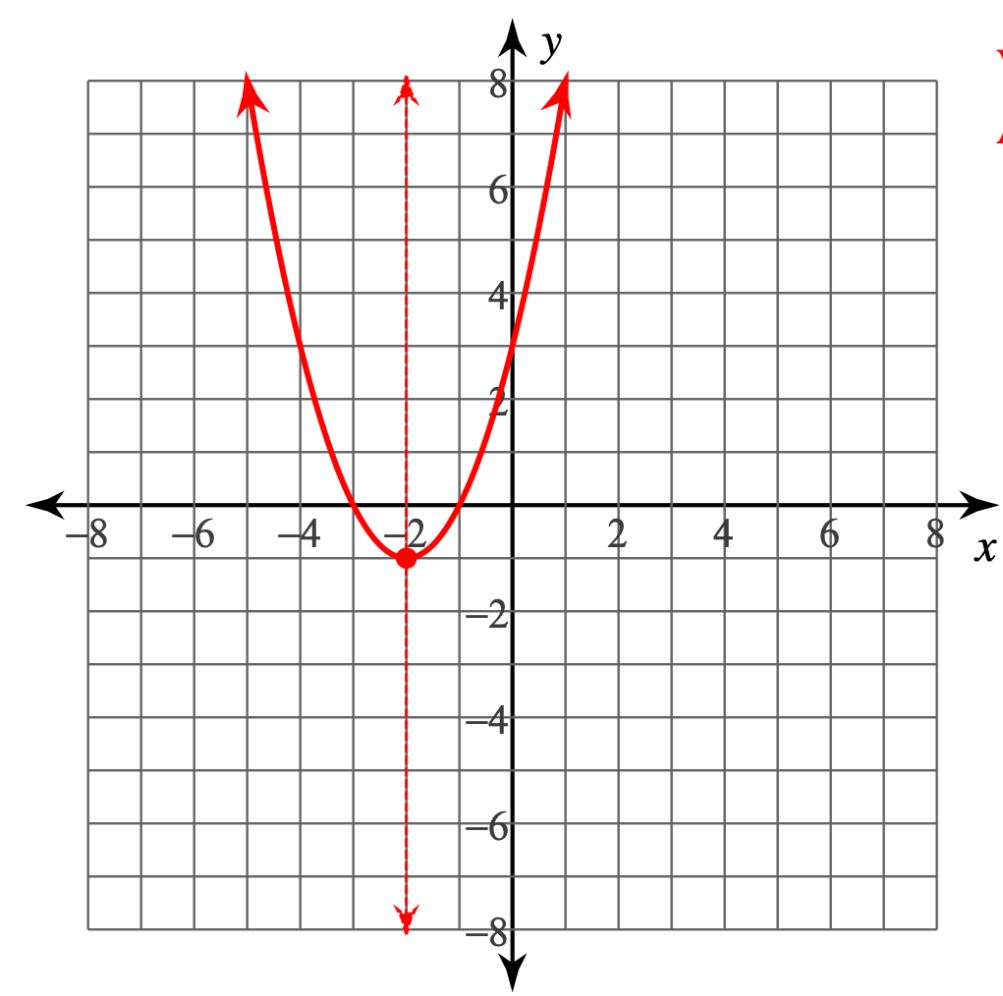
D: All real #'s
R:
y>=-1
400
Convert this equation to vertex form: y=-x^2-14x-59
y=-(x+7)^2-10
500
Find the y & x-intercepts from standard form:
y=2x^2-4x-1
x-intercepts: (-0.2, 0) (2.2, 0)
y-intercept: (0, -1)
500
Solve for x-intercepts in vertex form: y=-1/3(x-2)^2+6
(-2.2, 0) (6.2, 0)
500
Does graph a, b, or c have an a value of
-1/4
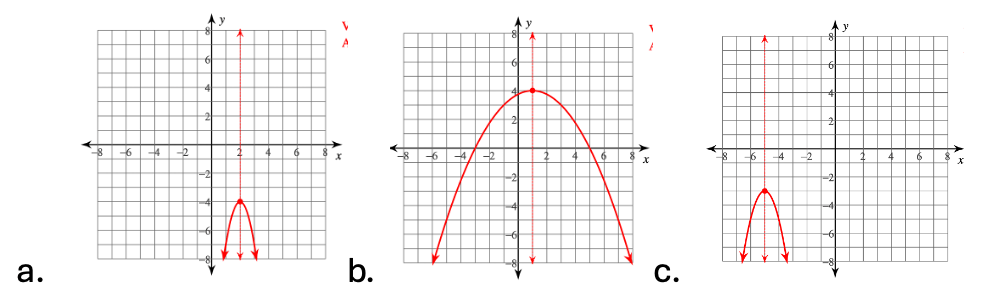
b
500
Convert this equation to vertex form: 6x^2+12x+y+13=0
y=-6(x+1)^2-7