Mass and Energy
Energy Pyramid
Genetics/Macro
Photosynthesis/Respiration/Nutrients
Random Trivia
100
What type of diet is the most energy efficient? Carnivore or Herbivore
Carnivore
100
Name the 4 trophic levels of the energy pyramid in order.
1. Producer
2. Primary Consumer
3. Secondary Consumer
4. Tertiary Consumer
100
Lions that live geographically close together are genetically ______ because they ______ alot of the same ______.
Similar, share, alleles.
100
Which nutrient requires a living thing to help make it become available to plants? Name the living things that do this.
Nitrogen (Soil Microbes/Detritivores).
100
Who was the Greek god of the sea?
Poseidon
200
What element is Missing in carbs/fats that is present in proteins?
Nitrogen
200
How much energy is available to a lion if a zebra has 120,234 kilocalories stored?
12,023.4 kilocalories (10% rule)
200
The following picture is an example of what macromolecule monomer?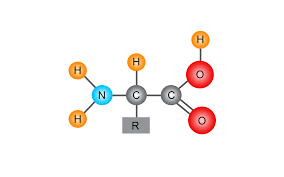
Amino Acid
200
What are the inputs of cellular respiration?
Oxygen and Glucose
200
What is the term for a word that is spelled the same forwards and backwards?
Palindrome
300
To maintain their weight, a platypus needs to eat 150 kilocalories/kg of their body mass. If a platypus weighs 3 kilograms, how many kilocalories per day will the platypus need to eat per day?
450 kilocalories per day
300
Build an energy pyramid with the following organisms:
1. Lion
2. Zebra
3. Wildebeest
4. Warthog
5. Vulture
6. Grass
7. Shrubs
8. Trees
See Mr. Wetherell’s Energy Pyramid on the board
300
How do you determine the parentage of a lion cub?
See Mr. Wetherell for answer
300
What are the inputs of Photosynthesis?
CO2 H2O and Light
300
How many Yahtzee "bonus" boxes are on a Yahtzee Score Card?
3
400
What is the name of the law that states “matter and energy cannot be created or destroyed?”
Law of Conservation of Mass/Energy
400
Imagine you have an energy pyramid with grass, zebras, lions, and vultures. Answer the following
1. If there was a drought that wiped out all of the grass, what type of effect (direct/indirect/positive/negative) would this have on the vulture? What type of regulation is this?
2. If there was a disease that killed the lions, what type of effect (direct/indirect/positive/negative) would this have on the zebra? What type of regulation is this?
1. Indirect negative effect. Bottom up regulation
2. Direct positive effect. Top Down Regulation
400
Which macromolecule has the highest amount of available energy? Explain why.
Fats (Lipids). Highest amount of C-C and C-H bonds.
400
What does ATP stand for?
Adenosine Triphosphate
400
What is a group of butterflies called?
Kaleidoscope -- A group of butterflies could also be called a "swarm" or a "flutter." A group of caterpillars, however, is called an "army."
500
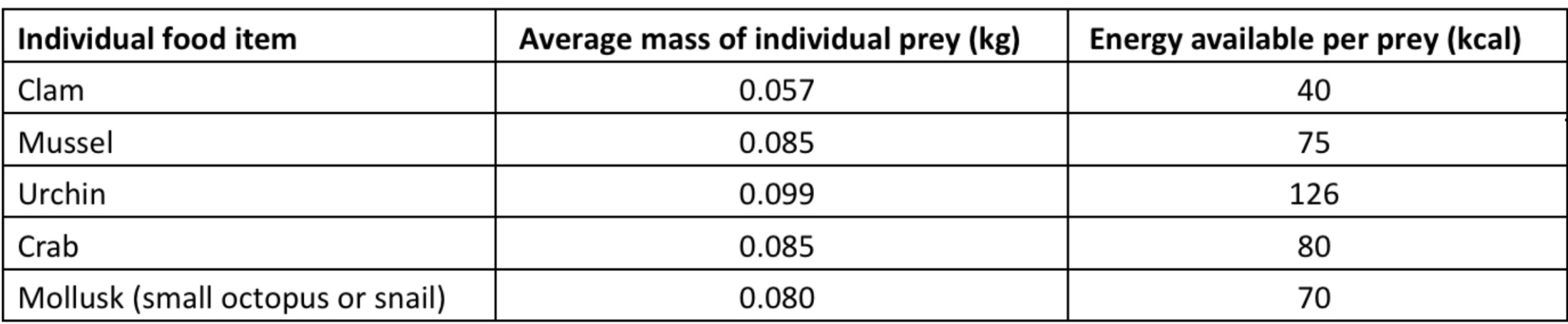
An otter eats 30 urchins, 5 mussels, and 2 crabs in one day.
A. How many kilocalories does the otter get from this diet?
B. If the otter weighs 16 kilograms and needs 250 kilocalories/kg of body weight per day, can they survive off of this hunt?
A. 4315 kilocalories
B. Yes, because 16kg x 250 kilocalories gives you 4,000 kilocalories which is less than the 4315 kilocalories from their diet.
500
In terms of an energy standpoint, are lions better off as secondary consumers or tertiary consumers? Explain your answer.
Secondary consumers. More available energy from primary consumers than a secondary consumer.
500
Explain DNA fingerprinting. How can is be useful for identifying specific individuals?
See Mr. Wetherell for answer.
500
Write out the entire unbalanced equation for Photosynthesis and Cellular Respiration
See Mr. Wetherell’s board for answer.
500
What plant contains the toxin grayanotoxin, which can cause “mad honey” poisoning?
Rhododendron