African American Studies
Geography & Migration
Kingdoms & Empires
Trade, Wealth & Religion
Culture & Society
Miscellaneous
100
This field uses multiple disciplines to analyze the history, culture, experiences, and contributions of people of African descent.
African American Studies
100
These two environmental regions supported important population centers in Africa.
The Sahel and savanna
100
This famous West African empire was ruled by Mansa Musa.
Mali
100
This natural resource was associated with wealth and luxury trade in ancient East Africa and Aksum.
Gold
100
These West African historians preserved and communicated community history.
Griots
100
African-descended communities in the Americas often blended indigenous African practices with these two religions.
Christianity and Islam
200
African American Studies challenges the misconception that African history before the Atlantic slave trade was this.
Unknowable, undocumented, or lacking cultural and political complexity
200
This language came into existence after 1000 C.E. as the direct result of trade between Bantu and Arabic speakers on Africa’s eastern coast.
Swahili
200
This Mali city became famous as a center of learning, trade, and Islamic scholarship.
Timbuktu
200
Trans-Saharan trade routes helped introduce this religion from North Africa into the Sudanic empires.
Islam
200
In early West and Central African societies, this system of family relationships helped form the basis of political alliances.
Kinship
200
This African state became the largest source of enslaved people in the history of the transatlantic slave trade to the Americas.
Kongo
300
African American Studies uses this type of approach rather than relying on a single academic discipline.
An interdisciplinary approach
300
This major population movement spread peoples and languages across large portions of Africa.
Bantu expansion
300
This South/East African kingdom became wealthy through trade in resources such as gold, ivory, and cattle and is known for monumental stone architecture
The Great Zimbabwe
300
This 1375 Catalan Atlas demonstrates the wealth and influence of this ruler.
Mansa Musa
300
This cultural process occurs when communities combine elements of different religious or cultural traditions.
Syncretism
300
By 1500, approximately this many enslaved Africans had been removed from Africa to work in Europe and on Portuguese-colonized Atlantic islands.
Approximately 50,000
400
This term describes the dispersion of people of African descent throughout the world.
The African diaspora
400
Africa's proximity to these three bodies of water helped foster connections beyond the continent.
Red Sea, Mediterranean Sea, & Indian Ocean
400
This ancient society was located near present-day Eritrea and Ethiopia and served as an intermediary between the Mediterranean and India
Aksum
400
The kingdom of ________'s conversion to _________ strengthened its trade relationship with _______, leading to the kingdom's increased wealth.
Kongo, Christianity, Portugal
400
These two African women leaders legacies demonstrate women's political leadership in African societies.
Queen Idia of Benin and Queen Njinga of Ndongo-Matamba
400
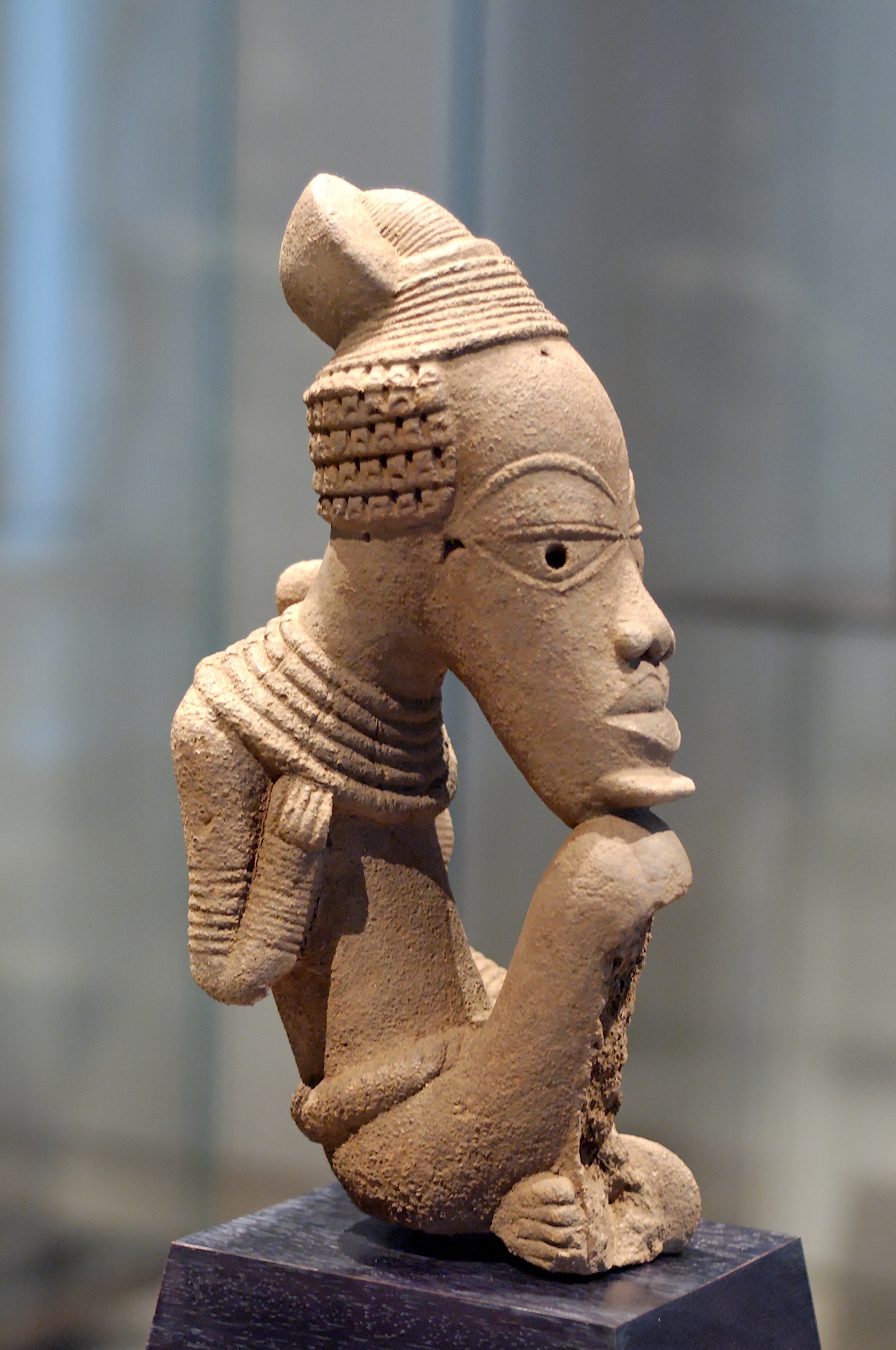
This terracotta sculpture demonstrates the advanced artistry and smithing, dating back to 1000 BCE of this ancient society.
Nok
500
African American Studies was created after this movement, demanding culturally relevant learning opportunities.
The Black Campus Movement
500
Africa's proximity to the Red Sea, Mediterranean Sea, and Indian Ocean helped early African societies establish these beyond the continent.
Global connections/trade networks
500
These Sudanic Empires were located in West Africa in the Sahel region south of the Sahara.
Ghana, Mali, Songhai
500
The coastal location of these East African communities connected Africa's interior with Arab, Persian, Indian, and Chinese trading communities.
The Swahili City-States
500
These are the three distinct architectural groups of the Great Zimbabwe.
The Hill Complex, Valley Complex, and Great Enclosure
500
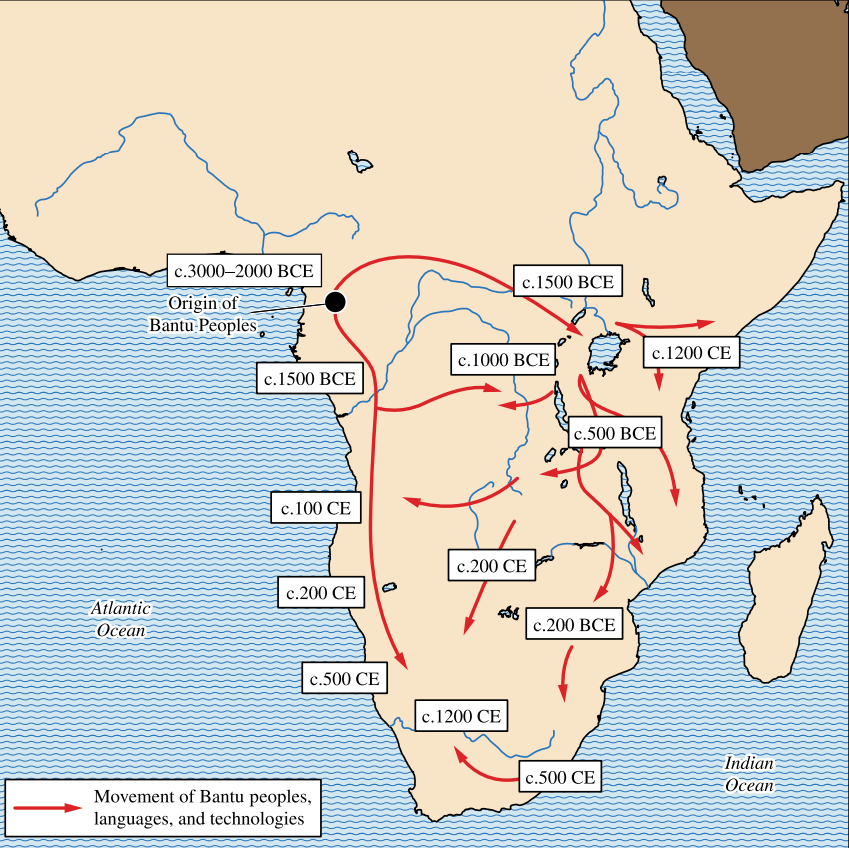
This was a significant effect of Bantu migrations on the African continent.
It contributed to the development of diverse ethnic groups and languages.