Neurobiology
Brain & Systems
Sleep & Dreams
Sensation
Psychoactive Drugs/ Misc
100
1. Name the neuron part that receives incoming signals and
2. Name the part that sends signals out to other cells. (not the bulbs)
1. Dendrites
2. Axon
100
Name the four lobes of the cerebral cortex.
Frontal, Parietal, Temporal, & Occipital Lobes
100
Define "circadian rhythm" and name one hormone involved in its regulation.
Circadian rhythm: internal 24-hour biological clock. Hormone: melatonin.
100
Name the processing theory: information processing guided by higher-level mental processes , as when we construct perceptions drawing on our experiences and expectations
Top-down Processing
100
Define "psychoactive drug."
A chemical substance that alters perception, mood, consciousness, or behavior by acting on the nervous system
200
This neurotransmitter is often referred to as the "feel-good" neurotransmitter and is associated with pleasure and reward.
Dopamine
200
THIS part of the brain helps regulate hunger, thirst, temperature, circadian rhythms
Hypothalamus
200
What is REM and when does it occur?
Rapid Eye Movement during sleep - when dreaming occurs. Occurs about every 90 minutes.
200
Define sensory adaptation and explain how it benefits everyday perception
Sensory adaptation: decreased sensitivity to constant stimulus (e.g., not noticing persistent background smell, acclimating to cool water). Helps focus on changing, relevant stimuli.
200
Brain Scanning Techniques: THIS is a medical device that records the electrical activity of the brain using small sensors attached to the scalp
EEG - Electroencephalogram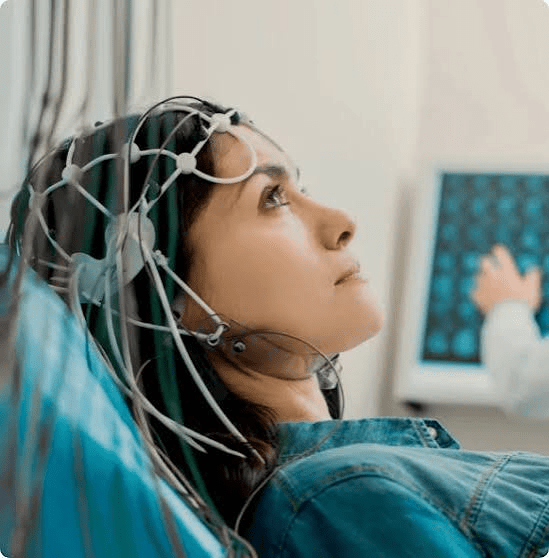
300
What is the neurotransmitter glutamate responsible for?
Enhancement of action potentials, learning and memory
300
Describe the primary functions of the limbic system structures: amygdala and hippocampus
Amygdala: emotion processing (esp. fear). Hippocampus: memory consolidation, spatial memory.
300
Explain the activation-synthesis theory of dreaming
Activation-synthesis: dreams arise from brainstem activation and cortex attempts to synthesize meaning from random signals.
300
State Weber’s Law in words and give a classroom example
Weber’s Law: the just noticeable difference is a constant proportion of the original stimulus.
ex) a loud concert you need a larger increase to detect a difference; or screen brightness
300
List two depressants and describe one physiological and one psychological effect shared by depressants.
Examples: Alcohol, benzodiazepines, opiates.
Physiological: slowed CNS activity; Psychological: decreased anxiety, impaired judgment/memory
400
Name the concept: Neuron fires action potential at full amplitude once threshold reached
the All-or-None principle
400
Give one example of a function typically lateralized to the left hemisphere
Example left-lateralized function: language production (Broca’s area).
400
Describe or draw the typical EEG wave patterns (broadly) across NREM stages 1–3
Stage 1: theta waves (light sleep).
Stage 2 (from reading): sleep spindles & K-complexes.
Stage 3: delta waves (slow-wave sleep)
400
Which theory of color vision is most useful for explaining the characteristic of afterimages?
Opponent process Theory
400
Compare stimulants and hallucinogens: provide one example of each and explain a primary physiological effect of each.
Stimulant example: cocaine — increases CNS activity, elevates heart rate.
Hallucinogen example: LSD — alters perception, causes sensory distortions.
500
Explain or draw out the process of reuptake
process where a presynaptic neuron reabsorbs leftover chemical messengers (neurotransmitters) from the synaptic gap after a nerve signal passes.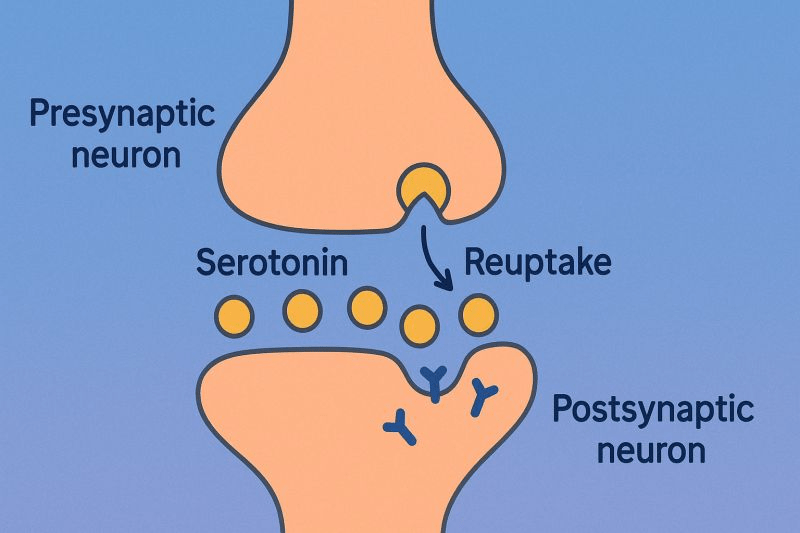
500
Explain contralateral hemispheric organization
Contralateral: sensory/motor pathways cross so one hemisphere controls opposite body side.
500
Describe narcolepsy: primary symptoms and one potential effect.
Narcolepsy: sudden sleep attacks, cataplexy in some;
Effects: Attacks usually last less than 5 mins, but can be triggered by heightened emotional states. Everyday activities, such as driving, require extra caution.
treatment: stimulant medications and scheduled naps.
500
Briefly explain how the place theory accounts for pitch perception.
Place theory: different frequencies stimulate different places along the basilar membrane, encoding pitch
500
Describe tolerance, addiction, and withdrawal. How do these contribute to a diagnosis of substance use disorder?
Tolerance: decreased effect with same dose
addiction: compulsive use despite harm
withdrawal: adverse physiological/psychological symptoms when use stops
together indicate substance use disorder.
600
Which psychological principle is represented in the area highlighted in the graph? - This is a graph of the firing of a neuron.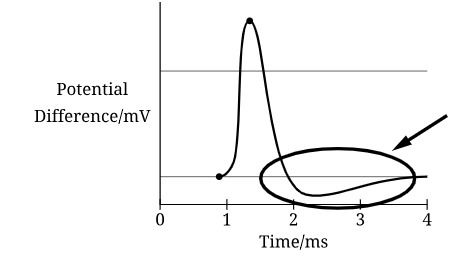
Refractory Period
600
What is the concept of neuroplasticity AND explain why plasticity is important after brain injury.
Neuroplasticity: the brain’s ability to reorganize synaptic connections. Neurogenesis: creation of new neurons (limited in adults).
Plasticity allows functional recovery and compensation after injury.