Secondary Dominants
Secondary Leading Tones
The Great Embellishers
Ulterior Motives
Sequence of Events
100
Key: C Major, Spell the V chord and the V/V Chord.
What is G-B-D and D-F#-A?
100
Key C Major. Spell V and vii0/V
What is G-B-D and F#-A-C?
100
This common visitor arrives by step from a chord tone and continues in the same direction to the next chord tone, essentially acting as a "bridge" between two different pitches.
What is a passing tone?
100
This rhythmic transformation involves "stretching" a motive by doubling the note values—making a quarter note become a half note.
What is augmentation?
100
This two-phrase structure functions like a "question and answer," where the first phrase ends with a weak cadence and the second ends with a stronger, conclusive one.
What is a period?
200
Key: C Major, Spell ii Chord and V/ii.
What is D-F-A and A-C#-E?
200
Key C Major. Spell ii chord and viio/ii
What is D-F-A and C#-E-G?
200
This flighty note leaves a chord tone by step but immediately gets homesick, returning to the original pitch it just left. 
What is a neighbor tone?
200
The opposite of augmentation, this technique "squeezes" the motive, shortening the note values to make the melody move twice as fast.
What is diminution?
200
First phrase of a period, ends in an inconclusive cadence (like a Half cadence)
Antecedent
300
Key: F Major. Spell V Chord and V7/V Chord
What is C-E-G and G-B-D-F?
300
Key D Major. Spell ii and viio/V
What is E-G-B and D#-F#-A-C#?
300
A master of suspense, this tone is "held over" from a previous chord, creating a spicy dissonance before finally resolving downward by step.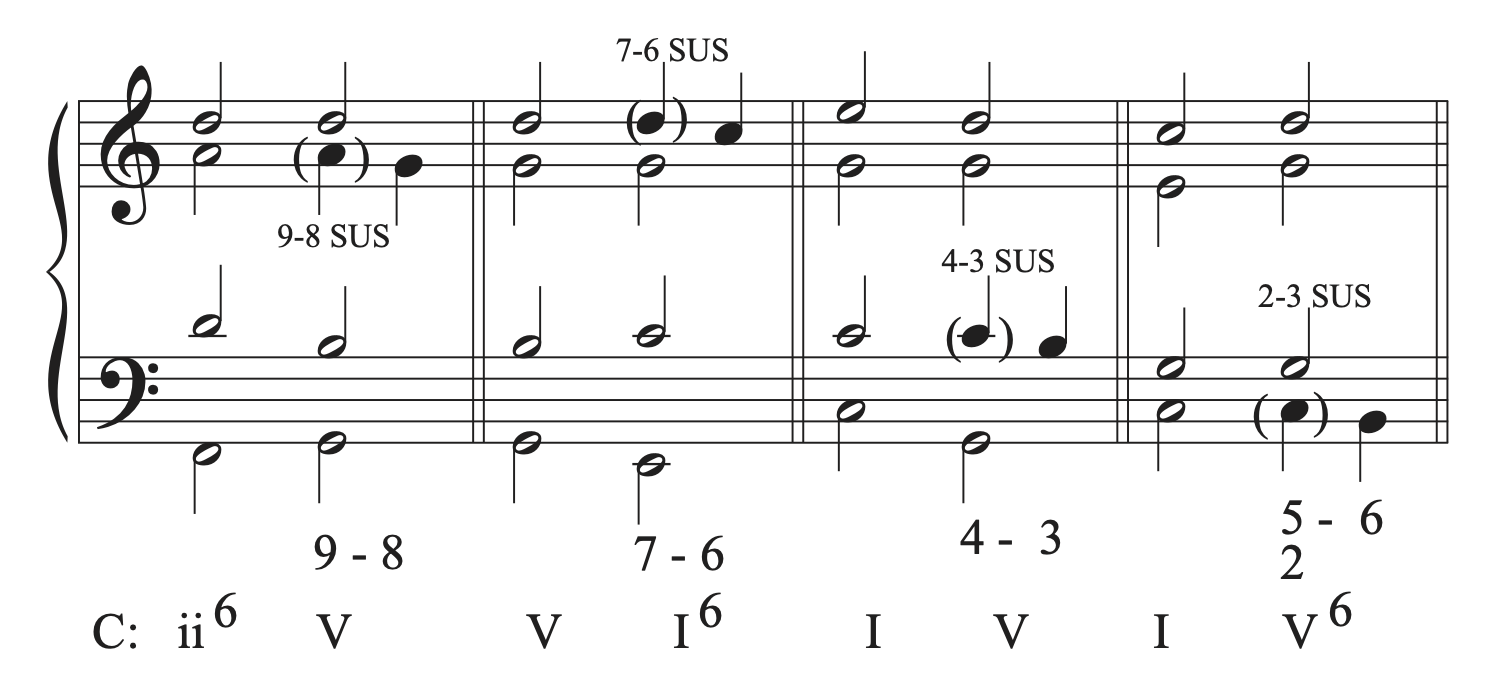
What is a suspension?
300
This device occurs when a melodic fragment is repeated immediately at a different pitch level in the same voice.
What is melodic sequence?
300
Second phrase of a period, ends on a conclusive cadence.
What is Consequent?
400
Key D Major. Spell ii Chord and V/ii Chord
What is E-G-B and B-D#-F#-A?
400
Key Ab Major. Spell V chord and viio7/V
What is Eb-G-Bb and D-F-Ab-C?
400
This "impatient" note quits the current chord early to join the next chord before the rest of the ensemble has even arrived at the bar line.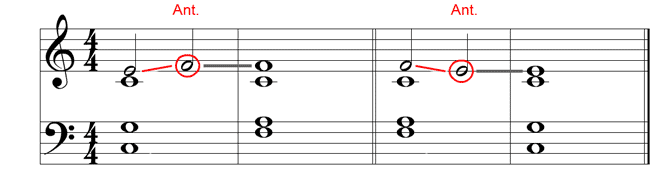
What is an anticipation?
400
When a composer takes a motive and turns it upside down—converting all upward intervals into downward ones—they are using this "reflective" technique.
What is inversion?
400
Phrases begin identically, or second phrase is a variation of the first, a-a'
What is Parallel period?
500
Key Ab Major. Spell V and V7/V.
What is Eb-G-Bb and Bb-D-F-Ab?
500
Key E Major. What is V chord and vii07/V?
What is B-D#-F# and F#-A#-C#-E?
500
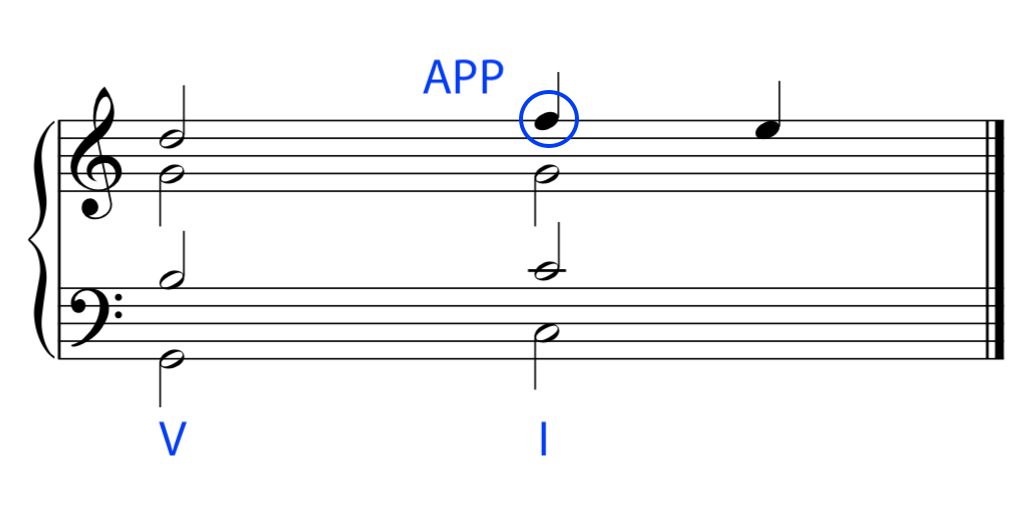 The most adventurous of the bunch, this tone leaps away from a chord tone and then resolves by step in the opposite direction.
What is an appoggiatura?
500
If a composer plays a motive backward, starting with the last note and ending with the first, they have employed this "retro" variation.
What is retrograde?
500
Two phrases are different from each other, a-b
What is parallel period?