Appy
Appy+ Tics
Pharm
Rando
Review
100
This is the treatment for a febrile patient who is tachycardic to 110, has tenderness in the RLQ, and has a CT scan showing a dilated appendix with surrounding fat stranding and a 4cm enhanced collection at the tip.
IV abx and percutaneous drainage
100
This is Sudecks Point
The areas of the colon that are more susceptible to ischemia include the splenic flexure (Griffith point) and the rectosigmoid region (Sudeck point).
100
This is the mechanism of action of Omeprazole and Pantoprazole
Irreversibly block the hydrogen-potassium pump within parietal cells, effectively blocking all acid secretions in the stomach
100
This laparotomy suture technique minimizes the risk of developing incisional hernias
Running 2-0 PDS with 5mm bites spaced 5mm apart.
100
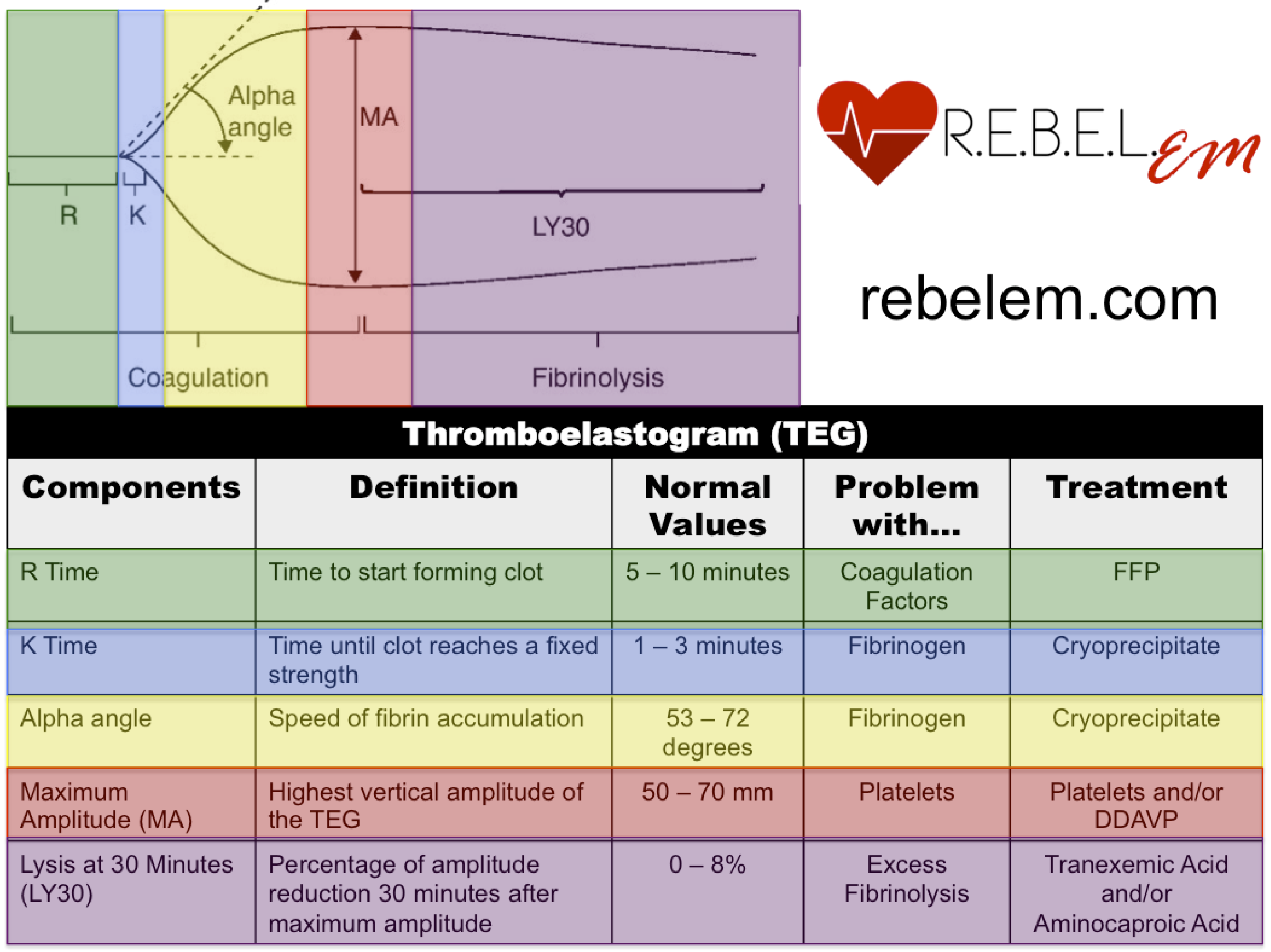
Patient with prolonged K time need this
200
This is the next step for a patient who had an uncomplicated appendectomy 1 week ago, and pathology showed a 1.8 cm adenocarcinoma at the tip of the appendix
He will need a colonoscopy, CT C/A/P, and tumor markers.
200
This is the definition of Hinchey classification Stage II
stage I: diverticulitis with a pericolic or mesocolic abscess
stage II: pelvic abscess
stage III: perforation with purulent peritonitis
stage IV: perforation with fecal peritonitis
200
What is the mechanism of action of Teglutide
GLP-2 Analogue
200
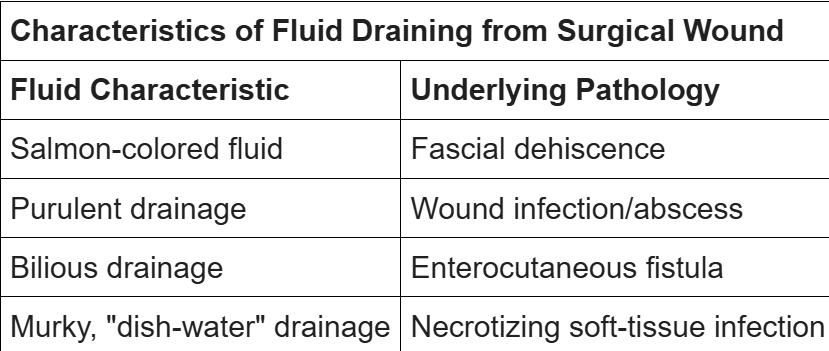
A frail 79-year-old female with a history of COPD, CAD, obesity, DM, and rheumatoid arthritis is s/p open sigmoidectomy with Hartmann's procedure for complex diverticulitis with feculent peritonitis. On POD 2, she has a tender soft bulge under the midline laparotomy with salmon-colored fluid soaking through her dressing. What is the next best step?
Wound exploration in the OR.
Risks for dehiscence: Age, obesity, COPD, immunosuppression, CVD, wound infection, malnutrition, renal failure.
200
This is the free water deficit for a 60kg F with a Na of 160
Female = FWD = W x 0.6 (current na -140/140) - so 6L for him
60 x 0.6 (160-140/140) = 5.1L
Male is the same but 0.6
300
A 46-year-old male with PMHx of HIV, HTN, asthma, and GERD presents with abd pain and what appears to be early appendicitis on CT. They are HDS, Afebrile, with no leukocytosis, and ask if this can be managed non-operatively.
What do you tell him?
If appendicitis is suspected, an operation should not be delayed because perforation can be devastating in immunocompromised patients.
300
This is the next step for a 53-year-old patient admitted with acute diverticulitis with a 2cm pericolic abscess who is successfully managed with antibiotics
Colonoscopy in 6 weeks.
300
This is the antidote for ethylene glycol toxicity
Fomepizole because it inhibits the metabolism of ethylene glycol.
Ethylene glycol metabolism produces oxalate, which precipitates calcium oxalate in tissue and urine and causes toxicity.
Drowsiness, dyspnea, seizures, renal failure, respiratory failure, and multi-organ failure.
300
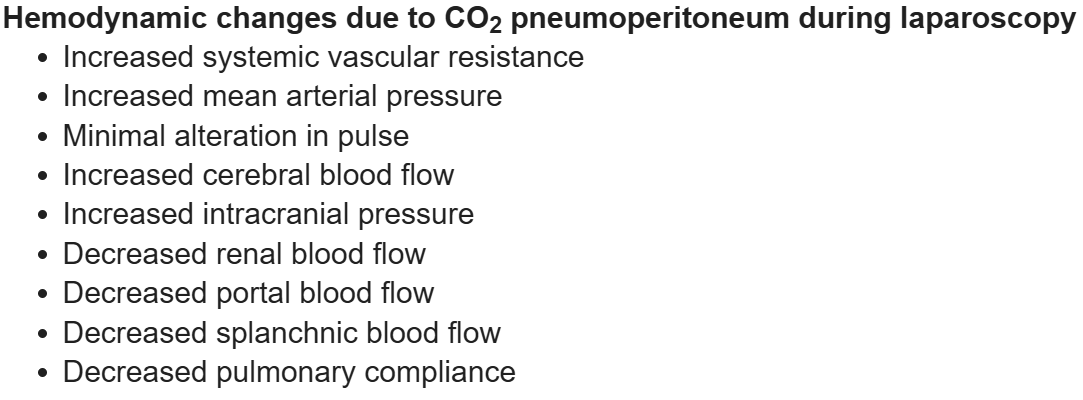
True or False:
During MIS surgery, pneumoperitoneum from carbon dioxide increases antidiuretic hormone.
True: Due to elevated intra-abd pressures decreasing blood flow to the kidneys and altering central vascular pressure--->neuroendocrine response to retain water
300
A 16 yo M s/ Burkitt Lymphoma is admitted and started on induction chemotherapy. Initial Labs are normal. 2 days later, his Cr is 2.5 and his K is 6.5. What additional electrolyte laboratory abnormality would be expected in this patient and why?
Hypocalcemia – due to tumor lysis syndrome. Massive tumor cell death leads to lysis of the tumor cells and release of intracellular contents K, Ph and nucleic acids as well as metabolic byproducts and you see rapid development of hyperkalemia, hyperphosphatemia, hyperuricemia. The hyperphosphatemia cause Ca to precipitate as calcium-phosphate leading to hypocalcemia.
400
A 35-year-old man with a history of HTN and DM who has had a laparoscopic cholecystectomy presents with 3 days of abdominal pain. His history, laboratory, imaging, and examination findings are consistent with a diagnosis of acute appendicitis. He denies any known medication allergies. What is the most appropriate choice of antibiotic for this patient?
A. IV levofloxacin
B. IV metronidazole
C. PO amoxicillin/clavulanic acid
D. IV cefoxitin
E. PO ciprofloxacin and metronidazole
D. IV cefoxitin
An IV cephalosporin, such as cefoxitin, is the most appropriate choice of the medications listed. Initial antibiotic management in acute appendicitis targets the most common flora, which include aerobes and anaerobes, and should therefore have broad-spectrum coverage. Antibiotics should be given intravenously for at least the first 24 hours, regardless of planned management (eg, operative vs nonoperative). The combination of ciprofloxacin and metronidazole is another appropriate combination of antibiotics for acute appendicitis, particularly in patients with penicillin or cephalosporin allergy. However, the oral formulation of ciprofloxacin and metronidazole would be inappropriate at this time in the patient’s course. IV levofloxacin and metronidazole, which are appropriate antibiotics as part of a combined regimen, do not provide adequate antimicrobial coverage when given individually.
400
A 45-year-old woman presents with a two-day history of right lower quadrant pain and leukocytosis. The patient is taken to the OR and undergoes laparoscopic appendectomy, which was uncomplicated. The pathology report shows a 1.5-cm appendiceal neuroendocrine tumor (NET) at the tip of the appendix with goblet cell morphology. Staging workup is negative for distant metastases. What is your next step in managing this patient?
A. No further intervention
B. Adjuvant chemotherapy
C. Hyperthermic intraperitoneal chemotherapy (HIPEC) and cytoreductive therapy
D. Right hemicolectomy with lymphadenectomy
E. Somatostatin analog treatment
D. Right hemicolectomy with lymphadenectomy
Appendiceal NETs most commonly present as acute appendicitis secondary to luminal obstruction from tumor growth. Tumors smaller than 2 cm and located in the body or tip of the appendix are adequately treated with appendectomy alone. However, if there are high-risk histologic findings, including (1) lymphovascular invasion, goblet cells, or mucin production; (2) involvement of lymph nodes in the mesoappendix; or (3) a positive margin, the patient should undergo a right hemicolectomy.
400
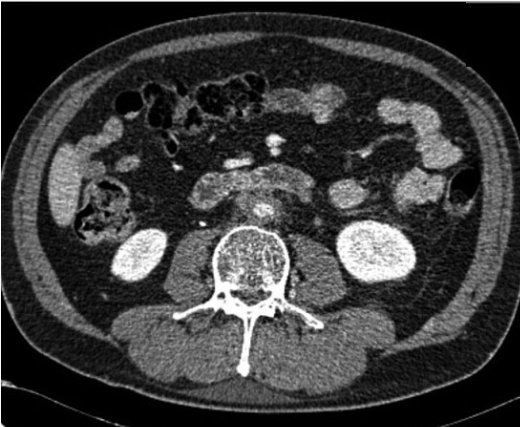
This is the first-line treatment for idiopathic retroperitoneal fibrosis.
First-line therapy: High-dose glucocorticoids
Presentation: Back/abd/flank pain, decreased GFR due to Hydronephrosis.
CT: Confluent RP mass encasing the anterior or lateral sides of the aorta, encircling and compressing the IVC, and often causing medial deviation of the ureters.
Histology: Type I collagen fibers in thick irregular bunches surrounding small vessels
400
True or False:
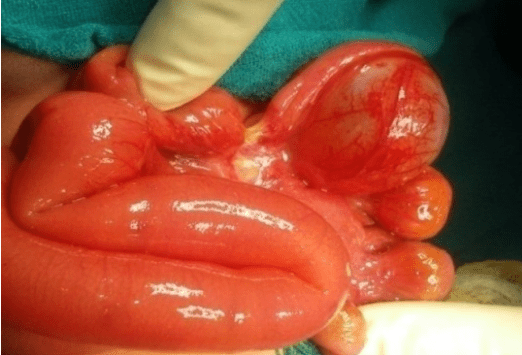
Mesentaric Cysts have a 12% chance of malignant transformation
False
3% risk of malignant transformation
Typically freely mobile and perpendicular to the mesentery. No communication to the bowel or lymphatic system.
Treatment: Total cystectomy with bowel resection if needed.
400
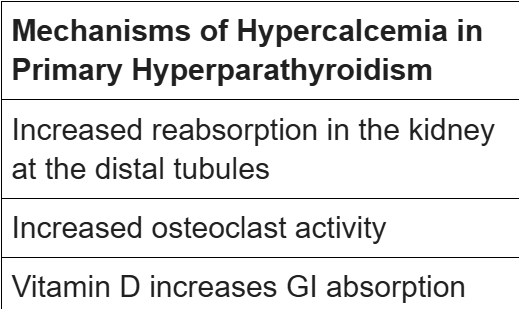
A 45-year-old woman presents with fatigue and weakness and is found to have hypercalcemia and elevated PTH. She is diagnosed with hyperparathyroidism. Which of the following mechanisms is contributing to the patient's electrolyte abnormalities?
A. Increased calcium reabsorption at the proximal tubules
B. Increased calcium reabsorption at distal tubules
C. Increased calcium reabsorption at the collecting tubules
D. Increased calcium excretion at the proximal tubules
E. Increased calcium excretion at the distal tubules
500
A 47-year-old woman with a history of lymphoma currently undergoing chemotherapy presents to the ED with several days of right lower quadrant pain and anorexia. The patient is afebrile and hemodynamically stable. Laboratory studies are significant for a WBC of 1400/µL. A CT scan shows fat stranding and bowel wall thickening in the area of the cecum and appendix. On examination, the patient has right lower quadrant tenderness with voluntary guarding.
What diagnosis do you suspect?
neutropenic enterocolitis, also known as typhlitis.
Patients may present with similar symptoms and examination findings to acute appendicitis (right lower quadrant pain and anorexia). However, neutropenia and ileal and/or cecal inflammation on CT scan should raise suspicion for typhlitis. It is important to recognize this pathology as an important differential diagnosis, particularly in immunocompromised patients, because the management differs significantly. Surgery should be avoided except in cases of frank perforation, uncontrollable hemorrhage with coagulopathy, or clinical deterioration.
500
A 57 yr woman presents to the clinic following an episode of diverticulitis 1 month ago. She has new-onset rectal pain, urinary incontinence and pneumaturia. The colonoscopy reveals moderately severe diverticulosis. The CT imaging is shown below. 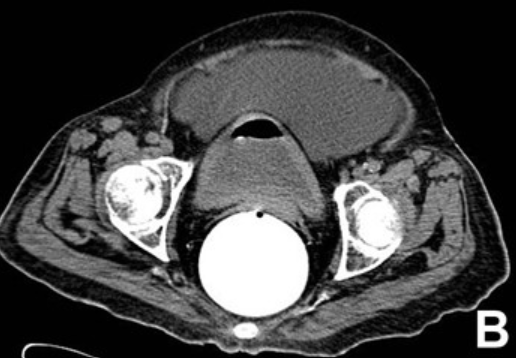
What is the diagnosis and what is the management?
Colectomy with fistula take-down and indwelling catheter placement for 7 to 10 days
In this patient with history of diverticulitis, findings of pneumaturia and CT with air in the bladder are consistent with a colovesical fistula. Although diverticular fistulas usually do not close spontaneously, there is rarely an indication for emergent surgical intervention. In the majority of patients, an elective one-stage procedure with resection of the involved segment of bowel and primary anastomosis can be performed. In most patients with colovesical fistulas, the fistula can be “pinched off,” leading to either no visible defect in the bladder or a small defect which can be sutured closed and managed with indwelling Foley catheter and closed suction drain. A formal bladder resection and repair is rarely necessary.
500
This is how much steroid a patient who is taking take 10mg/day of prednisone for 5 weeks should be given prior to a major surgery.
- Patients in the intermediate category, taking prednisone 5 to 20 mg/d (or its equivalent); those who have discontinued steroids in the prior 6 to 12 months; or those who are taking very high-dose or high-potency inhaled or topical steroids may benefit from HPA axis testing preoperatively. In patients found to have adrenal insufficiency or to be at risk for this condition preoperatively, the following "stress dose" of steroids is recommended:
- For minor surgeries (eg, open inguinal hernia repair)—hydrocortisone 25 to 50 mg intravenously on the day of surgery, with a return to normal dose thereafter
- For major surgeries (eg, colectomy)—hydrocortisone 50 to 75 mg intravenously every 8 hours for 24 to 48 hours, with a return to normal dose thereafter
500
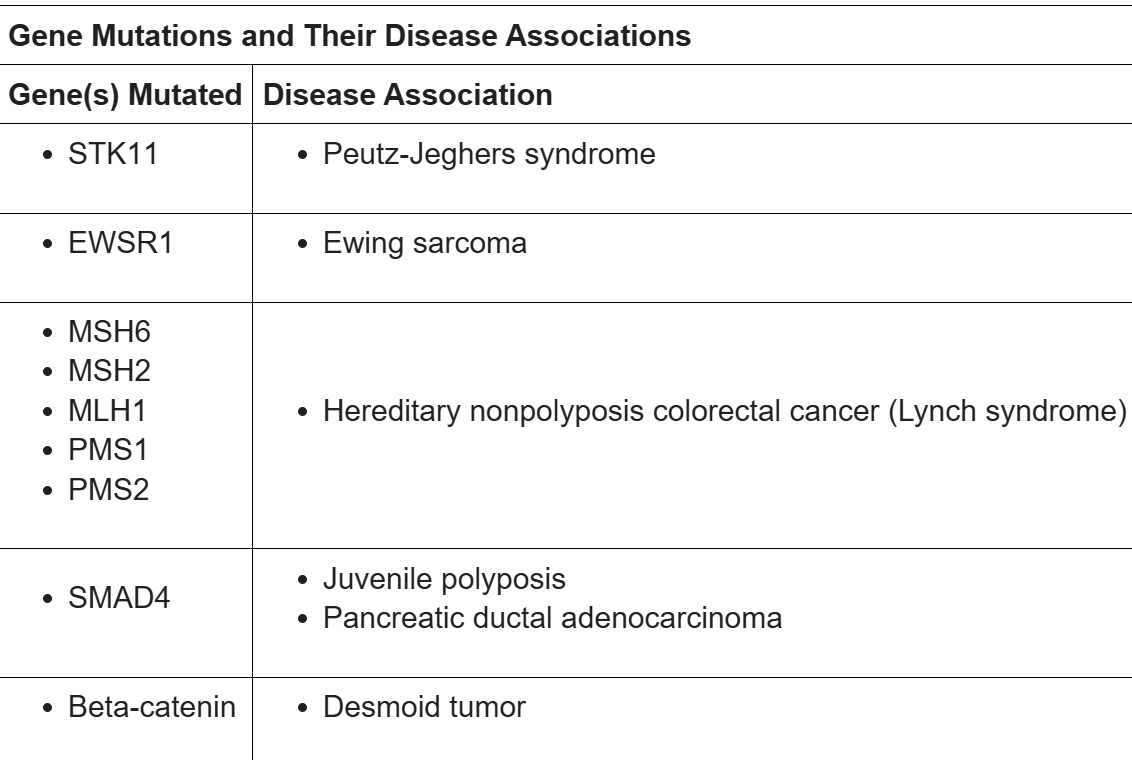
Desmoid tumors associated with FAP are driven by alterations in this pathway
WNT/APC/Beta-Catenin pathway leading to accumulation of beta-catenin and overexpression.
500
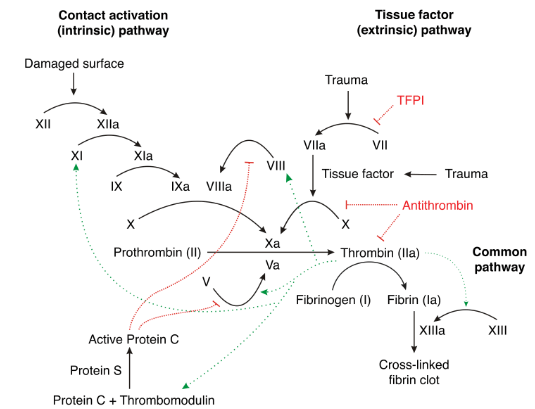
A patient presents to the ED with abd pain. Labs show an elevated PTT. Which of the following parts of the clotting cascade is associated with this finding?
A. Clot formation
B. PLT adhesion
C. PLT aggregation
D. Intrinsic Pathway
E. Extrinsic Pathway
D. Intrinsic Pathway
A normal PTT time requires coag factors: I, II, V, VIII, IX, X, XI. PTT measures the overall speed at which blood clots first via the intrinsic pathway.
Extrinsic pathway is measured by the PT/INR