Vocabulary & Terms
Ancient Aegean I
Ancient Aegean II
Ancient Aegean III
GENERAL Important Things You Should Know
100
★ Part of the Treasury of Atreus, what is this image an example of?
A Relieving Triangle
100
These minimalist, marble statuettes are apart of what Aegean culture?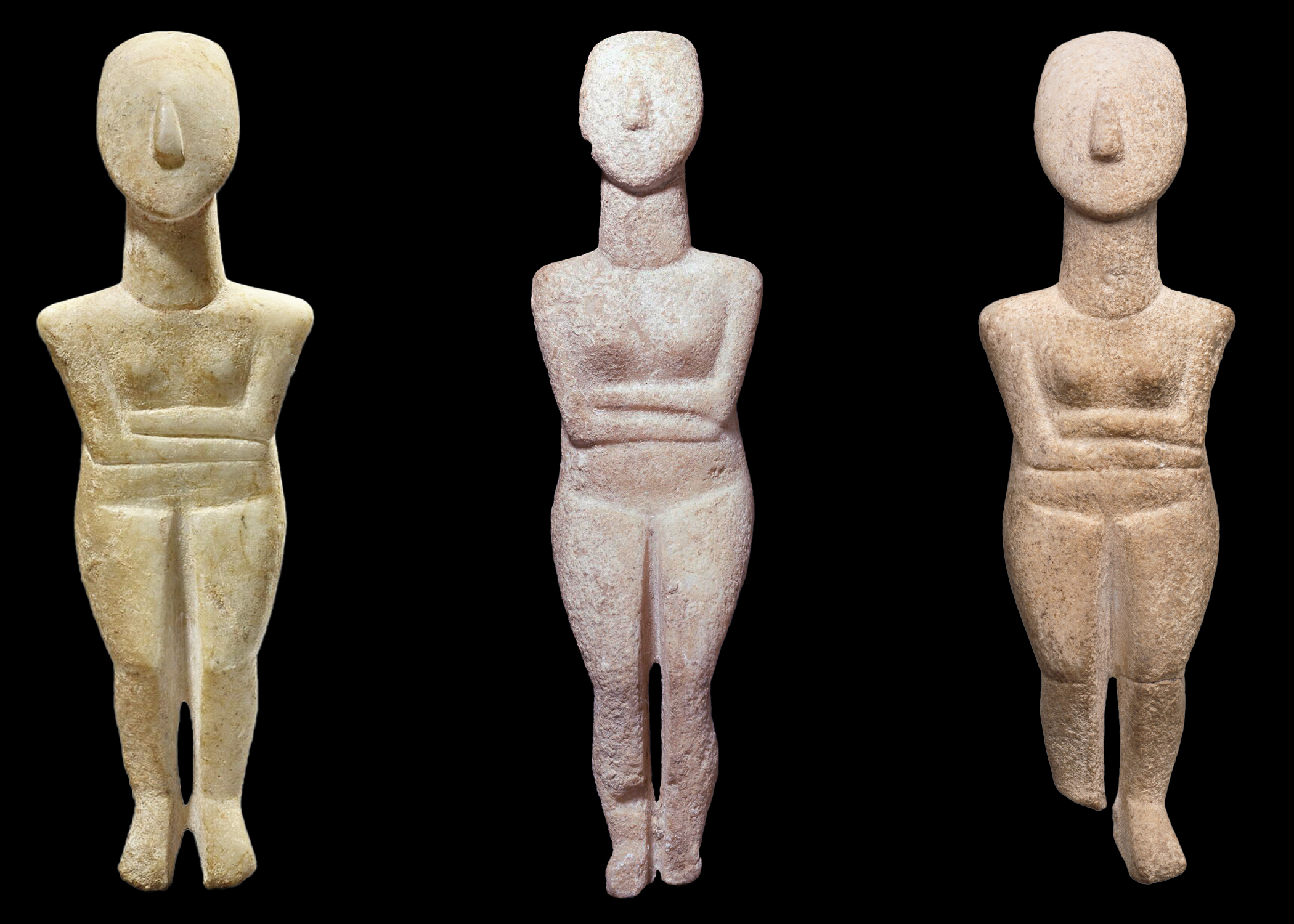
Cycladian
100
What is this fresco (Toreador Fresco from the Palace of Minos) depicting (1) and what was the possible meaning behind it? (2)
1) Bull-leaping or bull jumping
2) Though it's unclear, it likely had a ritual or ceremonial function, possible rite of passage.
100
In Mycenaen culture, local chieftains and kings were buried in these, known as...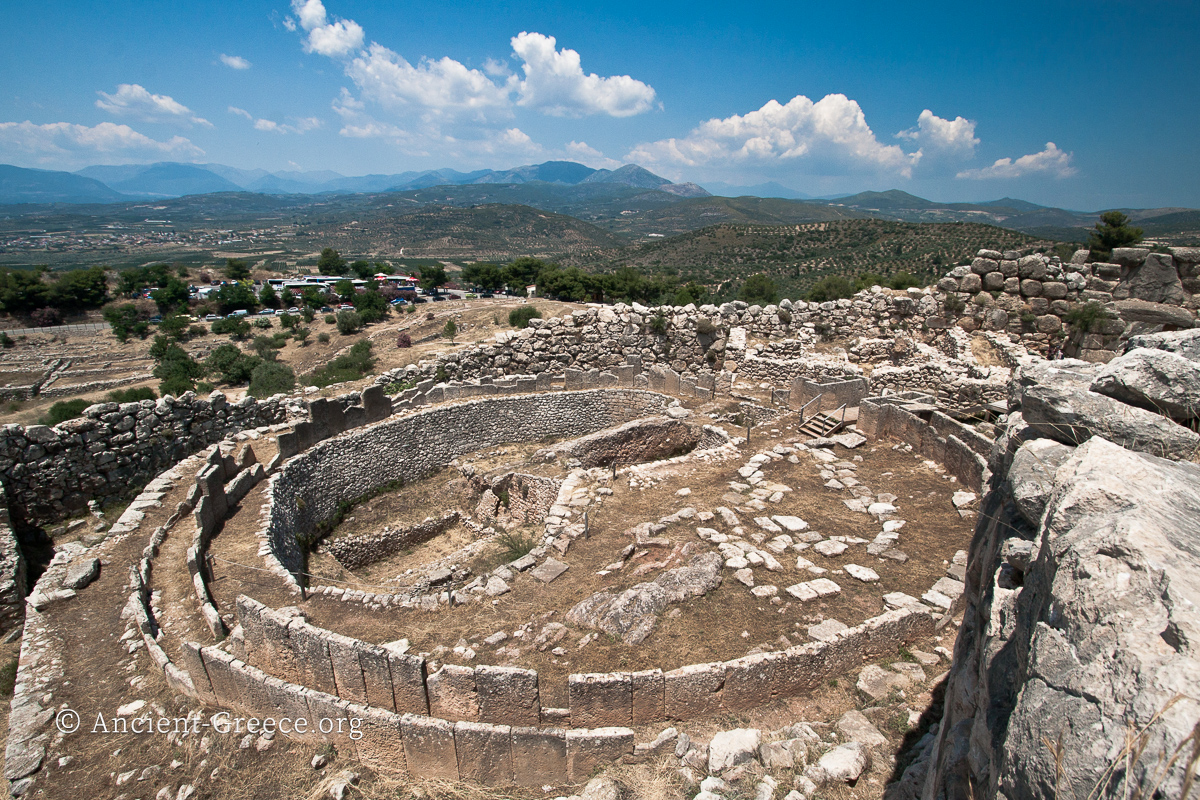
shaft graves
(NOTE: Mycenaeans were also buried with grave goods, though modest compared to Egypt, this indicates the unprecedented wealth, opulence and power of the Aegean world.
100
Besides marine life, what animal was considered sacred to the Minoan civilization and features heavily in their art?
The Bull
200
★ These Minoan "snake goddess" statuettes are made from faience. What is faience?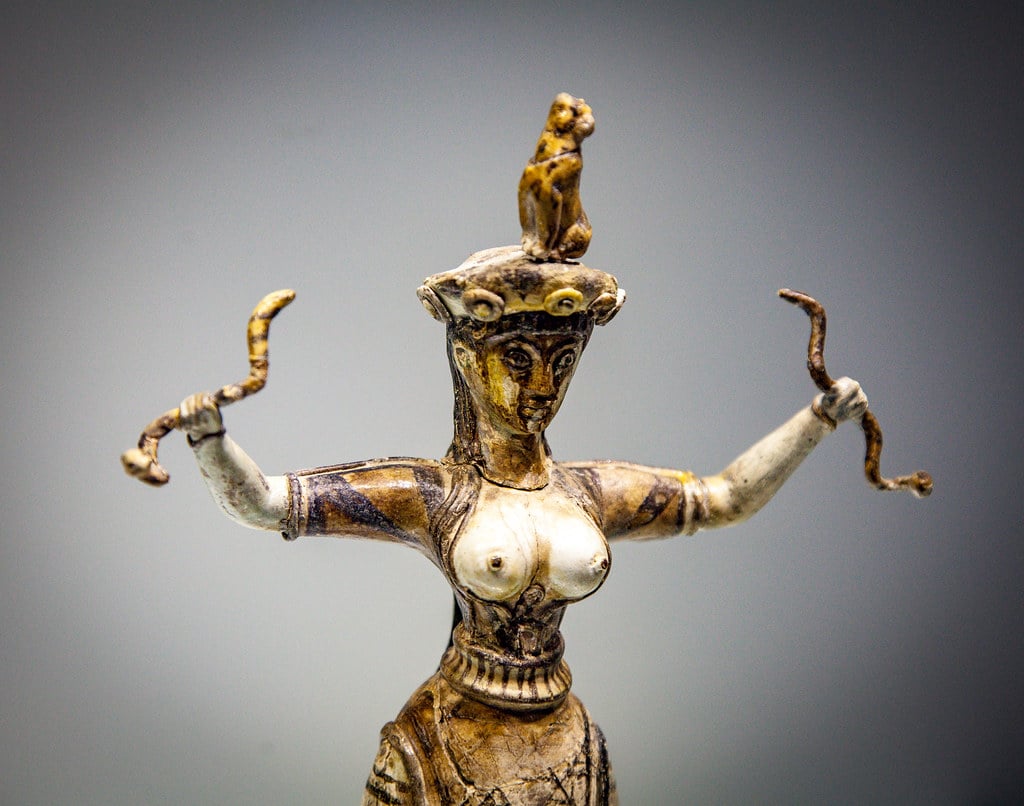
A fired mixture of sand and clay (Fire + sand + clay)
200
What might these Cycladic "frying-pans" actually be used for?
Possibly used either as a sort of "makeup palette" for mixing pigments OR as mirror when shined.
200
What is the significance of the Spring Fresco Room in Akrotiri, Thera

The first pure landscape painting in the history of art
200
The "Treasury of Atreus" is a underground, beehive shaped burial chamber found in the citadel of Mycenae, it is made up of two architectural components: an open air entrance passage called a ________ (1) and conical/domed roof called a ________. (2)
1. dromos - 2. tholos
200
What are the names of the three Bronze Age cultures of the Aegean sea? (IN CHRONOLOGICAL ORDER)
1. Cycladic, 2. Minoan, 3. Mycenaean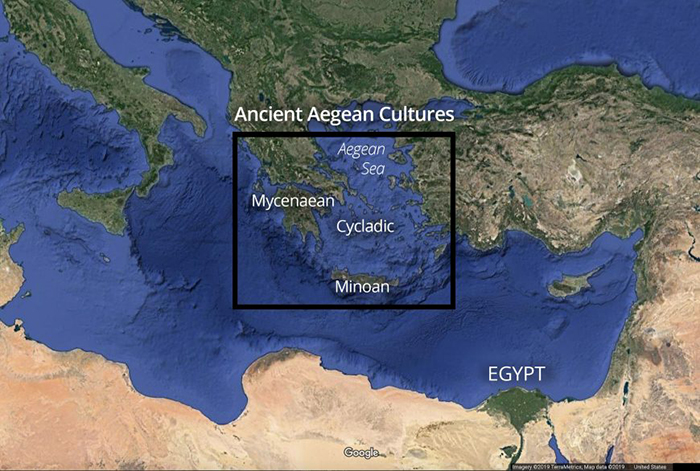
300
★ The Great Lion's Gate at Mycenae has three important artistic/architectural elements to it: the Post-and-Lintel, Relieving triangle, and ____________.
Heraldic Pose (figures mirroring each other)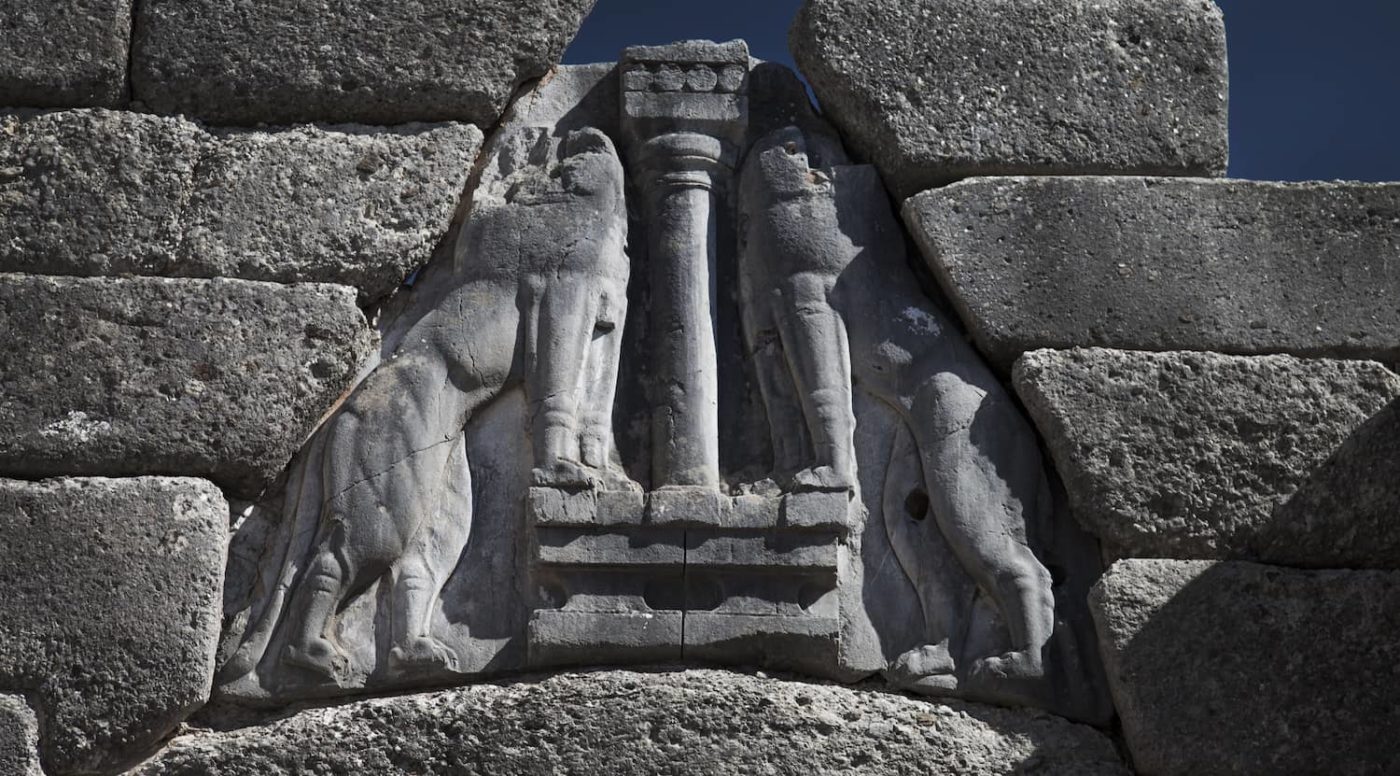
300
Where is the so-called Queen's Megaron located (1) and what the word "megaron" mean (2) ?

(1) The Palaces of Minos at Knossos, Crete - (2) large room
300
This is so-called Flotilla Fresco was one of the numerous interior murals in the town of Akrotiri, an old Cretan colony on the island of Thera (Santorini), was remarkably well-preserved, why?
Because of volcanic eruption in c. 1500 BCE, the town was was covered in ash, leaving numerous of the interior murals / frescos intact.
300
In 1876, Heinrich Schliemann in found this mask (made up of hammered sheet gold) and dubbed it the "face" of this famous greek hero of the Illiad.
The Face of Agamemnon
(NOTE! It's chronologically impossible for it to actually be Agamemnon, and was likely the face of a different Mycannean king)
300
The Lion's Gate, The Treasury of Atreus, and the Great Grave Circle are all structures located in this great citadel.
The Great Citadel at Mycenae
400
★ This architectural construction method where successive horizontal bricks or stones are stacked, and offset inward until they meet at the top, overlapping, to span an opening or a roof a space.
Corbel Vaulting
400
This bull art piece was used as a ritual vessel for libations, it's known as...
(BONUS POINTS: If you can name what stone it's made from!)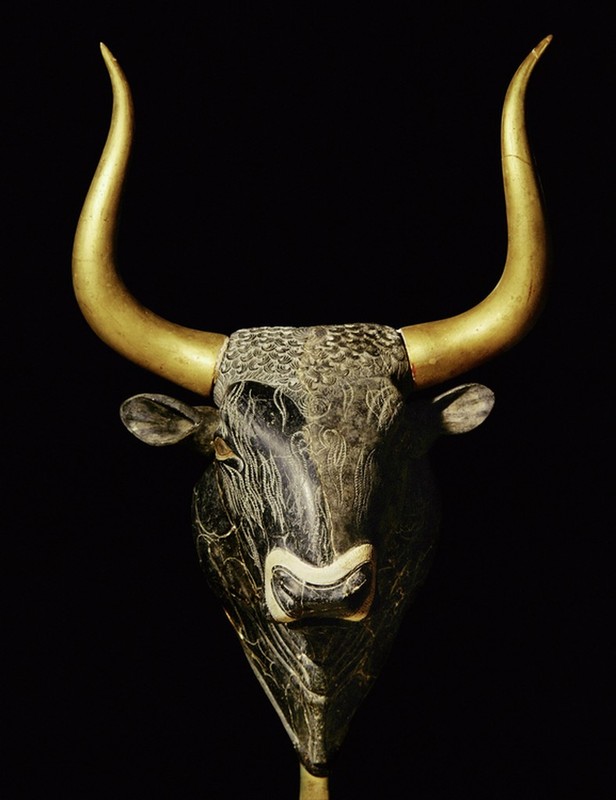
A rhyton
(BONUS: steatite / soapstone)
400
Found in Crete, this vase is a representation of the pinnacle of the Minoan "Marine Style," it uses the rounded surface of the vase to create dynamic composition and as an organic, lively depiction of the natural world (specifically a singular animal in this case.)
The Octopus Vase
400
These "Vaphio Cups" found in Mycenaean tomb, use a metalworking techinque where artisans hammered/embossed thin sheets of malleable gold to create raised relief designs, this technique is called _________ .
(BONUS: Explain the possible significance of the imagery and the cultural differences between the to cups)

repousse technique
(BONUS: Though we don't know much, there's analysis that suggest that while they relate to each other, they are not strictly a pair and could have been created by other artists. The cup on the left is believed to be Mycenaean because of it's more violent imagery, while the cup on the right is thought to be Minoan because of it's peacefulness.
400
Where were the three Aegean cultures primarily located? (Cycladic, Minoan, Mychannean)
- Cycladic Cultures = Islands (The Cyclades Islands)
- Minoan Culture = Crete
- Mycenaean = Mainland Greece (specifically the Peloponnese)
500
The Mycenaeans built massive fortifications, a massive fortress called a _______ (1), protected using mortarless, limestone _______ ________ (2) as a defensive structure, suggesting a more war-like and aggressive people.
1. Citadels. - 2. Cyclopic Walls
500
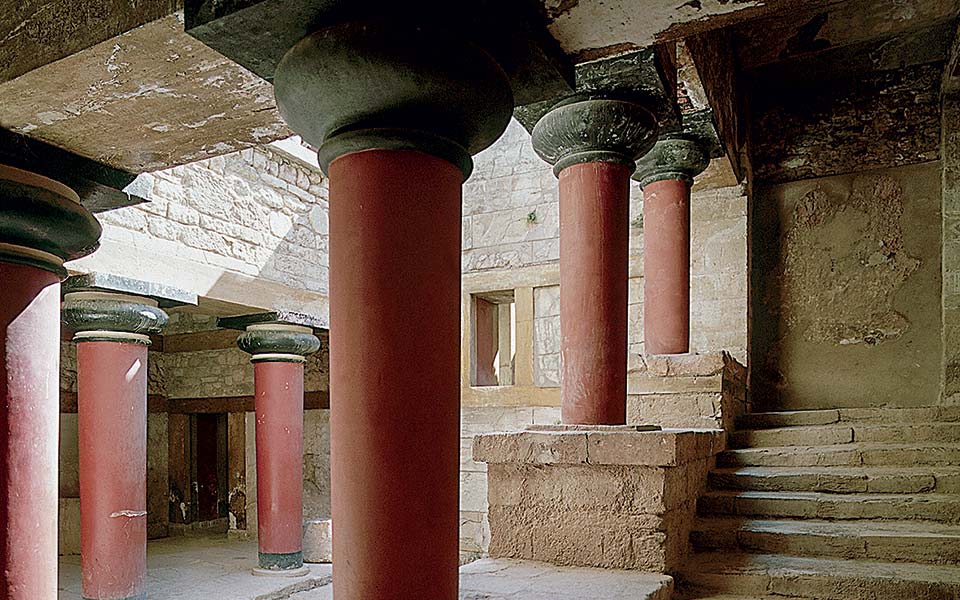
(FILL THE BLANK) The "so-called Palace of Minos" at Knossos was a multi-purpose hub, filled with a labyrinth of ceremonial rooms, shrines, courts, storerooms, as well as frequent ________ that illuminated and ventilated theses interior spaces with natural light.
Light Wells
500
What is the Grandstand Fresco of Knossos depicting (1) and what are some of the visual language/imagery shown in this piece? (2) Explain.
1) Spectators witnessing a ritual event
2) - The red disembodied heads representing a large crowd - Bull Horns on a shrine (sacred to Minoan culture) - Central women doing some sort of ritualistic activity - specific polychromatic color palette
500
At the megaron at Tiryns and the megaron at Pylos we see some important architectural elements: including a deep porch seperated by ______ (1), a _______, and an _________.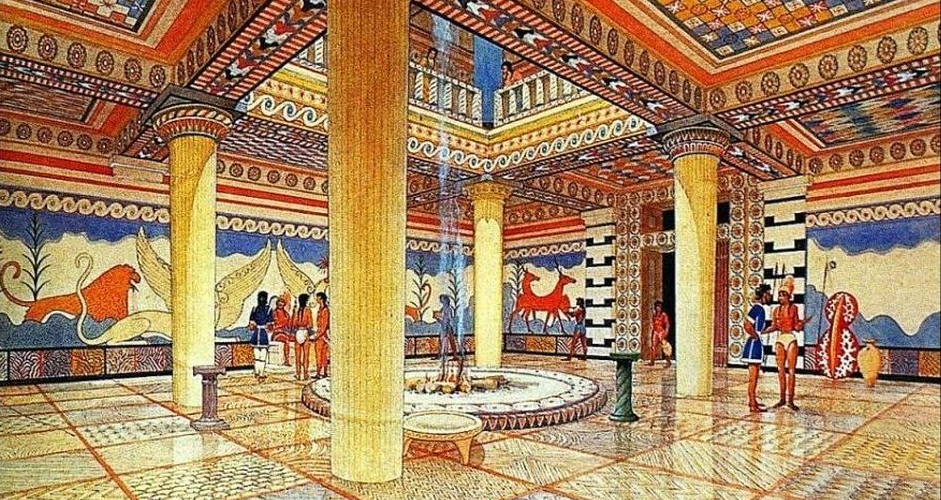
1. columns. - 2. vestibule. 3. audience hall
500
How did the Minoan distinguish gender in their artwork? (Besides the obvious garments)
Skin color (Males were often dark-skinned, while the women were pale)