Vocabulary & Terms
Etruscans I
Etruscans II
Important Things You Should Know
100
Made from terracotta this a sculptural ornament was placed at the apex or the corners of a temple roof.
Acroterion
100
This tomb is an example of post-mortem domesticity. The walls and the columns, are decorated with bas relief in colorful stucco (painted and carved) depicting objects used in daily life by the Etruscans
The Tomb of Reliefs at Cerveteri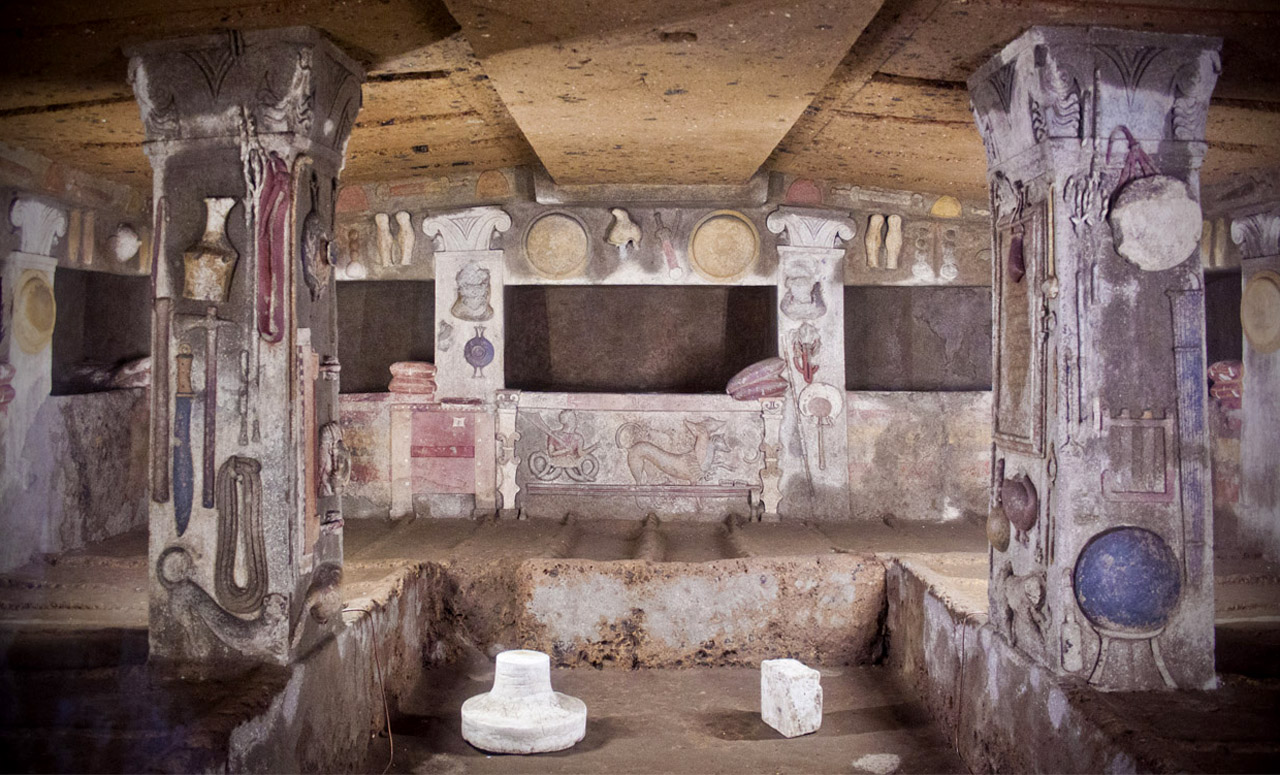
100
The Aplu (Apollo) from the Portonaccio Temple at Veii, while there is much in emotion and movement, he still is relatively ridged with an archaic smile and a garment that looks similar to ______ _______.
Roman Toga
100
The Etruscans civilization developed in mainland ______ (1), their culture was influenced by Greek traders, and by c.500 BCE they would eventually be assimilated in the _______ _________ (2).
1) Italy 2) Roman Republic
200
Like at the The necropolis of Cerveteri, Etruscans formed tombs in the shape of mounds called...
Tumulus (or tumuli)
200
At the necropolis of Tarquinia, the Tombs of the Leopard and the Tomb of Hunting and Fishing, depict the pleasures of the __________.
afterlife
200
This bronze statue was originally just the ___-_____ in c. 500 BCE, and the later additions of young Romulus and Remus were made by Antonio Pollauiolo.
She-Wolf
200
The Etruscan civilization, who called themselves _____ (1) , was a lose accumulation of city-states that shared a common language and culture, but were not _______ (2).
1. Rasna 2. Unified
300
Like many of the tombs in the necropolis at Cerveteri, the Estruscans used a this local stone: a soft volcanic rock known as ____, which is easy to cut and hardens after prolonged exposure to the air.
tuff
300
This sarcophagus from Cerveteri (Sarcophagus of the Spouses) is unique portrayal of marital closeness through the softness of their embrace, as well as having both husband and the wife on the same scale. They are also depicted with small, but warm _______ smiles.
Archaic
300
This bronze sculpture, known as The ________ bears an Etruscan inscription that includes the name Autus Metellus. The inscription shows that the workmanship is Etruscan, but the subject could possibly be Roman, due to it's garment and raised arm gesture.
Orator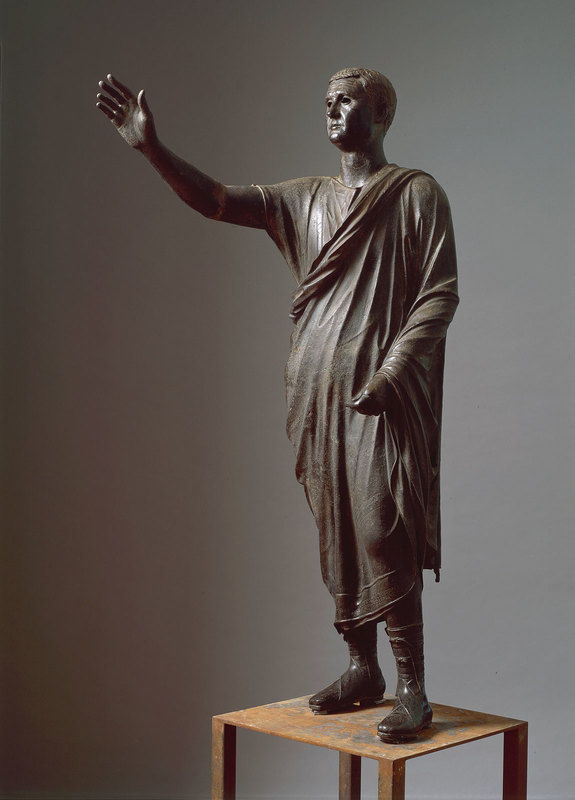
300
The Etruscans used THIS material extensively for their sculpture, architecture, and daily objects, largely because stones like marble and limestone were not locally available in central Italy.
Terracotta
400
Those who created the tumuli excavated into bedrock, cutting away a burial chambers and a path, often several _____ led to independent networks of chambers within a single mound.
dromos (dromoi)
400
These painted terracotta Revetment plaques from Acquarossa, depicts scenes from a _______.
Banquet
400
The Portrait of a Man from Manganello, is an example of funerary portraiture and the early transition into individual likeness in sculpture, due to terracotta's leaning itself to easy model-ing of distinctive facial features. It also was likely ____________.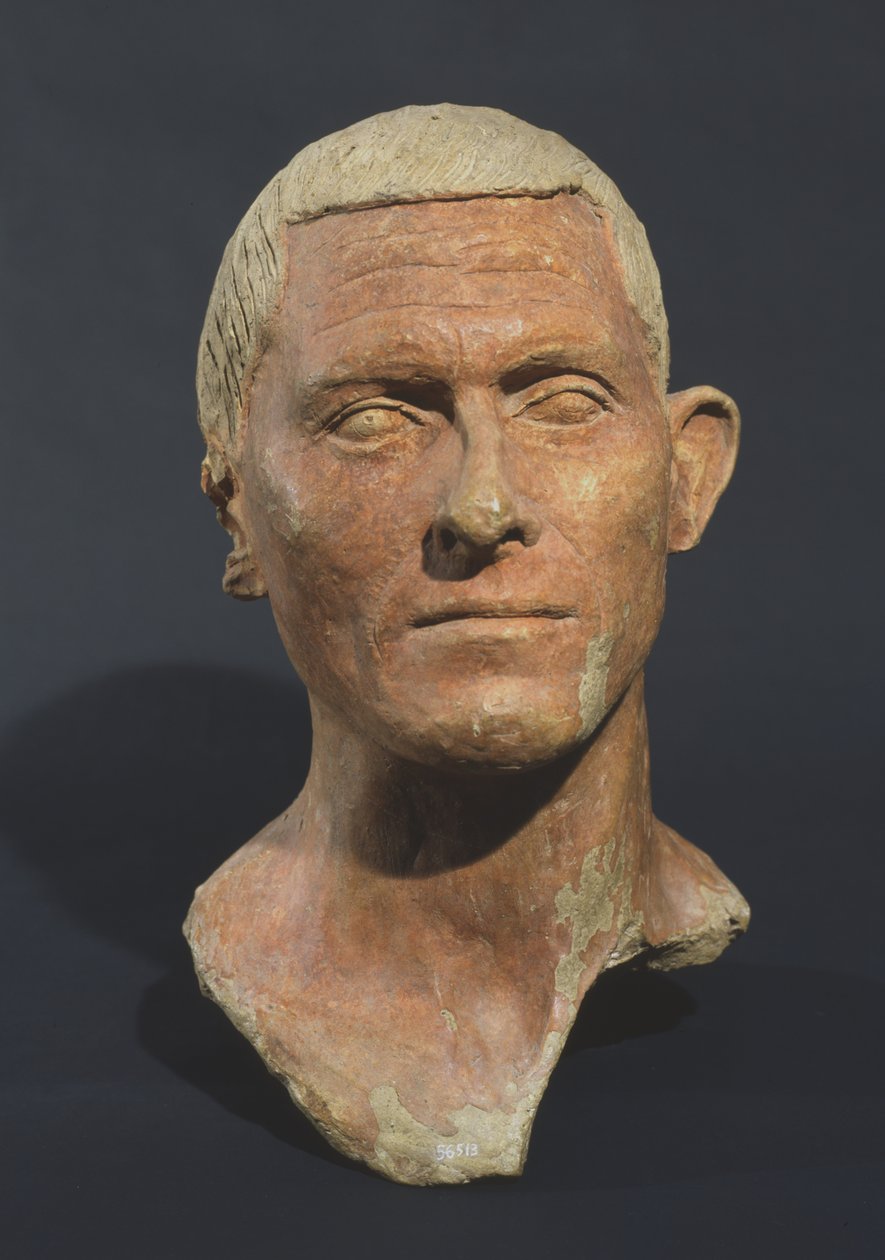
Painted
400
An Etruscan master sculptor and the only Etruscan artist specifically named by ancient writers like Pliny the Elder. (Possibly made the Aplu statue, but unsure)
Vulca de Veii
500
A molded, painted ceramic plaque or architectural facing used to protect vulnerable wooden and mudbrick structural parts from weather damage while providing rich artistic decoration.
Revetment
500
While the Portonaccio Temple at Veii is modeled after the Greeks, they are designed very differently. It is very _________ with only one entry point, and the _____ located on only one side and divided into multiple rooms.
1) directional 2) cella
500
Monumental building and residential complexes that may have been palaces or large villas. An especially fine example existed at ______ _________ (present-day Murlo), where numerous rooms framed a large central courtyard, an interior colonnade and altar.
Poggio Civitate
500
Etruscan cities were located on ______ (1), close to water, and w/ grip planning. The houses had foundations of _____ with building of wood or mud brick
1. hilltops 2. stone