Atoms
Macromolecules
The Cell Membrane
Structure and Function
Putting it all together
100
This atom can form four bonds allowing it to form complex biological molecules.
What is carbon?
100
The macromolecule that is made of glycerol and fatty acids.
What are lipids?
100
The main component of the bilayer.
What are phospholipids.
100
The monomer or building block of proteins.
What are amino acids?
100
The term that describes non-living matter like atoms and molecules.
What is abiotic?
200
Type of bonds that form when atoms share electrons.
What is a covalent bond?
200
The monomers of proteins. 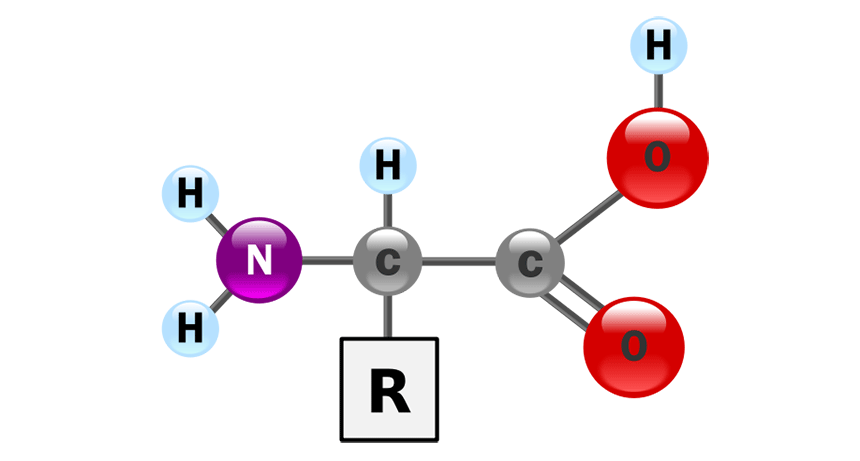
What are amino acids?
200
The part of the cell membrane that is hydrophobic.
The tails (interior) of the membrane.
200
This monomer is the building block of carbohydrates/ 
What are saccharides? (glucose)
200
The macromolecule a sprinter would consume before the 500 meter dash.
What are carbohydrates?
300
The type of bond shown here
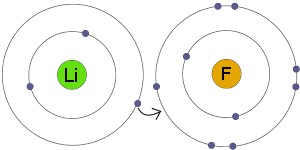
What is ionic?
300
Sucrose and Fructose are examples of this macromolecule.
What are carbohydrates?
300
This allows the membrane to be flexible and not rigid.
What is cholesterol?
300
Structures that allow large molecules to pass from one side of the membrane to the other.
What are transport/channel proteins?
300
An example of a nucleotide
What is DNA or RNA?
400
An element that needs two electrons to be stable.
What is hydrogen?
400
The three parts of a nucleotide.
What are sugar, phosphate and base.
:max_bytes(150000):strip_icc()/what-are-the-parts-of-nucleotide-606385-FINAL-5b76fa94c9e77c0025543061.png)
400
The interior of the cell comprised of a water-based fluid.
What is the cytosol?
400
Blood types A, B and O can recognize each other because of these.
What are carbohydrate chains?
400
The name of this molecule. 
What is a phospholipid?
500
The names of all six elements that make up 97% of all living things.
What are:
Carbon, Hydrogen, Oxygen, Nitrogen, Phosphorus and Sulfur.
500
The name of the reaction that removes water when polymers form.
What is dehydration synthesis?
500
The part of the membrane that faces the exterior because it is hydrophilic.
What are the heads of the phospholipids?
500
This molecule provides living things with long term energy and insulation from the cold.

What are lipids?
500
The number of layers that make up the cell membrane.
What are two; the phospholipid bilayer?