First & Second
Third & Fourth
Fifth & Sixth
Seventh & Eighth
100
 Life, Liberty, & The Pursuit of Happiness. The 1st amendment grants you many freedoms, such as the Freedom of Speech, Freedom of Religion, Freedom to Vote, Freedom of the Press, and according to Minarcini v. Strongville City School District, the Freedom to Read.
The Freedom to Vote was granted by the 26th amendment, not the 1st. In Minarcini v. Strongville City School District, a 6th circuit court found that removing books from a school library is unconstitutional as it violates a student's 1st amendment right to receive information.
Other Important Cases include Evans v. Selma Union High School District and Rosenberg v. Board of Education
100
The 3rd amendment, which stops the government from forcing homeowners to house soldiers, is sometimes referred to as the "forgotten" amendment as Engel v. Vitale is the only federal court case that has closely examined the 3rd amendment.
Luke and Ivan talked about the 1st amendment in their SCOTUS video on Engel v. Vitale, not the 3rd. While some cases such as Laird v. Tatum and Griswold v. Connecticut briefly bring up the 3rd amendment to support their arguments, it is true that only one federal court case has ever taken a close look at the 3rd Amendment. The verdict of Engblom v. Carey found that the 3rd amendment was designed to assure the fundamental right to privacy and incorporated the 3rd amendment to the states.
100
"I plead the 5th!" while this phrase is commonly associated with the 5th amendment, you don't actually have to say it for your 5th amendment rights to be invoked, in fact, you are advised against saying it since your 5th amendment rights are automatically applied as soon as you are put in police custody and they are revoked the moment you answer an officer's question in an interrogation.
I lied! I'm so freaking sorry. Please disregard everything I just said. Berghuis v. Thompkins found that in order for the 5th amendment to be invoked, a suspect must unambiguously invoke it themselves. If you ever get detained, the first and only thing you should say to an officer is that you want an attorney and that you are invoking your right to remain silent.
Other Important Cases include Dickerson v. United States and Miranda v. Arizona
100
The 7th amendment isn't confusing at all! According to Feltner v. Columbia Pictures Television, the 7th Amendment right to a jury trial includes the right to have the jury determine the amount of statutory damages. The 7th amendment also preserves the right to trial by jury for common law suits where damages exceed $20.
The 7th amendment is confusing, so much so, that I have chosen to make that the answer instead of making the 7th amendment anymore confusing for us.
Other Important Cases include Minneapolis & St. Louis R. Co. v. Bombolis and Parsons v. Bedford
100

The 2nd amendment grants you the right to bare arms, but according to Caetano v. Massachusetts, the 2nd amendment only applies to weapons that existed when the Bill of Rights was drafted.
Caetano v. Massachusetts actually found that the 2nd amendment does extend to weapons that were created after the Bill of Rights was drafted.
Other Important Cases include Bondi v. Vanderstok and Lewis v. United States
100
Bureaucracy is famously slow and technology evolves famously fast. In Riley v. Colorado, it was determined that police officers are generally not allowed to search through digital information on a suspect's seized cellphone.
A court case did, in fact, determine that a police officer is generally not allowed to search throught the digital information on a suspect's seized phone, but that case was not called Riley v. Colorado, it was called Riley v. California.
Other Important Cases included Torres v. Madrid and Brendlin v. California
100
You have the right to an attorney, even if you can't afford one, and you can thank Clarence Earl Gideon for that! The 6th amendment also guarantees you a fair and speedy trial and thanks to Brandon Thomas Bettermen that also includes your sentencing hearing.
While Gideon v. Wainwright did incorporate the 6th amendment to the states via the 14th amendment because Gideon's argument that Florida's law that prohibited him from getting an attorney unless being federally tried was impeding his constitutional rights provided to him by the 6th and 14th amendments was much more compelling than Wainwright's argument that Florida's law did not interfere with the 6th amendment right to a fair trial. Bettermen v. Montana, on the other hand, found that while Bettermen should not have had to wait 14 months in between his plea and sentencing, it had not violated his 6th amendment rights to a fair and speedy trial because Montana had given Bettermen a fair and speedy trial and the 6th amendment applies to the trial, but does not extend to the sentencing hearing because the court determined that "the accused", which is the language used in the 6th amendment, is different from "the convicted", which was not used in the 6th amendment. So the court concluded that, to extend the 6th amendment to post-conviction hearings would be to change the nature of the right, which is not the duty of the judicial branch.
100
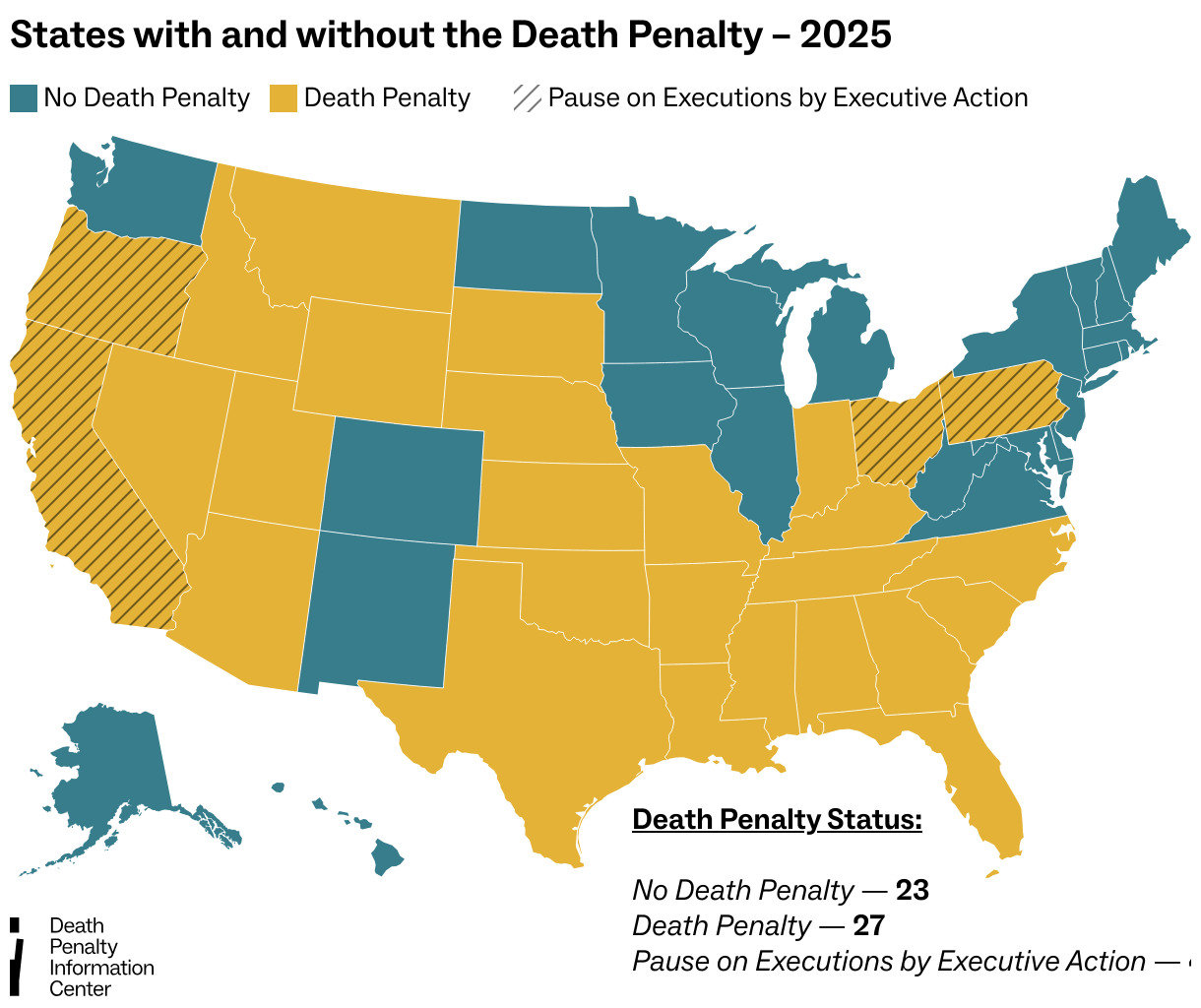 The Supreme Court has repeatedly found that the death penalty is not a violation of the 8th amendment's ban on cruel and unusual punishment, however, the Supreme Court has found certain exceptions to this ruling, including if the suspect is a minor, if the suspect has no memory of committing the crime, or if the suspect has a mental disability that renders the suspect unable to fully understand the circumstances of their execution.
According to Madison v. Alabama, the 8th amendment does not apply when a suspect who has no memory of committing the crime is sentenced to death, but it did find that it is cruel and unusual punishment for a suspect who has a mental disability that renders them unable to fully understand the circumstances of their execution to be sentenced to death.
Other Important Cases include Baze v. Rees and Ford v. Wainwright