CH. 1
CH. 2
CH. 3
CH. 4
CH. 5
CH. 6
100
Which of these is the largest in terms of order?
a. Populations
b.Communities
c. Organelles
d. Organism
Communities!
100
When are radioactive isotopes beneficial to humans?
PET scans & carbon dating
100
What must a buffer consist of?
a. H+ donor
b. H+ acceptor
c. Weak Acid
d. All of the above
d. all of the above
100
Stanley Miller or Miller-Urey’s experiment was significant because
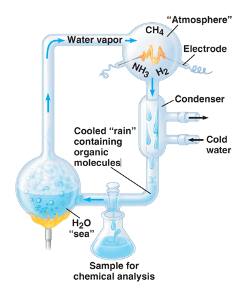
a. It shows the life can be formed from simple molecules
b. Simple molecules created an atmosphere
c. Organic molecules can be formed from simple molecules
d. Organization of biomolecules was impossible in early Earth’s atmosphere
c. Organic molecules can be formed from simple molecules
100
Identify the sugar below:
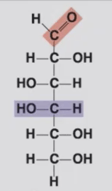
a.Hexose, Aldose
b.Hexose, Ketose
c.Pentose, Aldose
d.Pentose, Ketose
a. Hexose, Aldose
100
Where are proteins synthesized?
a. Ribosomes
b. Golgi Apparatus
c. Smooth ER
d. Mitochondria
a. Ribosomes
200
A kingdom is a collection of which direct subcategory?
a. Domain
b. Class
c. Phylum
d. Order
c. Phylum
200
TRUE or FALSE: Given the image below, O2 exhibits a polar covalent bond
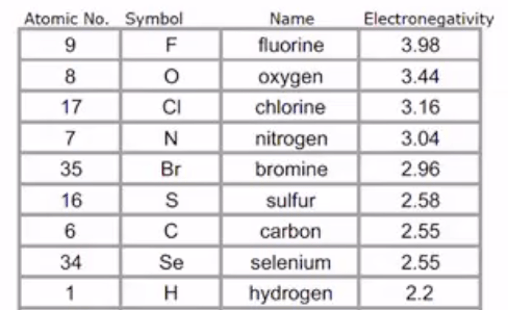
FALSE, it is a nonpolar covalent bond
200
The image below illustrates which property of water?
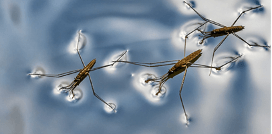
cohesion!
200
What functional group would I want to use to make a solution basic?
a. COOH
b. NH2
c. C=C
d. CH3
b. NH2
200
What structure is shown below?
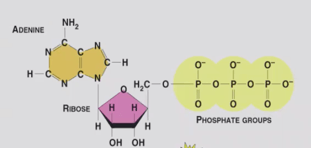
ATP
200
Suppose a cell has the following molecules and structures: enzymes, DNA, ribosomes, plasma membrane, and mitochondria. It could be a cell from _____.
A) a bacterium
B) an animal but not a plant
C) nearly any eukaryotic organism
D) a plant but not an animal
C) nearly any eukaryotic organism
300
What were two key takeaway of Charles Darwin’s The Origin of Species?
- Descent with modifications
- Natural selection (mechanism for descent with modification)
300
Oxygen-18 (8 protons, 10 neutrons) undergoes radioactive decay and one of its neutrons becomes a proton. What is the resulting atom?
a. Oxygen-17
b. Fluorine-18
c. Oxygen-19
d. Fluorine-17
b. Fluorine-18
300
A hydrogen bond in water is:
a. A bond between oxygen and hydrogen in one water molecule
b. An oxygen and hydrogen bond between two water molecules
c. An interaction involving highly electronegative atoms
d. A weak interaction
e. A, C, D
f. B, C, D
g. All of the above
f. B, C, D
300
What two functional groups are contained within a carboxyl group?
carbonyl and hydroxyl
300
Amino acids differ in their properties due to:
a. differing nucleotides that compose them
b. differing carboxyl groups
c. differing beta carbons for central atom
d. differing side chains called R groups
d. differing side chains called R groups
300
Which is my “shipping” side of the Golgi Apparatus?
Trans face
400
List the levels of the biological hierarchy from smallest to largest
molecules, organelles, cells, tissues, organs, organisms, populations, communities, ecosystems, the biosphere
400
An atom has 15 electrons, how many electrons are in its outermost shell?
a. 5
b. 8
c. 10
d. 2
a. 5
400
How does the polarity of water contribute to its ability to dissolve so many substances?
a. Because it is polar, water’s oppositely charged ends are attracted to positively and negatively charged ions and molecules. Water molecules form a hydration shell around oppositely charged particles.
b. Natural water has a pH of approximately 5.6, which is slightly acidic. Acids can dissolve more substances than bases.
c. Because it is polar, water forms ionic bonds with the ions in substances such as NaCl (salt).
d. Because it is polar, water is able to interact with and dissolve hydrophobic substances.
e. Water’s polarity allows it to form covalent bonds with many substances.
c. Because it is polar, water forms ionic bonds with the ions in substances such as NaCl (salt).
400
Is the isomer below cis or trans?
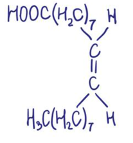
Cis isomer
400
Which is the complement strand to this DNA strand?
5’ – GCG ATT CAG TCA – 3’
A. 3’ – CGG TAA GAC ACA – 5’
B. 3’ – CGC TAA GTC AGT – 5’
C. 5’ – CGC TAA GTC AGT – 3’
D. 5’– CGG TAA GAC ACA – 5’
B. 3’ – CGC TAA GTC AGT – 5’
400
In which organelle(s) can DNA be found?
Nucleus, mitochondria, chloroplast
500
Fish in two populations look similar and only have small differences in scale color patterns. A scientist hypothesize that these populations are separate species, which observation would provide the most direct evidence in support of the claim?
a. Fish in one population are caught more frequently by humans than fish from the other population.
b. Fish in one population eat mostly algae, while fish in the other population eat mostly insect larvae.
c. Fish from each population fight with fish from the other population over breeding territory and mates.
d. Fish from each population occasionally mate with fish from the other population, but they do not produce viable offspring.
d. Fish from each population occasionally mate with fish from the other population, but they do not produce viable offspring.
500
What type of bond forms between sodium (Na) and chlorine (Cl)? Would they be sharing electrons?
What type of ion is sodium? What type of ion is chlorine?
Ionic bond; No, sodium would give up the electron and chlorine is accepting the electron.
Sodium is a cation, Chlorine is an anion
500
What would happen if the cell membrane was all polar?
If the cell membrane was polar, it would dissolve in water/ aqueous solutions. That would be bad! There would be no cells!
500
What is the name of the cross-link structure shown below and what functional group is responsible for its formation?
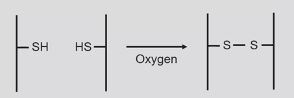
Disulfide bridge, Sulfhydryl group
500
What is the difference between purines and pyrimidines? Which nucleic acids (A, C, T, G, U) are purines and which are pyrimidines?
Purines have a double ring structure and pyrimidines have a single ring structure. Adenine and guanine are purines. Thymine, cytosine, and uracil are pyrimidines.
500
Tay-Sachs disease is a human genetic abnormality that results in cells accumulating and becoming clogged with very large, complex, undigested lipids. Which cellular organelle must be involved in this condition?
A) the endoplasmic reticulum
B) the Golgi apparatus
C) the lysosome
D) mitochondrion
C) the lysosome
C) the lysosome
600
Name the five unifying themes of biology and explain one of them.
organization, genetic information, energy&matter, interactions, and evolution.
ex: genetic information- info is contained in genetic material and life's processes involve expressing and transmitting information.
600
Why is the mass number slightly different than the atomic mass?
The mass number is the sum of the protons and neutrons in a specific isotope. The atomic mass is slightly different because it is the weighted average of the masses of every naturally occurring isotope of the element.
600
A solution has a [OH-] that is 1000 times fewer than that of pure water. What is my pH?
Water [OH-] = 10^-7 M
So, solution [OH-] = 10^-10 M
[OH-][H+] = 10^-14
[10^-10][H+] = 10^-14
[H+] = 10^-4
pH = 4
600
Carbon chains form the skeletons of most organic molecules and they can vary in what four way?
length, branching, double bond positions, and with presence of rings
600
What polysaccharide is depicted below and what monomers are linked together to form the structure?
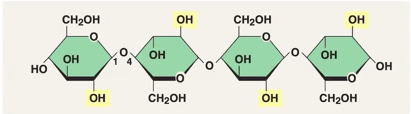
Cellulose; linkage of beta glucose monomers
600
What is the difference in the structure and function of the smooth ER and the rough ER?
The rough ER has ribosomes bound to it and aids in protein synthesis. The smooth ER has no ribosomes and produces lipids.