DNA Replication
Mitosis
Transcription
Translation
Miscellaneous
100
What is the term for the short sequences of RNA that are synthesized on the lagging strand during DNA replication to initiate the synthesis of Okazaki fragments?
RNA primers
100
The stage of mitosis when the nuclear membranes form
telophase
100
The region of DNA that tells the RNA polymerase to bind
promoter
100
Where does tRNA enter and what does it carry?
A site on ribosome and carries anticodon and amino acid
100
What ploidy and how many chromosomes do you end up with after meiosis
haploid cells with 23 chromosomes
200
What is the difference between DNA replication, transcription, and translation
DNA replication: copying DNA in a semi-conservative fashion; still creating DNA (occurs during mitosis and meiosis)
transcription: DNA to RNA
translation: RNA to proteins
200
During which phase of mitosis do sister chromatids separate and move toward opposite poles of the cell?
anaphase
200
The stages of transcription
initiation: RNA polymerase binds to promoter, unwinds DNA
elongation: RNA polymerase add nucleotides
termination: RNA polymerase reaches DNA sequence that is termination signal and loop causes RNA strand to separate from DNA
200
what is the name of the large RNA-protein complex where tRNA molecules deliver amino acids to assemble a growing polypeptide chain
ribosome
200
The 5' end is to DNA as ___ is to proteins
N term
300
What is the significance of the Okazaki fragments in DNA replication, and how are they eventually joined together to form a continuous strand?
short, discontinuous segments of DNA synthesized on the lagging strand during DNA replication. They are significant because the antiparallel nature of the DNA strands requires their formation. These fragments are eventually joined together by DNA ligase, an enzyme that catalyzes the formation of phosphodiester bonds between adjacent Okazaki fragments to create a continuous, complementary strand.
300
If the basket is a cell's nucleus and the fruit are chromosomes, what would the ploidy be? N?
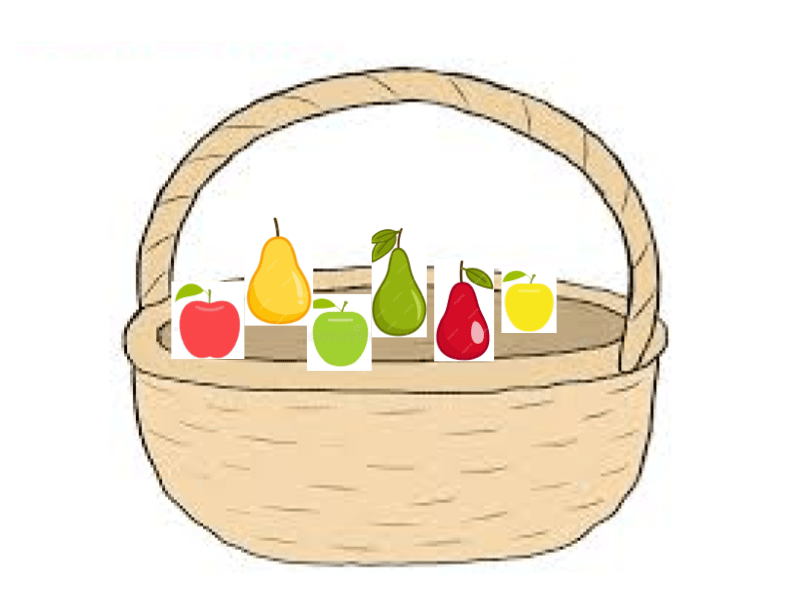
Ploidy= 3 (3 copies of each fruit)
N= 2 (2 types of fruit, pears and apples)
300
steps for RNA processing:
1. add 5' cap
2. splice out introns with splicosomes
3. add poly-A tail to 3' end
300
What are the sites in the large ribosome subunit and what happens in each of them?
E: Exit - the tRNA exits, in this site it has already lost its attached amino acid
P: Peptide - named for the peptide bond that forms when a tRNA is transferred to this site
A: Arrive - where tRNAs enter, carrying a new amino acid
300
What is the difference between mitosis and meiosis?
-create 4 daughter cells with meiosis
-go through phases twice in meiosis
-first round of meiosis includes crossover and recombination
-meiosis I homologous chromosomes separate, meiosis II sister chromatids separate
-no DNA replication during meiosis II
400
What are the enzymes involved in DNA replication and their functions?
helicase: unzips DNA
primase: makes RNA primer
DNA polymerase: adds new nucleotides to 3' end
topoisomerase: unwinds DNA
lipase: connects Okazaki fragments of lagging strand
single-strand binding protein: keeps leading and lagging strands separate
400
Draw a cell with equation of 3n=6
cell should have 6 chromosomes with 2 different sizes and shades, but 3 of each
400
What are the three types of RNA molecules produced during transcription, and what are their respective functions?
mRNA (messenger RNA, carries genetic information from DNA to ribosomes), tRNA (transfer RNA, carries amino acids to the ribosome), and rRNA (ribosomal RNA, forms the structure of ribosomes)
400
Describe the cycle of a tRNA coming in and leaving the ribosome
1. ribosome comes into A site
2. peptide bond forms between new amino acid and polypeptide
3. polypeptide is transferred over to the tRNA that just came in
4. ribosome shifts to right, so old tRNA exits through E site and new ribosome is in P site leaving A site open for a brand new tRNA
400
During which phase of meiosis does crossing-over occur, leading to genetic recombination between homologous chromosomes?
prophase I of meiosis
500
Draw a transcription bubble, label leading, lagging, and enzymes
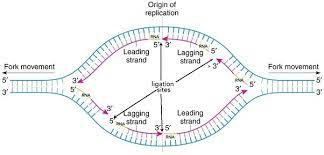
500
What is the significance of the G2 checkpoint in the cell cycle, and what happens if a cell fails to pass this checkpoint?
the cell ensures that it has completed DNA replication accurately and has no DNA damage. If a cell fails to pass this checkpoint, it may lead to the division of cells with incomplete or damaged DNA, potentially resulting in mutations and genetic instability.
500
The effect if a cell had no or non-functioning spliceosomes
non-functioning proteins
500
If your large and small subunits were unable to come together, how would this affect protein synthesis?
mRNA would be able to be made and sent out, but translation as a whole would not be able to be carried out
500
In meiosis, what is the term for the pairing of homologous chromosomes and the exchange of genetic material between them?
genetic recombination/crossing over