Biology/Emergent Properties
Atoms, Molecules, and Water
Carbon, Carbohydrates, Lipids
Proteins and Nucleic Acids
Single Cell Dynamics
100
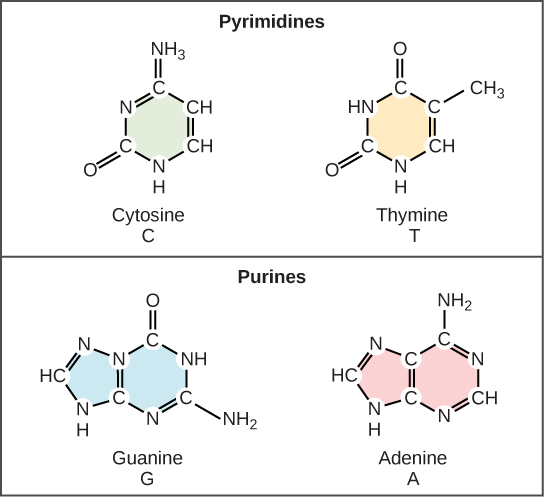
How many different kinds of nucleotides does DNA contain?
4: A, C, T, G
100
When carbon dioxide in the atmosphere dissolves with the raindrops, what is the expected change in pH of the raindrops?
Slightly acidic

100
How many fatty acids are in a phospholipid?
2
100
Protein molecules are polymers (chains) of _______
Amino acid molecules
100
What structure is common to all three domains of life?
Phospholipid bilayer
200
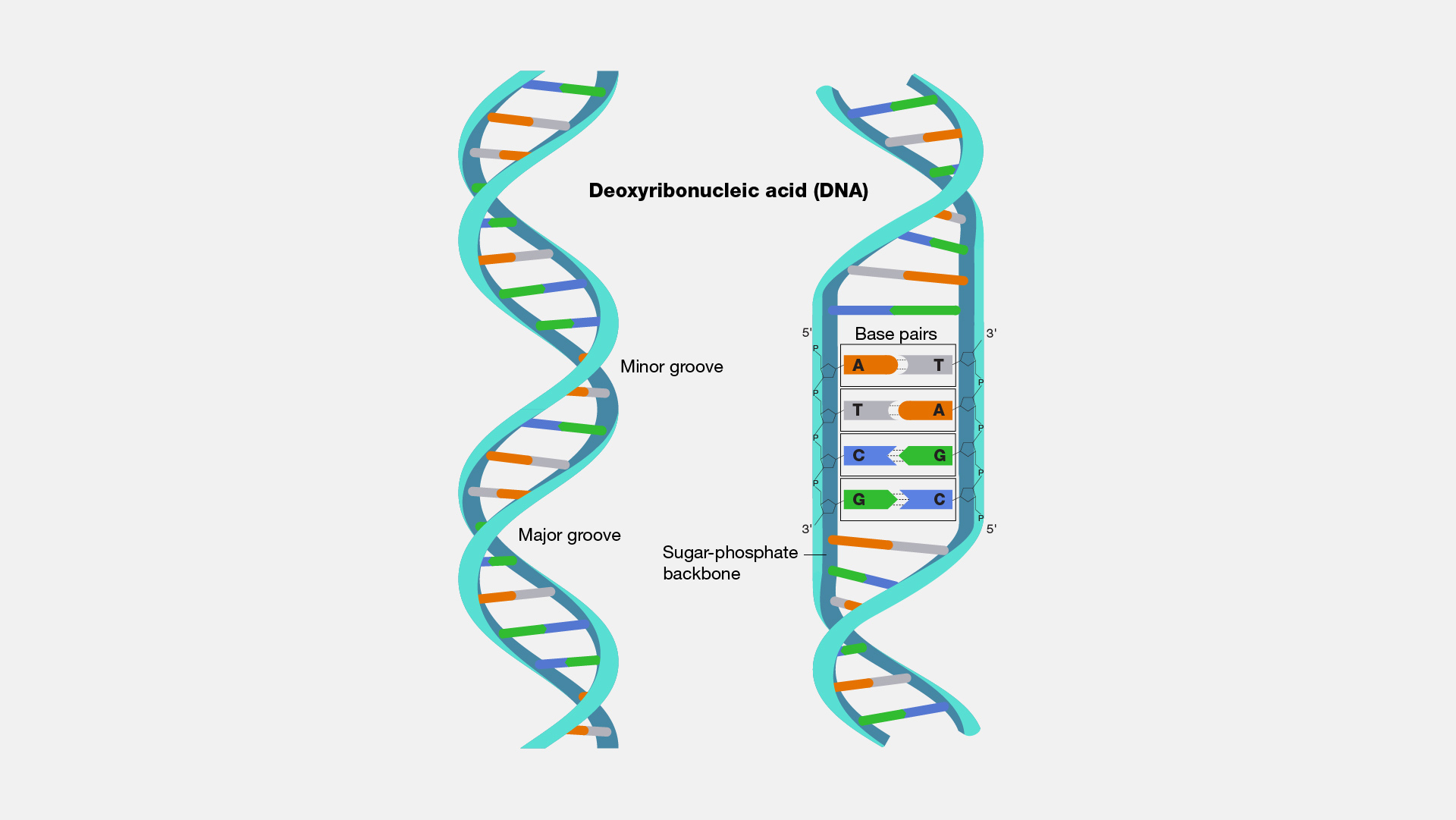
In eukaryotic cells DNA has the appearance of a _____
Double helix
200
What are the four most abundant elements found in living systems?
Hydrogen, oxygen, nitrogen, and carbon
200
A carbon atom is most likely to form what kind of bond(s) with other atoms?
Covalent
200
The α helix and β pleated sheet represent which level of protein structure?
Secondary structure
200
Where are enzymes responsible for biosynthesis of membrane lipids located?
Endoplasmic reticulum
300
How is the information encoded in DNA actually used by organisms?
The information in DNA is transcribed to RNA and then usually translated into protein
300
What do cohesion, surface tension, and adhesion have in common with reference to water?
All are properties related to hydrogen bonding
300
Some lipids are formed when fatty acids are linked to glycerol. These subunits are linked together by ________
Ester linkages

300
Which of the following are pyrimidines found in the nucleic acid DNA?
Thymine and cytosine
300
According to the fluid mosaic model of membrane structure, proteins of the membrane are mostly _____________
Embedded in a lipid bilayer
400
Why doesn’t a skin cell make crystallin protein?
-Skin cells have the crystallin gene but do not express it
-Skin cells do not need crystallin for their function
400
Why are cell membranes composed primarily of hydrophobic molecules?
In order to perform their function of separating the aqueous solutions outside cells from the aqueous solutions inside cells, cell membranes cannot be soluble in water
400
What functional feature(s) does the phosphate group contribute to the structure of a phospholipid?
-Negative charge to interact with water
-Place to attach another small charged molecule
400
When a protein is denatured, why does it lose its functionality?
Denaturation breaks the intramolecular bonds, such as hydrogen bonds and van der Waals interactions, that hold the protein in its three-dimensional shape. Without the proper shape, the protein cannot function.
400
In what way do the membranes of a eukaryotic cell vary?
Certain proteins are unique to each membrane
500
Emergent properties of living systems are properties that ______
Are due to the arrangement and interactions of parts as complexity increases
500
How does the polarity of water contribute to its ability to dissolve so many substances?
Because it is polar, water's negatively charged oxygen atoms and positively charged hydrogen atoms are attracted to positively and negatively charged ions and molecules
500
In a hydrolysis reaction, __________, and in this process, water is __________
A polymer is broken up into its constituent monomers; consumed
500
Enzymes that break down DNA catalyze the hydrolysis of the covalent bonds that join nucleotides together. What would happen to DNA molecules treated with these enzymes?
The phosphodiester linkages of the polynucleotide backbone would be broken
500
Consider the currently accepted fluid mosaic model of the plasma membrane. Where in the plasma membrane would cholesterol most likely be found?
In the interior of the membrane