Chemistry of Life🧪
Central Dogma🧬
Ethology🧠
Nervous System⚡
100
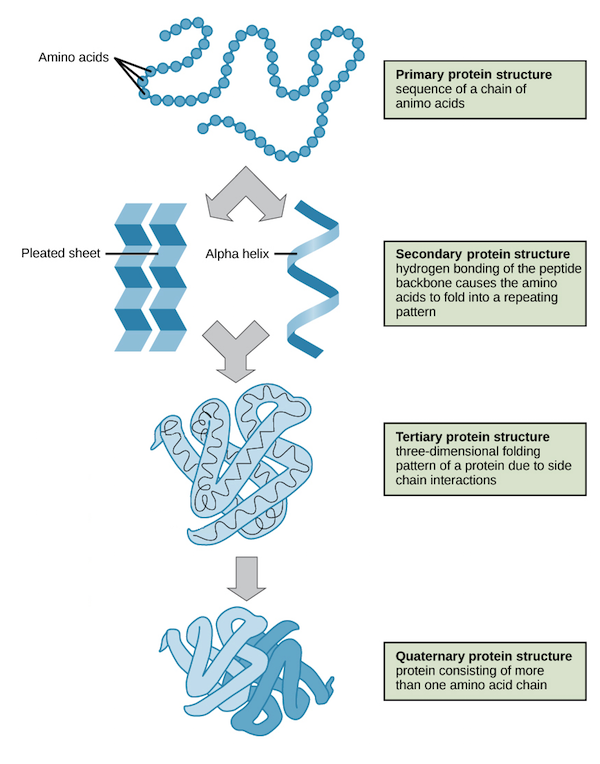
Alpha and beta sheets are examples of
Secondary structure
100
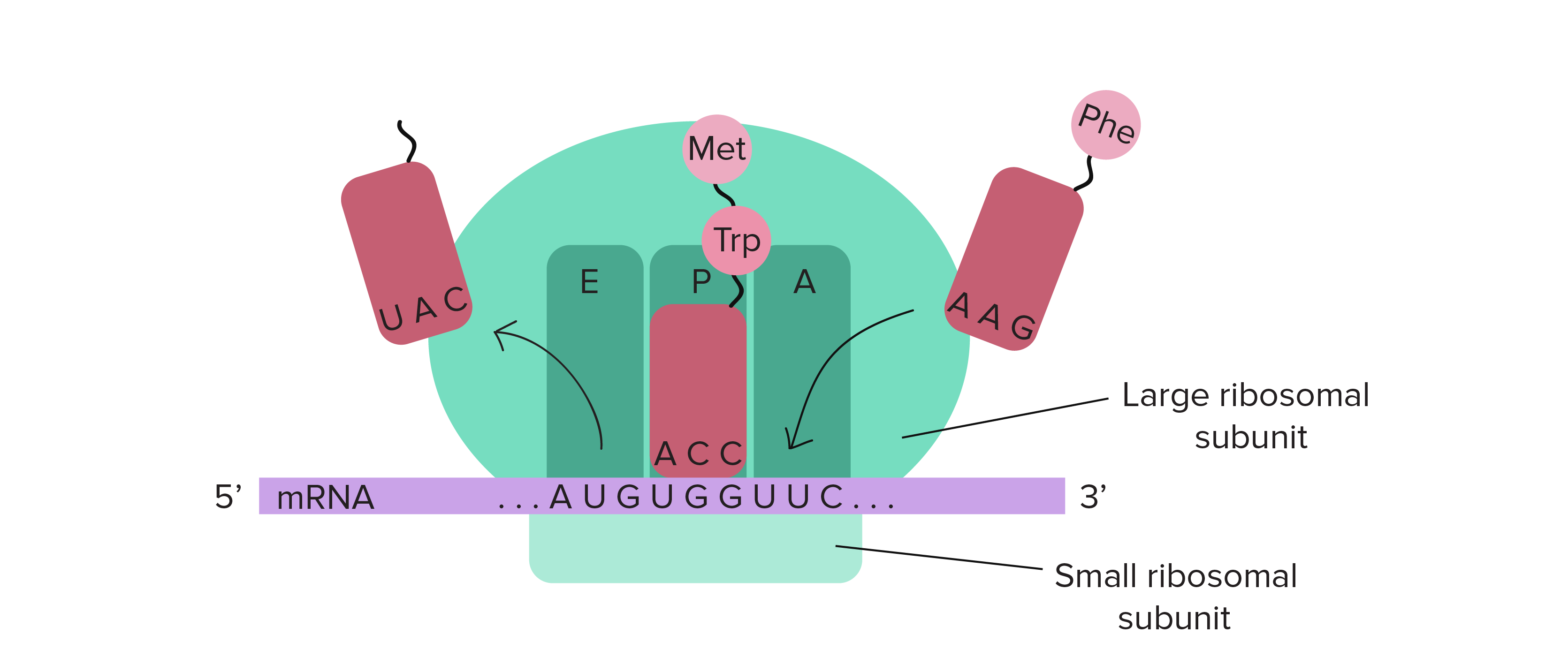
During translation, which site first binds to tRNA?
The A site
100
Bark for 100 points
Ruff
100
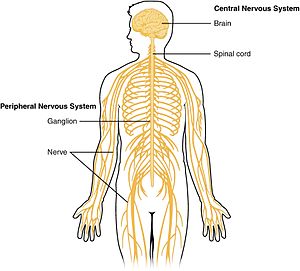
The central nervous system consists of the brain and the spinal cord, while the nerves of the (blank) nervous system transmit sensory and motor signals between the CNS and the rest of the body
Peripheral
200
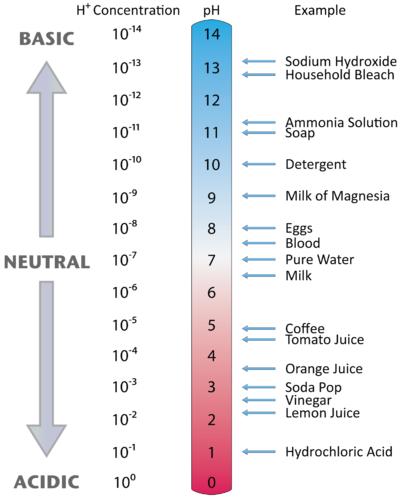
The pH of lake A is 5. The pH of lake B is 6. How much more acidic is lake A than lake B?
Lake A is 10 times more acidic than lake B. The pH scale is logarithmic, and every value is a 10x difference.
200
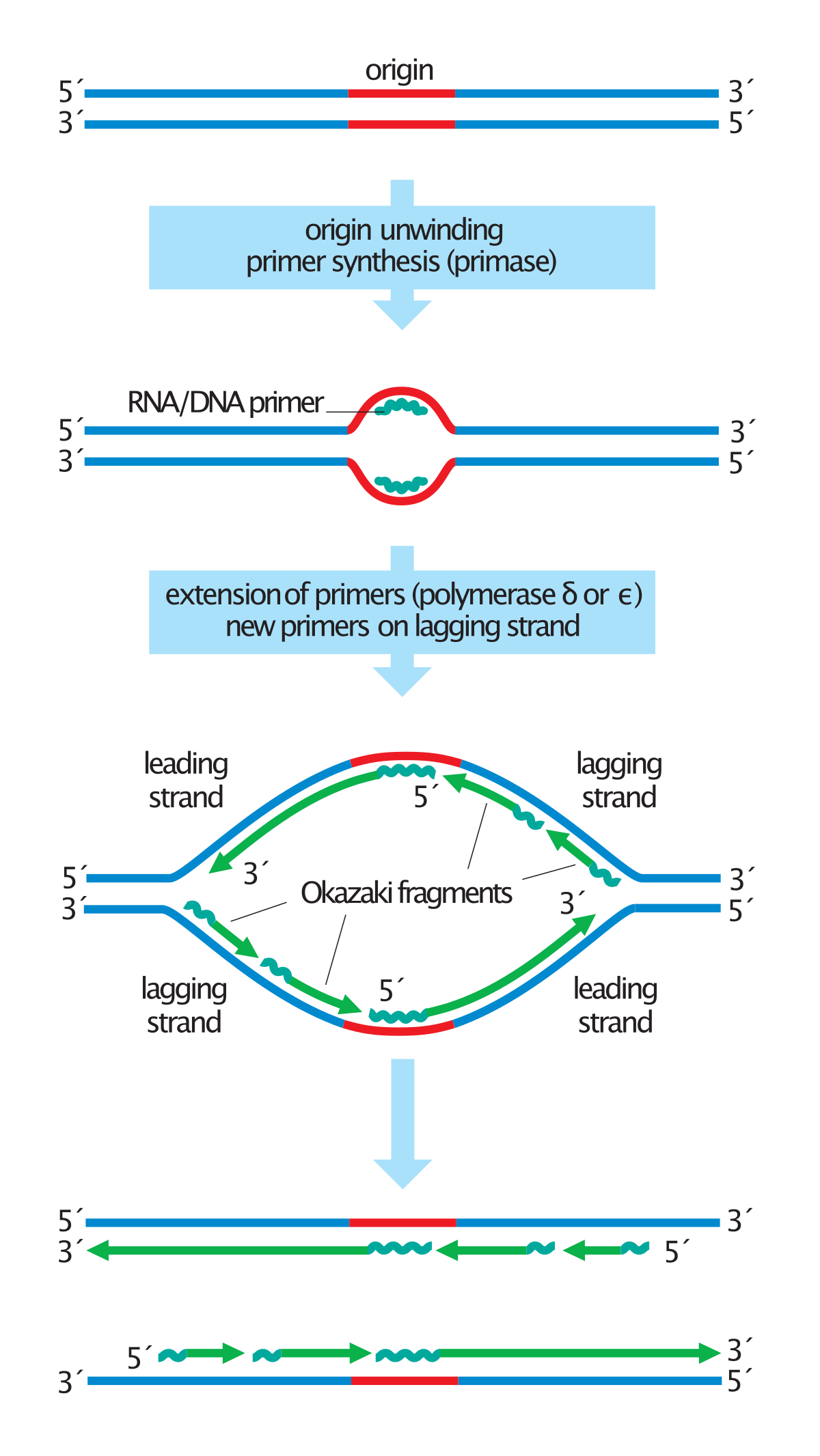
During replication, short sequences of nucleotides called (blank) are joined together by the enzyme (blank) to form the (blank) strand.
Okazaki fragments, DNA ligase, lagging

200
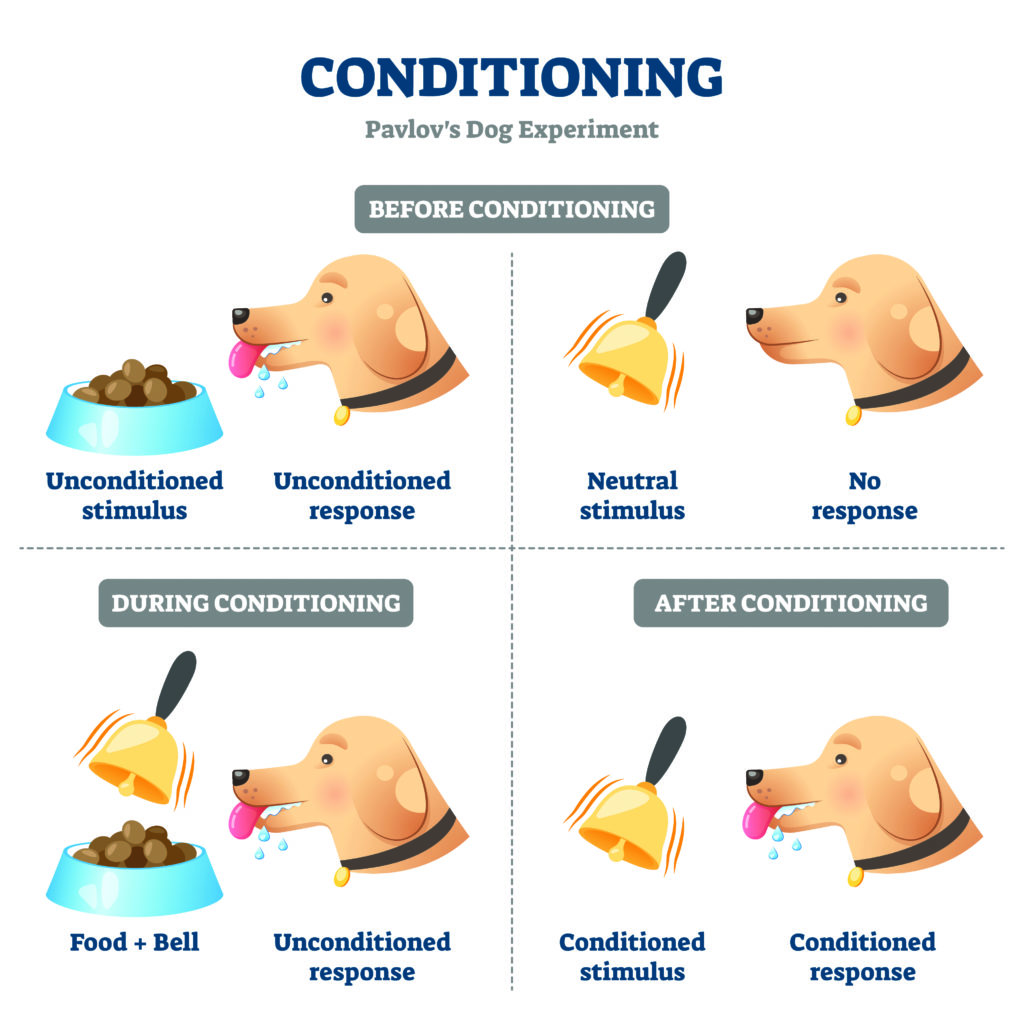
In Pavlov's famous classical conditioning experiment, the bell became the
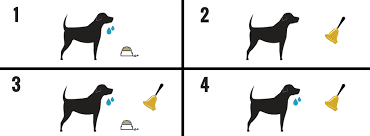
Conditioned stimulus
200
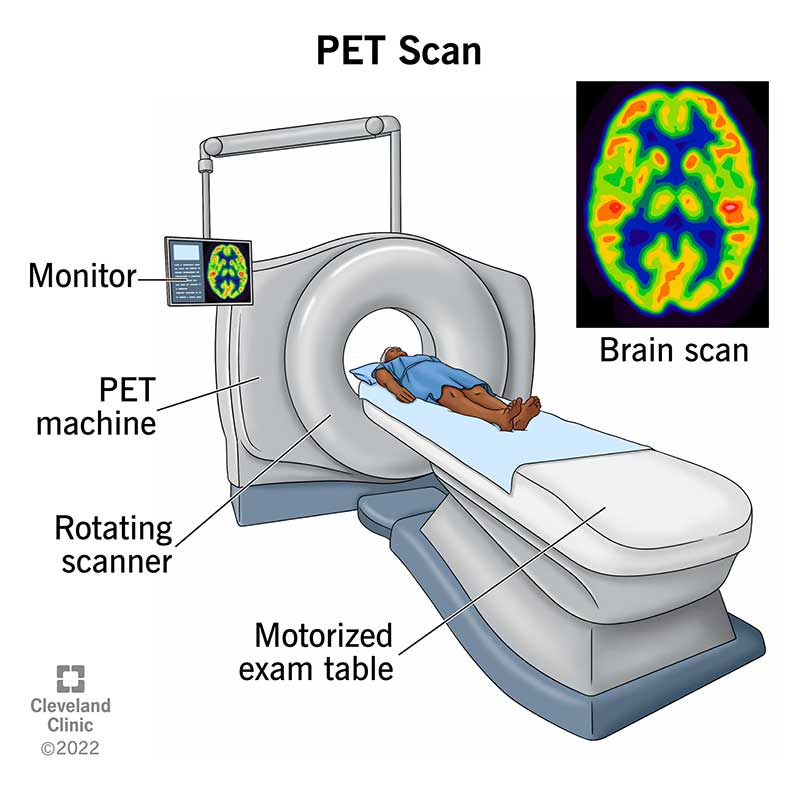
Matthew is injected with a radioactive tracer that attaches to the glucose in the bloodstream. Then, a (blank) scan is used to image the brain.
PET scan
300
The image below is an example of (blank) isomers
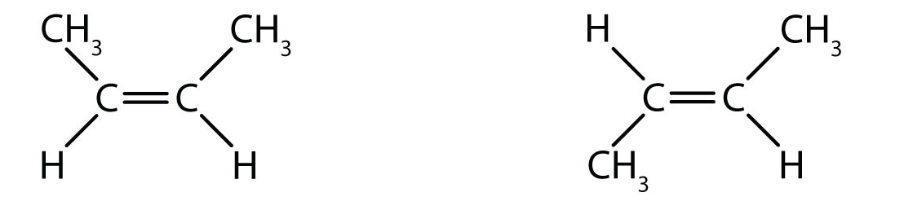
Cis-trans (also known as geometric)
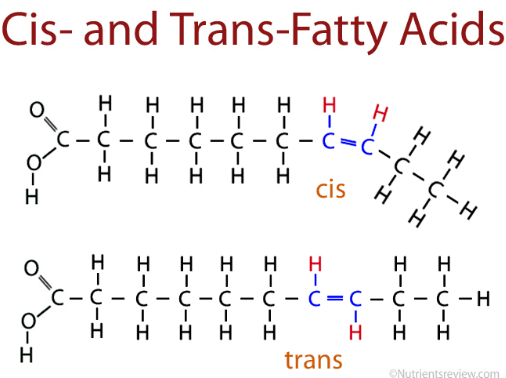
The arrangement with both Xs (functional group, in this case CH3) on the same side of the double bond is called a cis isomer, and the arrangement with Xs on opposite sides is called a trans isomer. This subtle difference in arrangement can have dramatic effects on biological activities.

300
An adenine nucleotide was inserted in the template strand after the TAC, making the new sequence to be TACATT. If AUG is the start codon and UAA is a stop codon, what type of mutation was this?
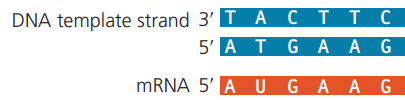
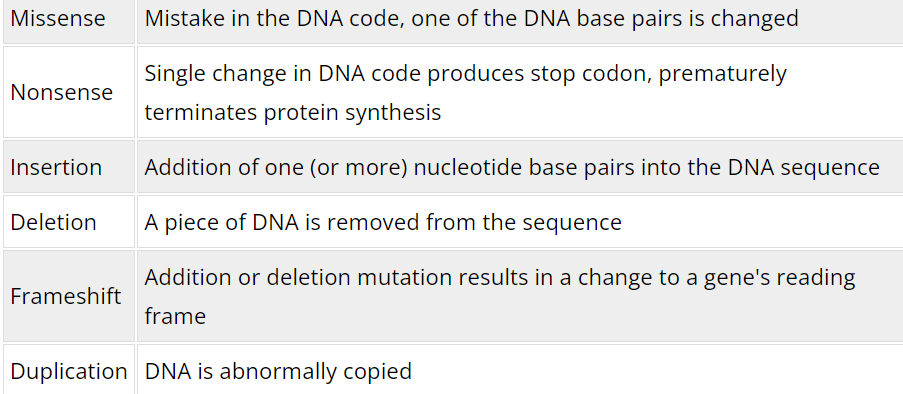
Nonsense mutation
Definition: A change in DNA that causes translation to end earlier than expected.
The resulting mRNA sequence is AUGUAA, with the UAA being the stop codon. This causes translation to end earlier than expected.
300
Female spotted sandpipers aggressively court males and, after mating, leave the clutch of young for the male to incubate. This sequence may be repeated several times with different males until no available males remain, forcing the female to incubate her last clutch. Which of the following terms best describes this behavior?
A) Polygyny
B) Polyandry
C) Promiscuity
D) Certainty of paternity
B) Polyandry
A pattern of mating in which a female animal has more than one male mate.
Polygyny is when one male has more than one female mate.
300
If you get jumped by a grizzly bear, your sympathetic nervous system activates and you start to feel which of the following symptoms?
I) Dilation of pupils
II) Relaxation of bladder
III) Inhibition of digestive functions
IV) Increase in heart rate
A) I, II, III, and IV
B) I and III
C) I, III, and IV
D) II, III, and IV
E) I and IV
A) I, II, III, and IV

400
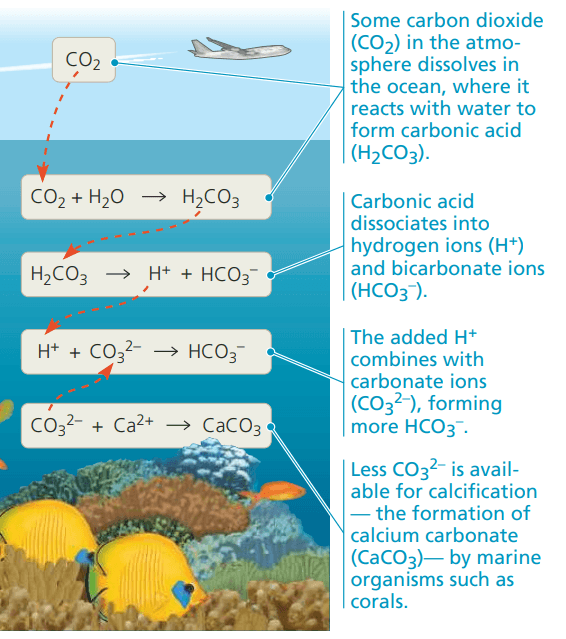
Carbon dioxide in the atmosphere sometimes dissolves into the ocean, where it reacts as described by this equation below:
CO2 (aq) + H2O ⇌ H2CO3 (carbonic acid) ⇌ HCO3- (bicarbonate) + H+ ⇌ CO32- (carbonate) + 2H+
Carbonate ions CO32- are required for calcification, the production of calcium carbonate CaCO3, in many marine organisms such as corals and shells.
CO32- + Ca2+ --> CaCO3
If there is an increased amount of CO2 in the atmosphere, how does it affect marine organisms that rely on calcification?
Since H+ combines with CO32-, fewer carbonate ions are available for calcification, leading to loss of marine organisms that rely on calcification.
400
Acetylation adds acetyl groups to histone, usually the lysine amino acid. This makes the histones more negative and pushes DNA away from the histones, allowing for easier transcription and gene expression. The resulting chromatin structure is called
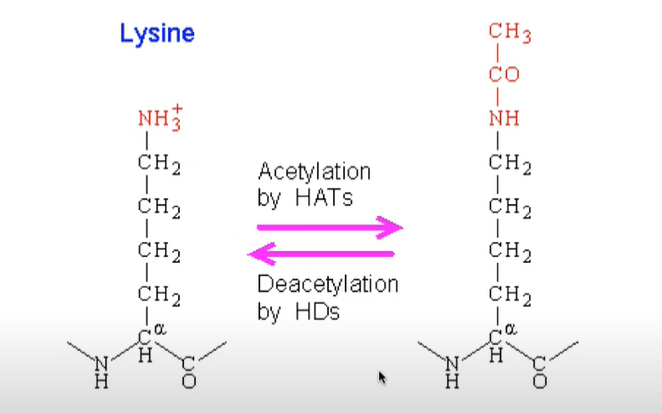
Euchromatin


400
Ellie is a dog who, as a pup, would quiver at the sight of any tiny leaf that flew near her. She is now a one-year old and will forget everything and bound into the woods to chase a blowing leaf. The learning mode is
A) Classical conditioning
B) Habituation
C) Imprinting
D) Operant conditioning
E) Insight learning
B) Habituation
400
In mammals, circadian rhythms are coordinated by clustered neurons in this part of the brain.
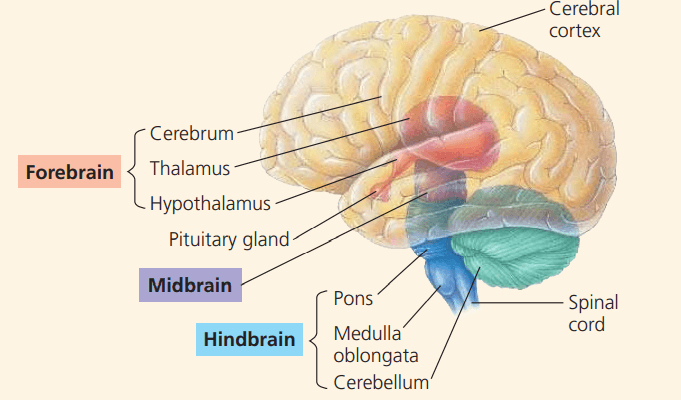
Bonus 100: what is the cluster of neurons called?
Hypothalamus.
The suprachiasmatic nucleus (SCN) is a cluster of neurons in the hypothalamus (responsible for homeostasis and basic survival behaviors) that synchronizes the biological clock in cells throughout the body to the cycles of day/night.
500
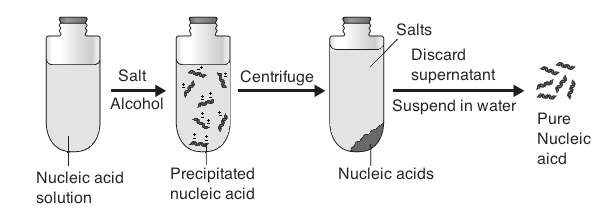
Meley is trying to extract DNA from calf thymus (gland in the neck responsible for establishing immune systems, has many WBC). After adding NaCl to a large volume of blended calf thymus, which of the following substances should she add to precipitate the DNA?
a) Distilled water
b) Ethanol
c) Isopropanol/Isopropyl alcohol
d) Glycerol
e) Mystery white sticky substance
C) Isopropanol
DNA is negative due to the phosphate groups in its backbone.
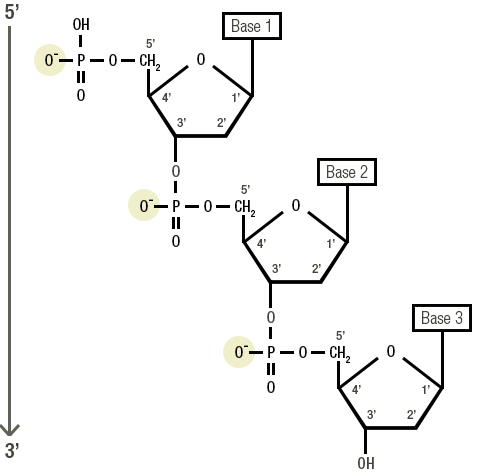
NaCl dissociates in water into Na+ and Cl-. The Na+ ions neutralize the negative PO4-, thereby making it less soluble.
However, water's high dielectric constant makes it difficult for Na+ and PO4- to come together. The PO4- attracts water molecules which hinders the Na+ from binding to the PO4-. On the other hand, ethanol and isopropanol have low dielectric constants. This makes it easier for Na+ to interact with PO4-, making the DNA less hydrophilic and less soluble to the point where it precipitates out.
Since isopropanol has a lower dielectric constant, it is even better at precipitating DNA, which is why it is preferred over ethanol when precipitating DNA in large volumes. The downside is, it can co-precipitate salt along with the DNA.
500
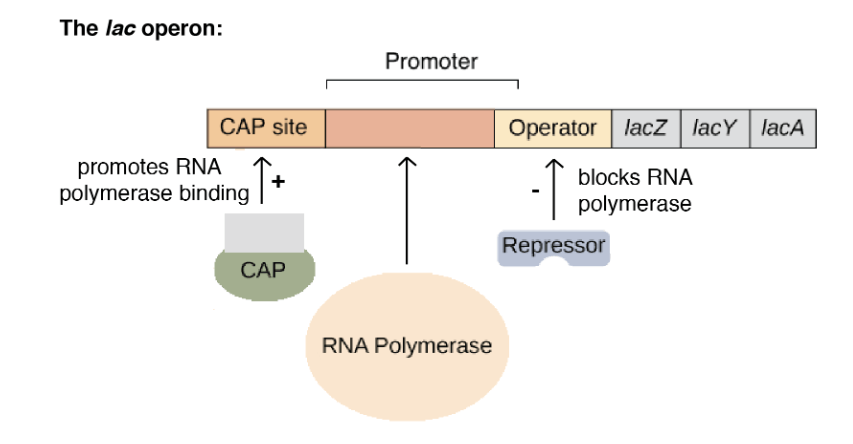
E. coli bacteria can break down lactose to use as fuel, but it prefers glucose because it requires less energy to break down. The lac operon is a group of 3 genes that code for enzymes for lactose breakdown -- lacZ, lacY, and lacA. In addition to the group of genes, there are also regulatory DNA regions preceding the genes that control the transcription of the operon (see picture attached).
CAP is a protein that binds to the region before the lac operon promoter (promoter is where RNA polymerase binds to in order to initiate transcription of the operon) and helps RNA polymerase attach to the promoter. However, due to its shape, it cannot bind to DNA without the help of a molecule called cAMP.
When glucose levels are low, cAMP is produced in high amounts. When cAMP attaches to CAP, it changes the shape of CAP and allows CAP to bind to DNA, thereby helping RNA polymerase attach to the promoter. When glucose levels are high, cAMP is produced in low amounts.
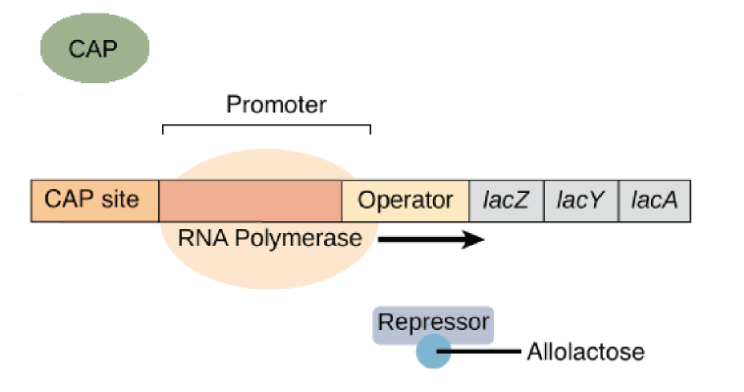
Allolactose is an isomer (a molecule with the same formula but in a slightly different shape) of lactose. When lactose is present, some molecules will be converted to allolactose. Allolactose then binds to the lac repressor so that it lets go of the DNA, thereby allowing RNA polymerase to move forward and transcribe the genes.
If both glucose and lactose levels are high, there will be (blank) of the lac operon.
A) Strong transcription
B) Low-level transcription
C) No transcription
B) Low-level transcription
When lactose is present, allolactose is also present, and the lac repressor is released.
When glucose is present, cAMP levels are low, and CAP remains inactive and cannot bind to DNA. This leads to a low, leaky level of transcription of the operon (there is still some transcription happening, but RNA polymerase cannot easily attach to the DNA without the help of CAP, so the level of transcription is low -- but not zero).
500
In the picture below, a cardinal feeds minnows, which rose to the surface looking for food.
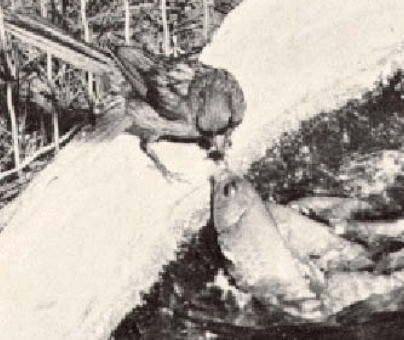
The bird fed the fish for several weeks, probably because its nest had been destroyed. The cardinal’s behavior is best understood as:
A) Habituation
B) Imprinting
C) Fixed action pattern
D) Associative learning
E) Operant conditioning
C) Fixed action pattern
A predictable series of actions triggered by a cue, sometimes called the key stimulus. Automatic & involuntary, although more complex than a reflex.
500
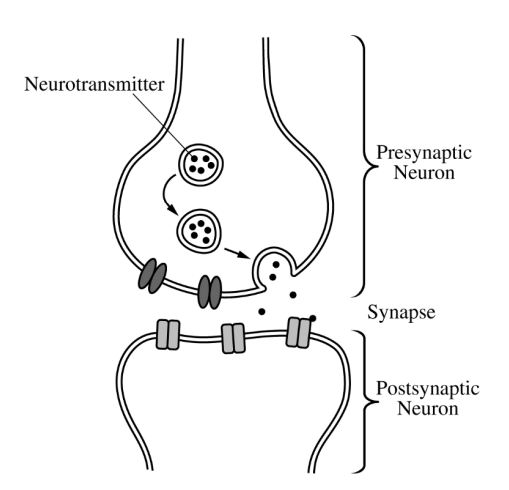
Action potentials are electrical signals carried along neurons. Synapses are small spaces between two neurons that allow these signals to pass from the presynaptic neuron to the postsynaptic neuron (see image below) This is done with the help of neurotransmitters, which are chemicals at the end of neurons that help transmit action potentials.
When an action potential reaches the end of a neuron, neurotransmitters are released from the end of the presynaptic neuron into the synoase. Then, they bind to receptors on the postsynaptic neuron, thereby activating another action potential.
Acetylcholine (ACh) is a neurotransmitter. Nina researches a particular neurotoxin that causes the amount of ACh released from presynaptic neurons to increase.
Acetylcholinesterase (AChE) is an enzyme that degrades ACh. Nina proposes that adding AChE to the cytoplasm of the postsynaptic cell would be more effective at preventing the effects of the neurotoxin than adding it to the synapse. Explain why this proposal is correct or incorrect.
Incorrect.

Adding AChE to the cytoplasm of the postsynaptic cell would not have any effect as neurotransmitters do not enter into the postsynaptic cell. They can only bind to the receptors on the cell.
However, adding AChE to the synapse would allow the degradation of ACh when it is released from the presynaptic neuron. This would decrease the amount of ACh in the synapse, counteracting the effect of the neurotoxin.