Coupled Reactions and Glycolysis
Respiration and Photosynthesis
DNA replication and Molecular Techniques
Transcription and Translation
100
Name the reactants and products of the reaction catalyzed by Hexokinase below:
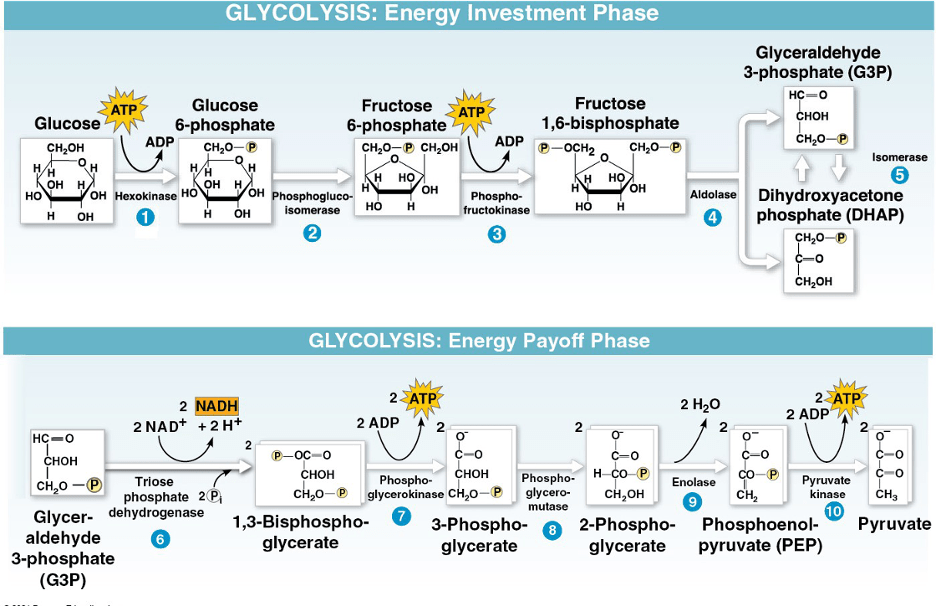
Reactants: Glucose, ATP
Products: Glucose 6-Phosphate, ADP
100
Which of the following molecules is used as a substrate in the Calvin cycle in plant cells to produce G3P, which is in turn used by the cell to make glucose?
A. H2S
B. CO2
C. O2
D. Chlorophyll
B. CO2
100
In the cell, DNA replication requires helicase; however, in vitro DNA replication in PCR does not. Which of the following replaces the function of helicase during PCR?
A. DNA Polymerase
B. dNTPs
C. Primers
D. Heat
D. Heat
100
The codon 5’ AUC 3’ codes for the amino acid Isoleucine. What is the anticodon on the tRNA that carries Isoleucine?
A. 5’ GAU 3’
B. 5’ UAG 3’
C. 5’ ATG 3’
D. 5’ GAT 3’
E. 5’ AUC 3’
A. 5’ GAU 3’
200
Which of the following molecules do you expect to observe in muscle cells when oxygen levels are low, but not when they’re high?
A. Glucose
B. Pyruvate
C. Lactate
D. Ethanol
C. Lactate
200
The creation of a water molecule by joining Hydrogen and Oxygen atoms is:
A. Highly endergonic, and occurs inside mitochondria
B. Highly exergonic, and occurs inside mitochondria
C. Highly endergonic, and never occurs inside cells
D. Highly endergonic, and occurs inside chloroplasts
E. Highly exergonic, and occurs inside chloroplasts
B. Highly exergonic, and occurs inside mitochondria
200
Which of the following is NOT true about DNA replication:
A. DNA ligase forms covalent bonds between a sugar and a phosphate
B. DNA polymerase can only add nucleotides to a DNA backbone, never remove them
C. Primase cannot covalently join a nucleotide to the 5’ end of another nucleotide
D. Topoisomerase can both break and re-form covalent bonds
B. DNA polymerase can only add nucleotides to a DNA backbone, never remove them
200
What peptide is translated by a ribosome from the following mRNA:
ACAUGACCUAAU
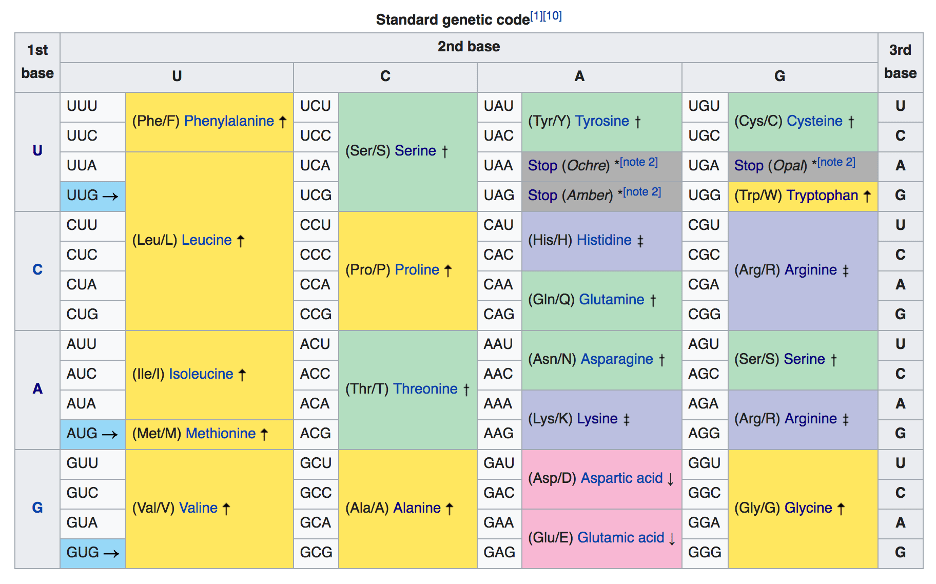
Met-Thr (or Met-Thr-STOP)
300
Yeast cells with a mutation in Phosphoglcuoisomerase (#2) are being grown in an oxygen-free environment. Which of the following can these cells use to produce ATP? SELECT ANY THAT APPLY.
I. Fructose 1,6 bisphosphate
II. G3P
III. Glucose
IV. Glucose 6-phosphate

I, II (Fructose 1,6 bisphosphate AND G3P)
300
Which of the following is true BOTH about photosynthesis AND cellular respiration? (SELECT ANY THAT APPLY)
I. Both convert CO2 into organic (C-H containing) compounds
II. Both involve redox reactions on chains of carbons
III. Both use a gradient of H+ ions to power the production of ATP
IV. Both catabolize glucose
II and III
Both involve redox reactions on chains of carbons
Both use a gradient of H+ ions to power the production of ATP
300
You amplify a segment of DNA from 4 patients. After a PCR reaction, you run the DNA out on a gel using gel electrophoresis, but forget to load a ladder sample. Refer to the image of the gel below. Which patient has the genome in which the amplified segment of DNA has the LARGEST size (longest stretch of nucleotides)?
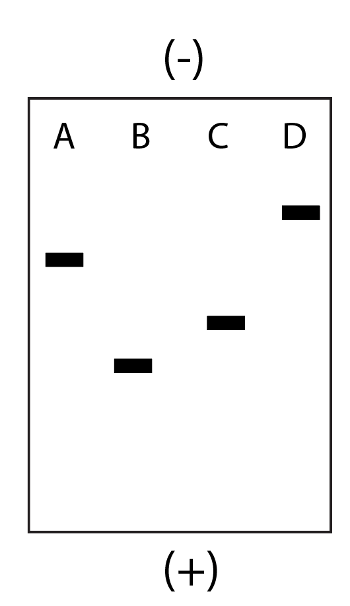
Patient D
300
On an alien planet, you find an organism whose translation works like ours, with tRNAs coding for amino acids and a special termination factor coding for stop, except that its ribosomes read out a doublet code (2 nucleotides in a row) rather than a triplet one. What is the maximum number of amino acids that this organism can uniquely code for?
Think carefully about all the kinds of information contained in our codons (and maybe stare at a codon chart before answering).
15
400
Order the following reactions from highest ∆G (closest to Infinity) to lowest (closest to -Infinity)
I. Fructose-6-phosphate → fructose 1,6 bisphosphate
II. G3P → 1,3 bisphosphoglycerate
III. PEP → pyruvate
IV. Glucose → 2 G3P
I. Glucose → 2 G3P (up 14.6 kcal/mol)
II. Fructose-6-phosphate → fructose 1,6 bisphosphate (up 7.3 kcal/mol)
III. PEP → pyruvate (at most -7.3 kcal/mol)
IV. G3P → 1,3 bisphosphoglycerate (at most -52.6 kcal/mol)
400
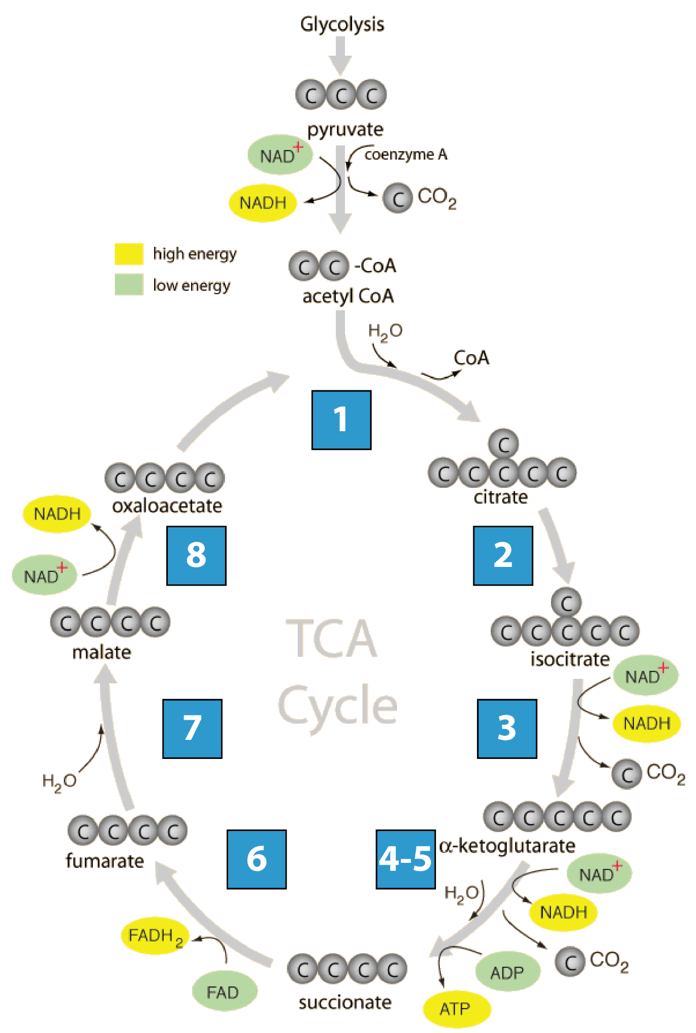
Fatty acids are used for generating ATP through a process that converts them into acetyl-coA. In a cell that ONLY has fatty acids as an energy source, removing which of the following enzymes would have the SMALLEST effect on producing energy (and thus survival)?
A. Cytochrome C oxidase, which is the last protein complex to receive electrons in the Electron Transport Chain
B. Pyruvate deyhdrogenase, which catalyzes the oxidation of pyruvate after it enters the mitochondria
C. Alpha-ketoglutarate dehydrogenase, which catalyzes step 4 of the TCA cycle
D. Fumarase, which catalyzes step 7 of the TCA cycle
B. Pyruvate deyhdrogenase, which catalyzes the oxidation of pyruvate after it enters the mitochondria
400
Ultraviolet light tends to cause mutations in which a C is converted to a T. You grow cells from several strains in low levels of UV light, similar to what your skin is exposed to outside. Which of the following do you expect to have an especially high level of the specific UV-caused mutation types compared to fully functional control strains grown in the same conditions? (SELECT ANY THAT APPLY)
I. Strains in which the proofreading role of DNA polymerase is non-functional
II. Strains in which telomerase is missing
III. Strains in which mismatch repair genes are non-functional
IV. Strains in which ligase is non-functional
III ONLY - Strains in which mismatch repair genes are non-functional
400
You introduce a new release factor into a cell, which is able to bind to a CAC codon (which normally codes for Histidine). You do not modify any existing release factors or tRNAs in the cell. What change do you expect to see to proteins translated in this cell after the introduction of the new, CAC-binding release factor?
A. No change at all to proteins translated in this cell
B. Proteins with generally longer chains of amino acids
C. Proteins with generally shorter chains of amino acids
D. No change to protein length, but changes to which amino acids make up each protein
C. Proteins with generally shorter chains of amino acids