Chem 105 Review
IMFs
Phase Changes
Concentration
Solubility + Freezing Point Depression
100
How many protons, neutrons, and electrons are in the isotope 36S?
16 protons, 20 neutrons, and 16 electrons.
100
What is the result of breaking IMFs?
Phase changes.
100
What is the name of the phase change from a solid to a gas?
Sublimation.
100
Molality is defined as ____ per ____.
Moles of solute per kg of solvent.
100
Explain why freezing point decreases when a solute is added to a pure compound.
The solute interferes with the solvent's ability to crystallize.
200
Perform the following calculation and write your answer with the correct number of significant figures:
(6.93 - 4.234) x 0.20 =
0.54
200
Rank the six IMFs from weakest to strongest.
LDF < Dipole-induced dipole < dipole-dipole < hydrogen bonds < ion-dipole < ion-ion
200
The enthalpy of ___ is used to calculate the energy required to heat a solid to a liquid.
Fusion.
200
Explain what happens to molarity and molality as temperature increases.
Molarity decreases; molality stays constant.
200
A solution contains 41 g NaCl at 28°C. Maximum solubility is 36 g. Is it saturated or
unsaturated?
Saturated.
300
Which metric prefix corresponds to 106?
Mega
300
List all IMFs present for the molecule CH2F2.
LDF, D/D
300
State what phase CO2 is in at a temperature of 298.15 K and 53200 mmHg.
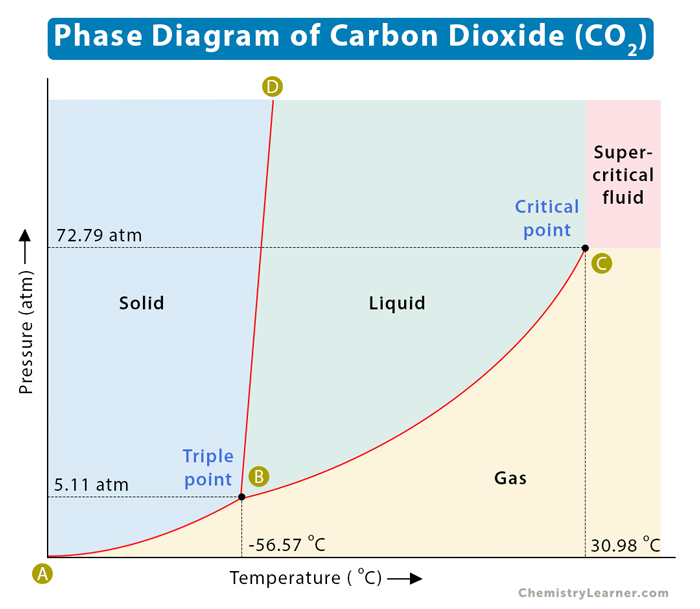
Liquid.
300
A solution of H2SO4 with a molal concentration of 7.083 m has a density of 1.215 g/mL. What is the molar concentration of this solution?
5.08 M
300
A 150.0 mg sample of an unknown nonelectrolyte compound was dissolved in 13.0 g of dichloromethane, decreasing the freezing point of dichloromethane by 1.62 oC. What is the molar mass (in g/mol) of the unknown compound? The Kf of dichloromethane is 1.73 oC/m.
12.3 g/mol
400
Name the following compound: Ba(OH)2·8H2O
Barium hydroxide octahydrate
400
Which compound has stronger IMFs: MgO or HF? Explain why.
MgO because it is an ionic compound.
400
Calculate the amount of energy (in kJ) required to heat a 10.0 g piece of ice at -25.0°C to water at 50oC.
Cs of ice: 2.09 J/g·oC
Cs of water: 4.184 J/g·oC
ΔHfusion = 333 J/g
5.94 kJ
400
What is the mass percent of a solution made by dissolving 42.1 g of glucose (C6H12O6) in 500 mL of water?
7.77%
400
Calculate the freezing point (in oC) of a solution made by dissolving 2.103 g of KCl in 22.3 mL of water. The Kf for water is 1.86 oC/m.
-4.77 oC
500
Boron has two naturally-occurring isotopes: 10B (10.012 u, 19.9%) and 11B (11.009 u, 80.1%). What is the average atomic mass?
10.81 u
500
State all IMFs for the molecule CH3OH.
Hydrogen bonds, dipole-dipole, LDF.
500
Draw a phase diagram for water. Include axis labels, melting point, boiling point, critical point, triple point, and phase names.

500
Draw a diagram that explains what happens when NaCl dissolves in water. Include Lewis structures, IMFs, and partial charges.
(draw on the board)
500
A nonelectrolyte compound containing only carbon, hydrogen, and oxygen is 54.5% C, 9.1% H, and 36.4% O by mass. When 3.680 g of this compound is dissolved in 75.00 g of benzene, the solution freezes at 3.14 oC. The freezing point of pure benzene is 5.50 oC. The Kf for benzene is 5.12 oC/m. Determine the molecular weight of the solid.
106 g/mol