Green Chemistry
Chemistry concepts
Petroleum
Syngas
Electrochemistry
Catalysis
Polymers
Fine chemicals
Reactors
100
Define Green Chemistry.
Green Chemistry is the design of chemical products and processes that reduce or eliminate the hazardous compounds.
100
Does a branched alkane or unbranched alkane have a higher boiling point?
Unbranched.
100
What is steam cracking?
Steam cracking is a process that convert alkanes to alkenes.
100
What are the 5 required processes required for ammonia synthesis using SMR?
Desulfurization, Catalytic steam reforming, Carbon Monoxide shift, Carbon Dioxide Removal, Methanation.
100
What is the difference between Galvanic cells and Electrolytic cells?
Galvanic cells have spontaneous reactions, and Electrolytic cells have non-spontaneous reactions.
100
Describe the difference between TON and TOF.
TON is described as the number of times a catalyst can go through a catalytic cycle converting the reactant into the product before it is deactivated. TOF is the number of catalytic cycles completed per unit time.
100
What are the four types of basic homopolymer structures?
Linear, branched, crosslinked, network.
100
How are fine chemicals different from bulk chemicals?
Fine chemicals have less productions per year in comparison to bulk chemicals. In addition, fine chemicals are also more specific than bulk chemicals in terms of applications.
100
Define reactor.
A reactor is a container, vessel, or tank designed to do chemical or biological reactions.
200
What is the difference between E-factor and atom economy?
E-factor is a measurement of the amount of waste produced, and atom economy is a measurement of the yield of the products.
200
What is the 18-electron rule?
The 18-electron rule indicates how stable a transition metal complex is; similarly to the octet-rule, 18 electrons means very stable.
200
What are Zeolites used for in cracking?
Zeolites are used as catalysts.
200
In the Haber-Bosch process, how can the production of ammonia be favoured?
The production of ammonia can be favoured by decreasing the temperature, or increasing the pressure/decreasing the volume.
200
Describe the difference between oxidation and reduction. (In terms of electrons and oxidation number)
Oxidation is the loss of electrons and increase in oxidation number. Reduction is the gain in electrons and decrease in oxidation number.
200
Which mechanism can be used for the deactivation of both homogeneous and heterogeneous catalysts?
Poisoning mechanism.
200
What is the difference between thermoplastics and thermosets in terms of structure?
Thermoplastics are linear or lightly branched. Thermosets are a network of crosslinked chains.
200
The production of fine chemicals usually have multi-step syntheses. What may this lead to?
The multi-step syntheses can lead to the formation of lots of by-products and/or waste.
200
Why is there a large range of chemical and biotechnological reactors?
Because there are many different reaction parameters in these reactions.
300
What was the cause of the Dioxin incident at Seveso in 1976?
Heat wasn't controlled, so there were lots of dioxin produced, and an explosion distributed the dioxin over a large area.
300
What stabilizes a tertiary butyl radical?
A tertiary radical is stabilized by the p orbitals of the carbons. 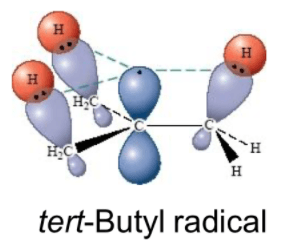
300
What is catalytic cracking?
Catalytic cracking is a process that uses a catalyst to convert gasoil to smaller olefins, and aromatic fractions.
300
How is Urea formed in industrial chemistry?
Urea is formed when ammonia is reacted with carbon dioxide, then the intermediate is dehydrated.
300
How are fuel cells different from electrochemical cells?
Fuel cells consume reactants, which must be replenished.
300
What is the difference between homogeneous and heterogeneous catalysts?
Homogeneous catalysts are in the same physical phase as the reactants. Heterogenous catalysts are in different physical phases as the reactants.
300
What are the 4 mechanisms for chain growth polymerization?
Radical polymerization, Cationic polymerization, Anionic polymerization, Coordination polymerization.
300
Which 3 Green Chemistry principles can be used to reduce waste in the production of fine chemicals and pharmaceuticals?
Use of catalysts, Use of renewable feedstocks, Use safer solvents.
300
Which 4 factors should be included when designing a reactor?
Production is safe, no severe environmental impacts, economically beneficial, desired specification (Physical size).
400
Why should industries seek prevention of toxic chemicals rather than find a cure for them?
1. Preventing harmful is more cost efficient than finding a cure.
2. Using less toxic chemical can reduce accident potential.
400
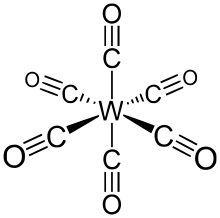
What is the oxidation number of W in this complex?
The oxidation number of W is 0.
400
Catalytic cracking is a better process than steam cracking in terms of the production of light olefins. Why?
Catalytic cracking has less energy consumption, therefore you can control the product distribution better, and improve the yields of light olefins.
400
Urea can react to form 2 side products. The process is slow and endothermic. How can these side products be limited?
The side products can be limited by decreasing the temperature, or increasing the pressure/decreasing the volume.
400
Briefly explain how aluminum metal is produced.
Bauxite is mined. Then Aluminum oxide is formed. Finally aluminum is formed by the reduction of the aluminum oxide.
400
Define and Describe the difference between Physical Adsorption and Chemisorption.
Physical adsorption is where the molecules has a weak interaction with the substrate, but no chemical bonds are formed or broken. Chemisorption is where the molecules are attracted to the substrate, and chemical bonds are formed or broken.
400
What is the difference between chain-growth and step-growth polymerization?
Chain-growth polymerization involves radicals, ions, or metal complexes as intermeidates which cannot be isolated. Step-growth polymerization is the polymerization using bifunctional monomers (Generally polyester or polyamide).
400
Explain the mechanism of the Friedel-Crafts acylation of benzene.
An acyl halide reacts with a lewis acid to form a complex. Then the halide and the lewis acid leaves the carbonyl compound, making it a cation. The pi electrons on the benzene attack the carbonyl cation. Finally, the tertiary hydrogen on the benzene is eliminated from being attacked by the lewis acid complex forming the final product.
400
What are the 4 ways to classify a reactor?
Mode of operation, end use base classification, phase based classification, Catalyst base.
500
 Why is this reaction a green synthesis?
1. Using a catalyst
2. Little amount of reactants and only one step required.
500
How many valence electrons are present in this structure?
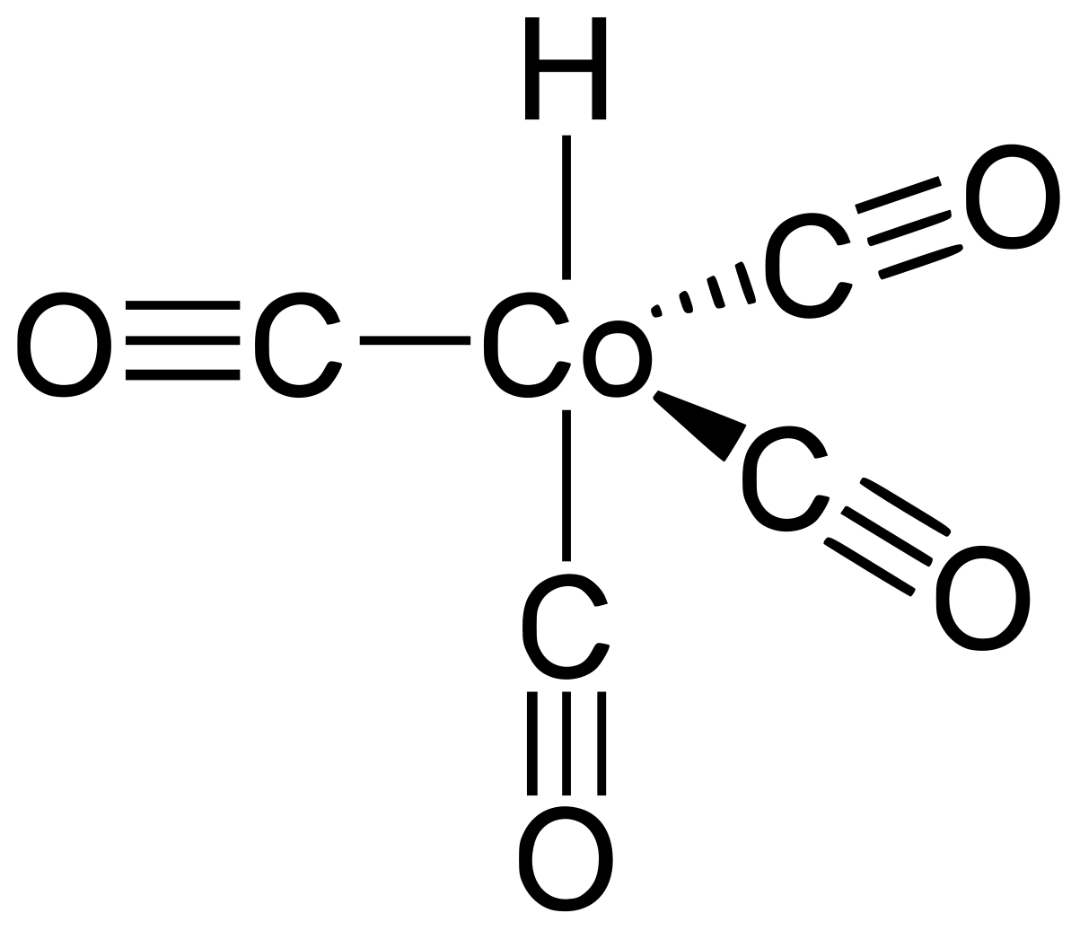
18 electrons.
500
What does a phase diagram represent?
A phase diagram represents the 3 states of matter for a specific component, and how they can be transformed into each other.
500
Briefly describe the mechanism for the Haber-Bosch process.
Nitrogen gas and hydrogen gas are both adsorbed onto the surface of the catalyst, then the adsorbed hydrogen gas is reacted with the adsorbed nitrogen gas, and once the ammonia gas is formed and leaves the surface of the catalyst.
500
Explain how chlorine gas and sodium hydroxide are formed in a membrane cell process.
Sodium chloride is reacted with water, where the sodium and chlorine are dissociated to ions. The chlorine is oxidized in the anode to form chlorine gas. Water is reduced into hydroxide ion in the cathode, and is reacted with the sodium cation to form sodium hydroxide.
500
How would you convert from diethylbenzene to ethylbenzene?
The transalkylation in the presence of benzene can convert diethylbenzene to ethylbenzene.
500
How is urethane produced and what is its mechanism?
Urethane is produced by the reaction of isocyanate with an alcohol, where the partial positive of the carbon on the isocyanate is attacked by the partial negative of the oxygen on the alcohol, and the hydrogen from the hydroxyl group moves to the nitrogen on the isocyanate.
500
Define Chemoselectivity, Regioselectivity, and Enantioselectivity.
Chemoselectivity is the preference of the location of the reaction (Ex: Hydrogenation occuring at carbonyl or alkene). Regioselectivity is the preference of a chemical bond being made or broken at a specific location over others (Ex: Forming isomers). Enantioselectivity is the preference of which enantiomer is formed.
500
How does the scale up procedure work?
Process discovered and experimented in Lab. Move on to pilot scale, where a continuous processing of a product is tested. Then a demonstration is shown of how it would work in plant production. Finally, move to plant production.