Vocabulary
Key Concepts
Atoms
Chemical Reactions
Types of Phase Change
100
the tiny pieces that all matter-all the stuff in the world-is made of
What are atoms?
100
During a _____, one or more starting substances (reactants) change into one or more different substances (products).
What is chemical reaction?
100
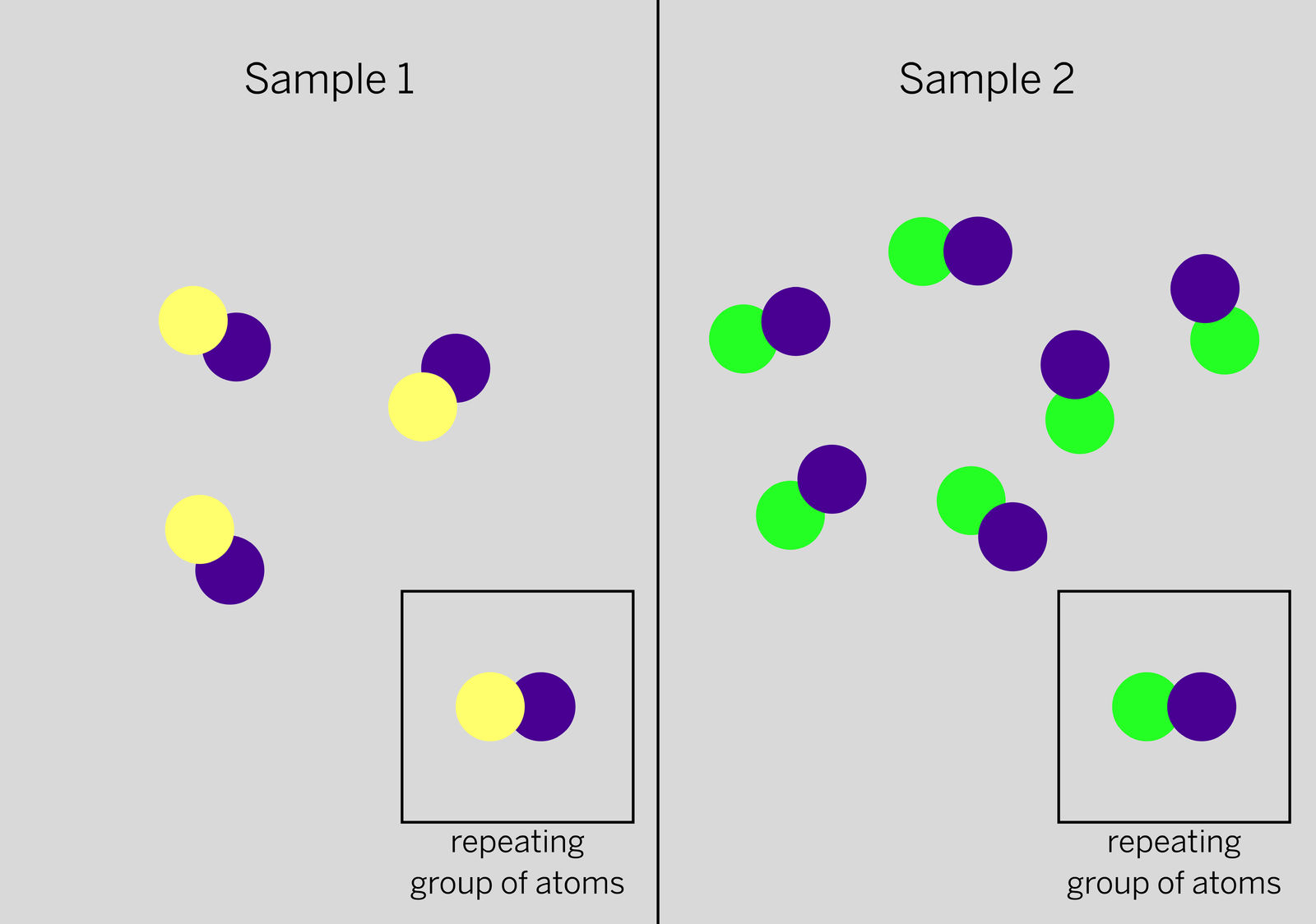 Are these groups of atoms the same or different?
What is different
100
What happens to molecules when a chemical reactions occurs?
Atoms break apart and rearrange to form new molecules?
100
The phase change that occurs when a solid changes to a liquid.
What is melting?
200
A process in which atoms rearrange to form new substances
What is a chemical reaction?
200
During a chemical reaction, atoms do not change from one ___ to ____
What is type and another?
200
Will these groups of atoms have the same properties or different properties? Why?
Different because they are different groups of atoms.
200
True or false: atoms are smashed when a chemical reaction occurs.
What is false?
200
What is the phase change when a liquid turns into a gas?
What is evaporation
300
A structure formed by repeating groups of atoms linked together in a large network
What is an extended structure?
300
During a chemical reaction, atoms _____ to form different groups of atoms.
What is rearrange?
300
If a chemical reaction occurs, what color atoms would we likely see in a product?
Yellow, purple, and green
300
True or false: a chemical reaction can occur when a substance is by itself
What is true
300
This is the type of phase change that occurs when a gas turns into a solid.
What is deposition?
400
Something that can be observed about a substance, such as color, smell, or boiling point
What is property?
400
During a chemical reaction, all of the atoms that make up the ____ rearrange to form the _____
What is rearrange and products
400
/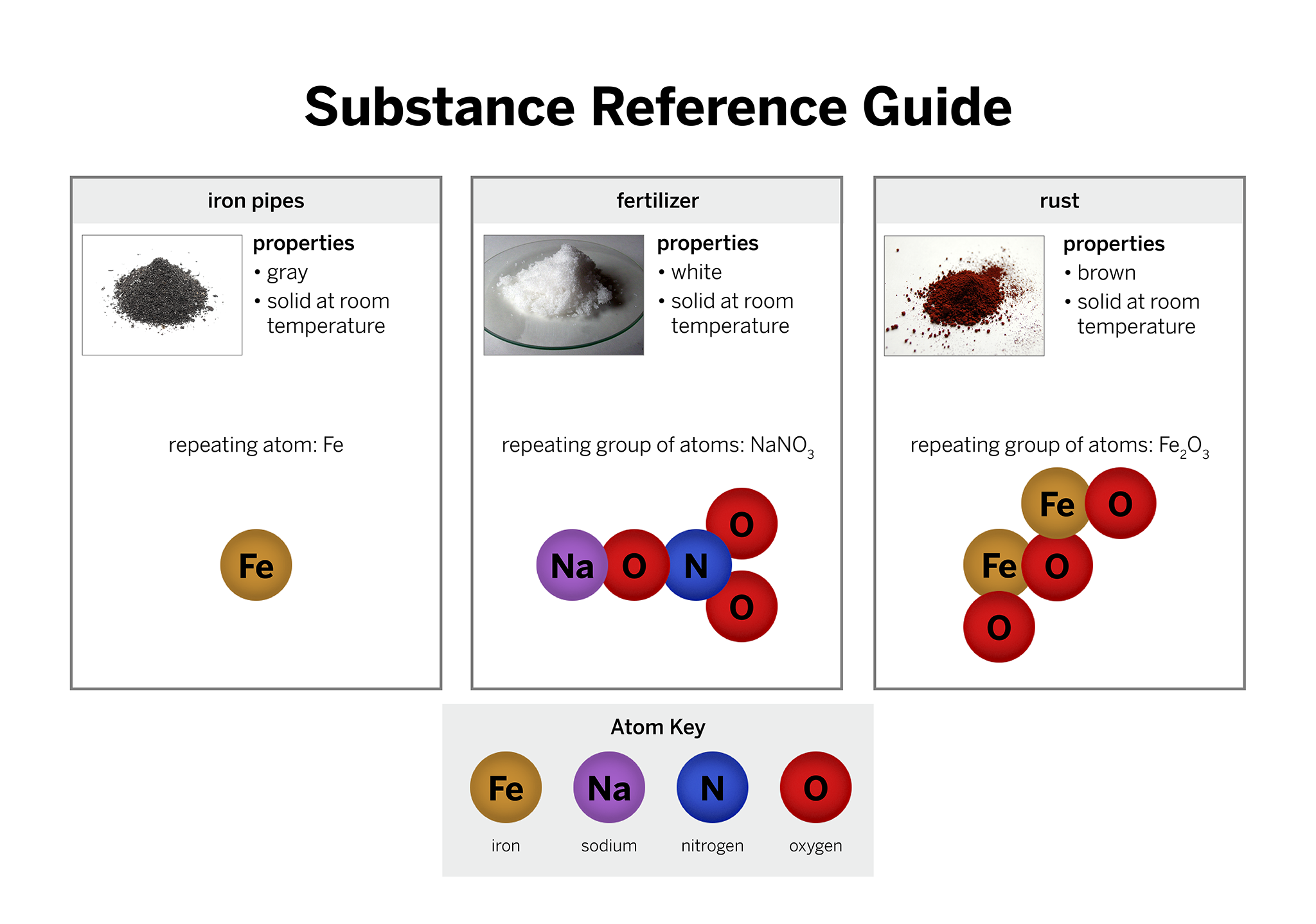 What two atoms are needed to form rust?
What is iron and oxygen?
400
When two substances form to create a chemical reaction, how do you ensure atoms are neither created or destroyed.
Reactants need to have the same amount of atoms as the products.
400
This is the phase change when a solid turns into a gas.
What is sublimation?
500
A starting substance that is part of a chemical reaction
What is a reactant?
500
During a chemical reaction, atoms cannot be _____ or _______
What is created or destroyed?
500
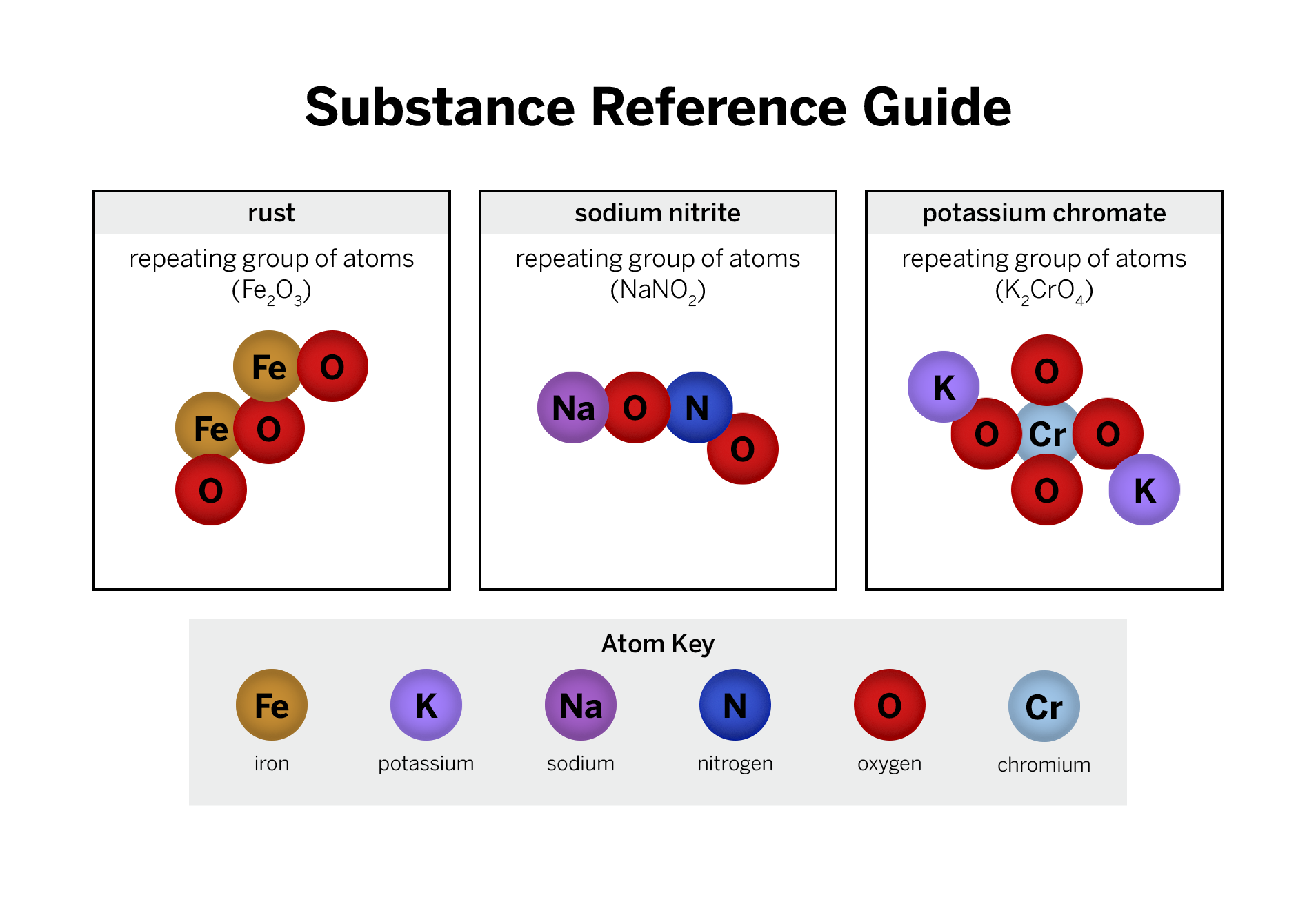 Is it possible to create potassium chromate with rust and sodium nitrite
It is not possible because nether rust nor sodium nitrite contains potassium or chromium
500
If molecules are attracted to each other, does that mean a chemical reaction will always occur? Why?
It does not because not all substances react to each other.
500
A substance with greater molecular attraction will _______ into a solid at a higher temperature than a substance with lower molecular attraction.
What is freeze