Subatomic Particles
Atomic Mass and Calculations
Mass Number
History of the Atom
Periodic Table
100
The positively charged particle found in the nucleus of atoms.
What is a proton?
100
Atomic Mass can be read directly of the periodic table (True/False)
What is true?
100
Mass number is calculated by doing this operation.
What is adding protons and neutrons.
100
This person had a theory with 4 statements about atoms.
Who is John Dalton?
100
The atomic number on the periodic table represents the number of this subatomic particle.
What is protons?
200
The negatively charged particle that orbits around the atom.
What is the electron?
200
Atomic mass is calculated by averaging all the mass numbers of these types of atoms.
What are isotopes?
200
Hydrogen-2 has this mass number.
What is 2?
200
The name for this model of the atom developed by JJ Thompson 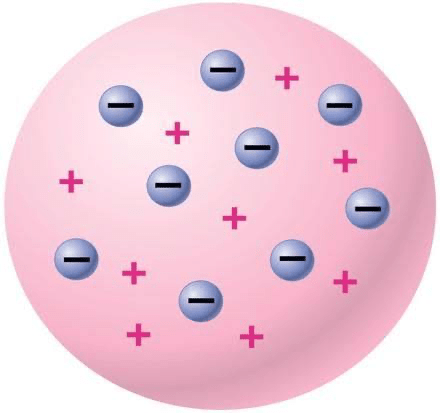
What is the Plum Pudding Model?
200
A cation has this charge.
What is positive?
300
The atomic particle in the atom's nucleus with no charge.
What is a neutron?
300
All of the abundance percentages must add up to this value.
What is 100%
300
Mass numbers for these kinds of elements change due to varying numbers of neutrons even though they are the same element.
What are isotopes?
300
Rutherford designed an experiment called this where he shot alpha particles and discovered the nucleus of an atom.
What is Gold Foil Experiment?
300
Mass number can be directly read of the periodic table. (True/False)
What is False?
400
There must be equal numbers of these two subatomic particles for an atom to be neutral (no charge).
What are protons and neutrons?
400
An isotope of Chlorine has three common isotopes. One has an abundance of 38%. Another has an abundance of 52%. This is the abundance of the third?
What is 10%
400
An isotope of Oxygen has 8 protons and 10 neutrons. This is its mass number.
What is 18?
400
Atomic theory states that "Atoms of different elements mix or combine in _____________."
What is whole number ratios?
400
Elements on the left side of the periodic table tend to form ions with this charge.
What is positive?
500
If an atom ______ an electron it will become positively charged.
What is loses?
500
An element has two stable isotopes:
Isotope 1: Mass = 10.00 amu, Abundance = 20%
Isotope 2: Mass = 11.00 amu, Abundance = 80%
This is its atomic mass number
What is 10.80 amu?
500
Uranium-238 has this many protons and this many neutrons.
What is 92 and 146?
500
JJ Thompson used this experiment to discover the electron.
What is the Cathode Ray Tube Experiment?
500
Atoms to the right of the periodic table tend to form ions that are this charge?
What is negative?