Diagnosis & Prognosis
Compressions
BLS
ALS
Algorithm &
Medications
Medications
ECG
MORE ECG!
100
Survival rate to discharge of patients who arrest due to an acute, reversable problem or a peri-anesthetic drug reaction
What is 50%
100
The % of cardiac output with well-executed chest compressions
What is 30%
100
ABCs of CPR
What is Airway, Breathing, and Circulation
100
The first thing to do after BLS has been initiated
What is attach an ECG and Capnograph
100
The frequency at which you give Epinephrine during CPR
What is every other 2-minute cycle if a non-shockable rhythm persists
100
The 4 types of rhythms we see during CPR
What is Asystole, VF (Ventricular fibrillation), PEA (pulseless electrical activity) and Pulseless VT (Ventricular Tachycardia)
100
The name of this ECG waveform and is it shockable

What is asystole and no, it is not shockable
200
The overall survival rate to discharge of patients that arrest
6-7%
200
The focus of compressions on a round-chested dog and an example of a breed with this confirmation
What is the widest part of the chest and Labs, Goldens, Australian Shepherds, ext
200
The length of cycles during CPR
What is 2 minutes
200
The recommended way to obtain vascular access if it has not been obtained within 2 minutes of the initiation of CPR
What is place and IO catheter
200
The treatment that should be applied after a cycle where Asystole or PEA are noted on the ECG
What is Epinephrine or Vasopressin and possibly Atropine one time as early as possible
200
ECG rhythm with no pulse, no repeating complexes and has a flat line

What is Asystole
200
The heart rate reading on an ECG for a patient that is experiencing PEA
What is <200
300
What you do when a patient comes in and is suspected to be in CPA
What is initiated CPR by following the ABC's. Airway, Breathing, and Circulation
300
The focus of compressions on a keel-chested dog and a breed with this confirmation
What is directly over the heart and Greyhounds, Dobermans, GSDs, Danes, Boxers, ext
300
The length of time allowed during 2-minute cycles to check ECG, pulse and change compressors
What is 10 seconds
300
The correct placement of a 3 lead ECG
What is white on the front right, black on the front left and red on the back left
300
The treatment that should be applied after a cycle where Pulseless VT or Ventricular Fibrillation are noted on the ECG
What is a precordial thump or defibrillation if accessible
300
ECG with no pulse, no repeating complexes and is not a flat line
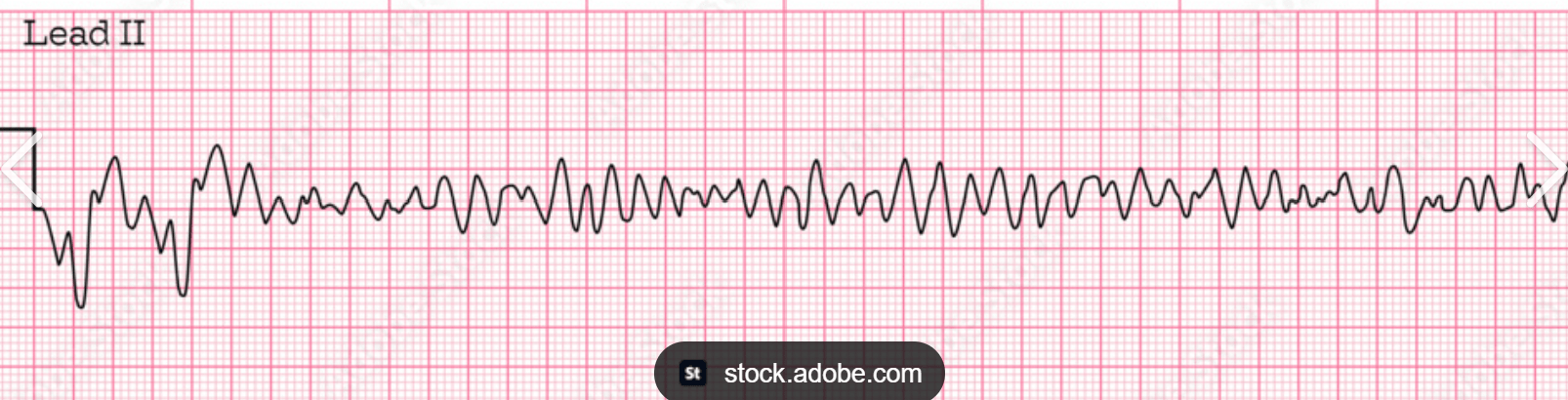
What is Ventricular Fibrillation
300
The heart rate reading on an ECG for a patient that is experiencing Pulseless VT
What is >200
400
The number of minutes of CPA before ischemic damage begins
What is CPR needs to be initiated within 4 minutes of CPA to avoid ischemic damage
400
The recumbency and focus of compressions on a flat-chested dog and a breed with this confirmation
What is dorsal recumbency with focus directly over the chest bone and Bulldogs, Frenchie's, Pugs, ext
400
The rate of which ventilation should be provided during CPR and the length of each inspiration
What is every 6 seconds lasting ~1 second
400
The amount of time of uninterrupted chest compressions needed to appropriately access the ECG of a patient that is in CPA
What is 1 minute but 2-minute cycles of chest compressions without interruption are recommended to optimize perfusion to the brain and heart
400
When you consider giving Atropine during CPR
What is when high vagal tone is suspected of contributing to the arrest you should administer one dose after the first cycle of compressions **NOTE** it is not recommended to repeat atropine since it lasts in the body for a prolonged period of time
400
ECG with no pulse, repeating complexes and a HR >200
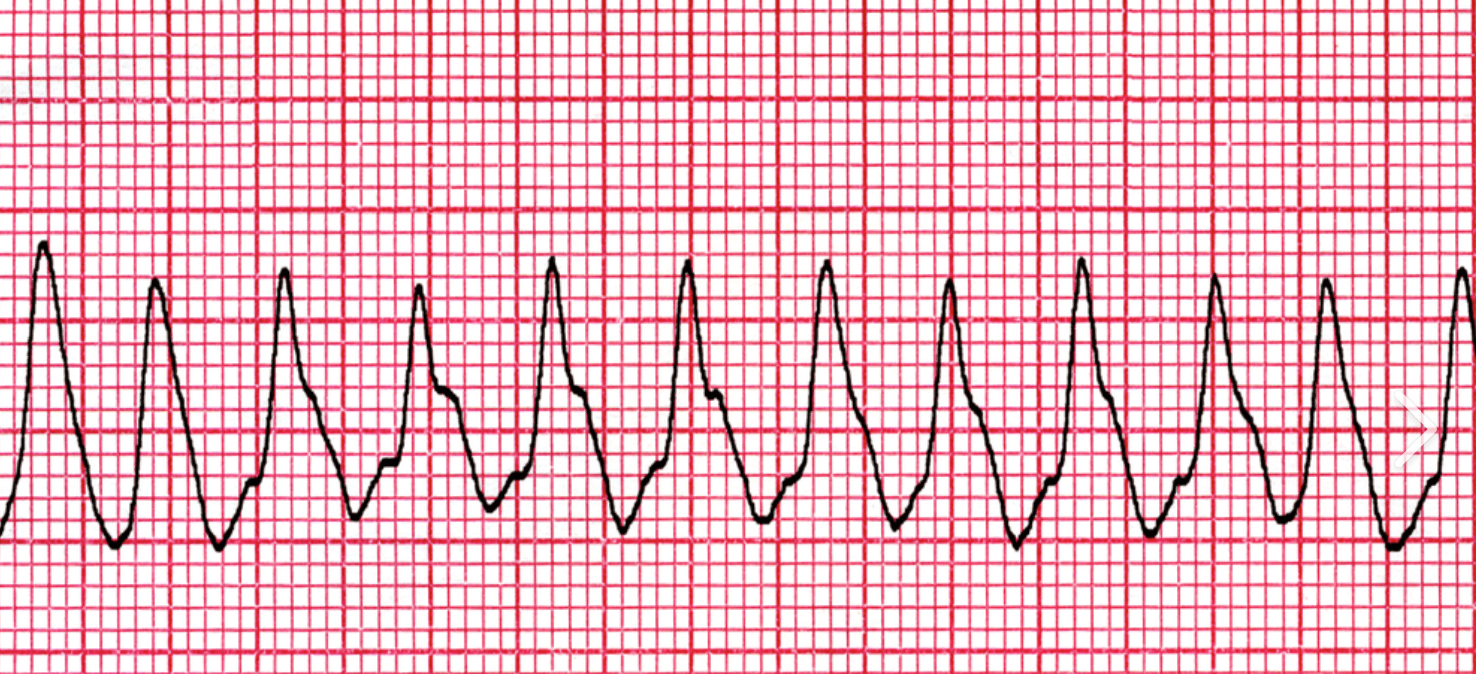
What is Pulseless Ventricular Tachycardia (Pulseless VT)
400
name of this ECG waveform and is it shockable (note* the HR is reading 150bpm)
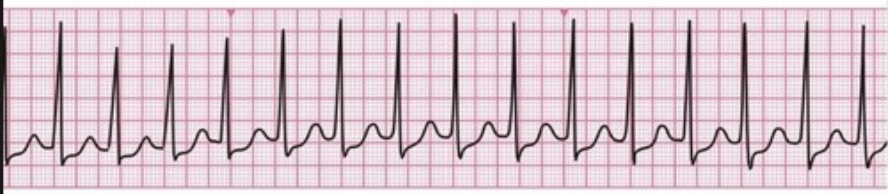
What is Pulseless Electrical Activity and no, it is not shockable
500
The number of minutes of CPA before irreversible ischemic damage occurs
What is CPR needs to be initiated within 10 minutes of CPA to avoid irreversible ischemic damage
500
The three types of compressions for small dogs and cats and where the focus of compressions is
What is 2-thumb, 1 handed, and 1 handed heal compressions and compressions should be focused directly over the heart
500
The depth of compressions for patients that are in lateral recumbency vs dorsal recumbency
What is 1/3-1/2 the depth of the chest for those in lateral and 1/4 the depth of the chest for those in dorsal
500
The mmHg reading that indicates proper ETT placement and the reading that indicates good quality chest compressions with good cirulation
What is >12mmHG and >18mmHg
500
When you consider giving Epinephrine to a patient that has Ventricular Fibrillation or Pulseless VT
What is after 1 shock and 1 full cycle. **NOTE**consider giving every other cycle and lidocaine as needed.
500
ECG with no pulse, repeating complexes and HR <200
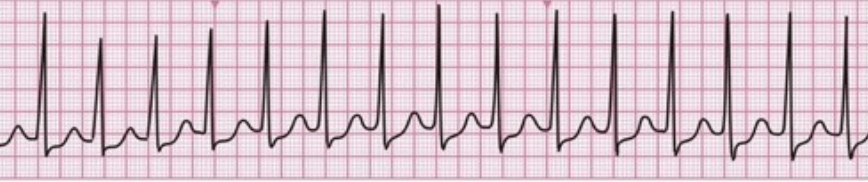
What is Pulseless Electrical Activity (PEA)
500
name of this ECG waveform and is it shockable

What is Ventricular Fibrillation and yes, it is shockable
600
The medication that should be considered if a patient has been in prolonged CPR (>15min)
What is sodium bicarbonate
600
What you do if a flat-chested dog does not lie easily on their back when providing compressions
What is lay them on their side and follow round-chested dog guidelines
600
The cmH2O that should be delivered when providing ventilation during CPR
What is 20-40 cmH2O
600
The recommended range of value for SPO2 and BP that indicates the patient may have ROSC
What is this is a trick question! While tempting, SPO2 and BP devices rely on pulse to obtain accurate values which patients in CPA do not have.
600
The indications that ROSC has been achieved
What is a sudden and persistent increase in ETCO2 that is >35 and you can palpate arterial pulses that are not consistent with the compressions that are being applied
600
The rhythms in which you would apply a precordial thump (the shockable rhythms)
What is Ventricular Fibrillation (VF) and Pulseless Ventricular Tachycardia (Pulseless VT)
600
name of this ECG waveform and is it shockable
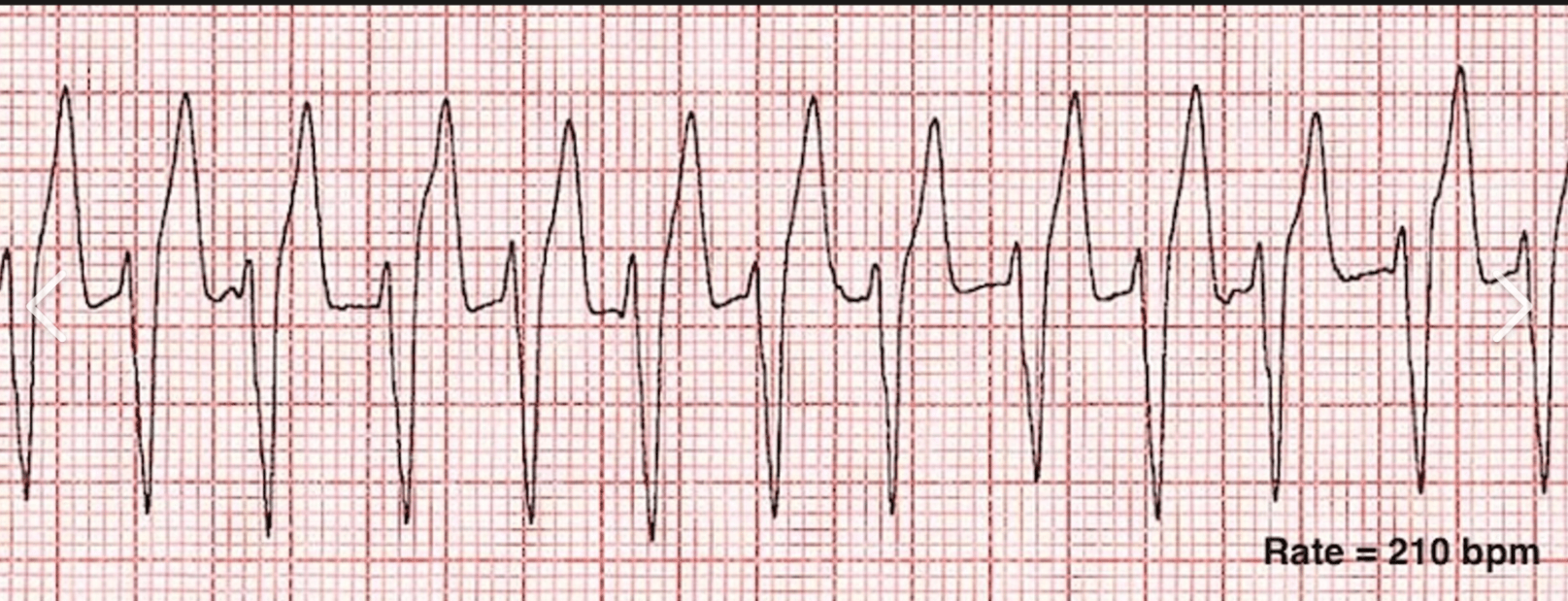
What is Pulseless Ventricular Tachycardia (Pulseless VT) and yes, it is shockable