Face Card Never Declines💅🏽
Fossa La Vista😎
I Came, I Saw, I Heard, Honey 💁🏻♀️
Little Miss Larynx and Pharynx 🎀
What You Talking Bout, Willis?🤔
100
This deep neck fascial space lies posterior to the pharynx, is filled with loose connective tissue, and can allow infections to spread to the danger zone.
What is retropharyngeal space?
100
The temporalis muscle, one of the four muscles of mastication, originates from the inferior temporal line and temporal fossa to inserts onto this structure.
What is the coronoid process of the mandible?
100
The inferior rectus muscle allows for this direction of eye movement.
What is depression?
100
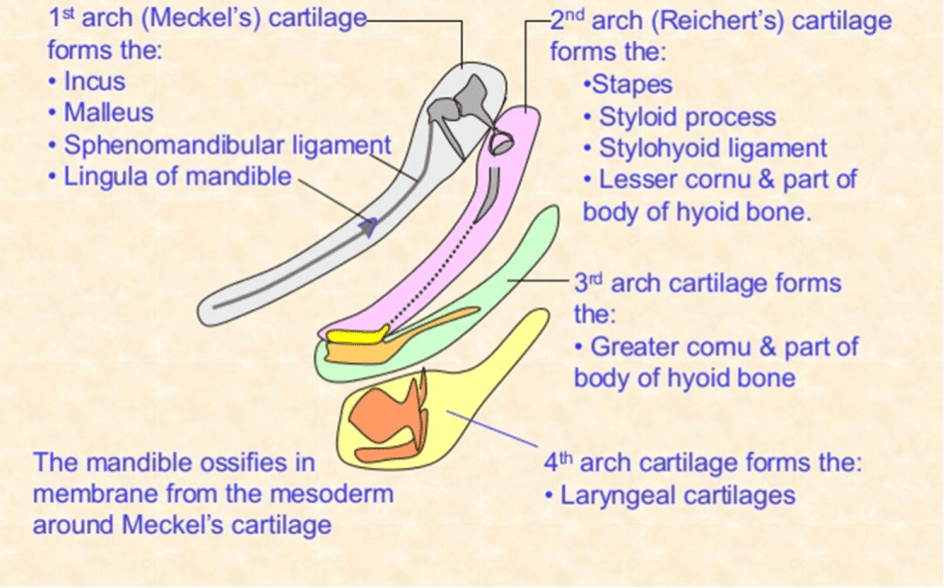
This skeletal structure is derived from the Meckel cartilage of the first pharyngeal arch to serve as the lateral-most of the middle ear ossicles.
What is the malleus?
100
This horizontal dural reflection separates the occipital lobes of the cerebrum from the cerebellum.
What is the tentorium cerebelli?
200
This cranial nerve provides motor innervation to the muscles of facial expression, delivers parasympathetic innervation to the lacrimal, submandibular, and sublingual glands, and provides the special sensation of taste to this portion of the tongue.
What is the anterior 2/3 of the tongue?
200
This structure makes up the medial bony boundary of the infratemporal fossa.
What is the medial pterygoid plate?
200
Parasympathetic fibers that constrict the pupil and allow for accommodation of the lens originate from the Edinger–Westphal nucleus and travel in the oculomotor nerve. These fibers synapse in this parasympathetic ganglion, sending postganglionic fibers to the eye.
What is ciliary ganglion?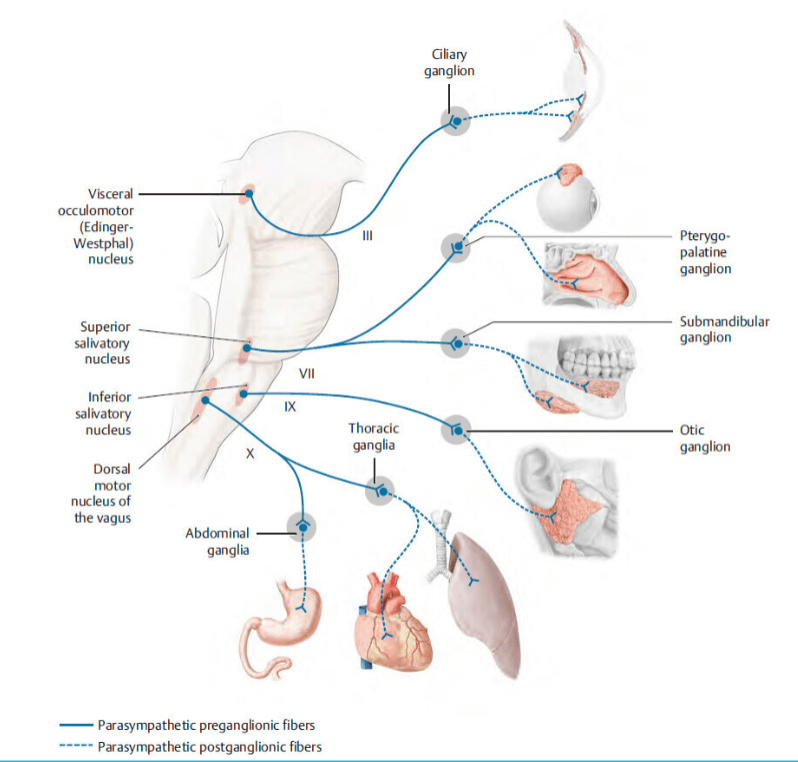
200
The stylopharyngeus muscle of the pharynx is innervated by this nervous structure.
What is the glossopharyngeal nerve?
200
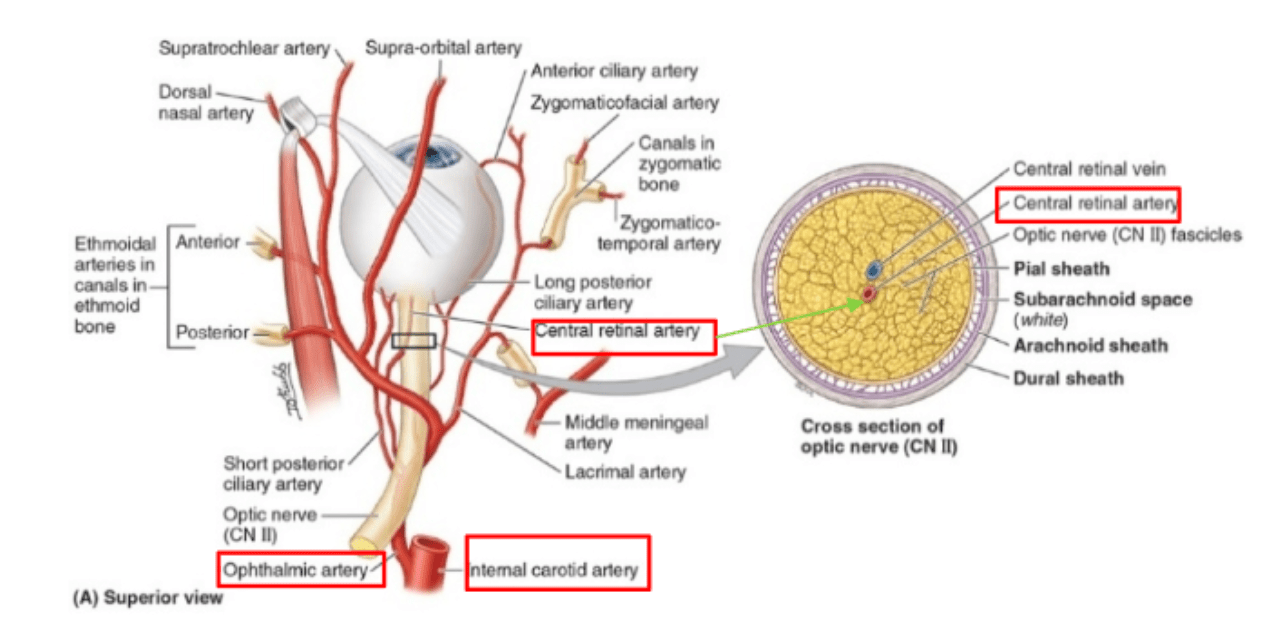
This branch of the internal carotid artery travels into the orbit, gives off the central retinal artery, and supplies structures of the eye and orbit as part of the anterior circulation to the brain.
What is the ophthalmic artery?
300
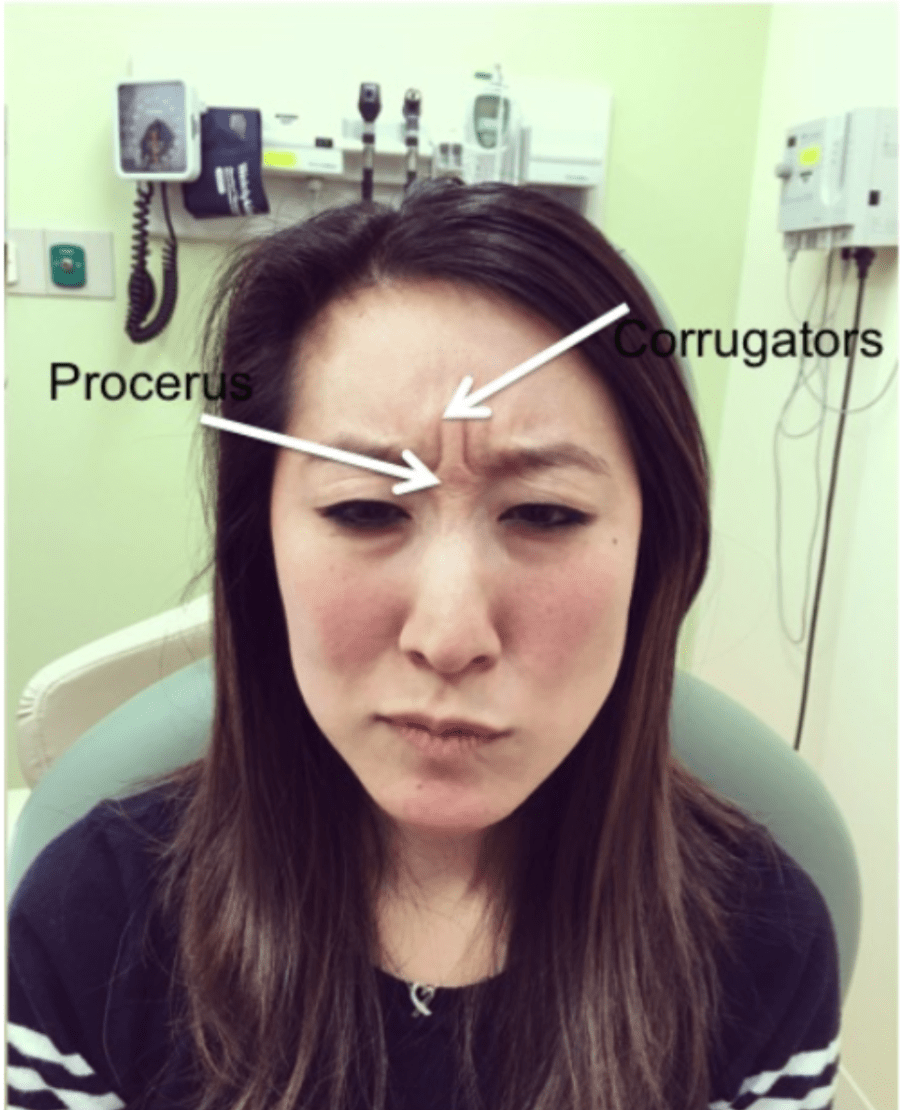
Many of the muscles of facial expression arise subcutaneously from fascia or bone and are innervated by the facial nerve. Identify the function of the procerus muscle of the nasal group.
What is draws medial border of the eyebrows down and/or transverse wrinkling of the top of the nose?
300
This terminal branch of the external carotid artery provides the primary arterial supply to the infratemporal fossa. This specific branch off this artery enters the cranial cavity through the foramen spinosum.
What is the middle meningeal artery?
300
The middle ear is a complex cavity found between the external and inner ear. It is bordered anteriorly by this structure.
What is the internal carotid artery?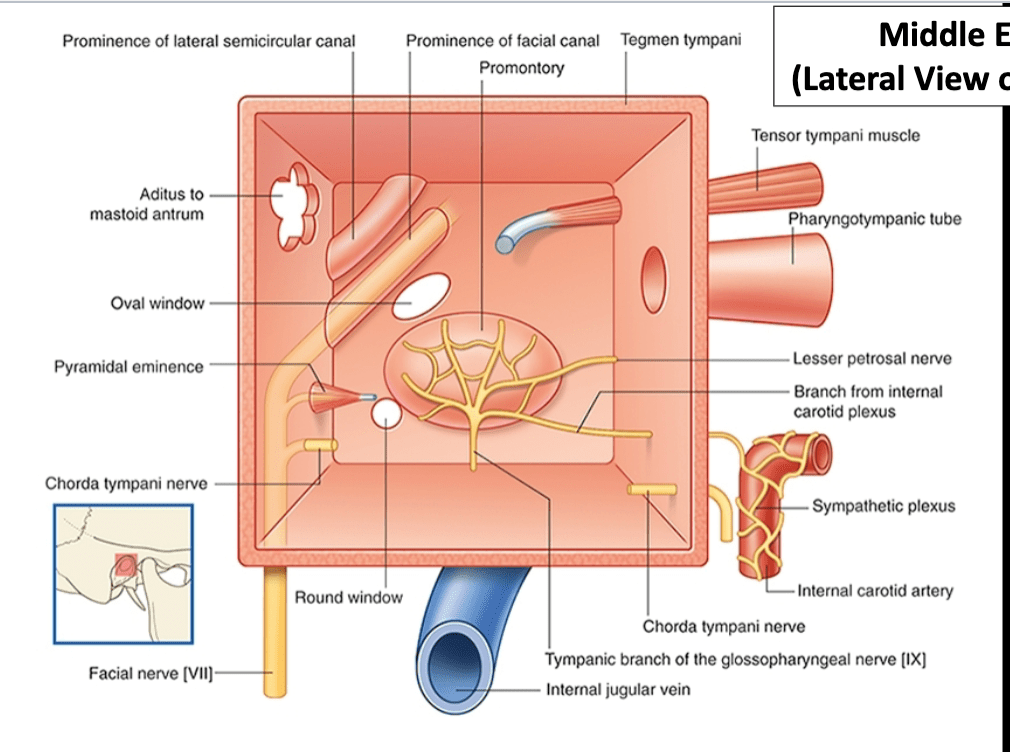
300
This gap in the pharyngeal wall serves as a passageway for nerves, arteries, and muscles into the oral cavity.
What is the oropharyngeal triangle?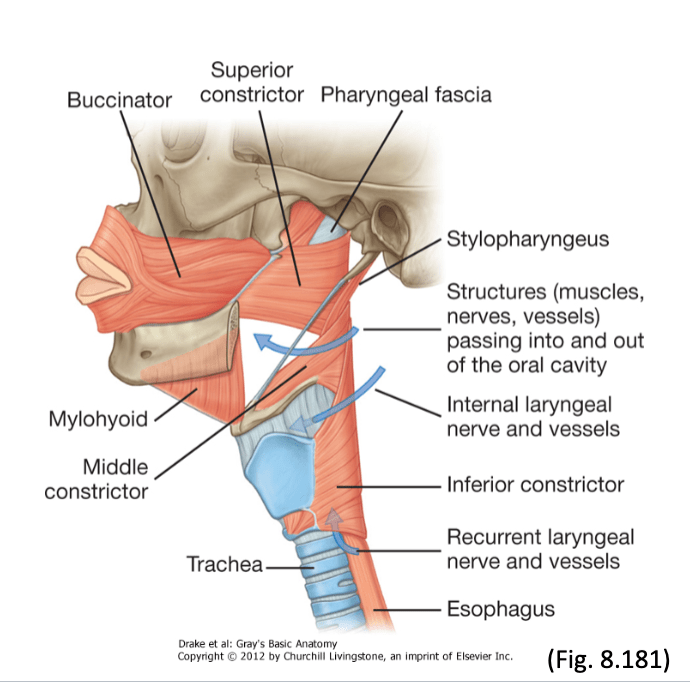
300
This cranial nerve carries GSE fibers to the muscles of facial expression, GVE fibers to the lacrimal and salivary glands, and SVA fibers to the anterior 2/3 of the tongue. It emerges from the brainstem at the pontomedullary junction and exits the cranial cavity through this opening.
What is the internal acoustic meatus?
400
The facial nerve (CNVII) provides the secretomotor parasympathetic innervation to all of the salivary glands except for this one. Identify the gland and its innervation.
What is the parotid gland and the glossopharyngeal nerve (CN IX)?
400
Formed by the union of two nerves, this structure travels toward the pterygopalatine ganglion, carrying both parasympathetic and sympathetic fibers destined for the lacrimal gland, nasal cavity, and palate.
What is the nerve of the pterygoid canal?
400
Identify the sense maintained by the structure indicated by the star.
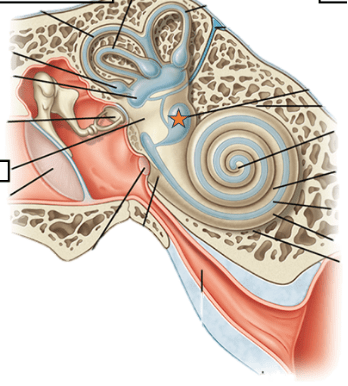
What is balance?
400
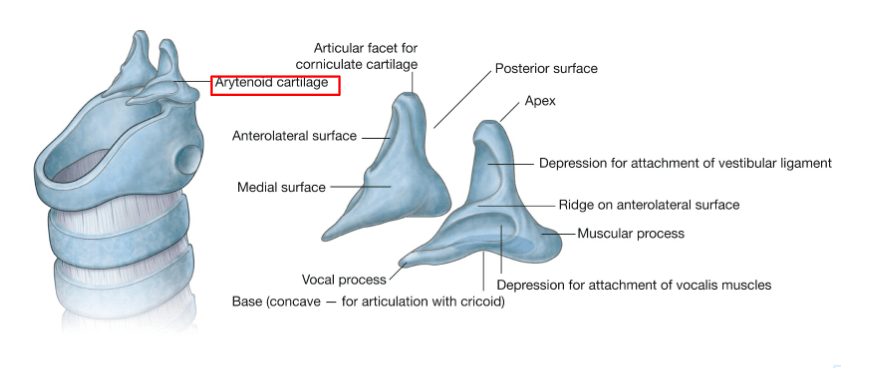
These paired, pyramidal cartilages sit on the superior border of the cricoid lamina, each with a vocal process that attaches to the vocal ligament and a muscular process for attachment of intrinsic laryngeal muscles that abduct and adduct the vocal folds.
What are the arytenoid cartilages?
400
This prominent deep cervical lymph node lies near the angle of the mandible along the internal jugular vein and is a key part of the deep lymphatic chain. It is the primary drainage site for the palatine tonsil, making it commonly enlarged and tender in tonsillitis.
What is the jugulodigastric node?
500
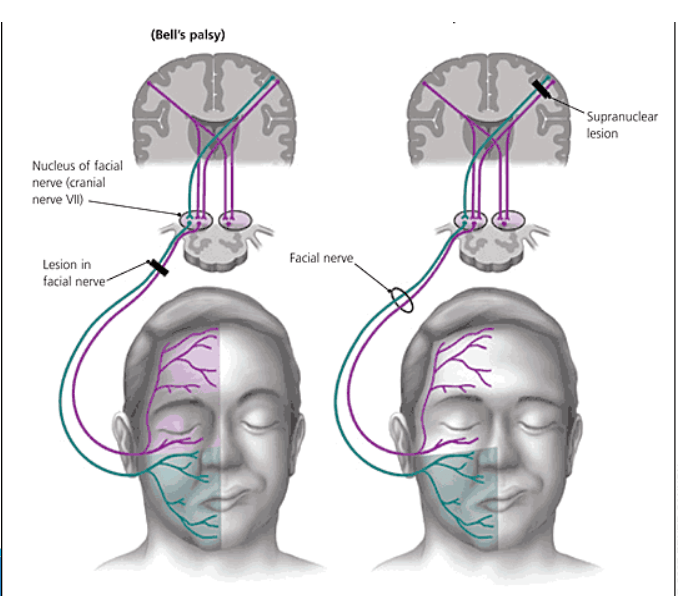
A 26-year-old female arrives at the emergency department presenting with sudden onset paralysis of the right side of her face. Both the corner of her eyelid and angle of her mouth appear to droop.
A blood antibody panel is drawn and reveals the presence of Herpes Simplex virus. You expect this to be the most likely diagnosis.
What is Bell's Palsy?
500
A 55-year-old woman reports brief, electric shock–like pain in her right upper teeth, cheek, and lateral nose, triggered by brushing her maxillary teeth or lightly touching her cheek.
To treat her pain, a needle is passed into the pterygopalatine fossa, where the maxillary division of the trigeminal nerve and the third part of the maxillary artery reside. You expect this to be the most likely diagnosis.
What is trigeminal neuralgia?
500
A 45-year-old man is brought to the ED presenting with slurred speech and difficulty breathing when lying on his back. When asked to stick his tongue out, it deviates markedly to the right side. These findings are due to paralysis of the genioglossus muscle. You suspect this structure is injured and causing the observed symptoms.
What is the right hypoglossal nerve?
500
A 30-year-old patient reports chronic nasal obstruction and recurrent maxillary sinus infections. Nasal endoscopy reveals a midline structure to be significantly displaced to the right. The ENT explains that correcting this displacement of this structure should improve airflow and sinus drainage.
What is the nasal septum?
500
A 56-year-old patient presents with ptosis of the left upper eyelid, dilation of the left pupil non-responsive to light, and a “down and out” presentation of the left eye at rest.
You suspect this cranial nerve is injured.
What is the left oculomotor nerve?