History
T&M
DX
Manual Therapy
Therex
Tests from Lab
100
After analyzing data gathered in the patient interview, These 3 options constitute the very first decision of outpatient PT eval (often having to do with the (N)ature of the problem).
What is: Refer, Treat & Refer, or Suitable for PT? (Also known as Triage.)
100
When active range of motion testing is full range and painfree, this further test must be conducted.
What is overpressure?
100
Prior to rigorously evidence-based Clinical Practice Guidelines, this is the name of the categorization-diagnosis system that was used to determine the best treatment for each patient with low back pain.
What is Treatment-Based Classification?
100
This term is synonymous with a grade V joint mobilization.
What is joint manipulation?
100
Muscle contractions that result in motion.
What is isotonic?
100
This is particular muscle or muscle group innervated by a single nerve root.
What is a myotome.
200
This part of SINSS analysis can help determine how aggressive the exam should be.
What is Irritability?
200
This type of test is best used towards the beginning of the physical exam.
What is a highly sensitive test? (Or, tests with high negative likelihood ratios)
200
A pnt has limited shoulder flexion ROM. If AROM=PROM, MMT 5/5, & painless, what is causing the limitation?
What is Hypomobility?
200
This grade of joint mobilization is characterized by large amplitude in and out of the first resistance (R1).
What is Grade III?
200
Muscle contractions that do not move a joint.
What is isometric?
200
This is the main dorsiflexion muscle, innervated by these nerve roots.
What is tibialis anterior, innervated by L4-L5?
300
This type of SX has an origin at a site other than where the patient feels the pain.
What is referred pain?
(will also accept radiating pain)
300
When having a patient perform a movement test, these are the 3 items the PT must assess.
What are 1) quality, 2) quantity, 3) SX response?
300
This condition can cause numbness/tingling, and potentially electric-like pain in a dermatomal pattern.
What is radiculopathy?
300
This is the dominant mechanism of manual therapy.
What is Neurophysiologic (input to the central nervous system)?
300
Muscle lengthens or shortens while a constant velocity is maintained throughout the contraction.
What is Isokinetic?
300
Forearm pronation myotome.
What is C7?
400
Signs/Sx that suggest a more serious underlying pathology requiring medical referral.
What is a Red Flag?
400
If a patient is too painful (or lacks the range) to get into the starting position for a manual muscle test, this is another way to test muscle contraction.
What is isometric muscle test/contraction?
400
This condition is characterized by high levels of pain for years, often generalized, widespread pain, in more than one region, in conjunction with difficulty sleeping and depression.
What is Central Sensitization (or Chronic Pain Syndrome or Nociplastic Pain)?
400
This is another term for passive accessory motion.
What is arthrokinematic motion?
400
Term for a muscle lengthening under tension.
What is eccentric?
400
This is the name of a special test for an upper motor neuron condition and the same word can serve as an adjective for hyperreflexia.
What is clonus?
500
Visceral referred pain in this region might originate where?
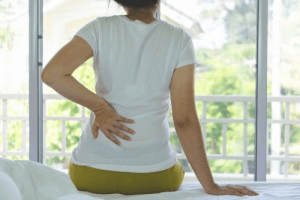
What is kidney?
500
Prior to performing a Special Test, this is the term of the guess-timate the PT must have about the expectation of a patient having the condition.
What is a Pre-test probability?
500
What is a synonymous medical term for osteoarthritis
What is a DJD -- Degenerative Joint Disease
500
This direction passive accessory motion is the typical PAM that goes with open-chain hip extension.
What is posterior-to-anterior (P-A) or Anterior?
500
This principle should be considered with the exercise prescription concept of specificity?
What is SAID? Specific Adaptation to Imposed Demands (Wolff's Law).
500
The picture indicates a palsy with this cranial nerve and on this side.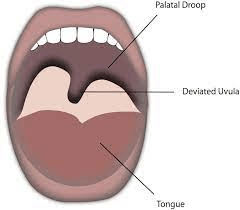
What is IX and X (on the left)?