Vocabulary
Ecological Organization
Ecological Relationships
Energy Flow
Food Chains/Webs
100
large area with distinct plant and animal species with a specific climate
What is a biome?
100
The smallest level of ecological organization
What is organism?
100
An ecological relationship in which one organism eats another for food
What is predation?
100
The original source of energy in an ecosystem
What is the Sun?
100
These organisms make their own food through photosynthesis or chemosynthesis
What is a producer?
200
The non-living factors in an ecosystem
Bonus: 100 points - 3 examples of abiotic factors
What are abiotic factors?
BONUS:
drought
flood
tornado, hurricane, heat wave
200
population with many kinds of species; individuals are most likely to survive
What is biodiversity?
200
An ecological relationship in which organisms try to use the same limited resources (food, water, mate, etc.)
What is competition?
200
number of organisms an environment can support over a relatively long period of time:
What is carrying capacity??
200
organisms that break down wastes and dead organic matter into essential nutrients that are recycled back into the ecosystem.
What is a decomposer?
300
The living factors in an ecosystem
What are biotic factors?
300
A group of same species living in the same area at the same time
Bonus: 100 points
change in the number of individuals in a population over time:
What is population?
Bonus:
What is growth rate?
300
An ecological relationship in which both organisms benefit
What is mutualism?
300
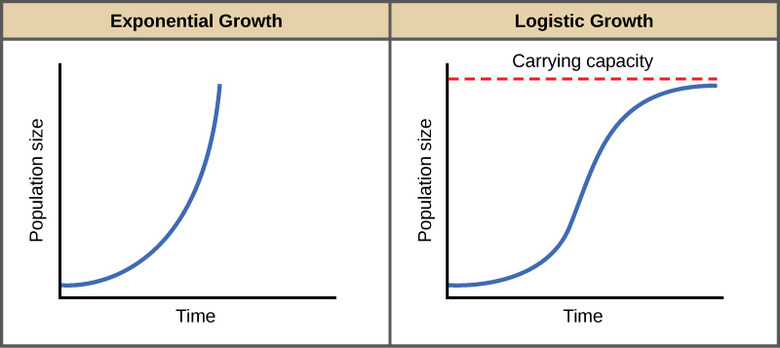
Graph with a J-shape curve;
when the rate of growth in a population is steady and the population size increases at a multiple of the previous generation.
What is exponential growth?
300
This type of consumer is typically found at the top of the food chain.
What is a tertiary consumer?
400
The role a species plays in an ecosystem
What is a niche?
400
All of the populations of different species living in the same area at the same time
What is community?
400
hurricanes would be
CHOOSE 1:
Density-Dependent OR Density-Independent
What is
density independent?
400
all the interconnected food chains in an ecosystem make up a:
the flow of energy from one organism to another can be shown in a:
Food web
400
An interaction in which one organism kills another for food.
What is predation?
500
drought, disease, and famine are ________ factors for humans.
What is a limiting factor for humans?
500
The level of ecological organization that only includes biotic and abiotic factors
What is ecosystem?
group of interacting populations that live in an area along with the nonliving parts of the environment.
500
An ecological relationship in which one organism benefits and the other is unaffected
What is commensalism?
500
The amount of energy that moves from one level to the next:
What is the 10% rule?
500
A group of organisms that are physically similar and can mate with each other and produce offspring that can also mate and reproduce.
What is a species?
* it is the most specific taxonomic rank