Race, Equality & Civil Rights
Rights of the Accused
First Amendment Freedoms
Executive Power & Elections
Business Regulation & Privacy
100
This 1896 case ruled that racial segregation on trains was legal under the standard of "separate but equal."
Plessy v. Ferguson
100
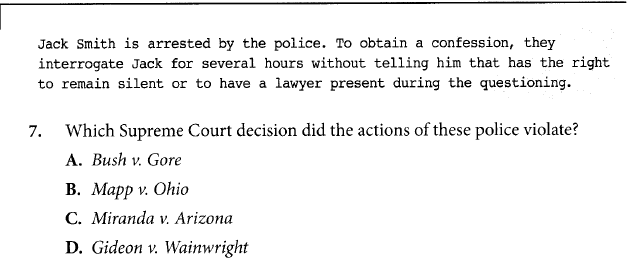
C
100
In Engel v. Vitale (1962), the Court ruled that public schools violate the separation of church and state if they sponsor or lead students in this morning ritual.
Prayer
100
Reinforcing the Rule of Law, this 1974 case held that even the President must obey court subpoenas and hand over evidence.
United States v. Nixon
100
This 2022 decision officially overturned Roe v. Wade, returning the power to regulate or ban abortion back to individual states.
Dobbs v. Jackson Women's Health Organization
200
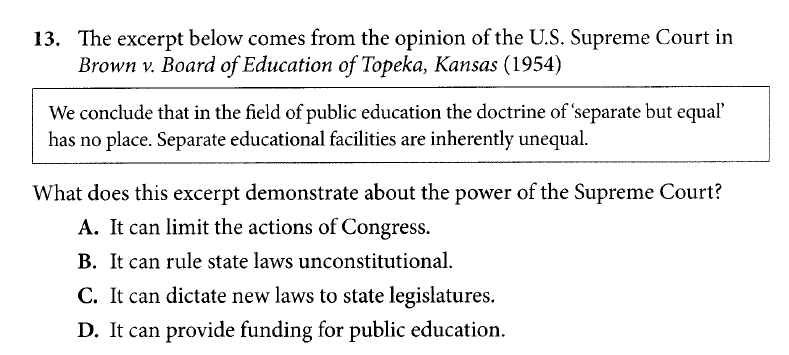
B
200
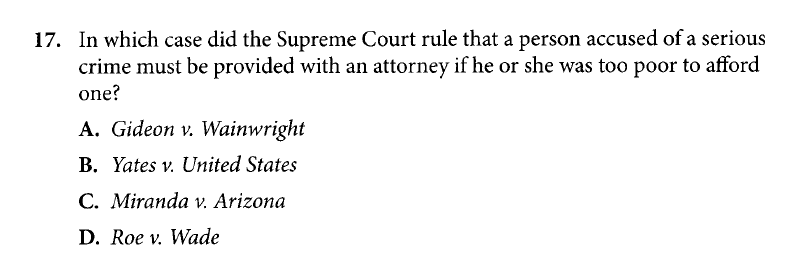
A
200
This 1969 case protected student symbolic speech, allowing them to wear black armbands to protest a war as long as they don't cause a substantial disruption.
Tinker v. Des Moines
200
This modern, Florida-centered case stopped a manual ballot recount, effectively deciding the 2000 presidential election.
Bush v. Gore
200
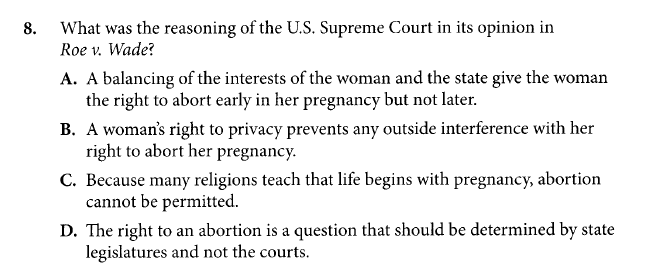
B
300
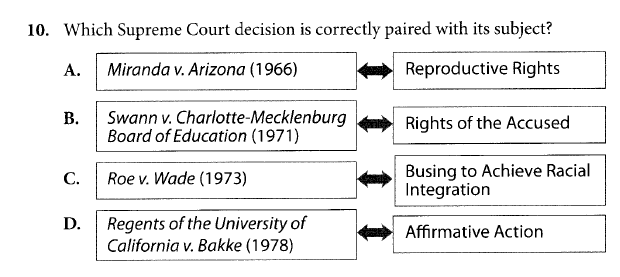
D
300
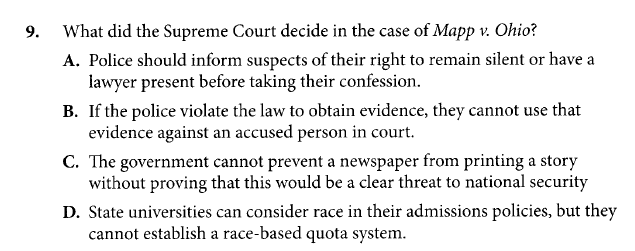
B
300
This 1919 case established that freedom of speech can be limited during wartime if it creates a "clear and present danger."
Schenck v. United States
300
In 1944, the Court ruled that national security during a war emergency outweighed civil rights, making this forced relocation of Japanese-American citizens legal.
Korematsu v. United States (or the creation of internment camps)
300
This Gilded Age case ruled that individual state governments do have the power to regulate private business prices to protect the public good.
Munn v. Illinois
400
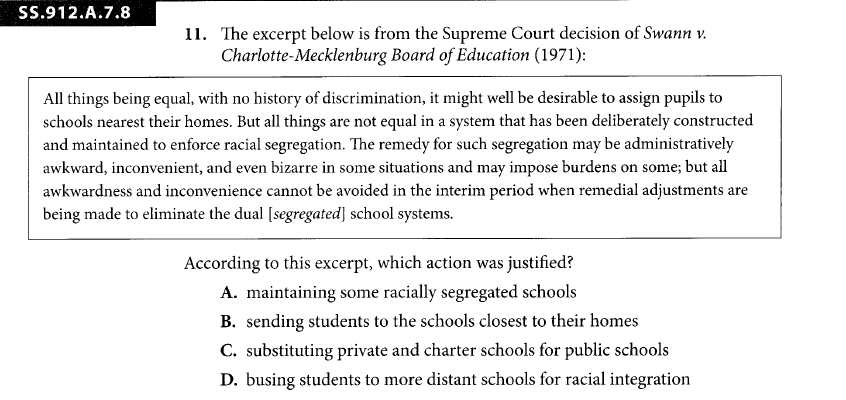
D
400
The Amendment at the absolute center of the Gideon v. Wainwright decision, guaranteeing the right to counsel.
6th Amendment
400
In New York Times v. United States (1971), the Court blocked the Executive Branch from using censorship, legally known by this two-word term, to stop the press from printing leaked documents.
prior restraint
400
The fundamental legal principle reinforced by U.S. v. Nixon stating that no individual, not even a leader, is above the law.
Rule of Law
400
Striking down a state's control over railroads, this 1886 case ruled that individual states cannot regulate commerce that crosses state lines.
Wabash v. Illinois
500
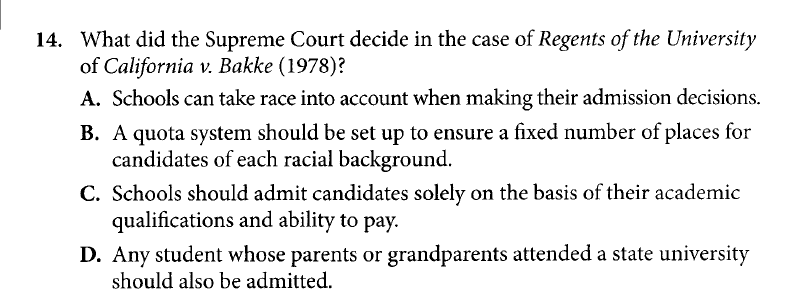
A
500
The specific rule established in Mapp v. Ohio that kicks illegally obtained evidence out of a courtroom.
Exclusionary Rule
500
The classic, fiery analogy used by Justice Oliver Wendell Holmes in Schenck to describe speech that creates an immediate panic and is not protected.
"falsely shouting 'Fire!' in a crowded theater"
500
The specific constitutional argument claimed by Richard Nixon to try to keep his White House audio tapes private from investigators.
executive privilege
500
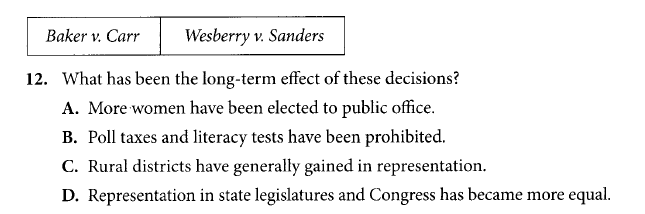
D