Log Functions
Properties of Logs
Common/Natural Logs
Solve Equations
Exponential Applications
& Inverses of Functions
& Inverses of Functions
100
This logarithm can be rewritten in log form without the radical and without an exponent:

What is:
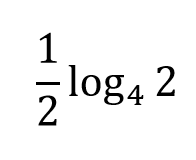
100
Rewrite the following sum as a single logarithm: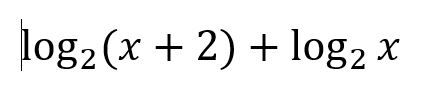
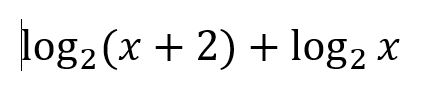
What is
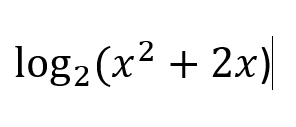
100
The base of a common or standard log is _____ .
What is
10
100
5(3)^(2x+1)=405
What is
x = 1.5 or 3/2
100
Find the inverse of the given function:
f(x) = e^x - 5
What is
f^-1(x)=ln(x+5)
200
The exponential form of this is what?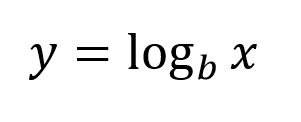
What is
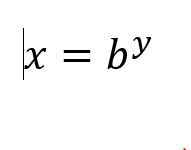
200
Use the Logarithm of a Product Property to rewrite:
log_b xy
What is
log_b x + log_b y
200
This number is the base of the Natural Logarithm: __
What is
e or Euler's number or Napier's constant
200
5x-4=25x-6
What is
x = 8
200
Give the exponential function:
After the winter ended, sales of snow boards decreased 25% per week. During the winter $70,000 worth of snow boards were sold.
What is
f(x)=70000(.75)^x
where x is the number of weeks after the end of winter
300
A logarithmic function is the inverse of _____ functions.
What are
exponential functions
300
Rewrite the following difference as a single logarithm:
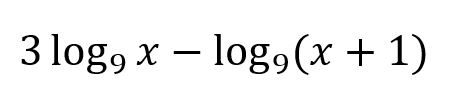
What is:
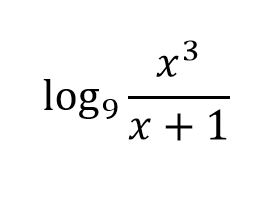
300
Rewrite in exponential form:
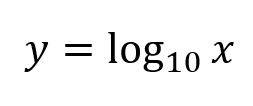
What is
10^y = x
300
e0.25x+35=215
What is
x=20.77
300
Find the inverse of the function:
f(x)=log(2+x)-3
What is
f^-1(x)=10^(x+3)-2
400
This is the type of asymptote an exponential function has: __________
What is a
horizontal asymptote
400
Rewrite (but do not evaluate) the following logarithm as a sum and difference of logs:
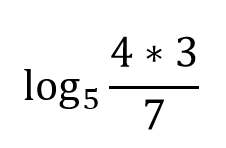
What is
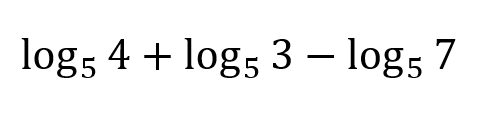
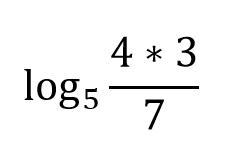
400
The exact value of the following is:
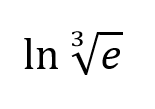
What is
1/3
400
log5(2x-7)=log5(3x-9)
What is
no solution
400
Give the exponential function:
The deer population has increased 15% per month. Last January the deer population was 5600 deer.
What is
f(x)=5600(1.15)^x
where x is the number of months after last January
500
This is the type of asymptote a logarithmic functions has: _____________
What is a
vertical asymptote
500
This is a property of logarithms and has a value of:
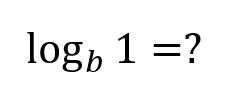
What is
zero
500
Rewrite (but do not evaluate) using the change of base property:
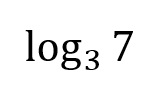
What is:
log7/log3
500
ln(x+8)-ln7=3
What is
x = 132.6
500
Find the inverse of the given function:
f(x) = (1/2)^x - 5
What is
f^-1(x)=(log(x+5))/log(1/2)
or
f^-1(x)=log_(1/2) (x+5)