Psychosis Basis
Diagnose That Psychosis- DMSV
The Psychotic Brain
Consults/Inpatient Cases
Misc
100
A patient sees a coat hanging in a dark room and mistakes it for a person. Is this a hallucination or an illusion?
An illusion. An illusion is a misinterpretation of a real external stimulus vs a hallucination which is present without external stimulus
100
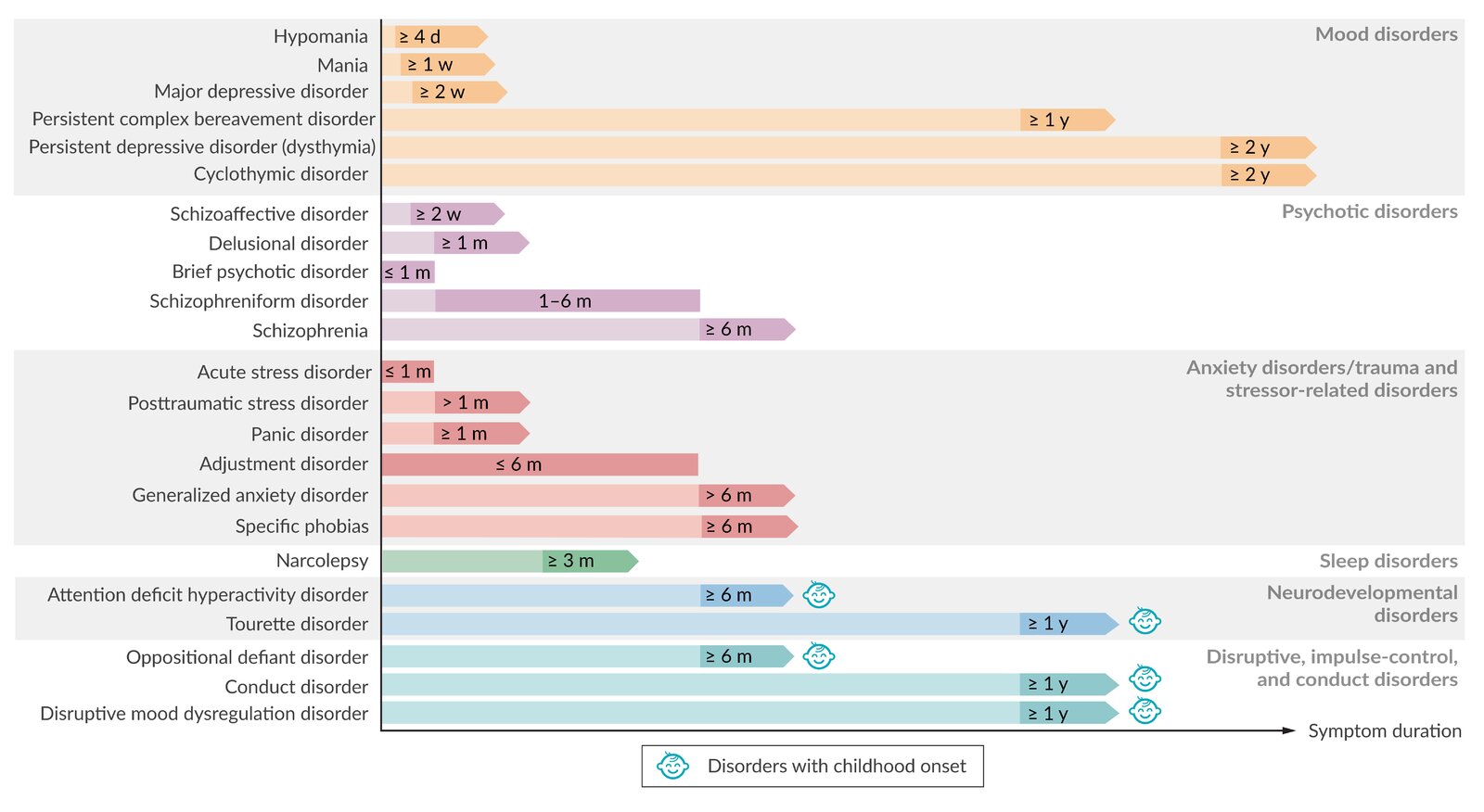
What is the minimum total duration of disturbance required for schizophrenia, including prodromal or residual periods?
Six months. This includes at least one month of active-phase symptoms, unless successfully treated sooner.
100
Which neurotransmitter is most classically associated with the hypothesis of psychosis developemant?
Dopamine hypothesis. In particular, increased presynaptic striatal dopamine synthesis and release are associated with psychosis.
1,2 physiology of psychosis
L=+
C= cognitive blunting, thought blocking
3,4 side effects

100
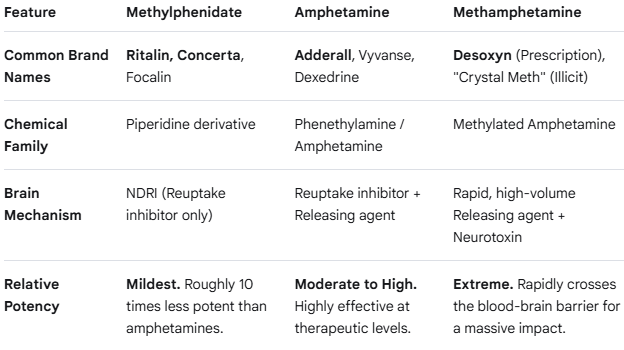
21-year-old male at ED is agitated, believes computers are flashing messages at him, and says “I need my knife to protect myself.” Which substance on UDS? (2x)
amphetamines= paranoid ideations during intoxication due to increase in dopamine release
amphetamine withdrawal= dysphoria
vs. meth (crystal meth): Methyl group makes it more lipophilic and cross BBB easier, more massive dopamine surge with direct dopamine release and reuptake inhibitor blockade- 5 min onset (vs amphetamine with 30 min onset). Meth with high risk for persistent psychosis
100
Psychiatrist that first coined the term "schizophrenia"
Swiss psychiatrist Eugen Bleuler, 1911.
"split mind"
Bleuler shifted the diagnostic focus away from Kraepelin's timeline requirements and created the first symptom-based framework, famously known as the "4 A's":
- Association: Fragmentation or loosening of thought processes, leading to disconnected or illogical speech.
- Affect: Flattened, blunted, or highly inappropriate emotional responses.
- Ambivalence: Simultaneously holding conflicting emotions or attitudes toward the same object or person.
- Autism: A profound detachment from reality and a withdrawal into a private world of inner fantasies
Not including hallucinations in the criteria
200
A patient believes the television news anchor is sending coded messages specifically to them. What is this called?
Delusion of reference (correct if you say idea of reference if you can give me the nuance difference between the two)
200
A patient experiences psychotic symptoms for 3 weeks, then returns to their previous level of functioning. Which diagnosis best fits?
Brief psychotic disorder. Symptoms last at least 1 day but less than 1 month, with eventual full return to baseline functioning.
200
Which dopamine pathway is most associated with positive psychotic symptoms?
Mesolimbic pathway.
1,2 physiology of psychosis
L=+
C= cognitive blunting, thought blocking
3,4 side effects
200
A patient with schizophrenia has persistent symptoms despite two adequate antipsychotic trials with adherence confirmed. What's your step in treatment?
Clozapine
200
Which antipsychotics were used in the CATIE trial?
CATIE = Clinical Antipsychotic Trials of Intervention Effectiveness. Published in 2005, this NIMH-funded study compared the real-world effectiveness of first- and second-generation antipsychotics in chronic schizophrenia
Second-generation: Olanzapine, quetiapine, risperidone, ziprasidone.
First-generation: Perphenazine.
Study design
Participants: 1,493 adults with chronic schizophrenia.
Design: Randomized, double-blind trial across 57 U.S. sites.
Duration: Up to 18 months.
Primary outcome: Time to discontinuation for any reason—a measure incorporating efficacy, tolerability, and patient/clinician decisions.
300
A patient hears two voices discussing the patient's action. This is best described as:
A. Thought broadcasting
B. Third-person auditory hallucinations
C. Thought insertion
D. An illusion
Third-person auditory hallucinations- voices that argue, comment or narrate the person's action and life. No longer part of our criteria but fundamental part of understanding psychosis.
In 1959, Schneider identified a specific set of core diagnostic criteria that he called "first-rank symptoms". Schneider’s First-Rank Symptoms (FRSs)- special privilege era where having this single symptoms automatically allowed a physician to diagnosis schizophrenia.
Used from 1980-2013; The American Psychiatric Association (APA) first integrated Schneider's FRSs into the DSM-III. Continued through DSM-IV-TR (1994–2000). DMS 5 officially ended this special status in 2013 and incorporating into the standard positive symptoms
International Classification of Diseases (ICD): WHO's global criteria for diagnosis used it through ICD 10 (1992-2012) until ICD 11 published
300
What distinguishes delusional disorder from schizophrenia?
Delusions for at least 1 month without the broader characteristic symptom profile of schizophrenia. Functioning is not markedly impaired apart from the impact of the delusion, and behavior is not obviously bizarre or odd. Hallucinations, if present, are not prominent and are related to the delusional theme.
300
According to the traditional dopamine hypothesis, blocking D2 receptors in which pathway can produce parkinsonism and other extrapyramidal symptoms?
Nigrostriatal pathway.
1,2 physiology of psychosis
L=+
C= cognitive blunting, thought blocking
3,4 side effects
300
A patient is medically ill, inattentive, and reports seeing insects on the wall. Is this sufficient to diagnose a primary psychotic disorder?
No. Evaluate for delirium and medical or medication-related causes first. Reversal causes of psychosis.
Delirium w/ psychosis in an elderly person comes more readily if they are with an underlying neurocognitive disorder (dementia) due to lower cognitive reserves
300
German psychiatrist that first described schizophrenia as Dementia Praecox
Emil Kraepelin in 1899- first distinction from mood vs psychotic disorder (thought disorder)
chronic, progressive decline in cognitive, emotional, and behavioral functioning that ultimately led to permanent mental weakness (dementia) vs manic-depressive illness (bipolar disorder), which he noted occurred in episodic waves but left the person's baseline mental faculties intact between episodes
significance: prognosis education and evaluating for appropriate diagnosis
400
A patient believes other people can hear their thoughts directly, without the patient speaking. What is this called?
Thought broadcasting.
400
A 27-year-old woman presents with auditory hallucinations, persecutory delusions, and disorganized speech. Over the past 2 years, she has experienced multiple episodes of major depression. Her medical records indicate that she also experienced 4 weeks of hallucinations and delusions in the absence of a major depressive or manic episode. Across the total duration of her illness, mood episodes have been present for approximately 70% of the active and residual periods.
Which of the following is the most appropriate diagnosis?
A. Schizophrenia
B. Major depressive disorder with psychotic features
C. Schizoaffective disorder, depressive type
D. Brief psychotic disorder
Schizoaffective disorder, depressive type.
At least 2 weeks of delusions or hallucinations without a major mood episode.
400
A patient develops paranoia and auditory hallucinations after heavy methamphetamine use. What is the most likely mechanism contributing to these symptoms?
Increased monoaminergic signaling, especially dopamine. Methamphetamine increases monoamine release and reverses transporter-mediated transport, contributing to psychosis.
400
Infectious neuropsychiatric disorder with psychosis and abnormal gait, was once treated with malaria-induced fever and was 20% of patients in mental asylums until the 1940s
syphilis
400
Phencyclidine (PCP) induces psychosis by?
PCP and Ketamine (similar to autoimmune NDMA encephalitis) are NMDA receptor blockers on the GABA interneuron/inhibitory - aka if inhibition is turned off= no GABA released=hyperactivation


Glutamate now free to stimulate limbic DA neurons excessively and promote psychosis completing a GLU-GABA-GLU-DA circuit.
500
A 29-year-old man with no history of psychiatric treatment reports that his thoughts are being removed from his mind by an external force. He states that he can feel his thoughts leaving his head and believes his coworkers are responsible. He denies hearing voices or seeing things others cannot perceive.
Which of the following best describes his experience?
A. Thought broadcasting
B. Thought insertion
C. Thought withdrawal
D. Somatic hallucination
Thought withdrawal is the belief that thoughts are being removed from one's mind by an external agent. Thought insertion involves believing thoughts are being placed into one's mind, whereas thought broadcasting involves believing others can access one's thoughts.
500
A 26-year-old man presents with a 9-month history of persecutory delusions, auditory hallucinations, and disorganized speech. During this period, he has experienced two major depressive episodes, each lasting approximately 6 weeks. His psychotic symptoms have persisted during periods when he has no significant mood symptoms. Medical and substance-induced causes have been excluded.
Review of his longitudinal course reveals that the total duration of major mood episodes accounts for approximately 25% of the combined duration of his active and residual illness.
According to DSM-5-TR, which diagnosis is most appropriate?
A. Schizoaffective disorder, depressive type
B. Schizophrenia
C. Major depressive disorder with psychotic features
D. Schizophreniform disorder
B. Schizophrenia, DSM-5-TR requires major mood episodes to be present for the majority of the total duration of the active and residual portions of the illness, in addition to at least 2 weeks of delusions or hallucinations without a major mood episode. The disturbance has lasted longer than 6 months.

500
Which neurotransmitter deficit is particularly associated with cognitive impairment and psychosis in dementia with Lewy bodies?
Acetylcholine, due to cholinergic neuronal degeneration. Dopaminergic dysfunction also contributes to visual hallucinations and parkinsonism.
Pimavanserin (Nuplazid)- FDA approved- Selective 5-HT₂A inverse agonist/antagonist but $$$$
Donepezil (Aricept), Rivastigmine (Exelon)- A cholinesterase inhibitor which increase Ach in the synaptic cleft
DO NOT USE ANTIPSYCHOTICS OR POTENT D2 BLOCKERS: Severe neuroleptic sensitivity. Avoid haloperidol, when possible, because they can cause marked worsening of parkinsonism, rigidity, confusion, or potentially life-threatening reactions.
500
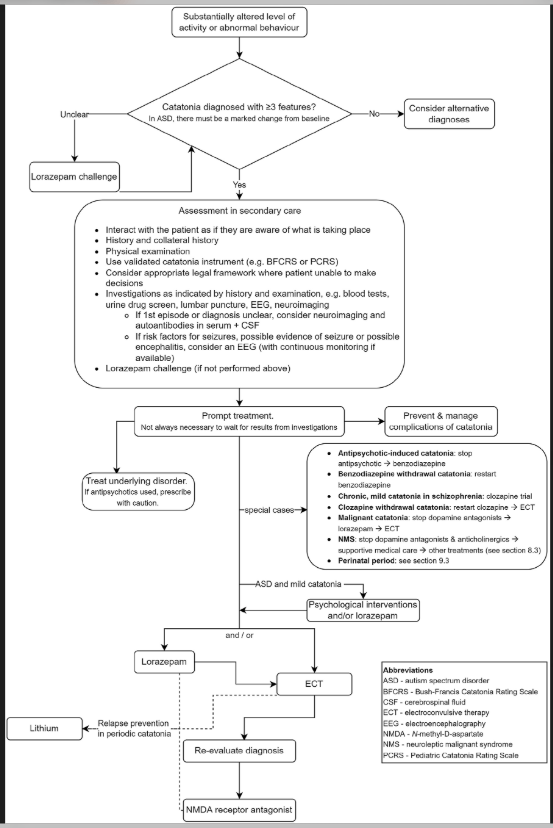
A 31-year-old man with a 7-year history of schizophrenia is admitted for worsening auditory hallucinations and persecutory delusions. He has received adequate trials of risperidone and olanzapine, with adherence confirmed. During the current admission, he develops mutism, staring, negativism, posturing, and waxy flexibility. His temperature is 37.1°C (98.8°F), and his creatine kinase level is within normal limits.
A 2-mg intravenous lorazepam challenge produces marked improvement in his motor symptoms within 10 minutes.
Which of the following is the most appropriate next step in management?
A. Increase olanzapine because the motor symptoms represent worsening psychosis
B. Initiate haloperidol because catatonia is best treated with high-potency D2 antagonists
C. Initiate scheduled lorazepam and assess the need for electroconvulsive therapy (ECT)
D. Diagnose neuroleptic malignant syndrome and immediately administer dantrolene
C. Catatonia: scheduled benzodiazepine treatment, with ECT considered when indicated.
500
A 32-year-old man with treatment-resistant schizophrenia has been stable for 2 years on clozapine 400 mg nightly. He is brought to the emergency department by his family for 3 days of decreased speech, poor oral intake, immobility, and prolonged staring. On examination, he exhibits mutism, negativism, and posturing. His family reports that he ran out of clozapine 5 days ago because of a pharmacy delay. His vital signs are stable, and he has no fever, muscle rigidity, or autonomic instability.
Which of the following is the most appropriate next step in management?
A. Administer lorazepam 2 mg IV and initiate scheduled benzodiazepine treatment as first-line therapy.
B. Initiate electroconvulsive therapy (ECT) immediately as definitive treatment for catatonia.
C. Restart clozapine at lower dose
D. Initiate haloperidol to treat an acute exacerbation of schizophrenia.
E. Start amantadine for suspected medication-induced catatonia.
C. Clozapine withdrawal catatonia ! No benzos are indicated and clozapine will reverse catatonia symptoms. Can also be in a context of any other SGA abrupt discontinuation when benzos don't help. 12.5–25 mg/day and titrating upward after > 48 hours of discontinuation
*Also assess for cholinergic rebound symptoms