Definitions
Name the technique
Name as many as you can (Visual)
Name as many as you can (figurative)
Mood, tone & atmosphere
Visual Literacy
Symbolism
100
What technique compares two things using ‘like’ or ‘as’?
Simile
A simile makes a comparison using ‘like’ or ‘as’.
100
Name the figurative language: The stars danced in the night.
What is personification?
100
Identify ONE visual literacy technique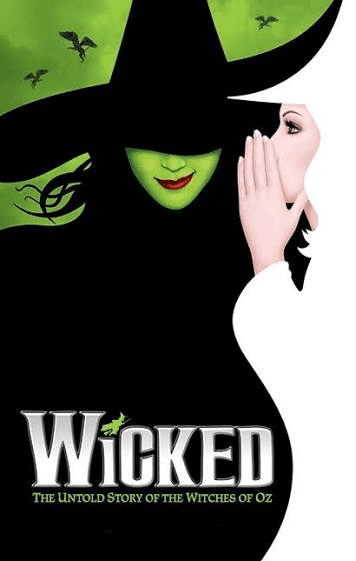
Examples: salience, colour, gaze, framing, vectors.
100
The moon was a silver lantern,
Lighting the sleeping town below.
Identify ONE figurative language technique.
Metaphor – "The moon was a silver lantern" directly compares the moon to a lantern, helping readers imagine its brightness.
100
What is mood in a text?
The feeling or atmosphere created for the reader or viewer
For example, eerie, peaceful or cheerful.
100
What is salience?
The element that attracts the viewer's attention most
Salience may be created through size, colour, placement or contrast.
100
What is symbolism?
The use of an object, colour or image to represent a deeper idea
For example, a dove may represent peace.
200
What is personification?
Giving human qualities or actions to non-human things
For example, ‘The wind whispered through the trees.’
200
Name the figurative language: The slithering snake stalked the small children.
Alliteration/ Sibilance
200
Identify 2 Visual Literacy Techniques and describe the effect.
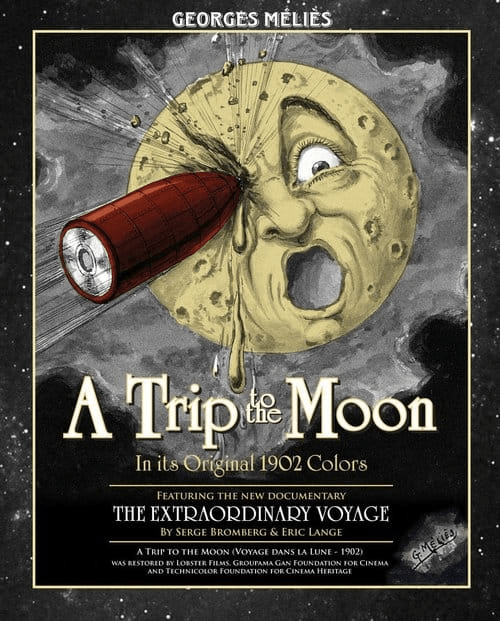
Salience- The large moon with a rocket embedded in its eye which attracts attention and creates curiosity and surprise.
Colour- The yellow moon contrasts with the dark background and red rocket, this makes the central image stand out, creating a dramatic and imaginative atmosphere.
Symbolism- The rocket travelling into the moon, may represent exploration, scientific discovery and desire to explore the unknown.
Vectors- The diagonal direction of the rocket, Directs the viewer's gaze towards the moon's face, emphasising the point of impact.
Framing- The moon and rocket are enclosed within a rectangular golden border, Focuses attention on the central image.
200
The furious wind screamed through the night,
As bright as fire, the stars burned white.
Identify TWO different figurative language techniques.
1. Personification – "The furious wind screamed" gives the wind human-like qualities.
2. Simile – "As bright as fire" compares the stars' brightness to fire.
Also acceptable: visual imagery, which helps readers picture the bright stars.
200
What is the difference between mood and tone?
Mood is the feeling created for the audience; tone is the creator's or speaker's attitude.
Tone might be sarcastic; the resulting mood might be uncomfortable.
200
What are vectors in a visual text?
Lines or directions that guide the viewer's attention
Examples include roads, arms and lines of sight.
200
What might a broken chain symbolise?
Freedom, escape or release from restriction
Symbolic meanings depend on the context.
300
What is the difference between a metaphor and a simile?
A simile uses ‘like’ or ‘as’; a metaphor makes a direct comparison.
‘The lake was a mirror’ is a metaphor; ‘the lake was like a mirror’ is a simile.
300
Identify the technique: ‘Her smile was sunshine.’
Metaphor
300
Explain how the illustrator uses salience and contrast to influence our understanding of the woman and the other passengers on the train. Refer to visual evidence in your response.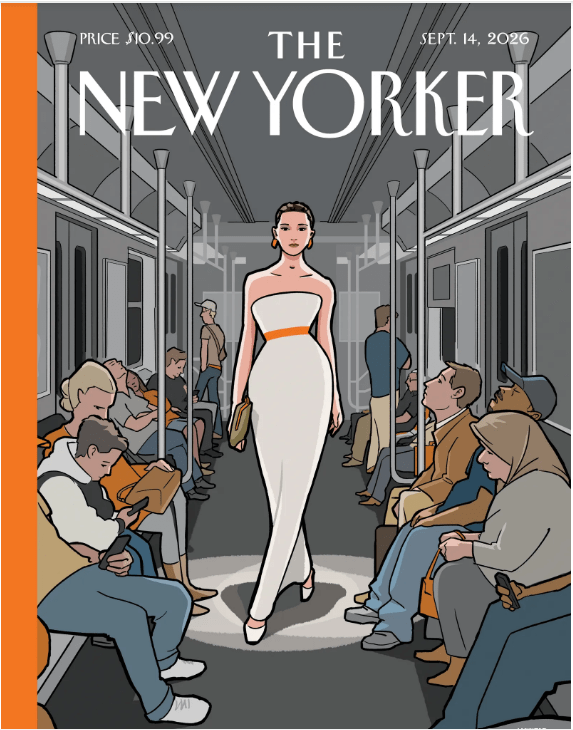
Model response: The illustrator uses salience by positioning the woman in the centre of the image, making her the main focus and drawing the viewer's attention to her confidence. The contrast between her elegant white dress and the other passengers' casual, darker clothing makes her stand out. This encourages viewers to see the woman as confident and glamorous compared to the ordinary passengers, highlighting how different she appears from those around her.
300
The door slammed. BANG! Shadows danced across the walls as the cold, cruel wind crept beneath the floorboards. Mia's heart raced like a frightened rabbit.
Identify THREE different language techniques.
1. Onomatopoeia – "BANG!" imitates the sound of the door slamming.
2. Personification – "Shadows danced" gives shadows a human action.
3. Simile – "like a frightened rabbit" compares Mia's racing heart to a frightened rabbit.
Also acceptable: Alliteration – "cold, cruel" and "cold, cruel wind crept".
300
What mood is created by: ‘The empty hallway echoed with slow, uneven footsteps’?
An eerie, tense, mysterious or unsettling mood
The empty setting and unexplained footsteps create unease.
300
What effect can a low camera angle have on the viewer's perception of a character?
It can make a character appear powerful, imposing or intimidating.
The precise effect depends on the context.
300
A character releases a bird from a cage. What might the bird and cage symbolise?
The bird may represent freedom; the cage may represent confinement.
Students should explain the relationship between the two symbols.
400
What is onomatopoeia? Provide TWO examples.
Words that imitate sounds, e.g. bang, crash, buzz, splash.
Both examples must imitate sounds.
400
Name the figurative language: He had to put his dog down
What is Euphemism?
400
Analyse how the composer uses visual techniques to create a magical atmosphere and influence the viewer’s feelings and imagination. Support your response with evidence from the image.

The composer uses bright colours such as yellow, orange and green to create a cheerful and magical atmosphere, making viewers feel curious and excited about the unusual setting. The salience of the large yellow chair draws the viewer's attention towards it, making it appear inviting and suggesting it is a special place. Furthermore, the symbolism of the books, butterflies and flowers suggests imagination, freedom and adventure. Together, these techniques encourage viewers to imagine escaping into a magical world where anything is possible.
400
The golden sun kissed the sleeping sea,
As waves whispered softly beside me.
I waited, I watched, I wished for the day,
While mountains of sorrow drifted away.
Identify FOUR different language techniques.
1. Personification – "The golden sun kissed the sleeping sea".
2. Alliteration – "sun ... sleeping sea".
3. Anaphora – "I waited, I watched, I wished" repeats "I" at the beginning of successive phrases.
4. Metaphor – "mountains of sorrow" compares sorrow to mountains.
Also acceptable: Sibilance in "waves whispered softly" and rhyme in "sea/me" and "day/away".
400
Explain how dark colours and shadows can create a suspenseful atmosphere in an image.
They can hide details and make viewers feel uncertain or uneasy.
Full points require a link between visual evidence and audience effect.
400
What is juxtaposition?
Placing contrasting elements together to emphasise differences
For example, a bright flower growing in a ruined building.
400
Why might a writer repeatedly describe a storm during a character's difficult journey?
The storm might symbolise emotional conflict, danger or hardship.
It can also establish mood and foreshadow difficulties.
The weather representing the character's emotions is an example of pathetic fallacy.
500
What type of figurative language is this? "I'm so hungry I could eat a cow."
Hyperbole
500
Identify THREE techniques: ‘The icy fingers of fear crawled down her spine.’
Metaphor, personification and Imagery
Fear is represented as having fingers and the ability to crawl; imagery is also acceptable as an additional observation. This creates an image in the reader's mind, so it is also imagery.
500
Identify 5 Visual Literacy Techniques/ Camera Angles in this image.

Salience The small white dog sitting in the bright red kayak.
Vectors The pointed kayak directs the viewer's eyes towards the centre of the image. Guides the viewer's gaze towards the distant forest, creating a sense of movement and adventure.
Colour contrast The bright red kayak contrasts with the cool blues, greens and whites of the winter landscape.
Framing The snow-covered trees on either side of the river frame the kayak and waterway.
Perspective The photograph is taken from the viewpoint of someone sitting in the kayak.
Symmetry Trees line both sides of the river, with their reflections visible in the water.
Foreground and background
The kayak and dog dominate the foreground, while the snowy forest stretches into the distance.
Colour Cool blues and whites dominate the snowy landscape. Contrasts the vibrant red Kayak.
Symbolism The kayak travelling through the open river. Could symbolise adventure, exploration or a journey into the unknown.
500
The forest was a sea of darkness. Ancient trees stretched their twisted fingers towards the sky. Crack! A branch snapped behind Liam, sending a shiver down his spine. His heart beat like a drum. One step. Two steps. Silence. The sweet scent of wildflowers drifted through the air, strangely out of place in the cold, shadowy forest.
Identify FIVE different language techniques.
1. Metaphor – "The forest was a sea of darkness" compares the forest to a sea.
2. Personification – "trees stretched their twisted fingers" gives trees human-like features.
3. Onomatopoeia – "Crack!" imitates the sound of a snapping branch.
4. Simile – "His heart beat like a drum" compares a heartbeat to a drum.
5. Olfactory imagery – "The sweet scent of wildflowers" appeals to the sense of smell.
Also accepted: Short sentences (truncated sentences) and sentence fragments ("One step. Two steps. Silence."), visual imagery, and juxtaposition between the pleasant scent and the threatening environment.
500
Compare tone and mood in: ‘Oh, wonderful. Another test,’ she muttered, rolling her eyes.
Sarcastic or frustrated tone; a humorous, irritated or uncomfortable mood.
Students must explain how the words or action support their interpretation.
500
Explain how THREE visual techniques might influence the viewer in this image.
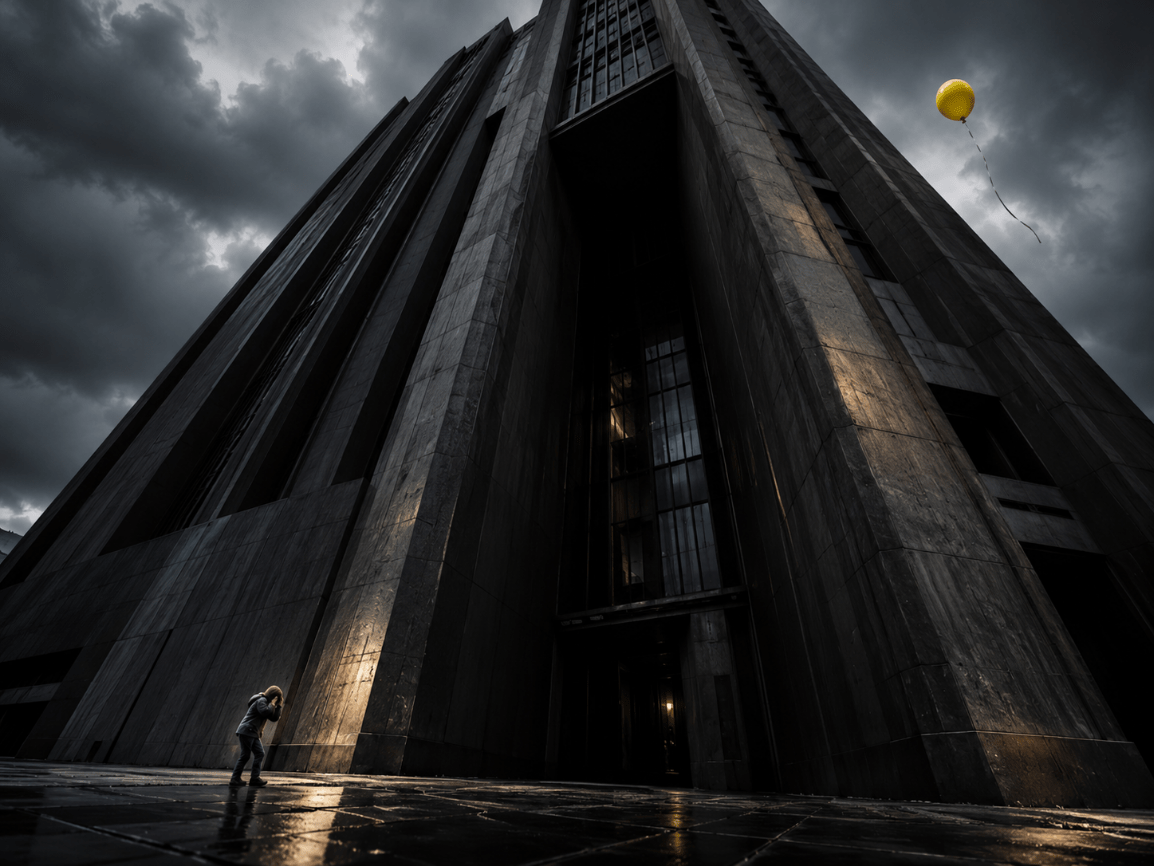
Suggested responses:
Camera Angle and Size/Scale
The low camera angle makes the enormous building appear powerful and intimidating, while the person appears tiny and vulnerable. This encourages viewers to feel concerned for the person and understand how overwhelmed and powerless they may feel.
2. Colour Contrast and Salience
The bright yellow balloon contrasts with the dark grey and black surroundings, drawing the viewer's attention towards it. The balloon may symbolise happiness, hope or freedom. Its position out of reach makes viewers feel sympathy for the person and suggests that happiness or freedom may be difficult to achieve.
3. Body Language
The person's cowering posture, with their head lowered and hands raised protectively, communicates fear and vulnerability. This encourages viewers to feel empathy for the person and understand that they may feel threatened by their surroundings.
Vector lines- show the magnitude of the building and enhance how small and isolated the person is
500
A poem contrasts a beautiful garden with a wild forest. Analyse what these settings might symbolise.
The garden could represent order, control or conformity; the forest could represent freedom, individuality or uncertainty.
Full points require an explanation of the contrast and an idea communicated to readers.