Vocabulary
Structure of the Earth
Volcanoes 1
Volcanoes 2
True or False
50
A large hole at the top of a volcano where material erupts
crater
50
What is the Earth's crust made of?
a. magma
b. rocks
c. metals
d. toothpaste
b. rocks
50
Label the different parts of a volcano.
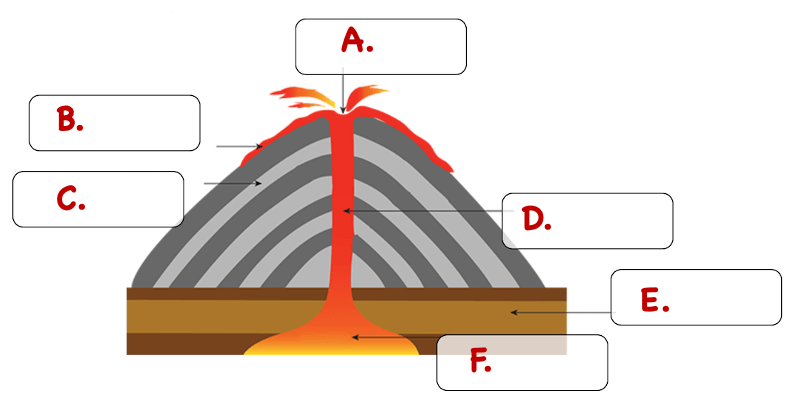
A. crater
B. lava
C. ash
D. vent
E. crust
F. magma
50
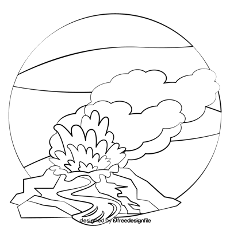
I have a wide base and a large bowl shaped opening. My sides are broad and I am less steep and shorter than most volcanoes. What kind of volcano am I?
* 10 extra points if you can draw me *
shield volcano
50
All volcanoes erupt frequently.
False - some volcanoes are dormant and others are extinct
100
The outer layer of the Earth, made of rocks
crust
100
What is the Earth's mantle made of?
a. rocks
b. magma
c. metals
d. toothpaste
b. magma
100
Using the diagram to help you, name the parts of a volcano that match these descriptions:
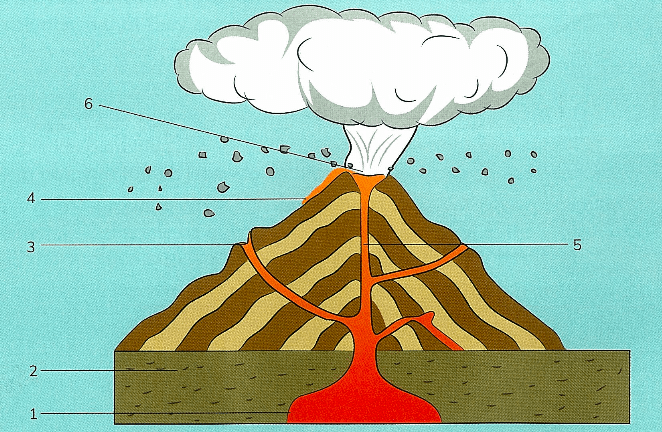
a. The path which magma takes to travel up to the surface.
b. The hole in the ground where magma erupts.
a. 5 - vent
b. 6 - crater
100
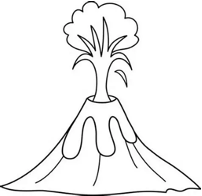
I am steep but not very tall. I am the most common type of volcano. What kind of volcano am I?
* 10 extra points if you can draw me *
cinder cone volcano
100
Some volcanoes are extinct and will never erupt again.
True
150
The layer of the Earth below the crust
mantle
150
Which layers of the Earth are made of metals?
a. inner core
b. mantle
c. crust
d. outer core
a. inner core AND d. outer core
150
Using the diagram to help you, name the parts of a volcano that match these descriptions:
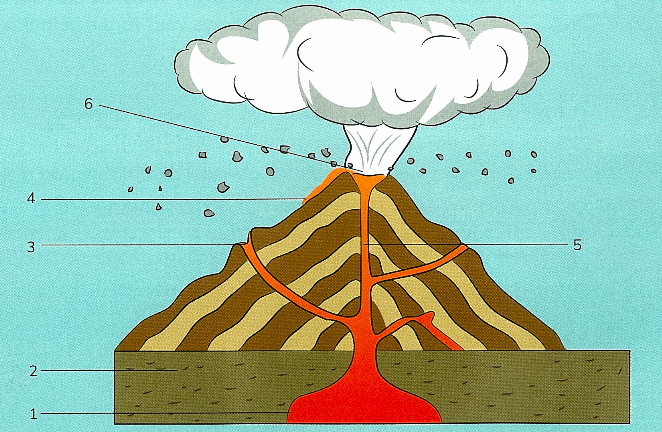
c. A small volcanic hill on the side of the main volcano
d. Liquid rock which comes out of the volcano
c. 3 - secondary cone
d. 4 - lava
150
I am also known as the stratovolcano. I am the tallest and the steepest volcano. I am made of layers of volcanic rocks, ash and lava. What kind of volcano am I?
* 10 extra points if you can draw me *
composite volcano
150
Volcanic eruptions only happen on land.
False - volcanoes can also erupt under the sea
200
The center of the Earth
core
200
Label the layers of the Earth
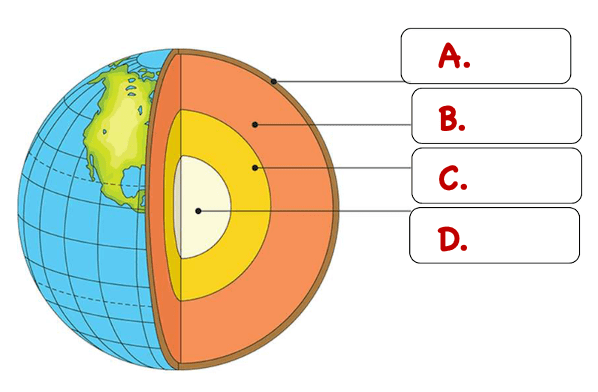
A. crust
B. mantle
C. outer core
D. inner core
200
1. Which of these countries is most likely to have volcanoes?
A. Nepal B. Australia C. England D. Japan
2. Around which ocean do we find most of the world’s earthquakes and volcanoes?
A. Indian Ocean B. Pacific Ocean
C. Atlantic Ocean D. Arctic Ocean
1. D - Japan
2. B - Pacific Ocean
200
1. What causes a volcanic eruption?
A. wind pushing rocks
B. too much sunlight
C. heavy rain
D. movement of rocks in Earth’s crust
2. Which volcano destroyed the city of Pompeii in 79 AD?
A. Mount Vesuvius B. Kilauea
C. Mount St. Helens D. Mauna Loa
1. D - movement of rocks in Earth's crust
2. A - Mount Vesuvius
200
Lava is melted rock that is deep inside the Earth.
False - magma is melted rock deep inside the Earth; lava is what we call it when it comes out of the volcano onto the Earth's surface
250
Materials that make up the inside of the Earth
internal structure
250
There are four layers of the Earth: crust, mantle, outer core and inner core. Describe each layer as solid or liquid.
Solid - crust and inner core
Liquid - mantle and outer core
250
Describe the difference between magma and lava.
Magma is hot molten rock under the Earth’s crust in the mantle. Lava is what comes out of a volcano when it is on the Earth’s surface.
250
Describe the difference between an active volcano, a dormant volcano and an extinct volcano.
An active volcano is a volcano that has erupted recently and can erupt at any time. A dormant volcano is a volcano that is sleeping and hasn’t erupted for a while. An extinct volcano is a volcano that is dead and will not erupt again.
250
The biggest volcano in the solar system is Olympic Park.
False - it is Olympus Mons