STRX & DOCS
EKGeez
too SIGSy
LGS
100
What is the role of the ductus arteriosus in fetal circulation?
It allows blood from the pulmonary arteries to enter the descending aorta directly, bypassing the lungs
100
What are the 5 rules for normal sinus rhythm?
1. P before QRS
2. QRS after P
3. Consistent R-R interval
4. PR between 3-5 small boxes
5. R-R between 3-5 big boxes
100
CPR: What is the ratio of breaths to compressions?
2 breaths to 30 compressions
100
Why are dihydropyridine CCBs better for treating essential HTN than non-dihydropyridine CCBs?
dihydropyridine CCBs effect vasodilation better
non-dihydropyridine CCBs effect the heart better
200
What is the level/location of Anterior Thoracic Counterstrain Point #8?
AT8 = 1/2 the distance between the xiphoid process and the umbilicus
Lateral AT7 = ¼ between xiphoid process and umbilicus
Lateral AT8 = ½ between xiphoid process and umbilicus
Lateral AT9 = ¾ between xiphoid process and umbilicus
200
EKG: what block is this?

2nd degree type I
200
This disease features:
Enlargement of one or both of the ventricles along with impaired contractility defined as left ventricular ejection fraction (LVEF) less than 40%
What is dilated cardiomyopathy?
200
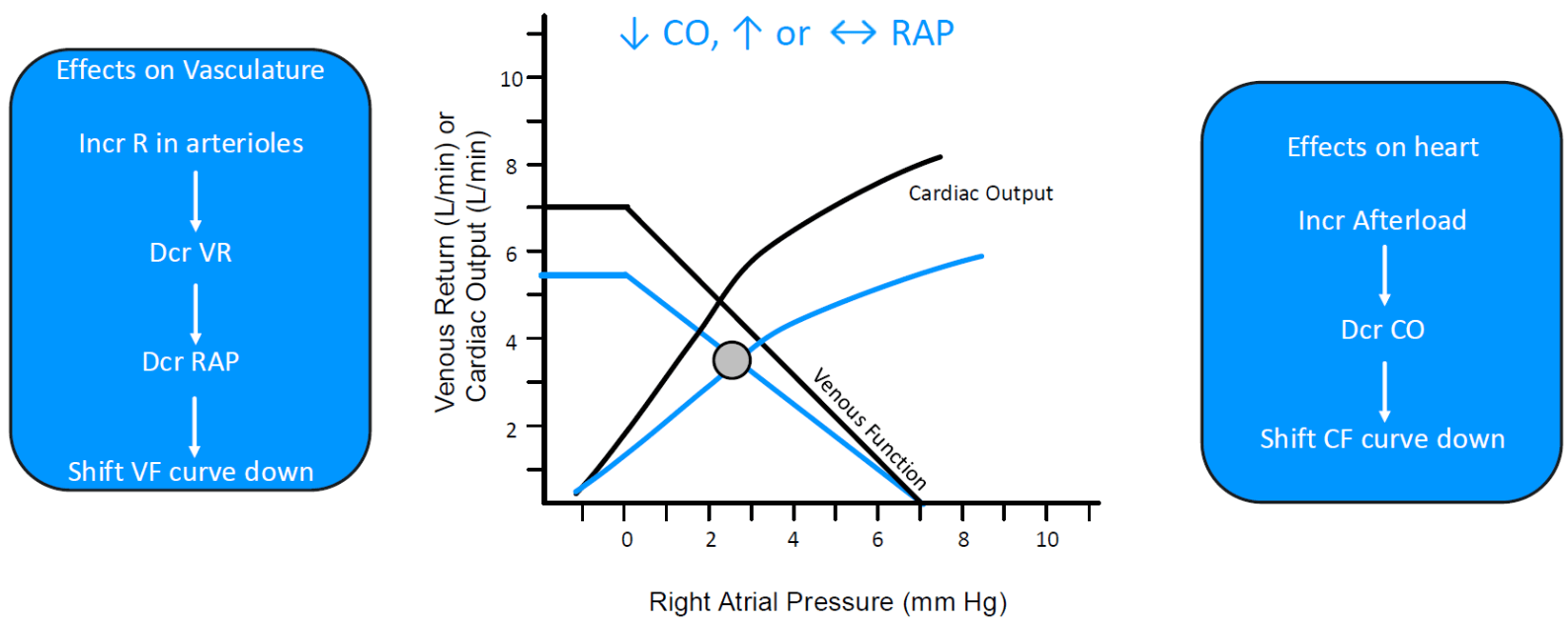
Does this shift represent: beta-1 agonist, IV fluids, heart failure, increased TPR?
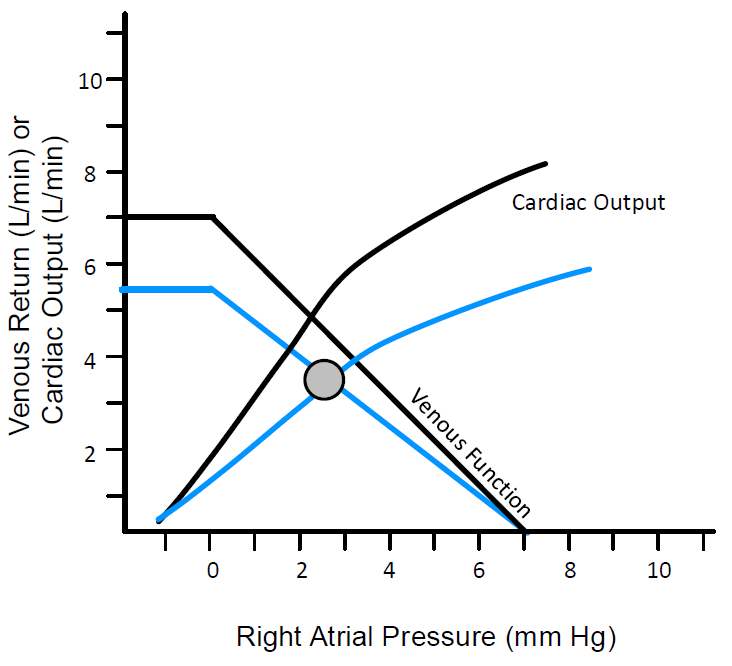
increased TPR
300
True or False?
An atrial septal defect leads to cyanosis
False.
ASD would be acyanotic. Oxygenated blood would move from Left Atrium (high pressure) to Right Atrium. Oxygenated blood moves to the pulmonary side.
300
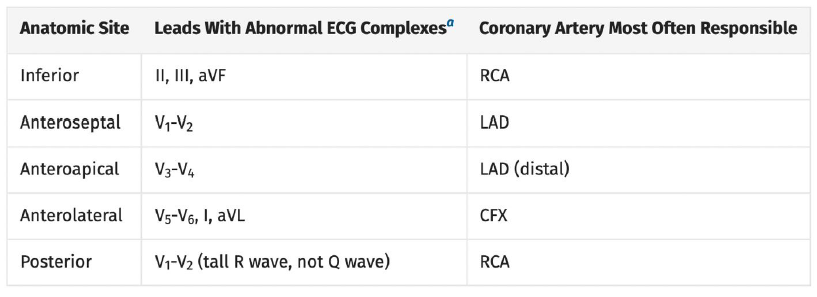
EKG: which artery/s is most likely occluded?
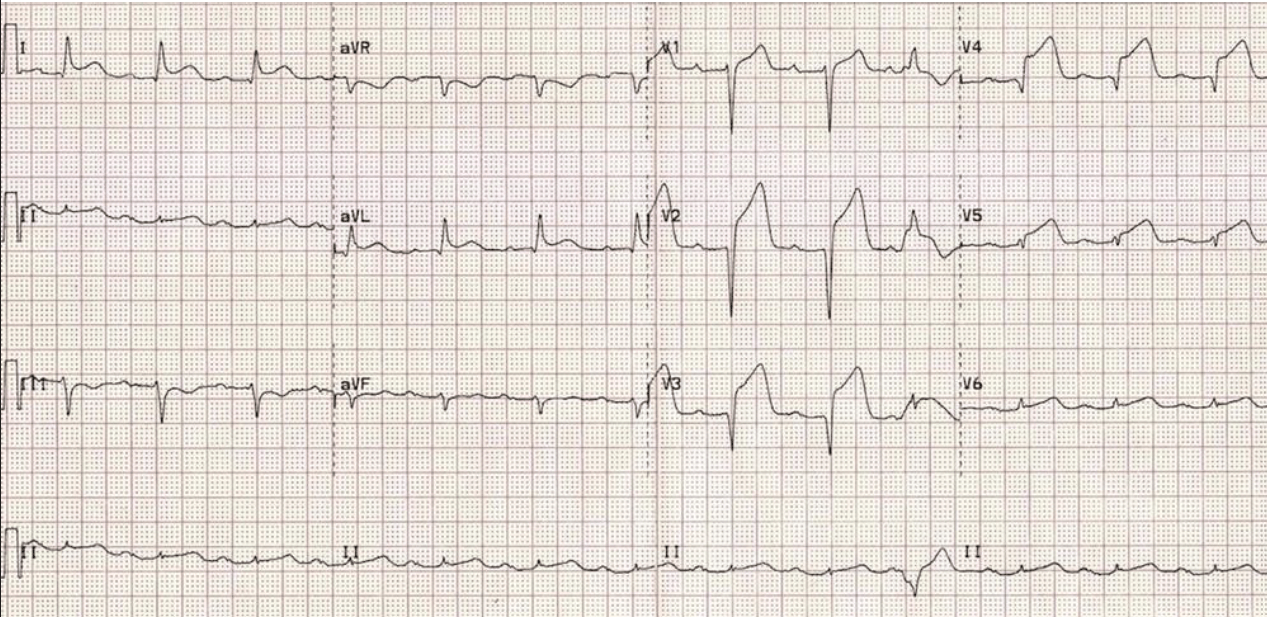
ST elevations in leads V1-V6, I, aVL
Most Likely: Left Coronary Artery (LAD + CFX)
300
Calculate this patient's CHAD-VASC Score:
80yo F p/w sudden 7/10 chest pain, radiating to her jaw. PMHx of cholecystitis, HTN, DM2, atrial fibrillation, dyslipidemia
Score: 5

V = PAD, aortic plaque, prior MI
300
Patient has prosthetic valve endocarditis, with MSSA infection. What are the three medications used for treatment?
1. Nafcillin or oxacillin
2. Gentamicin
3. Rifampin (for penetrating biofilm)
MSSA = methicillin-susceptible staph aureus
400
True or False?
The Valsalva maneuver decreases the intensity of the aortic regurgitation
True.
Valsalva lowers preload, reducing venous return. Reduced blood flow back to the heart lowers left ventricular volume and thus, less turbulent flow occurs.
400
EKG: calculate rate, rhythm, axis deviation
(100pts each)
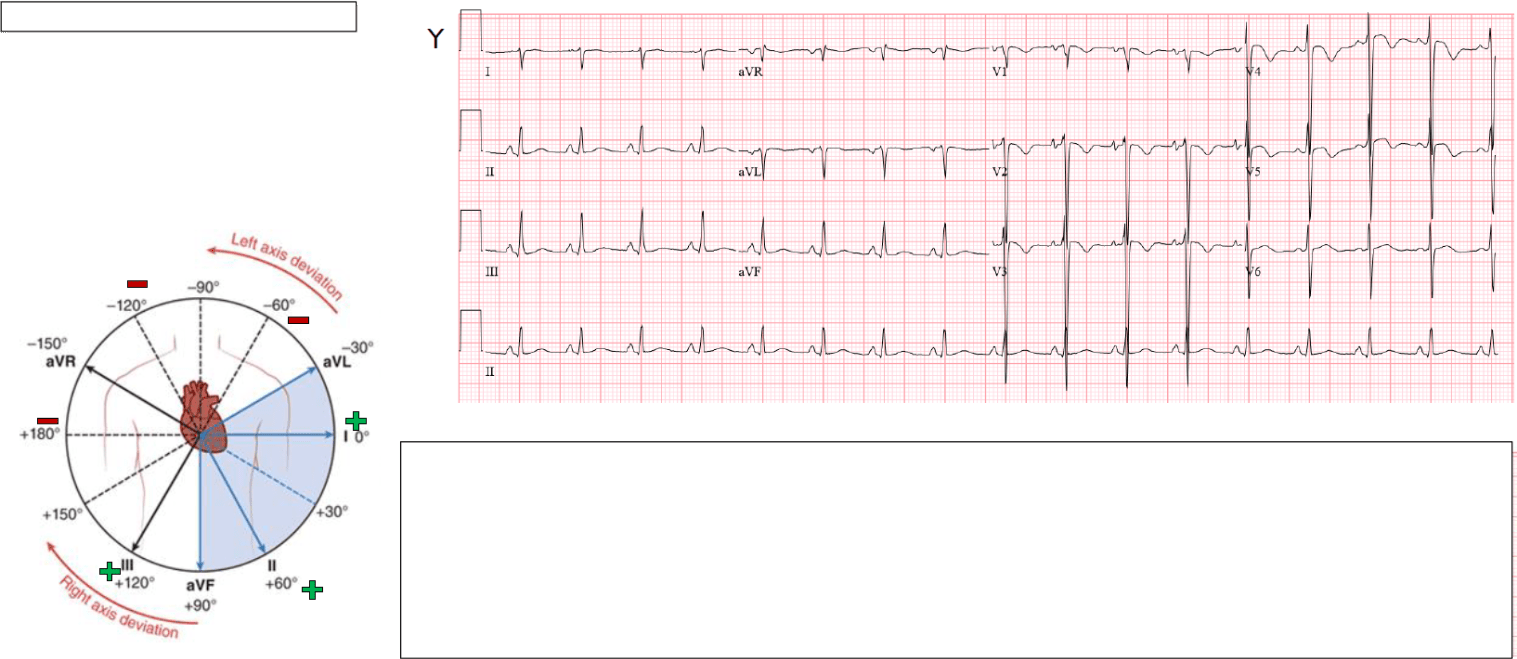

Rate: ~100bpm (1500 / 15 cubitas)
Rhythm: Normal Sinus
Axis Deviation: Right Axis +120
400
With the Valsalva maneuver, does the intensity of hypertrophic cardiomyopathy murmurs increase or decrease?
increases intensity of the murmur
(Valsalva decreases preload -> heart fills less -> obstruction is worsened -> more turbulent flow)
400
This figure change from black to yellow represents an increase in what?
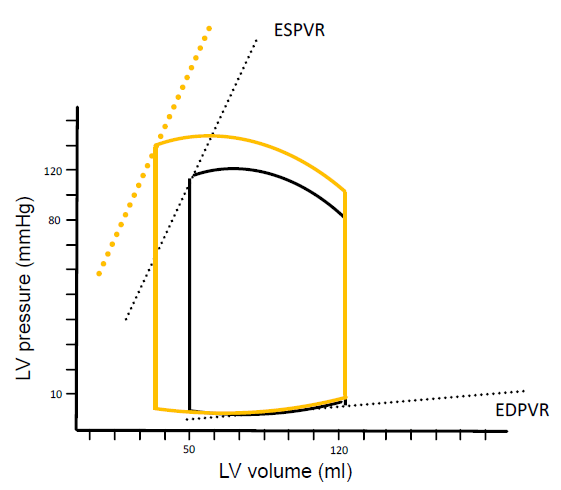
An increase in contractility.
End Diastolic Volume stays the same (right side)
Greater force of contraction -> end systolic volume decreases (extends left)
Greater contractility creates greater pressure (up)
500
True or False?
In the Still technique, an activating force is added to the body with a neutral spine before it is moved to the position of ease.
False
1. Move to position of ease without neutralizing the spine (the SD diagnosis)
2. Add & maintain an activating force
3. Smoothly move body in an arc to restrictive barrier
500
EKG: what is the diagnosis?
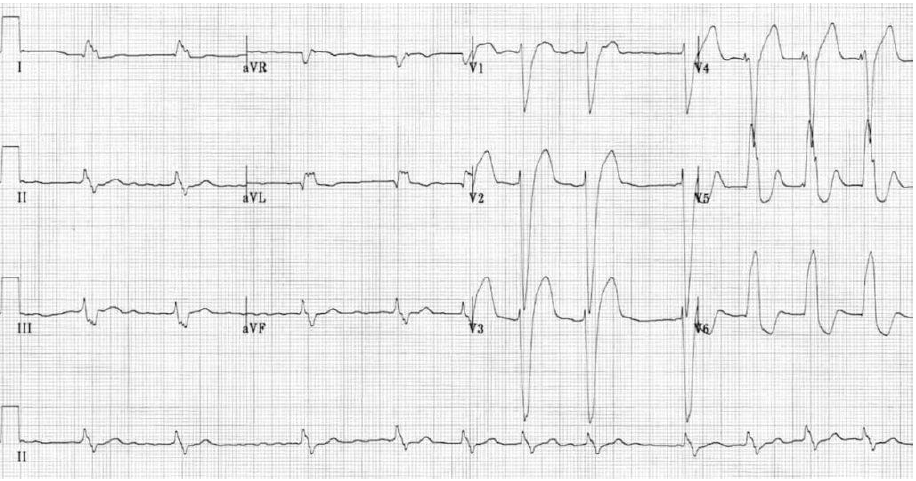
Left Bundle Branch Block
500
LVOTO in HCM can be attributed to what two causes?
1. increase in septal thickness which narrows the LVOT
2. alterations in the structure of the mitral valve, such as elongated leaflets
500
A patient is diagnosed with infective endocarditis, 40 days after a valve replacement. It is gram-positive cocci, arranged in clusters.What is the most likely organism?
Streptococcus epidermidis (<60 days post-op)
(if >60 days post-op, most likely Streptococcus viridans)