Vocabulary
Remember When?
What is history?
More What is history
Even more!
100
History
A continuous, systematic narrative of past events as relating to a particular people, country, period, person, etc., usually written as a chronological account.
100
What year was Okinawa Christian School founded?
1957
100
a continuous, systematic narrative of past events as relating to a particular people, country, period, person, etc., usually written as a chronological account
What is history?
100
To read primary sources effectively requires you to
use your historical imagination along with your research skills.
100
What two things will studying history allow us to understand?
People and Societies
Change and How the Society We Live in Came to Be
200
Historically significant
An important and notable event/person, Brings change, Tells us about the time period, It is remembered today, Affects the future
200

Sugarloaf hill, Okinawa
200
What two types of sources do historians use for evidence?
Primary and secondary
200
"A-L-F-E-R"
Author and Audience
Logic
Frame of reference
Evaluating Truth Content
Relation to Other Sources
200
Essentially, history is important because...
...it connects our stories with those that lived long ago.
300
Context
the situation within which something exists or happens, and that can help explain it
300
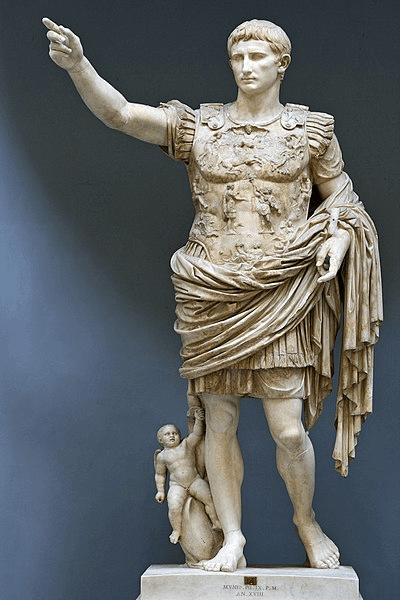
Augustus Caesar
300
"C-E-R"
Claim, evidence and reasoning
300
“STARM”
Structure
Thesis
Argument
Resources
Motives
300
History teaches by examples and allows us to do what?
provides a terrain for thinking about morality
400
Claim
Statements that can become a thesis.
400
When reading historical documents, what are the four ways we should read?
1. Reading for Origins and Context
2. Reading for meaning
3. Reading for Argument
4. Reading Like a Historian
400
Good historical writing includes...
Clear argument
Logical and persuasive arguments
Something new
400
What is the acronym for "How to Read a Secondary Source?"
S-T-A-R-M
400
What Skills Does a Student of History Develop?
a. The Ability to Assess Evidence.
b. The Ability to Assess Conflicting Interpretations
c. Experience in Assessing Past Examples of Change
d. It provides basic factual information about the background of our political institutions and about the values and problems that affect our social well-being. It also contributes to our capacity to use evidence, assess interpretations, and analyze change…
e. History is useful for work
500
Reasoning
the process of thinking about something in order to make a decision
500
Remember the Khan Academy video on "Thinking Like a Historian?" What are the three aspects of thinking and telling history?
Story telling, Scientific investigation and Law(yer)
500
Primary sources are produced usually by...
a participant or observer at the time an event or development took place.
500
What is "bias?"
...an inclination or outlook to present or hold a partial perspective, often accompanied by a refusal to consider the possible merits of alternative points of view.
500
Cleopatra Was Not Egyptian. What was her nationality?
Greek. She was a descendant of Alexander the Great's Macedonian general Ptolemy.