Change and Continuity
Belief Systems
Popular Culture
Key Terms
Lucky Dip
100
Social change comes as a result of divisions in society.
Conflict Theory
100
In what modern-day country was Buddhism founded?
Nepal.
The region where Siddhartha Gautama was born (Lumbini) was part of a kingdom called the Shakya Kingdom. This kingdom was located in what is now modern-day Nepal, near the Indian border.
However, many significant events in the Buddha's life, including his enlightenment and teachings, took place in India. So while his birthplace is in Nepal, much of early Buddhism developed in India.
100
In which New York City borough did Hip Hop emerge during the 1970s?
The Bronx
100
Define all of the additional course concepts:
-power
- gender
- technologies
- authority
- identity
- globalisation
100 POINTS EACH
Power: The ability to influence or control the behaviour of people or events.
Gender: The social and cultural roles, behaviours, and attributes that a society considers appropriate for men, women, and other gender identities.
Technologies: Tools, systems, or methods created by humans to solve problems or improve life.
Authority: The right or power to give orders, make decisions, and enforce rules.
Identity: The qualities, beliefs, and characteristics that make a person or group unique.
Globalisation: The process of increased interconnectedness between countries through trade, communication, culture, and more.
100
A policy based on the idea that Japan can boost its economy by getting more women into the workforce
Womenomics
200
Society is seen as a living organism with each institution contributing to the health and stability of the system.
Functionalist Theory
200
Who was the founder of Buddhism?
Siddhartha Gautama (Buddha)
200
What DJ is commonly associated with using the break of a record to extend dancing time?
DJ Kool Herc
200
Quantitative and Qualitative Research
Quantitative: Research that focuses on numerical data and statistical analysis.
Qualitative: Research focused on non-numerical data, personal experiences and beliefs.
200
Which process best explains the actions of the Australian Government?

Modernisation
300
Death by overwork
Karoshi
300
Under what kind of tree did the Buddha famously meditate under?

Bodhi Tree
300
The 1982 Grandmaster Flash and the Furious Five song "The Message" sang about...?
Poverty and inequality in urban America
300
Strand (religious)
A distinct tradition, belief, or practice within a broader religion.
e.g. Theravada Buddhism, Mahayana Buddhism
300
Explain the difference between westernisation and modernisation.
Westernisation: Refers to the adoption of Western (European or American) culture, values, customs, and lifestyle, such as clothing, language, or political systems.
Modernisation: Refers to the process of becoming more technologically, economically, or socially advanced, often through industrialisation, urbanisation, and improved infrastructure. It is not tied to a specific culture and can occur in any society without necessarily adopting Western customs.
400
Maternal harassment
Matahara
400
What is the difference between a belief system and an ideology?
A belief system is a personal or collective set of values and principles, often related to religion or spirituality, while an ideology is a structured set of ideas, usually political or social, that aims to shape society.
400
What are THREE examples of paraphernalia associated with Hip Hop popular culture?
Sneakers, streetwear, jewellery, caps, graffiti art, vinyl records or turntables.
400
Micro, Meso and Macro Worlds
- Micro: individual-level interactions and experiences within small-scale settings like families or peer groups.
- Meso: intermediate-level structures and organisations such as schools, workplaces, or communities.
- Macro: large-scale societal systems, institutions, and patterns of behavior, like governments, economies, or global cultures.
400
A structured discussion with a small group of participants, guided by a moderator, to explore opinions, attitudes, or perceptions on a specific topic.
Focus Group
500
What was the impact of the Meiji Restoration on Japan?
Rapid modernisation and westernisation transformed Japan from a feudal society into a modern, industrialised nation.
500
What is Samsara?
The cycle of birth, death, and rebirth
500
Name a female hip hop artist who challenged gender stereotypes
100 POINTS PER EXTRA ARTIST
- Queen Latifah
- Missy Elliott
- Lil' Kim
- Salt-N-Pepa
- Lauryn Hill
- Megan Thee Stallion
500
Karma
A Buddhist law of moral causation, where a person's actions in this life affect their future lives (what goes around, comes around).
500
What are the five FUNDAMENTAL course concepts of Society and Culture?
Persons
Society
Culture
Time
Environment
600
Distinguish between evolutionary change and transformative change.
Evolutionary Change: Gradual adjustments or improvements that occur within existing systems or structures over time, often resulting in incremental progress.
Transformative Change: Radical or fundamental shifts that lead to significant alterations in systems, structures, or paradigms, often resulting in profound and wide-reaching impacts.
600
What is the Buddhist path to end suffering called?
[BONUS 500 POINTS: What is the name of the symbol associated with it?]
The Eightfold Path
Represented by the Dharma Wheel

600
What is the difference between official and unofficial censorship?
Official (macro): governments laws, institutional organisations that control film / TV ratings and what content can be viewed such as sexual, violent, political, social content according to the values of society at the time.
Unofficial (micro or meso): institutions of family, religious groups, peers and media that influence the ability of an individual to engage with popular culture because of their values and beliefs
600
Individuals who are not ordained monks or nuns. Ordinary members of the Buddhist community who follow Buddhist teachings and practices while engaging in daily secular life.
Laypeople
600
The process by which religion loses its influence over different areas of life, such as government, education, and culture, leading to a more non-religious or worldly focus in society.
Secularisation
700
Outline the differing reactions to changing gender roles in Japan at a micro, meso and macro level.
Micro Level (Individual):
Some people embrace new roles, while others resist due to traditional beliefs.
Meso Level (Community/Organisational):
Communities and organisations might adopt gender diversity policies, but some resist due to traditional values.
Macro Level (Societal/Institutional):
The government introduces gender equality measures, but societal change is slow due to entrenched cultural norms.
700
What are the four noble truths?
- The Truth of Suffering (Dukkha)
Suffering exists - The Truth of the Cause of Suffering (Samudaya) Suffering is caused by desire
- The Truth of the End of Suffering (Nirodha) Suffering can end
- The Truth of the Path to End Suffering (Magga)
The Eightfold Path will end suffering
700
How do streaming platforms use listener data to influence the Hip Hop music people consume?
Platforms collect data about listening habits and use algorithms to recommend songs and artists, influencing what Hip Hop audiences discover and consume.
700
Empowerment. Explain this concept in relation to our study of Japan.
Empowerment is gaining greater power, control and opportunities. In Japan, women have experienced increased empowerment through greater access to education, employment and leadership roles, challenging traditional gender expectations.
700
Which row of the table best expresses the continuum of quantitative to qualitative research methods?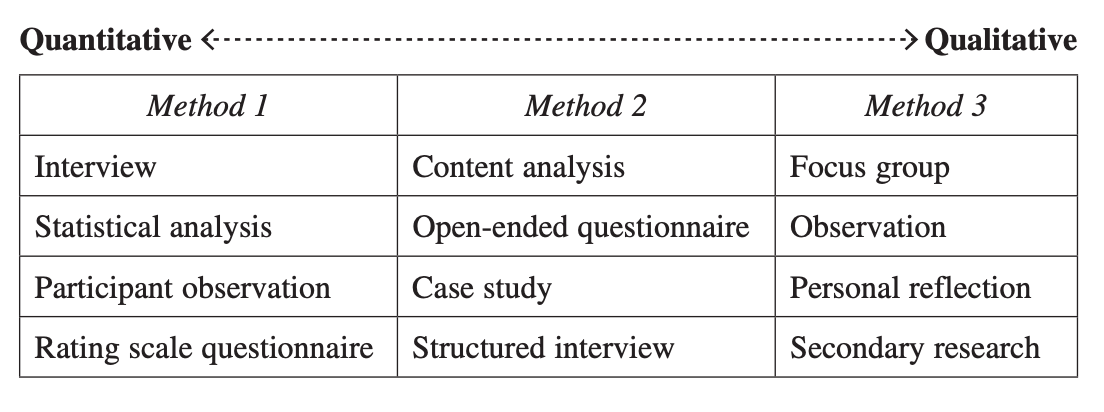
Row 4
Rating scale questionnaire -> Structured interview -> Secondary research
800
Translates into "pulling inward, being confined". Also known as severe social withdrawal, is total withdrawal from society and seeking extreme degrees of social isolation and confinement.
Hikikomori
800
Explain what FOUR of these symbols represent in Buddhism.
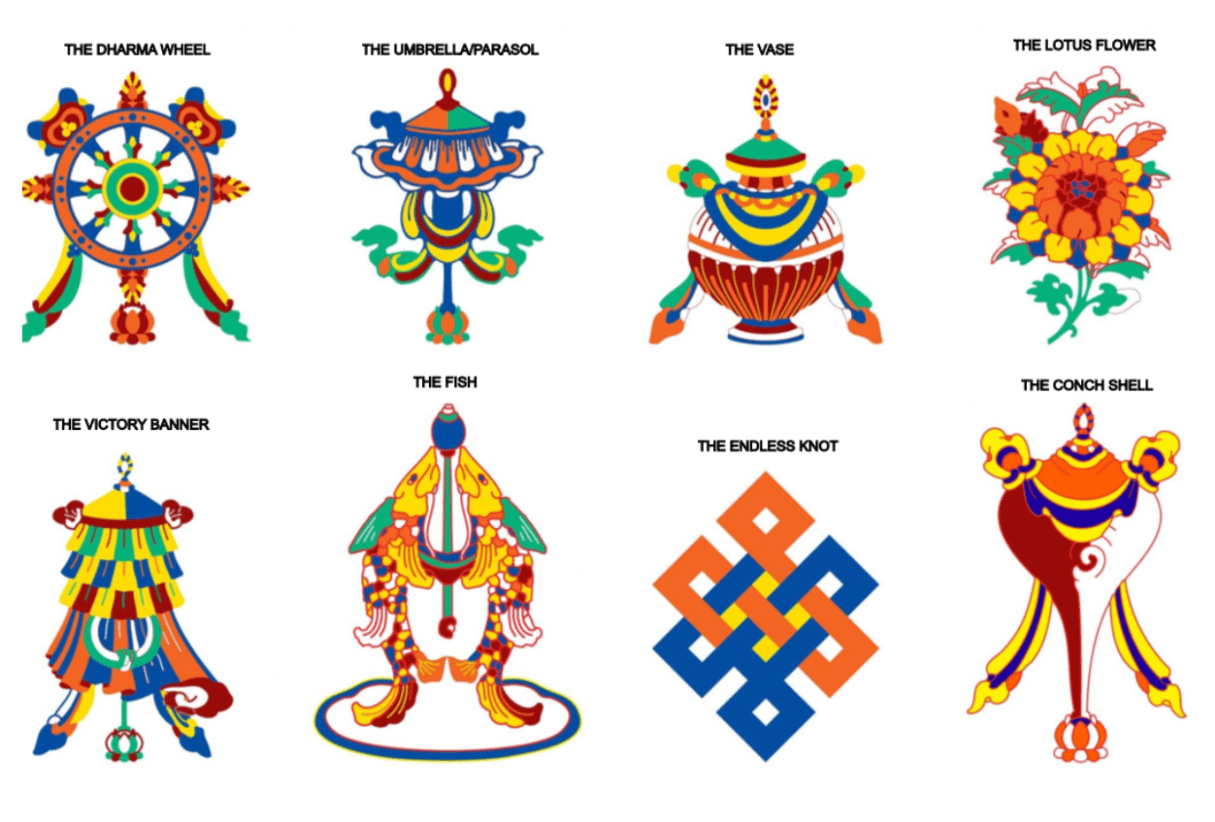
BONUS 400 POINTS FOR EACH ADDITIONAL SYMBOL
- The Dharma Wheel: Represents the teachings of Buddha and the turning of the wheel of life.
- The Umbrella/Parasol: Symbolises protection, shelter, and enlightenment.
- The Vase: Represents wealth, abundance, and prosperity.
- The Lotus Flower: Represents purity, enlightenment, and spiritual growth.
- The Fish: Symbolises knowledge, wisdom, and liberation from suffering.
- The Conch Shell: Represents the sound of the Buddha's teachings and the awakening of consciousness.
- The Victory Banner: Symbolises the triumph of good over evil and the victory of enlightenment.
- The Endless Knot: Represents the interconnectedness of all things and the eternal nature of existence.
800
What are the FOUR distinguishing characteristics of popular culture?
- Associated with commercial products and paraphernalia
- Develops from a local to a global level
- Achieves widespread consumer access
- Is constantly changing and evolving
800
Social Constructivism
The idea that knowledge and many aspects of the world around us are created and shaped by social interactions, rather than existing as objective realities.
800
Apply THREE course concepts to the following scenario:
Students at a Western Sydney high school using slang terms that they have adapted from UK drill music.
- Identity
- Socialisation
- Westernisation
- Change and Continuity
- Culture
- Environment
- Technologies
900
Match the theory to the person:
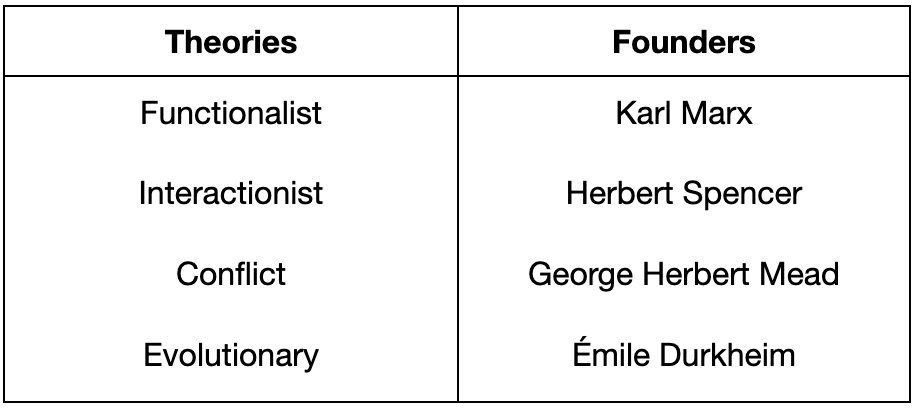
Functionalist - Durkheim
Interactionist - Mead
Conflict - Marx
Evolutionary - Spencer
900
Outline ONE significant text related to Buddhism
Tripitaka (Pali Canon): The earliest and most authoritative collection of scriptures in Theravada Buddhism, divided into three "baskets" (Vinaya, Sutta, and Abhidhamma).
Sutras: Sacred texts in Mahayana Buddhism, including well-known ones like the Heart Sutra and Lotus Sutra, which contain teachings attributed to the Buddha.
Tibetan Book of the Dead (Bardo Thodol): A key text in Tibetan Buddhism, offering guidance for the process of dying and the afterlife.
900
Hip Hop began as a relatively local culture but became a multibillion-dollar global industry. Name two processes that helped cause this change.
E.g. globalisation, commercialisation, technology, media expansion. Strong argument
900
Commodification
Turning aspects of culture into things that can be bought and sold
900
Large, family-owned business conglomerates that dominated the country's economy before World War II. These powerful groups controlled industries like banking, manufacturing, and trade, often with close ties to the government. Examples include Mitsubishi, Mitsui, and Sumitomo. After the war, these were broken up to reduce their economic and political influence.
Zaibatsu
1000
Identify and explain ONE case study that could be used in answering the following question:
Evaluate the role of power and authority in influencing change in ONE society you have studied. [2017 HSC]
Sample answers:
The Meiji Restoration
Power and Authority: The shift of authority from the Tokugawa Shogunate to the Meiji Emperor.
Influence on Change: Centralised power under the emperor led to rapid modernisation and the dismantling of the feudal system, transforming Japan into a modern, industrialised nation.
The Role of the Zaibatsu and Economic Reforms
Power and Authority: The dismantling of the powerful zaibatsu (family-controlled corporate conglomerates) by U.S. occupation forces and the Japanese government.
Influence on Change: Breaking up the zaibatsu redistributed economic power and helped establish a more competitive, growth-oriented economy. This influenced the development of Japan’s post-war economy and contributed to its rapid recovery and growth during the 1950s and 1960s.
Womenomics introduced by Shinzo Abe
Power and Authority: The economic policies implemented by Prime Minister Shinzo Abe aimed at revitalising Japan's stagnating economy through women's participation
Influence on Change: Abe’s use of political power to introduce economic and gender reform: promoting growth, and encouraging greater participation of women in the workforce (though with mixed success).
1000
What are the three major strands of Buddhism?
Theravada ("The Teaching of the Elders"): Focuses on the earliest teachings of the Buddha and emphasises individual enlightenment through meditation and wisdom. Most common in Southeast Asia (e.g., Thailand, Sri Lanka).
Mahayana ("The Great Vehicle"): Emphasises compassion and the idea that everyone can become a Buddha. It focuses on helping others reach enlightenment and is practiced in countries like China, Japan, and Korea.
Vajrayana ("The Diamond Vehicle"): A branch of Mahayana that incorporates rituals, mantras, and meditation techniques. It is primarily found in Tibet and Mongolia and includes Tibetan Buddhism.
1000
Identify how THREE of the following stakeholders can exert control over Hip Hop as popular culture:
Family
Peers
Media
Marketers
Government
Global groups
Family: Influences what young people are allowed or encouraged to listen to.
Peers: Influence music, fashion and artist choices through trends and recommendations.
Media: Controls exposure through radio, streaming, social media and algorithms.
Marketers: Promote artists and connect Hip Hop with brands and products.
Government: Uses laws and regulations, such as copyright and content restrictions.
Global groups: Influence which artists and Hip Hop trends gain worldwide exposure.
1000
Viewing one's own culture as superior to others and to use one's own cultural norms as a standard to evaluate other cultures.
Ethnocentrism
1000
List all 8 practices that make up the Eightfold Path.
Right Views
Right Resolve
Right Speech
Right Conduct
Right Livelihood
Right Efforts
Right Mindfulness
Right Concentration