May the Force Be With You
What the IMF?
Hot and Cold
Triple the Fun
Mixed Bag
100
The attractive force within NaCl.
What is electrostatic attraction?
100
Predict the type(s) of intermolecular force between molecules of HBr.
What are dipole-dipole forces and LDF?
100
The amount of energy normally in kJ/mole required to completely melt a substance.
What is heat of formation?
100
The phase transition of water at 0oC and a pressure of 1atm.
What is melting from solid to liquid?
100
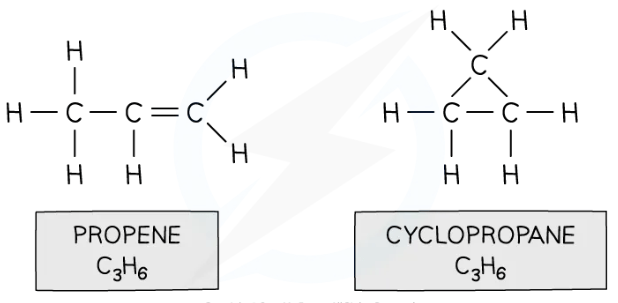 The molecule with the higher boiling point.
What is propene (both have LDF, propene is a stright chain)?
200
An intermolecular force; the attraction of the positive end of one polar molecule to the negative end of another polar molecule.
What is dipole-dipole force?
200
Predict the type(s) of intermolecular force between molecules of OCl2.
What are dipole-dipole and dispersion (London) forces?
200
The amount of energy needed to raise the temperature of 1.00 mole of water from 308K to 338K.
C(l) = 74.5 J/moleK
What is 2230 J or 2.23 kJ?
200
The point at which all three phases of matter of a substance co-exist.
What is the triple point?
200
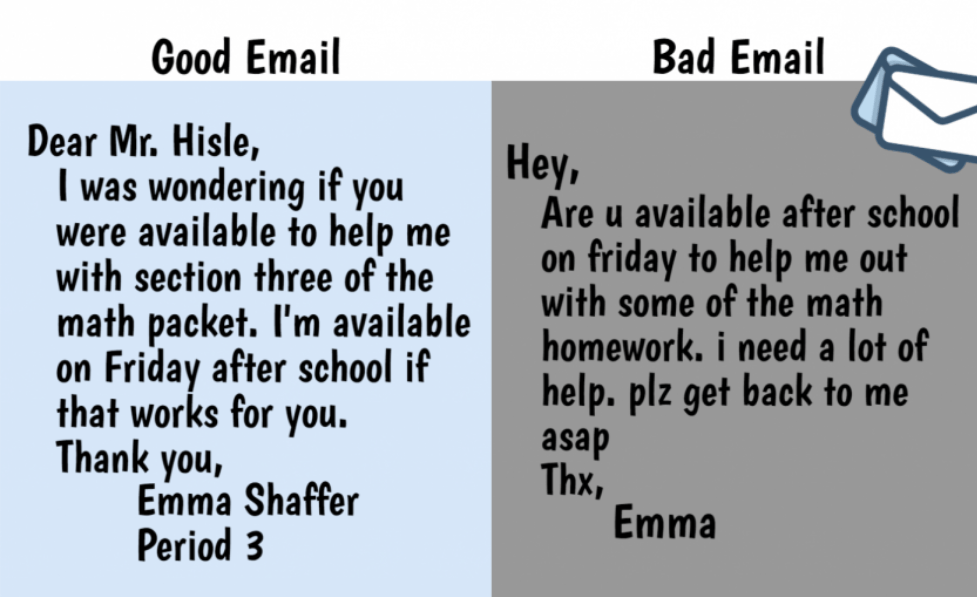 Why the email on the left is much better than the email on the right.
What is the email on the left has the proper address, is written in complete sentences, no abbreviations and I is capitalized. It is also less demanding and to the point!
300
A special dipole-dipole force involving hydrogen and a highly electronegative element.
What is a hydrogen bond?
300
Predict the type(s) of intermolecular force between molecules of NH3. Select all that apply.
What are dipole-dipole forces, hydrogen bonds, and dispersion (London) forces?
300
The amount of energy needed to decrease the temperature of 1.00 mole of water from 338K to 308K.
C(l) = 74.5 J/moleK
What is -2230 J or -2.23 kJ??
300
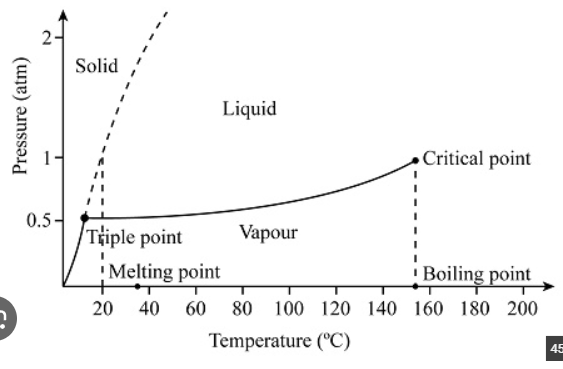 The phase of matter of the substance at 0.5 atm and 140oC.
What is gas or vapor?
300
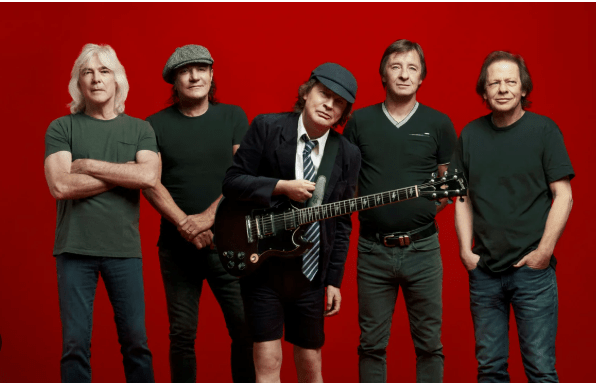 The name of this rock band which sings "Back in Black"
Who is AC/DC?
400
The FON in "Chemistry is FON!"
These are highly electronegative elements.
What are fluorine, oxygen, or nitrogen?
400
Predict the type of intermolecular force between molecules of HCN. Select all that apply.
What are dipole-diploe forces and dispersion (London) forces?
400
The reason why the heat of vaporization of water is much greater that the heat of fusion.
Heat of vaporization = 40.66 kJ/mole
Heat of fusion = 6.01 kJ/mole
Vaporization "severs" IMF between molecules from liquid to gas. Melting only weakens IMF.
400
A primary reason why water is a liquid at room temperature and carbon dioxide is a gas at 1atm.
What is water is a polar molecule with HBF and carbon dioxide is a non-polar molecule with LDF. Water has much stronger IMF that CO2 which exhibit stronger attractions between molecules holding particles much closer in the liquid phase?
400
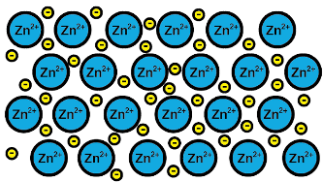 The force of attraction shown within this compound.
What are "sea of electrons"?
500
This is the only intermolecular force acting on nonpolar molecules. It is an electrostatic attraction that arises between atoms or molecules because of the presence of instantaneous and induced temporary dipoles.
What is a dispersion (London) force?
500
Predict the type(s) of intermolecular force between molecules of Cl2.
What are dispersion (London) forces?
500
A physical change directly from the gaseous state to the solid state. Examples include snowflakes and frost.
What is deposition?
500
The energy released when gaseous particles of an ionic compound form solid crystals.
What is lattice energy?
500
 The name of my baby girl.
What is Rosie?