Key terms
Pocahontas & The Colonisation of Jamestown
The Last Samurai & The Meiji Restoration
Police Verso & The Roman Empire
Gladiator & The Roman Empire
100
Define ‘historically inaccurate’
historically accurate: when the portrayal of a person, idea, movement or event in history does not match the reliable historical evidence available.
100
Outline one way that John Smith is portrayed as 'heroic' in Disney's Pocahontas (1995). 
Examples: his rescue of crewmate in the sea in opening scene, his visual displays of strength throughout the film, when he warns Pocahontas about the colonists' intentions, when he pushes the Powhatan chief out of the way of Ratcliffe's line of fire and gets shot.
100
Outline one way that Nathan Algren is portrayed as 'nationalistic' in The Last Samurai (2003).

Examples: Throughout the movie he tells about all the American civil war battles and people he conquered, he is the military advisor/trainer to the Japanese imperial army and is portrayed as advanced in the use of the gun, he is able to become proficient in the art of the samurai in no time at all, he survives when most other main characters die.
100
Identify what feature means death in Pollice Verso (1872)
Thumbs down 👎🏽
100
True or False?
Evil Tyrannical Emperor Commodus in Gladiator was not based on a real historical person.
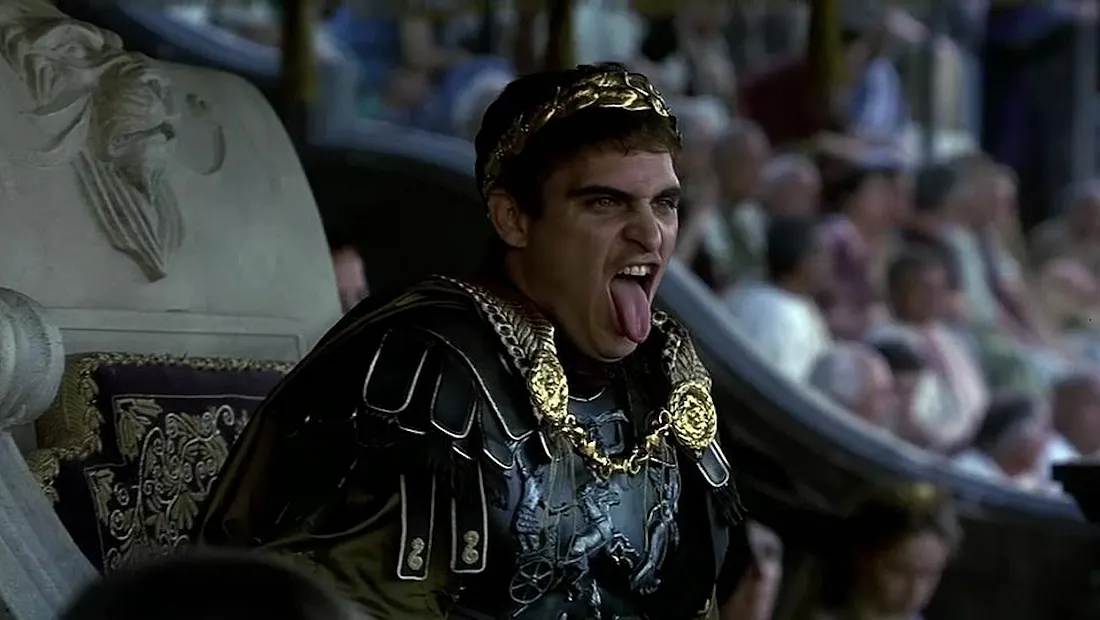
False. Commodus was Roman emperor from 177 to 192, first serving as nominal co-emperor under his father Marcus Aurelius and then ruling alone from 180.
200
Define ‘pop culture’ and provide an example of a pop culture source.
pop culture: can refer to things like art, literature, fashion, dance, film, television, magazines etc. that have become popular (consumed by many).
example: Pocahontas, the Last Samurai, Gladiator, Pollice Verso etc.


200
Outline two historical accuracies in Disney's Pocahontas (1995).
- Pocahontas was a real person
- The colonisation of Jamestown actually happened
- John Smith was a real person
- Ratcliffe was a real person
- The Virginia company ordered by the King was sent to colonise Jamestown.
- There were interactions between John Smith and Pocahontas
200
Outline two historical accuracies in The Last Samurai (2003).
Examples:
- Emperor Meiji was a real person
- Rebel leader Saigo Takamori was a real person
- Meiji Restoration occurred after the Shogunate period which has isolated Japan from the rest of the world.
- The Satsuma Rebellion occurred after the Meiji Restoration
Saigo Takamori's Death: although the rebel leader was shot during the Satsuma rebellion and did turn to his 'second' to assist with 'seppuku' (suicide) (although his second was certainly not a foreigner, let alone an American who became a samurai)
200
Outline the most significant historical inaccuracy of Pollice Verso (1872) and what would needed to be done to make the painting historically accurate.
The main historical inaccuracy is the thumbs down feature of the vestal virgins. To be historically accurate, the emperor should be giving a thumbs up to signify death to the gladiator.
200
Compare the impact that art can have vs. that movies can have on our interpretation of history. For example, the differences that artwork Pollice Verso (1872) can have vs. the difference that Gladiator (2000) can have on our interpretation of Ancient Rome.
100 points for similarity / 100 points for difference
Similarities:
Both can impact/influence on what we think is true for a particular area of history
Differences:
Art can be more believable as it can replicate a lot of elements from the time period and because it has no words, the imagery and symbolism can be extremely impactful and speak to more people.
Movies can be exaggerated and is more accepted to have creative interpretations/differences to suit modern audiences. However, even though we can sometimes easily spot inaccuracies, it can still creep into our subconscious as being true.
300
Define autocracy, an emperor & slavery.
100 POINT BONUS: Outline how one of these terms links to a symbolic gesture used in Ancient Roman Gladiatorial combats.

Autocracy: Where the power to govern is placed in the hands of one person (ie: the emperor).
Emperor: someone who rules an empire; which is a group of countries or areas with different languages or cultures.
Slavery: a condition in which one human being was owned by another. A slave was considered by law as property and was deprived of most of the rights ordinarily held by free persons.
100 POINT BONUS: the thumbs up gesture symbolised death (and derives from being a finger of power (pollex, pollet) - In Ancient Roman Gladiatorial combats and usually given by the emperor who had complete authority/power to rule. Gladiators were slaves who were owned and exploited by the social hierarchy employed by the emperor.
300
Compare similarities & differences of the real-life Pocahontas to Disney's portrayal in Pocahontas (1995).
Differences: age, hair, height, body development, love interest with John Smith (John Smith called her Nonpareil, which means ‘to have no equal'), feelings towards Kocoum (in 1910 she marries him and the fact that he was not a chief, and not high in status, suggests that she may have married him for love).
Similarities: tattoos (around when John Smith leaves Pocahontas would have started to decorate herself with tattoos), Pocahontas did form a relationship with (friendship/spiritual guide to) John Smith.
300
Compare similarities and differences of the real life Satsuma rebel leader to the portrayal in The Last Samurai (2003).
Differences: Saigo's (rebel leader) rebellion was about retaining military class and not some 'greater cause'.
Saigo Takamori's Death: although the rebel leader was shot during the Satsuma rebellion and did turn to his 'second' to assist with 'seppuku' (suicide), his second was certainly not a foreigner, let alone an American who became a samurai.
Similarities: was revered by Japanese people, some aspects of physical appearance, preference of using samurai sword, infuriated by changes of Meiji's westernisation such as not being able to carry swords.
Saigo Takamori's Death: the rebel leader was shot during the Satsuma rebellion and did turn to his 'second' to assist with 'seppuku' (suicide)
300
Compare a similarity & differences of the (historically accurate) feature that signifies death to the feature that signifies mercy in Ancient Roman Gladiatorial combats.
Differences: feature that signifies death - thumbs up, feature that signifies mercy - closed fist with thumb pressed
Similarity: both focus around ancient assertion that the thumb (Latin: pollex) derives from the fact that this finger “has power” (Latin: pollet)
300
Outline 3 historical inaccuracies in Gladiator (2000).
1. Maximus is a fictional character, not a real person
2. The thumbs gesture used by the Emperor was used inaccurately
3. Emperor Marcus Aurelius wanted to abolish the Roman Empire and restore the Roman Republic in the film, this was not true in real life.
400
Define ‘nationalism’, its Latin-root ‘natio’ and its noun ‘ism’ ending and provide an example of nationalism.
Nationalism: the idea of supreme loyalty and devotion to a nation, including the promotion of its culture and interests as opposed to those of other (my country is the best).
natio: ‘born’, people united by common descent, history, culture, or language or inhabiting a particular area.
ism: a practice, system, or philosophy, typically a political ideology or an artistic movement.
examples: Japanese nationalism regarding samurai or ancient culture, shogunate era implementing isolationism was a nationalistic policy, Americans forcing Japan to trade was an example of nationalism etc.
400
Explain why you think Disney's Pocahontas (1995) has a large focus on a love story between Pocahontas & John Smith.
(100 points each for cause, consequence 200 points for significance)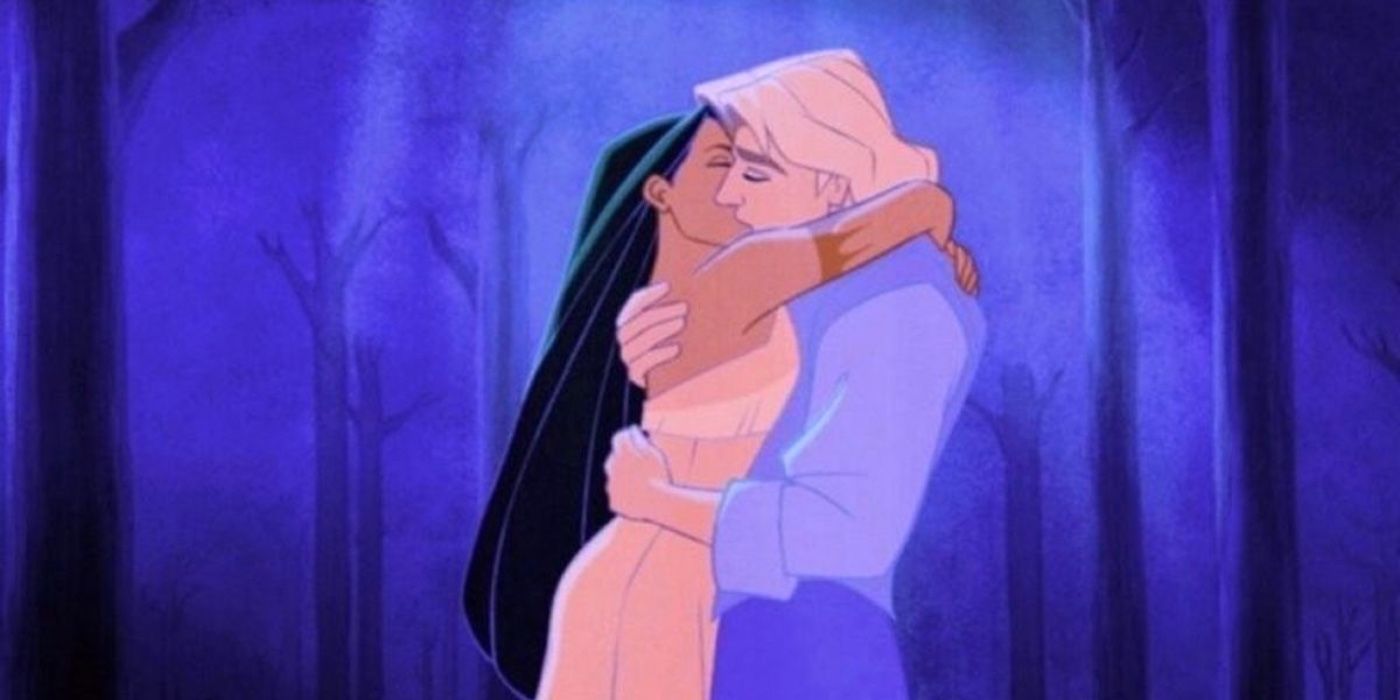
100- cause
100- consequence
200- significance
Potential causes:
Directors/writers are American/western. The love story downplays/draw focus away from atrocities of imperialism and colonisation.
Potential consequences:
After watching this movie, people can romanticize the Colonisation of Jamestown and even idolise colonisers such as John Smith, who in reality, wasn't a very decent person.
Potential significance:
This relates to us today as colonisation of Indigenous populations occurred around the world and still have significant impacts on those groups today such as trying to claim back land that was taken through dispossession (and there are significant links between having land/shelter and health outcomes), trying to retain native languages spoken prior to colonisation, being able to seek reparations/recognition for trauma faced as many people have been led to believe that 'it wasn't that bad.'
400
Explain why you think The Last Samurai (2003) changes history and portrays an American military advisor to Meiji's Imperial army, instead of French.
(100 points each for cause, consequence, 200 for significance)
100- cause
100- consequence
200- significance
Potential causes:
American directors who want to input America into the history to assert their importance / reiterate that they are one of the 'big powers'.
Potential consequences:
A lot of people believe that Americans had a large influence on/over the Japanese and they are superior to the Asian nation (superior weapons, ideas etc.).
Potential significance:
It relates to us today as the idea of patriotism/nationalism is so intrinsic with American values. Arguably, this devotion to their own country prevents rebellions and internal fighting especially when considering the social inequality in America.
It also relates to us today as it can continue tensions/distrust between Western and Asian nations
It also relates to us today as it perpetuates, especially to Western English speaking countries to who this movie is focused on, that Western countries are superior and better than Asian countries.
400
Explain why you think French artist Jean-Léon Gérôme created the significant historical inaccuracy in his painting Pollice Verso (1872).
(100 points each for cause, consequence, 200 points for significance)
100- cause
100- consequence
200- significance
Potential causes:
Didn't have the technology to access Ancient Roman primary sources
Couldn't properly translate primary sources
Influenced by other modern uses of the thumb such as the American pilots in war who used thumbs up as a good thing
Potential consequences:
Influenced more people to believe that the thumbs down in Ancient Rome meant death, including the director of Gladiator who continued to perpetuate this myth to an even larger audience.
Potential significance:
It's relevant to us today because the use of the thumbs up/thumbs down gesture is still commonly used, and although is opposite to the original meaning of the Ancient Romans, still has power and is often used by political leaders, who often use the thumbs up as a positive gesture but ironically, many of these politically figures could also be linked with the Ancient Roman meaning of death.
400
Outline 4 historical accuracies in Gladiator (2000).
- The depiction of Ancient Roman soldiers was fairly accurate
- Gladiators were slaves; the lowest social class in Ancient Rome and were forced to fight for entertainment.
- Emperor Commodus was a cruel and tyrannical emperor in Ancient Rome and his succession after his father Emperor Marcus Aurelius ended ‘Pax Romana’, a 200 year period of relative peace in Imperial Rome led by the ‘five good emperors.’
- The Colosseum was built in 80CE, could hold up to 80,000 people and it’s longer and wider than the MCG.
- There was much inequality between the social classes in Rome and so emperors would organise free public entertainment such as Gladiatorial games to ensure the masses did not become restless and rebellious.
- Animals such as tigers were sometimes used in Gladiatorial combats.
- Freedom was often granted to victorious gladiators after a time, and they would then become trainers of other gladiators.
500
Define imperialism, identify three imperialist countries and name the policy or practise that this imperialist country would implement to “occupy a country with settlers, and exploit it economically.”
Imperialism: A system in which a country rules other countries, sometimes having used force to get power over them.
Imperialist countries: UK, France, Portugal, Spain, Netherlands, USA, Russia/Soviet Union, Belgium, Turkiye, Italy, Germany, Japan, Denmark
Colonialism: to occupy a country with settlers, and exploit it economically
500
Outline five historical inaccuracies in Disney's Pocahontas (1995).
Pocahontas: age, physical features, love interest with John Smith, feelings towards Kocoum (in 1910 she marries him and the fact that he was not a chief, and not high in status, suggests that she may have married him for love).
John Smith: physical features, faultless heroism, love interest with Pocahontas.
Native Americans: story suggests that there was practically no communication between Powhatans and British until end of movie. There were both negative encounters (such as Smith with other tribes) as well as positive encounters (such as Smith being 'welcomed' into the Powhatan tribe).
British Colonists: portrayed in control/stable/well-fed/superior/as conquerors (they relied heavily of the Native Americans and many died of starvation), Ratcliffe died a horrible death at the hands of the Powhatan Native Americans.
500
Outline five historical inaccuracies in The Last Samurai (2003).
Examples: French military advisor not American, guns were brought over by the Portuguese in the 1500s way before Americans arrived and were used by shogun leaders before emperor Meiji's restoration (many were competent in using guns), Japanese would not have a very positive view towards the Americans due to their own nationalistic values and the fact that American's forced Japan's borders to open under the Shogunate (this embarrassment to nationalism ended the Shogunate Era). Overall, Americans had very little to do with the Meiji Restoration & Satsuma rebellion.
- Character of Nathan Algren:Tom Cruise's character, Nathan Algren, is based on Jules Brunet, a French military officer who trained Japanese soldiers in modern warfare. The film exaggerates Algren's role and his connection to the samurai rebellion.
- Saigo Takamori's Death: although the rebel leader was shot during the Satsuma rebellion and did turn to his 'second' to assist with 'seppuku' (suicide), his second was certainly not a foreigner, let alone an American who became a samurai.
- Depiction of the Satsuma Rebellion:The film's portrayal of the Satsuma Rebellion is not entirely accurate. The rebellion was a complex event driven by various factors, including the loss of samurai privileges and the rise of a conscripted army. The film simplifies this complex situation by portraying the rebellion as a clash between traditional samurai values and modern military tactics.
- Ninja Representation:The film depicts ninjas fighting alongside the samurai, but this is not historically accurate. The samurai and ninjas were distinct groups, and ninjas were not a significant part of the Satsuma Rebellion or the Boshin War.
- American Influence:The film's focus on an American military advisor is also an inaccuracy. While Japan did hire Western advisors, they were predominantly French and not American.
- "White Savior" Tropes:The film has been criticized for its "white savior" narrative, where Algren transforms the samurai into more "modern" warriors, which is seen as a misrepresentation of Japanese culture.
500
Outline 5 historical accuracies in Pollice Verso which makes it believable. 
- Clothing of Gladiators
- Weapons of Gladiators
- Size/depiction of the Colosseum
- Positioning of the Emperor
- Positioning of the Vestral Virgins
- Clothing of the Emperor
- Clothing of the Vestral Virgins
500
Explain why you think the Gladiator film creators led people to believe that the Ancient Roman Empire became a republic after Emperor Commodus died? Consider:
time period it was made (100 points)
country it was made in (100 points)
potential motivations/ideas of the creators (100 points)
- x1 positive or x1 negative impact that inaccuracy could create
time period it was made: 2000s
country made: America
ideas/motivations:
eg: George Bush is the president (leader) of the US and a large part of his campaign is surrounded around the idea of bringing down dictators (namely, Saddam Hussein from Iraq).
eg: duty, honor of main character falls in-line with American values of patriotism & nationalism.1 positive/negative impact:
eg: romanticize the period and ignore the inequality of the class system in place, especially the hardships of those at the bottom; the slaves as the film shows that a slave could come out having the most influential change for Ancient Rome.