MENTAL HEALTH
& SUDS
(multiple choice)
& SUDS
(multiple choice)
Which of the following is NOT a behavioral symptom of substance use disorder?
(a) Drop in attendance and performance at work or school
(b) Frequently getting into trouble (e.g., fights, accidents, illegal activities)
(c) Using substances in physical hazardous situations (e.g., while driving or operating a machine)
(d) Engaging in secretive or suspicious behaviors
(e) None of the Above
(e) None of the Above
Symptoms of substance use disorders may include behavioral changes, such as…
(1) Drop in attendance and performance at work or school
(2) Frequently getting into trouble (e.g., fights, accidents, illegal activities)
(3) Using substances in physical hazardous situations (e.g., while driving or operating a machine)
(4) Engaging in secretive or suspicious behaviors
(5) Changes in appetite or sleep patterns
(6) Sudden mood swings, irritability, or angry outbursts
(7) Periods of unusual hyperactivity, agitation, or giddiness
(8) Lacking motivation
(9) Appearing fearful, anxious, or paranoid, with no reason
Among people aged 12 or older in 2020, _____% (or 61.6 million people) were binge alcohol users in the past month.
(a) 34.7%
(b) 29.1%
(c) 14.8%
(d) 22.2%
(e) 16.3%
(d) 22.2%
The percentage was highest among young adults aged 18 to 25 (31.4% or 10.5 million people), followed by adults aged 26 or older (22.9% or 50 million people), then by adolescents aged 12 to 17 (4.1% or 1 million people).
David’s father has three sons: Snap, Crackle, and _____?
David!
According to the United States Department of Health and Human Services (HHS, 2012), which of the following populations are known to have an increased risk for suicidal behaviors.
(a) American Indians / Alaska Natives (AI / AN)
(b) Individuals in Justice and Child Welfare Settings
(c) Men in Midlife
(d) Older Men
(e) All of the Above
(e) All of the Above
The following populations are known to have an increased risk for suicidal behaviors (HHS, 2012)
(1) American Indians / Alaska Natives (AI / AN)
(2) Individuals Bereaved by Suicide
(3) Individuals in Justice and Child Welfare Settings
(4) Individuals Who Engage in Non-Suicidal Self-Injury (NSSI)
(5) Individuals Who have Attempted Suicide
(6) Individuals with Medical Conditions
(7) Individuals with Mental and/or Substance Use Disorders
(8) LGBT+ Individuals
(9) Members of the Armed Forces and Veterans
(10) Men in Midlife
(11) Older Men
True or False?
Self-esteem refers to an individual’s overall subjective feelings of personal value and self-worth. It can have an effect on many areas of my life, including substance use and recovery.
True!
Which of the following is a physical symptom of substance use disorder?
(a) Bloodshot eyes and abnormally sized pupils
(b) Periods of unusual hyperactivity, agitation, or giddiness
(c) Sudden weight loss or weight gain
(d) Deterioration of physical appearance
(e) Unusual smells on breath, body, or clothing
(b) Periods of unusual hyperactivity, agitation, or giddiness
Symptoms of substance use disorders may include behavioral changes, such as…
(1) Bloodshot eyes and abnormally sized pupils
(2) Sudden weight loss or weight gain
(3) Deterioration of physical appearance
(4) Unusual smells on breath, body, or clothing
(5) Tremors, slurred speech, or impaired coordination
Among people aged 12 or older in 2020, _____, _____, and _____ were the most used illicit drugs over the past year.
(a) Tranquilizers, Cocaine, and Marijuana
(b) Marijuana, Prescription Pain Relievers, and Cocaine
(c) Hallucinogens, Marijuana, and Prescription Stimulants
(d) Heroin, Inhalants, and Methamphetamines
(e) Marijuana, Prescription Pain Relivers, and Hallucinogens
(e) Marijuana, Prescription Pain Relivers, and Hallucinogens
Among people aged 12 or older in 2020, 217.6 million (78.6%) did not use illicit drugs within the past year.
Among people aged 12 or older in 2020, 59.3 million (21.4%) did use illicit drugs within the past year.
What kind of coat is best put on wet?
A Coat of Paint!
According to the Centers for Disease Control and Prevention (2015), the rates of suicide were almost four times higher for _____ than for _____ (20.6 per 100,000 versus 5.7 per 100,000) and were highest among Whites (14.9 per 100,000).
(a) Men; Women
(b) Women; Men
(c) Older Adults; Adolescents
(d) White / Caucasian Individuals; Black / African American Individuals
(e) Black / African American Individuals; Hispanic / Latinx Individuals
(a) Men; Women
True or False?
Low self-esteem has been linked to the onset of drug use, and research has shown a connection between low self-esteem and behavioral addictions including internet addiction, eating problems, and compulsive buying.
True!
While alcohol, drugs, or compulsive behaviors can initial mask insecurities and even make people feel more confident, these feelings are short-lived.
Which of the following is a social symptom of substance use disorder?
(a) Sudden change in friends, favorite hangouts, and hobbies
(b) Legal problems related to substance use
(c) Unexplained need for money or financial problems
(d) Using substances even though it causes problems in relationships
(e) Sudden mood swings, irritability, or angry outbursts
(e) Sudden mood swings, irritability, or angry outbursts
Symptoms of substance use disorders may include behavioral changes, such as…
(1) Sudden change in friends, favorite hangouts, and hobbies
(2) Legal problems related to substance use
(3) Unexplained need for money or financial problems
(4) Using substances even though it causes problems in relationships
Among people aged 12 or older in 2020, _____, _____, and _____ were the most common SUDs diagnosed.
(a) Alcohol Use Disorder, Illicit Drug Use Disorder, and Marijuana Use Disorder
(b) Alcohol Use Disorder, Marijuana Use Disorder, and Pain Reliever Use Disorder
(c) Alcohol Use Disorder, Pain Reliever Use Disorder, and Methamphetamine Use Disorder
(d) Alcohol Use Disorder, Stimulant Use Disorder, Marijuana Use Disorder
(e) Alcohol Use Disorder, Methamphetamine Use Disorder, Cocaine Use Disorder
(a) Alcohol Use Disorder, Illicit Drug Use Disorder, and Marijuana Use Disorder
Among people aged 12 or older in 2020, 236.6 million (85.5%) were not diagnosed with an SUD in the past year.
Among people aged 12 or older in 2020, 40.3 million (14.5%) were diagnosed with an SUD in the past year.
I am always hungry and will die if not fed, but whatever I touch will soon turn red. What am I?
A Fire!
According to the Centers for Disease Control and Prevention (2014), approximately _____% of deaths by suicide involved alcohol intoxication, with a blood-alcohol content at or above the legal limit (i.e., 0.08+).
(a) 44%
(b) 22%
(c) 33%
(d) 55%
(e) 66%
(b) 22%
Which of the following is NOT a way to improve your self-esteem?
(a) Write Your Own Affirmations
(b) Forgive Yourself for Past Mistakes
(c) Accept Compliments
(d) Do Something Kind Every Day
(e) Start Making Changes
(f) None of the Above
(f) None of the Above
Mental health problems and substance use disorders sometimes occur together; this is because…
(a) Certain illegal drugs can cause people with an addiction to experience one or more symptoms of a mental health problem
(b) Mental health problems can sometimes lead to alcohol or drug use, as some people with a mental health problem may misuse these substances as a form of self-medication
(c) Mental and substance use disorders share some underlying causes, including changes in brain composition, genetic vulnerabilities, and early exposure to stress or trauma
(d) All of the Above
(d) All of the Above
According to the 5th edition of the Diagnostic and Statistical Manual of Mental Disorders (DSM-5), which of the following is NOT one of the criteria required to be diagnosed with a substance use disorder (SUD).
(a) The substance is often taken in larger amounts over a longer period than intended.
(b) Important social, occupational, or recreational activities are given up or reduced because of substance use.
(c) There are a required number of withdrawal symptoms that occur when substance use is cut back or stopped following a period of prolonged use.
(d) A great deal of time is spent in activities necessary to obtain the substance, use the substance, or recover from its effects.
(e) None of the Above
(e) None of the Above
A DSM-5 SUD diagnosis requires the presence of two or more of the 11 criteria to be present within a 12-month period:
(1) The substance is often taken in larger amounts over a longer period than intended.
(2) There is a persistent desire or unsuccessful efforts to cut down or control substance use.
(3) A great deal of time is spent in activities necessary to obtain the substance, use the substance, or recover from its effects.
(4) There is a craving, or a strong desire or urge, to use the substance.
(5) There is recurrent substance use resulting in failure to fulfill major role obligations at work, school, or home.
(6) There is continued substance use despite having persistent or recurrent social or interpersonal problems caused by or exacerbated by the effects of the substance.
(7) Important social, occupational, or recreational activities are given up or reduced because of substance use.
(8) There is recurrent substance use in situations in which it is physically hazardous.
(9) Substance use is continued despite knowledge of having a persistent or recurrent physical or psychological problem that is likely to have been caused or exacerbated by the substance.
(10) There is a need for markedly increased amounts of the substance to achieve intoxication or the desired effect, or markedly diminished effect with continued use of the same amount of the substance (i.e., tolerance).
(11) There are a required number of withdrawal symptoms that occur when substance use is cut back or stopped following a period of prolonged use. (Hallucinogen use disorder and inhalant use disorder do not have a withdrawal syndrome associated with discontinued use. Therefore, withdrawal is not a criterion of either of these two disorders.)
What kind of band never plays music?
A Rubber Band!
Think and Share!
State at least one warning sign of suicide.
(a) Talking about wanting to die or kill oneself
(b) Looking for a way to kill oneself, such as searching online or buying a gun
(c) Talking about feeling hopeless or having no reason to live
(d) Talking about feeling trapped or in unbearable pain
(e) Talking about being a burden to others
(f) Increasing the use of alcohol or drugs
(g) Acting anxious or agitated / behaving recklessly
(h) Sleeping too little or too much
(i) Withdrawing or feeling isolated
(j) Showing rage or talking about seeking revenge
(k) Displaying extreme mood swings
(l) Losing interest in things, or losing the ability to experience pleasure
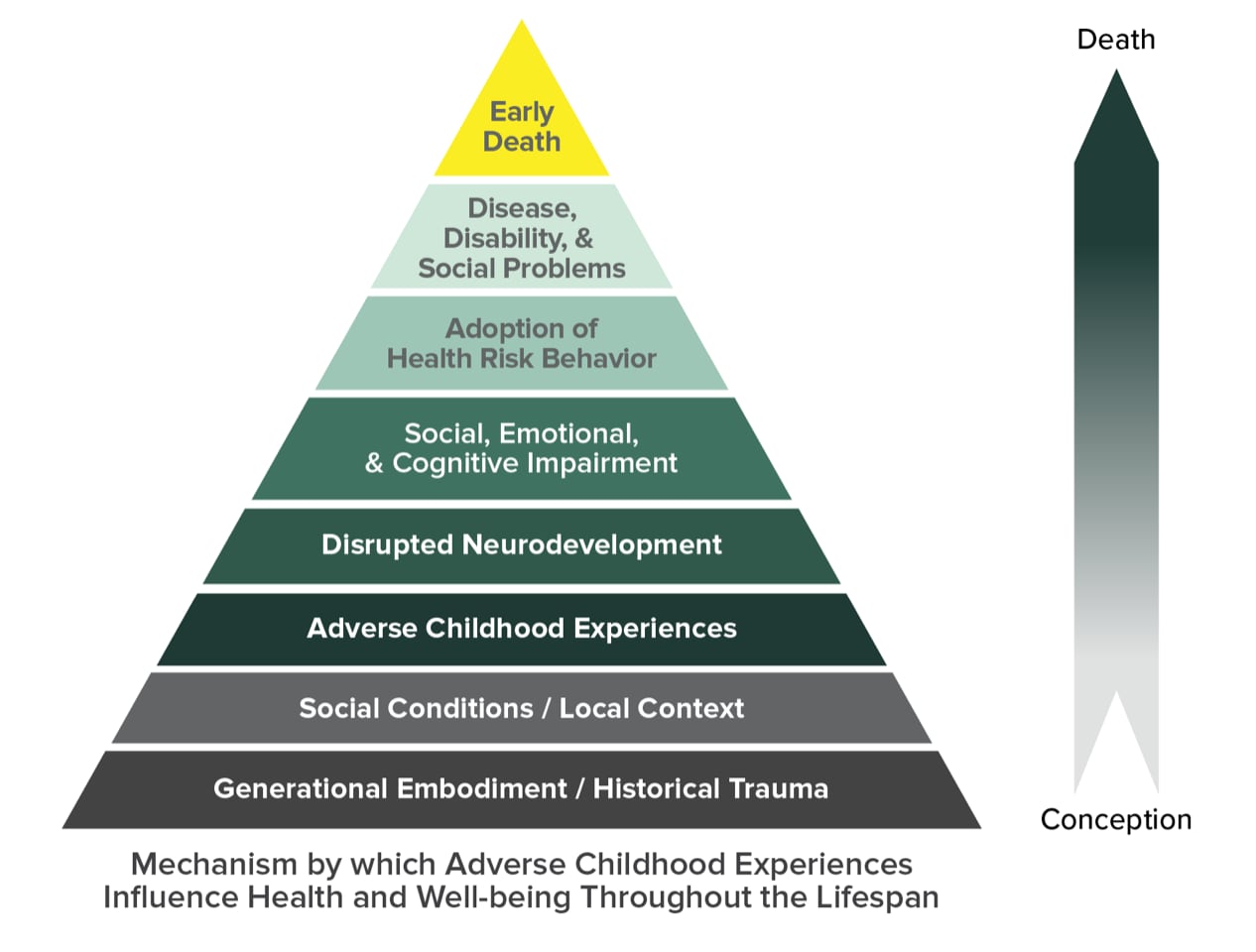
According to the Centers for Disease Control and Prevention (CDC; 2022), adverse childhood experiences (or, ACEs), are potentially traumatic events that occur in childhood (ages 0 to 17 years). For example, (1) experiencing violence, abuse, or neglect, (2) witnessing violence in the home or community, and/or (3) having a family member attempt or die by suicide.
Which of the following are aspects of the child’s environment that can undermine their sense of safety, stability, and bonding?
(a) Growing Up in a Household with Substance Use Problems
(b) Growing Up in a Household with Mental Health Problems
(c) Instability Due to Parental Separation
(d) Household Members being in Jail or Prison
(e) All of the Above
(e) All of the Above
More than one in _____ adults living with serious mental health problems also have a substance use problem.
(a) Three
(b) Two
(c) Four
(d) Seven
(e) Nine
(c) Four
Substance use problems occur more frequently with certain mental health problems, including depression, anxiety disorders (e.g., Generalized Anxiety Disorder [GAD], Social Anxiety Disorder [SAD], etc.), Schizophrenia, and Personality Disorders (borderline personality disorder, antisocial personality disorder, histrionic personality disorder, etc.).
Which of the following was a perceived effect on access to substance use treatment because of the COVID-19 Pandemic?
(a) Appointments moved from in-person to telehealth format
(b) Delays or cancellation in appointments
(c) Delays in getting prescriptions
(d) Inability to access needed care resulting in moderate-to-severe impact on health
(e) All of the Above
(e) All of the Above
Which room in a house ghosts will not haunt?
The Living Room!
Think and Share!
State at least one protective factor of suicide.
(Note, according to the Substance Abuse and Mental Health Services Administration [SAMHSA; 2019], protective factors are characteristics associated with a lower likelihood of negative outcomes or that reduce a risk of factor’s impact. Protective factors may be seen as positive countering effects.)
(a) A trusting relationship with a counselor, physician, or other service provider
(b) An optimistic or positive outlook
(c) Childrearing responsibilities
(d) Coping and problem-solving skills
(e) Cultural and religious beliefs that discourage suicide
(f) Employment
(g) Involvement in community activities
(h) Perceiving that there are clear reasons to live
(i) Receiving effective mental and/or substance use disorder treatment / care
(j) Resiliency, self-esteem, direction, perseverance
(k) Sobriety
(l) Strong family bonds and social skills
ACEs are common. About _____% of adults surveyed across 25 states reported they had experienced at least one type of ACE before age 18m and nearly 1 in _____ reported they had experienced four or more types of ACEs.
(a) 61%; 1 in 6
(b) 51%; 1 in 5
(c) 41%; 1 in 7
(d) 71%; 1 in 8
(e) 31%; 1 in 10
(a) 61%; 1 in 6